
Can a rotted window sill be repaired, or does the whole window need replacing?
How deep a screwdriver sinks into a soft sill, and where, decides between an epoxy patch, a new sill, and a full-frame replacement. Here's how to read the probe and when to stop.
The short answer
A soft spot confined to a corner or the front edge of a sill, with firm wood around it, can usually be dried, consolidated with a penetrating epoxy, and filled. If the rot runs along most of the sill, goes through to the underside, or has reached the framing below the window, patching won't hold, and the fix is a new sill or a full-frame replacement. Either way, rot is a water problem first, so find how the water got in before you pay to fix the wood.

Estimate, not a final quote
This range is for planning. Final pricing depends on an on-site inspection, materials, permits, access, and contractor scope.
Compare written bids
Ask each contractor for the same scope, warranty terms, permit handling, cleanup details, and exclusions before choosing.
Source-backed guidance
Guides use public references and practical cost modeling, then point you to official sources where rules or rebates can change.
WEST SYSTEM, the marine epoxy maker, says the wood under a rot repair should be below 12 percent moisture content before any epoxy goes on. That one number tells you most of what you need to know about a rotted window sill: the soft wood is the symptom, and the water that softened it is the problem. Fix the wood without stopping the water and you'll be doing it again in a few years.
A lot of sill rot is smaller than it looks. Peeling paint and a dark corner stain can sit on an inch of soft wood or on a sill that's gone all the way through. A screwdriver tells you which in five minutes.
Probe it before anyone quotes it
Press a flat screwdriver or awl into the sill with firm hand pressure. Don't stab or pry. Start in sound wood near the middle so you know what solid feels like, then work toward the stain. Check both outside corners, the front edge, the joints where the sill meets each side jamb, and the bottom of each jamb. Those joints hold water longest.
For each soft spot, note how far the tip sinks, how long the soft area runs, and whether the wood under it is firm.
| What the probe finds | What it usually means | Typical fix | Rough market cost |
|---|---|---|---|
| Tip barely dents the wood, paint cracked, wood firm below | Surface weathering, not structural rot | Scrape, prime, repaint | Paint and an afternoon |
| Soft pocket at one corner or along the front edge, under 1/2 inch deep, firm wood around it | Localized rot | Remove soft fibers, consolidate, fill with epoxy | $50–$150 DIY; $200–$500 hired |
| Soft pocket deeper than 1/2 inch in a limited area | Localized rot with a real void | Wood plug or dutchman set in epoxy, then fill | $250–$600 hired |
| Soft along most of the sill's length, or the tip goes through to the underside | Sill is gone | Replace the sill, or replace the window | $500–$1,000+ for a sill; window cost if it can't be separated |
| Sill soft and the jambs, the subsill, or the wall framing below are soft too | Rot has left the window | Full-frame replacement with framing repair | $1,000–$2,000+ per opening |
The half-inch line comes from Gougeon Brothers, the company behind WEST SYSTEM. Its window repair guide says that once a cavity is more than 1/2 inch deep and 1/4 inch wide, you cut and fit a wood plug to fill the bulk of it rather than filling it all with epoxy. The cost column is not from a primary source. It reflects common contractor pricing and moves with your region, the window's height, whether the sill is a separate piece or milled into the frame, and how much paint has to come off. Treat it as scale, not a quote.
Find the water first
Sills rot because water reaches them and can't leave. The usual sources fall into three groups: paint failure that lets rain soak the top of the sill, a missing or failed sill pan that sends water past the frame into the wood below, and indoor condensation running down the glass onto the interior stool.
Look at where the rot is. Rot on the top and front edge, with the inside dry, is weather. Rot that's worse underneath, or that shows up as a stain on the wall below the window, points to water getting behind the window. IRC Section R703.4 requires corrosion-resistant flashing at exterior window openings, applied to keep water out of the wall cavity and off the structural framing. A sill that's rotting from the bottom up usually means that flashing is missing or failing, and our window leak guide walks through how to tell. Rot on the interior stool with dripping glass on cold mornings is a humidity problem; the condensation guide covers it.
EPA's mold guidance says to dry water-damaged materials within 24 to 48 hours, and that cleanup without fixing the water source usually fails. Wood is no different: epoxy over a sill that's still getting wet seals the moisture in.
Cost estimator
Window cost estimator
A budgeting range, not a quote. Move the inputs to see what changes the number.
Estimated national cost
Typical project lands near $6,500.
If a written quote comes in above the high end, that's not automatically wrong — ask what scope is driving it.
What this assumes
- 10 replacement windows selected.
- Vinyl frame material selected.
- Standard professional installation assumed.
What moves this price
- 01Pocket vs. full-frame installation method.
- 02Glass package, grid style, trim, and flashing details.
- 03Window size, access, permit requirements, and local labor rates.
Walk into your quotes ready
This range is your anchor. Bring these to every contractor conversation so you can tell a fair quote from a padded one.
- Is this full-frame or insert (pocket) replacement, and why for my openings?
- What's the frame material and glass package (low-E, gas fill, U-factor)?
- Is removal, disposal, and interior/exterior trim work included?
- What does the warranty cover: glass, frame, and the install labor?
- A per-window price with no mention of frame condition or install type.
- 'Today only' pricing that drops dramatically when you hesitate.
- Vague glass specs, with no U-factor or low-E details in writing.
What a proper epoxy repair involves
A penetrating epoxy repair is a real fix, not a cover-up, when it's done in order. WEST SYSTEM's Wood Rot Repair Kit lists windowsills by name. Remove all loose and weathered fibers first, because debris blocks the epoxy from reaching sound wood. Dry the wood below 12 percent moisture. Apply the thin epoxy into cracks and over the surface until the wood stops absorbing it. Then thicken it with filler to rebuild the shape.
The details are where DIY repairs fail. WEST SYSTEM lists 30 to 40 minutes of working time at 72°F and a 50°F minimum, so a cold late-fall morning won't cure properly. Keep each layer under 1/2 inch thick; Gougeon's guide warns that too much epoxy at once can exotherm and smolder. After curing, wash off the amine blush, sand, and finish with a UV-stable topcoat.
The kit comes in 360 ml, 1.5 liter, and 6 liter sizes. One corner rarely needs more than the smallest.
Flat rule: if more than about a third of the sill's length is soft, stop patching. Epoxy rebuilds a corner well. It's a poor substitute for a whole sill, and once you've dug out that much wood, a new sill often costs less than the labor to fill it.
When the house was built before 1978
Scraping old window paint is exactly what EPA's lead rules target. Under the Renovation, Repair and Painting rule, a contractor paid to disturb paint in a pre-1978 home must be an EPA-certified firm using lead-safe practices. The minor repair exception covers jobs disturbing no more than 6 square feet of interior paint per room or 20 square feet outside, but EPA says it doesn't apply to window replacement or to prohibited practices. Ask any contractor bidding sill work on an older house for their RRP certification. Doing it yourself isn't covered by the rule, but the lead hazard is the same.
Repair or replace: three questions decide it
First, is the rot contained to the sill? If the jambs and framing below are firm, the window can usually stay. If they're soft, the window has to come out to repair them, and you're paying for most of a replacement's labor anyway.
Second, is the rest of the window failing too? ENERGY STAR's guidance on when to replace lists degraded sills and sashes, drafts and leaks, and double-pane glass that's cloudy between the panes. One of those is a repair. Two or three on the same window is a replacement. If glass is the other problem, our foggy window guide prices a glass-only fix.
Third, is it under warranty? Andersen's 400 Series coverage runs 20 years on glass and 10 on non-glass parts, against defects in materials and workmanship. Rot from unmaintained paint or a poorly flashed opening usually falls outside that. A recent clad window rotting behind intact cladding is worth a call to the installer and manufacturer before you pay anyone.
Our rule: rot in the sill alone, on a window that otherwise works, gets repaired. Rot that has reached the framing gets a full-frame replacement. A pocket insert set into a frame with soft wood around it seals the rot in. Our full-frame vs. pocket guide explains why that matters, and the quote guide shows how to get a rot allowance written onto the bid.
Where you stop and call a pro
A ground-floor sill you can reach standing up is reasonable to probe and repair yourself. Hire it out for any window above the first floor that needs a ladder, rot that has reached the wall framing, any window that has to come out of the opening, and paid work on a pre-1978 house. Pulling a window means working with the wall's water barrier and possibly the header, and a mistake there starts the next rot problem.
For labor scale, BLS puts the median carpenter wage at $28.51 an hour as of May 2024. A contractor's billed rate runs well above that once overhead and insurance are added, so even a half-day repair lands in the hundreds.
Research sources
- WEST SYSTEM: Wood Rot Repair Kit
- Epoxyworks (Gougeon Brothers): Wooden Window Repair, step-by-step with WEST SYSTEM Epoxy
- Epoxyworks (Gougeon Brothers): New WEST SYSTEM Wood Rot Repair Kit
- ICC: 2021 International Residential Code, Section R703.4, Flashing
- EPA: A Brief Guide to Mold, Moisture and Your Home
- EPA: How Is Window Repair or Maintenance Distinct From Removal Treated Under the RRP Rule?
- EPA: Window Repairs, Removing and Replacing Sash, Under the RRP Rule
- ENERGY STAR: Is It Time to Replace Your Windows?
- Andersen: product brochure with Owner-2-Owner warranty terms (PDF)
- BLS Occupational Outlook Handbook: Carpenters
Compare local quotes
Ready to compare real quotes from window installer pros?
Use your estimate as a budget anchor, then compare written contractor bids against it before you decide. Free request, no obligation.
Disclosure: this button opens a third-party quote-matching service. If you submit its form, its contact and privacy terms apply, and SaveBricks may earn a referral fee. It never changes the prices you're quoted, and our cost ranges are set independently — see how we estimate.
The cost guide
Get the monthly cost briefing
One useful email a month: project cost ranges, contractor red flags, and practical ways to avoid an inflated quote.
No spam. Unsubscribe any time. Read our privacy policy.
More windows guides

Window Leaking When It Rains? Where the Water Shows Up Names the Fix
Water at the sill, the head, or the lower corners points to different failures. Here's how to tell clogged weeps from failed caulk from missing flashing before you buy a tube of anything.
Read guide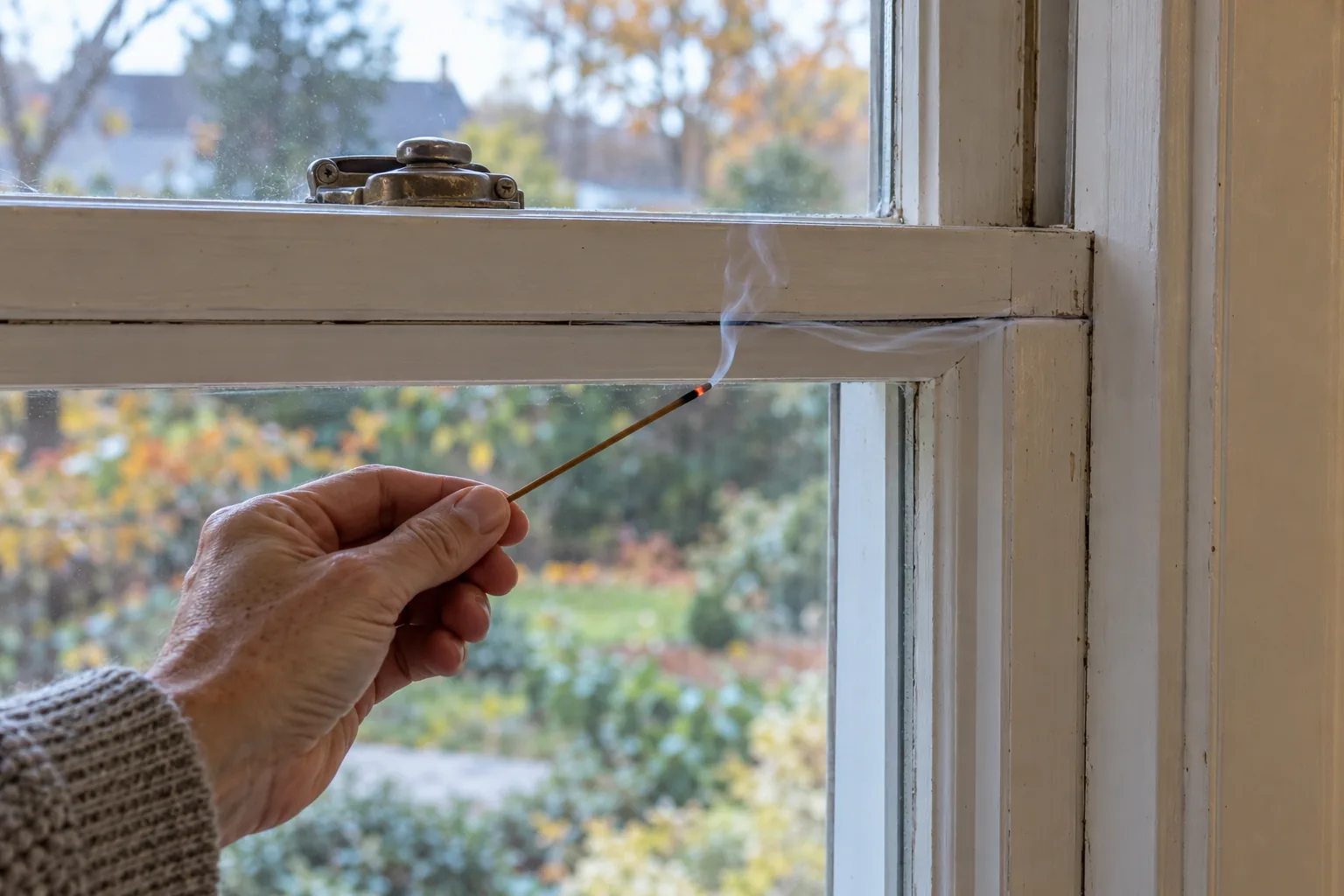
Drafty Windows? Find Which Gap the Air Uses Before You Price New Ones
A drafty window usually leaks through one of three paths, and the fix for each runs from a $5 strip to a new unit. Here's how to tell them apart with a sheet of paper and an incense stick, and when replacement actually pays.
Read guide
Window Won't Stay Up? Price the Balance Before You Price a Window
A double-hung sash that slides down on its own almost always means a failed balance, a part Andersen lists from about $21. Here's how to tell which balance system you have, what the fix costs, and when the window itself is the problem.
Read guide