
Why won't my double-hung window stay open, and do I need a new window?
A double-hung sash that slides down on its own almost always means a failed balance, a part Andersen lists from about $21. Here's how to tell which balance system you have, what the fix costs, and when the window itself is the problem.
The short answer
A sash that drifts down after you lift it nearly always has a failed balance, the spring or cord system hidden in the side jambs that holds it in place. Replacement balancers for one whole window run roughly $42 to $185 at list price from Andersen's own parts store, a small fraction of a new installed window. Replace the window instead only when the sash or sill is rotting, the glass seal has failed, or the frame is out of square.

Estimate, not a final quote
This range is for planning. Final pricing depends on an on-site inspection, materials, permits, access, and contractor scope.
Compare written bids
Ask each contractor for the same scope, warranty terms, permit handling, cleanup details, and exclusions before choosing.
Source-backed guidance
Guides use public references and practical cost modeling, then point you to official sources where rules or rebates can change.
Andersen's parts store lists a 200 Series double-hung sash balancer for $20.76. A sash that slides down the moment you let go of it is, in most houses, a failed version of that part, not a failed window. The repair often costs less than the trip charge for someone to come look at it.
What it costs depends on which balance system your window has, how many failed, and whether anything else on the window is going too.
What's actually holding the sash up
A double-hung or single-hung sash weighs more than the friction in its track can hold. Something in the side jambs pushes back against that weight, and that something is the balance. When it quits, gravity wins and the sash drops to the sill or drifts down a few inches after you open it.
Four systems show up in American houses, and you can usually tell them apart by what you see when the sash is tilted in or the jamb liner is visible.
| Balance type | Where you'll find it | What it looks like | What usually fails |
|---|---|---|---|
| Cord and weight | Older wood windows | Rope or chain running over a pulley at the top of the jamb into a hidden weight pocket | The cord breaks or comes off the pulley |
| Spiral (tube) | Many older vinyl and builder-grade windows | A slim tube in the jamb with a twisted rod inside | The spring loses tension or the rod detaches from the shoe |
| Block and tackle | Many current vinyl and clad windows | A metal channel with pulleys, a spring, and a cord | The cord frays or the spring stretches |
| Constant force (coil) | Many current windows | A flat coiled metal spring at the top of the jamb, fastened to a shoe | The coil fatigues or the shoe breaks |
Ply Gem describes the block-and-tackle design as pulleys grouped to cut the force you feel lifting the sash. When one fails, the window suddenly weighs what it actually weighs.
Rule out the free causes first
Before you order anything, check three things that cost nothing.
Is the sash fully seated in its shoes? On tilt-wash windows, each lower corner of the sash carries a pivot bar that locks into a sliding shoe in the jamb. If the sash was tilted in for cleaning and put back with one pivot bar above the shoe instead of in it, that side has no balance at all. The sash will sag on one side and bind. A bent or twisted pivot bar does the same thing.
Did the shoe lock in the wrong place? Many balance shoes lock in position when the sash tilts out, so the spring doesn't snap up the jamb. A shoe left locked partway up the channel means the sash isn't connected to anything below it.
Is it the top sash? A top sash that creeps down leaves a gap at the meeting rail, which reads as a draft or a lock that won't catch. If your drafty window leaks only there, look here.
If all three check out and the sash still won't hold, the balance has failed.
What the parts actually cost
Manufacturer parts are sold by series and by unit size, and they are not interchangeable. Here's what Andersen's own store lists for its Tilt-Wash double-hung lines:
| Andersen part | Fits | List price each |
|---|---|---|
| 200 Series balancer M530 | 2030, 2430, 2830 units | $20.76 |
| 200 Series balancer M746 | 2046, 2846 units | $28.37 |
| 200 Series balancer M1046 | 3046 units | $35.93 |
| 200 Series balancer M1256 | 3456 units | $42.81 |
| 200 Series balancer M1360 | 3460 units | $46.30 |
| 400 Series Tilt-Wash balancer | Several unit sizes | $24.55 |
Each sash has a balance on both sides, so a full window takes four. Andersen's listings recommend replacing all of a window's balancers at once, and its 400 Series listings also recommend new side jamb liners. One 400 Series listing notes the balancer was modified in 2016 and says to order two when the unit was built before November 2016. The listings show an eight-day lead time, so a sash that won't stay up may need a temporary stop for a week or so.
That's the range at the top of this page: two small 200 Series balancers for one sash at about $42, four 400 Series balancers at about $98, four of the largest 200 Series units at about $185. Jamb liners add to that.
Find the series and unit size before you order. Andersen's help center has a balancer-replacement article and written guide for the 400 Series Tilt-Wash. For other brands, match the code stamped on the old balance; don't guess by length.
Cost estimator
Window cost estimator
A budgeting range, not a quote. Move the inputs to see what changes the number.
Estimated national cost
Typical project lands near $6,500.
If a written quote comes in above the high end, that's not automatically wrong — ask what scope is driving it.
What this assumes
- 10 replacement windows selected.
- Vinyl frame material selected.
- Standard professional installation assumed.
What moves this price
- 01Pocket vs. full-frame installation method.
- 02Glass package, grid style, trim, and flashing details.
- 03Window size, access, permit requirements, and local labor rates.
Walk into your quotes ready
This range is your anchor. Bring these to every contractor conversation so you can tell a fair quote from a padded one.
- Is this full-frame or insert (pocket) replacement, and why for my openings?
- What's the frame material and glass package (low-E, gas fill, U-factor)?
- Is removal, disposal, and interior/exterior trim work included?
- What does the warranty cover: glass, frame, and the install labor?
- A per-window price with no mention of frame condition or install type.
- 'Today only' pricing that drops dramatically when you hesitate.
- Vague glass specs, with no U-factor or low-E details in writing.
Check the warranty before you pay anyone
Balances are a hardware part, and hardware coverage often outlasts what you'd expect. Andersen's product literature describes 10 years of coverage on non-glass parts, explicitly including balance systems, that transfers from one owner to the next and runs from the date of purchase. Pella's historical vinyl warranty covered non-glass components for as long as the original buyer owns and occupies the home, but paid labor only within two years of the sale. Terms change by product line and year, so pull the warranty for your series and purchase date before you hire anyone.
The labor side, and where you stop
Replacing a balance on a current tilt-wash window is a parts swap, but springs are stored energy. A spiral balance is wound under torque and a coil balance is under tension; release one at the wrong moment and it snaps up the jamb, or the sash drops on your fingers.
Stop and hire it out in three cases. Any window above the first floor, where tilting a sash in means leaning over a long drop. Any cord-and-weight window, because restringing it means pulling the stop and parting bead to reach the weight pocket. And any window in a house built before 1978: EPA's Renovation, Repair and Painting rule requires a certified firm for paid work that disturbs paint in pre-1978 homes, and prying stops off an old wood window does exactly that.
There's no primary-source price for a balance repair visit. Your quote depends on the local trip charge, how many windows are on the ticket, and whether the shop stocks your brand's parts. For orientation, BLS puts the median carpenter wage at $28.51 an hour as of May 2024, which is what the worker earns, not what the company bills. Batch every sticky window into one visit, and per the FTC, get the work and price in writing first.
Repair or replace: the rule
If the frame is square, the sash wood is sound, and the glass is clear, replace the balances. Even at the high end of the table above, four balancers cost a fraction of a new installed window, and the window you have keeps working.
If the balance failed and the sash or sill is soft, or the glass is fogged between the panes, price the window. ENERGY STAR lists degraded sills and sashes and double-pane glass that's cloudy between the panes as signs a window is due. Fixing a balance on a rotting sash buys you a window that stays up and still leaks. If it's only the glass, read our foggy window guide first, because glass-only replacement is often cheaper still.
One more check for upstairs rooms with low sills. The IRC's fall-protection provisions in Section R312.2 cover operable windows with a sill less than 24 inches above the floor and more than 72 inches above grade outside, and accept opening control devices tested to ASTM F2090, which must still release for full egress. Your local code edition may set the sill height differently.
If you do end up replacing, there's no federal credit to net against the bid. The IRS Form 5695 instructions say the Section 25C credit can't be claimed for property placed in service after December 31, 2025. Our line-by-line quote guide covers what belongs on the page.
Research sources
- Andersen Parts Store: 200 Series Double-Hung Window Sash Balancer M530
- Andersen Parts Store: 200 Series Double-Hung Window Sash Balancer M746
- Andersen Parts Store: 200 Series Double-Hung Window Sash Balancer M1046
- Andersen Parts Store: 200 Series Double-Hung Window Sash Balancer M1256
- Andersen Parts Store: 200 Series Double-Hung Window Sash Balancer M1360
- Andersen Parts Store: 400 Series Double-Hung Window Sash Balancer
- Andersen Parts Store: Tilt-Wash Double-Hung Sash Balancer (pre-November 2016 note)
- Andersen Help Center: Balancer Replacement for 400 Series Tilt Wash Double Hung Windows
- Andersen: product brochure with Owner-2-Owner warranty terms (PDF)
- Andersen: 400 Series Windows & Patio Doors Limited Warranty (PDF)
- Pella: Vinyl Window & Door Limited Warranty, 2015–2017 (PDF)
- Pella: Warranties
- Ply Gem: Learn the Lingo: Window Balance
- ENERGY STAR: Is It Time to Replace Your Windows?
- EPA: Renovation, Repair and Painting Program: Contractors
- EPA: RRP Small Entity Compliance Guide, March 2026 (PDF)
- ICC: Child Window Safety Report (PDF)
- BLS Occupational Outlook Handbook: Carpenters
- IRS: Instructions for Form 5695
- FTC Consumer Advice: How To Avoid a Home Improvement Scam
Compare local quotes
Ready to compare real quotes from window installer pros?
Use your estimate as a budget anchor, then compare written contractor bids against it before you decide. Free request, no obligation.
Disclosure: this button opens a third-party quote-matching service. If you submit its form, its contact and privacy terms apply, and SaveBricks may earn a referral fee. It never changes the prices you're quoted, and our cost ranges are set independently — see how we estimate.
The cost guide
Get the monthly cost briefing
One useful email a month: project cost ranges, contractor red flags, and practical ways to avoid an inflated quote.
No spam. Unsubscribe any time. Read our privacy policy.
More windows guides
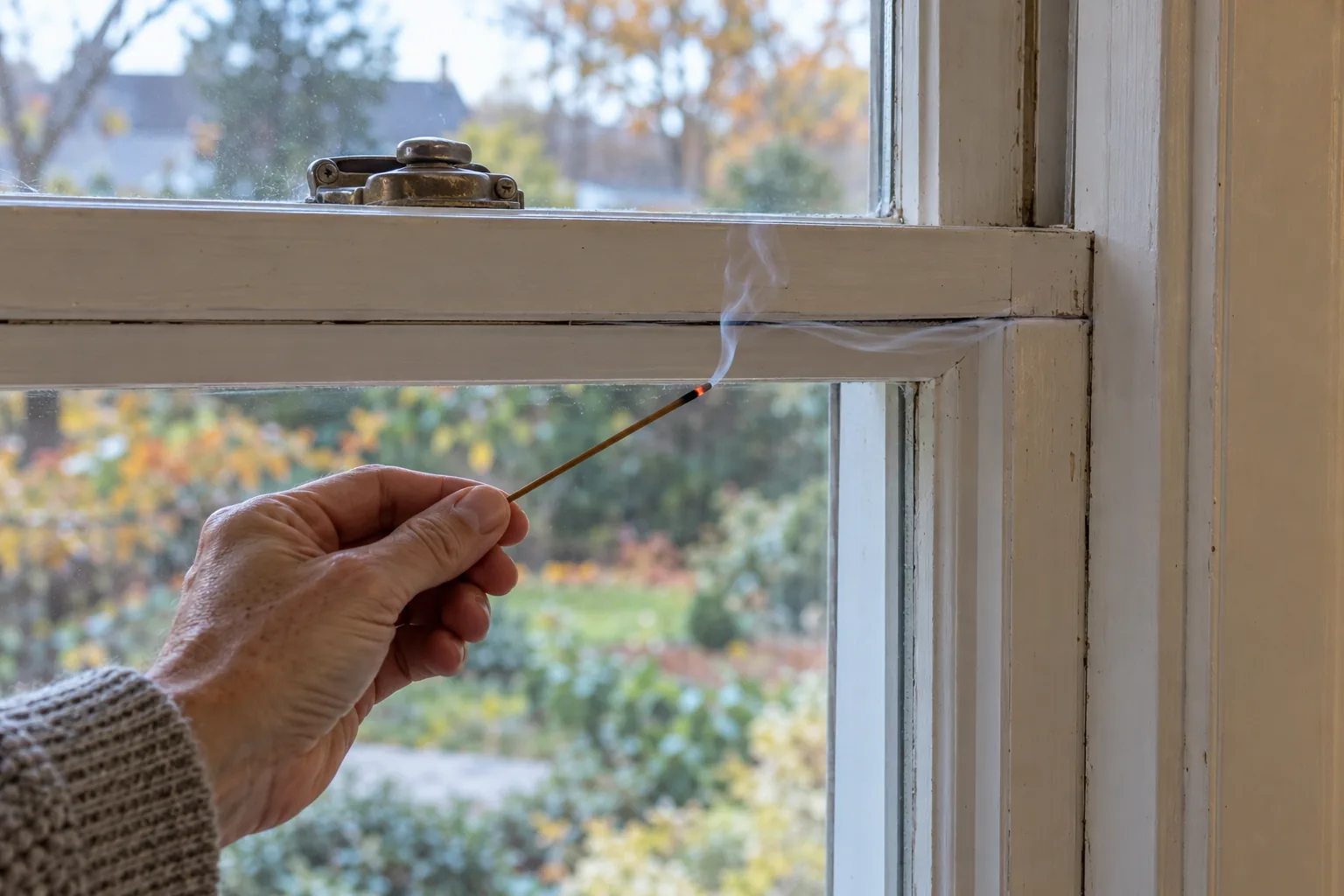
Drafty Windows? Find Which Gap the Air Uses Before You Price New Ones
A drafty window usually leaks through one of three paths, and the fix for each runs from a $5 strip to a new unit. Here's how to tell them apart with a sheet of paper and an incense stick, and when replacement actually pays.
Read guide
Window Leaking When It Rains? Where the Water Shows Up Names the Fix
Water at the sill, the head, or the lower corners points to different failures. Here's how to tell clogged weeps from failed caulk from missing flashing before you buy a tube of anything.
Read guide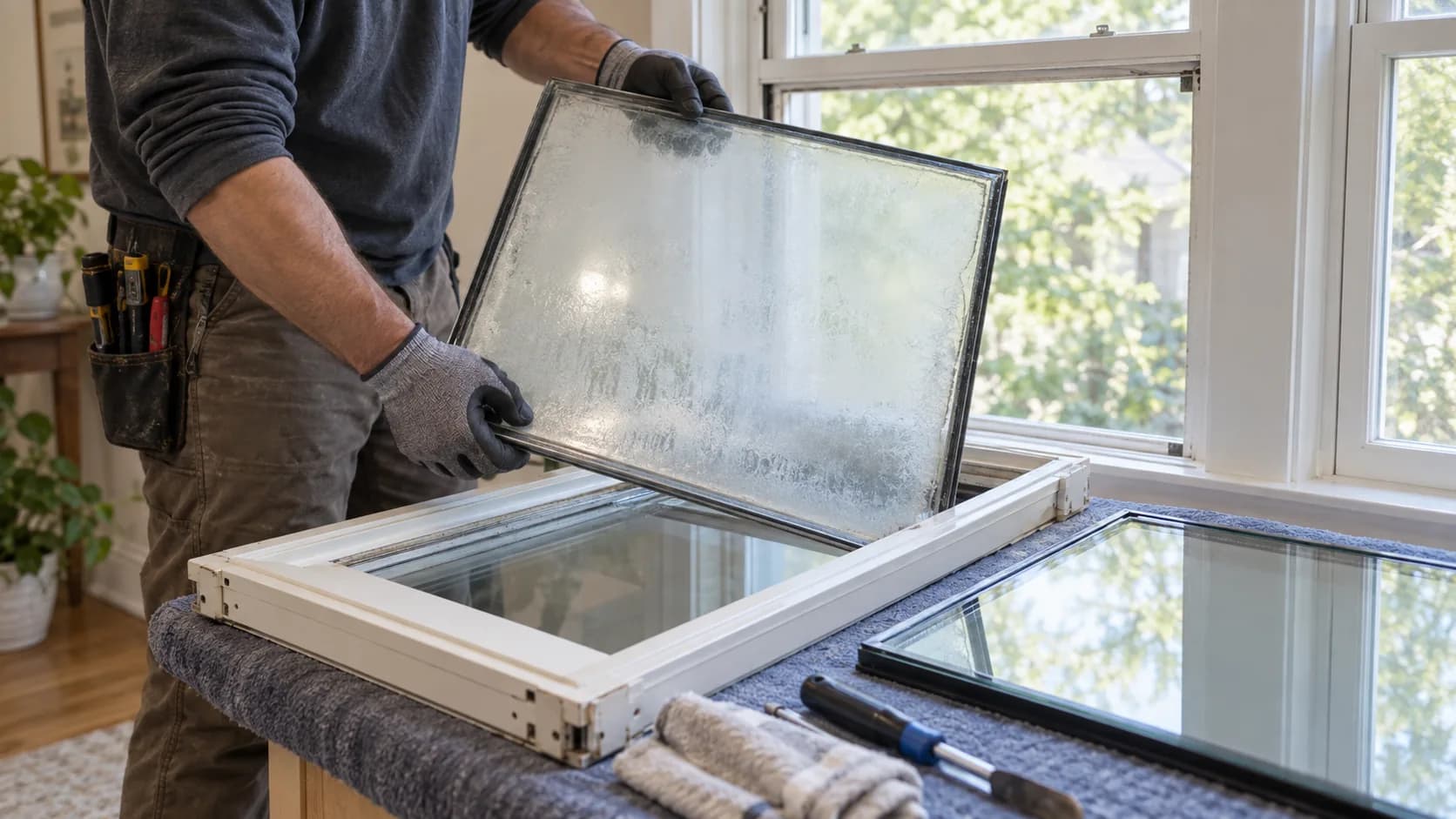
Foggy Window Between the Panes? The Seal Failed, Not the Window
Haze between two panes of glass means the sealed unit is breathing outdoor air. Here's how to tell it apart from ordinary condensation, what the warranty probably owes you, and when glass-only beats a new window.
Read guide