
Why is my window foggy between the panes, and can it be fixed without replacing the window?
Haze between two panes of glass means the sealed unit is breathing outdoor air. Here's how to tell it apart from ordinary condensation, what the warranty probably owes you, and when glass-only beats a new window.
The short answer
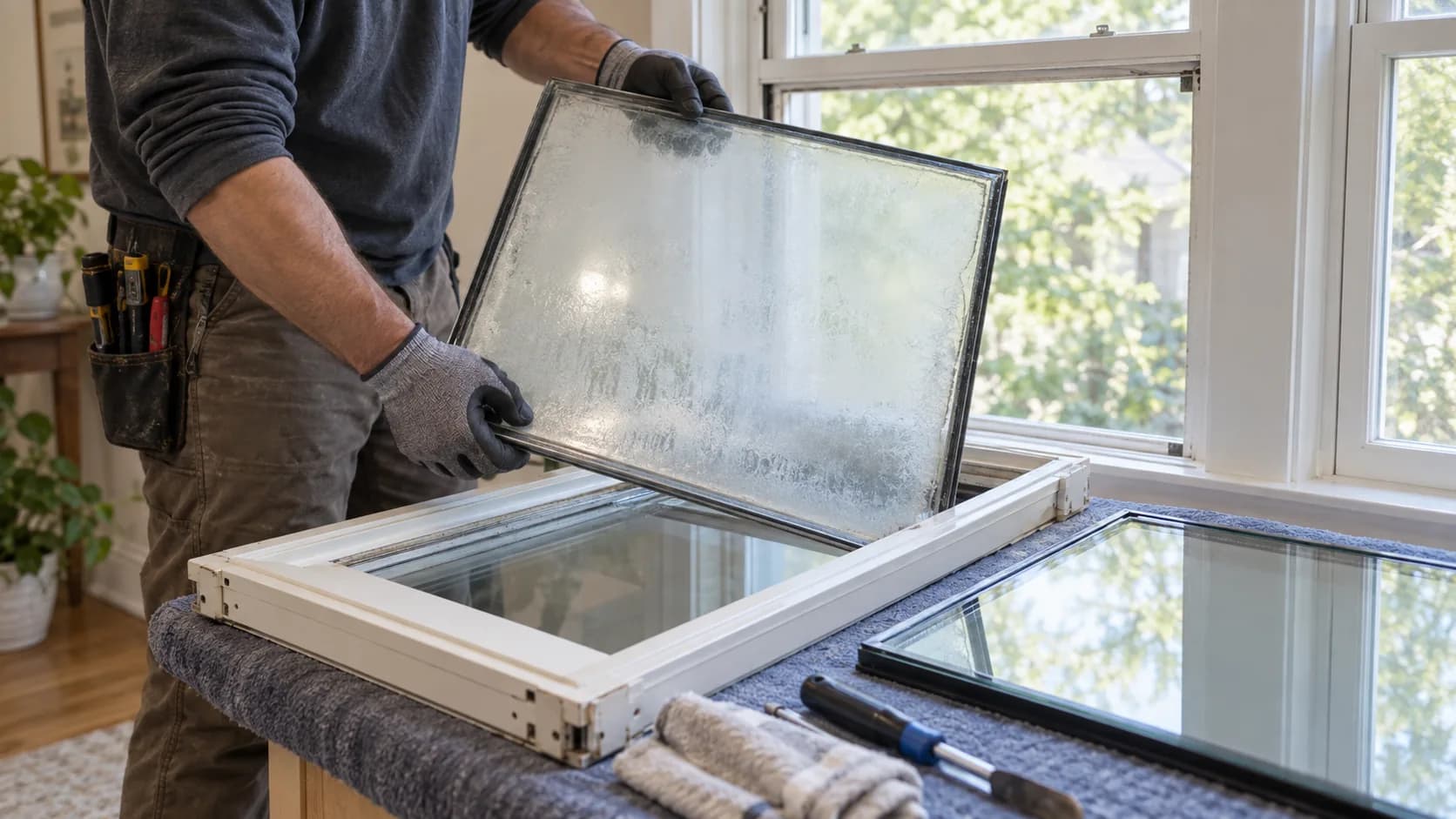
Fog between the panes means the insulated glass unit's perimeter seal has failed and the airspace is now pulling in humid outdoor air. Often the glass alone can be replaced while the existing sash and frame stay in place, which costs far less than a new window. Check the manufacturer's glass-seal warranty first — several major lines cover seal failure for 20 years or longer, and at least one requires you to report the defect within a year of noticing it.
Estimate, not a final quote
This range is for planning. Final pricing depends on an on-site inspection, materials, permits, access, and contractor scope.
Compare written bids
Ask each contractor for the same scope, warranty terms, permit handling, cleanup details, and exclusions before choosing.
Source-backed guidance
Guides use public references and practical cost modeling, then point you to official sources where rules or rebates can change.
This article contains paid links to Amazon. As an Amazon Associate I earn from qualifying purchases.
The haze between your window panes is not dirt, and no amount of cleaning will touch it — it's condensation on a glass surface sealed inside the unit, in an airspace that is supposed to be hermetically sealed and no longer is. The useful part: what failed is the glass package, not the frame, which in a lot of houses means a few hundred dollars per opening instead of a few thousand for new windows.
What actually broke
An insulated glass unit (IGU) is two lites of glass held apart by a perimeter spacer, with a sealant bead wrapping the outside edge and desiccant packed inside the spacer. The spacer's inner face is perforated so that desiccant can pull moisture out of the airspace and hold the dew point far below anything your climate produces. Most double-pane units are filled with argon rather than plain air, because the heavier gas slows heat transfer across the gap.
When the perimeter seal fails, the unit starts breathing. Sun heats the airspace and it expands; overnight it cools and contracts, drawing outdoor air past the breach on every cycle. The desiccant absorbs the incoming moisture until it saturates, and its capacity is finite. Once it's spent, the dew point inside the airspace climbs and the first cold morning writes the result on the glass. The fog you noticed last week is the end of that sequence, not the start — the seal usually let go months or years earlier.
Assume the gas fill is gone too. Manufacturers are blunt about this in their own warranty language: Pella injects argon at manufacture but makes no warranty as to the amount or percentage present, and says argon is known to dissipate over time. Milgard's Full Lifetime Warranty excludes gradual inert-gas dissipation as a natural occurrence — except when the loss is due to seal failure, which is exactly your situation.
Read the condensation before you call anyone
Three different problems put water on a window, and only one of them is a dead IGU.
| Where the moisture is | What it means | What to do |
|---|---|---|
| Inner surface, room side — wipes off | Indoor humidity too high for the glass temperature | Run bath and kitchen fans, check humidifier settings |
| Outer surface — morning dew that burns off | Outer lite running cold because the unit insulates well | Nothing. It's a good sign |
| Between the panes — can't be wiped from either side | Perimeter seal failure | Glass-unit or window replacement |
| Between the panes on hot afternoons only | Early-stage seal failure; the airspace is cycling | Same fix. It gets worse, not better |
| Mineral streaks or permanent haze between the panes | Long-failed unit; deposits have etched the inner surface | Glass is not recoverable. Replace the unit |
| Pooling on the sill or staining drywall below | Flashing or installation leak, not the glass | A different repair — the opening, not the IGU |
ENERGY STAR is direct about the third row: when the seals in a double-pane window fail, you lose insulating power, the glass may go cloudy, and you cannot clean it. Certified windows resist interior condensation better — warm-edge spacers and coatings keep the inner surface warmer — but even good windows fog on the room side in cold weather if indoor humidity runs high enough. Row one is a humidity problem with a humidity fix, and no glazier can help you with it. A digital hygrometer helps you record room humidity before deciding whether the windows need work; it cannot diagnose or repair a failed glass seal.
Cost estimator
Window cost estimator
A budgeting range, not a quote. Move the inputs to see what changes the number.
Estimated national cost
Typical project lands near $6,500.
If a written quote comes in above the high end, that's not automatically wrong — ask what scope is driving it.
What this assumes
- 10 replacement windows selected.
- Vinyl frame material selected.
- Standard professional installation assumed.
What moves this price
- 01Pocket vs. full-frame installation method.
- 02Glass package, grid style, trim, and flashing details.
- 03Window size, access, permit requirements, and local labor rates.
Walk into your quotes ready
This range is your anchor. Bring these to every contractor conversation so you can tell a fair quote from a padded one.
- Is this full-frame or insert (pocket) replacement, and why for my openings?
- What's the frame material and glass package (low-E, gas fill, U-factor)?
- Is removal, disposal, and interior/exterior trim work included?
- What does the warranty cover: glass, frame, and the install labor?
- A per-window price with no mention of frame condition or install type.
- 'Today only' pricing that drops dramatically when you hesitate.
- Vague glass specs, with no U-factor or low-E details in writing.
Check the warranty before you get a quote
This is the step most people skip, and the one that occasionally makes the repair free. Glass seal coverage is separate from the frame warranty and from the installer's labor warranty. Here's what several common lines actually say:
| Product line | What the glass seal warranty covers |
|---|---|
| Andersen 400 Series, factory glazed | 20 years from purchase, against material obstruction of vision from premature glass or organic seal failure |
| Pella vinyl, nonlaminated glass | 20 years from sale, against premature failure or permanent obstruction of vision from seal failure |
| Pella vinyl, laminated glass | 10 years from sale |
| Milgard Full Lifetime Warranty | Obstruction of vision from dust, moisture, or outgassing inside the IGU, for as long as the original owner lives in the home — parts, labor, glass breakage |
| Milgard replacement-product line | 10-year limited warranty |
Two things there matter more than the numbers. Coverage runs from the date of purchase or sale, not installation, and it's generally tied to the original owner — if you bought the house, read the transfer clause first. And report the fog the season you see it: Pella's vinyl warranty requires notice immediately, and in no case more than one year after the defect is discovered or should have been. Sitting on a fogged window for two summers can cost you a claim that was otherwise good for twenty years.
Buying new units rather than claiming on old ones? ENERGY STAR's guidance sets the floor: a glass seal warranty of at least 10 years, preferably 20, specifically covering seal failure.
Glass-only or a whole new window
Here's the flat rule. Frame square and sound, window under roughly 20 years old, one to three units fogged — replace the glass, not the window. Twenty isn't an arbitrary cutoff: it's the glass-seal horizon the major manufacturers warrant to in the table above, and a frame still square at that age is worth keeping. A glazier measures the failed unit, orders a matching IGU, and swaps it into your existing sash; frame, hardware, trim, and flashing stay untouched, which is the whole reason it's cheap.
More than half the house fogged, or frames soft, racked, or rotted — stop buying glass and price the windows. Widespread seal failure usually means every unit came off the same line in the same year, and you'll be buying glass one opening at a time for five years.
| Approach | Typical bid range | When it fits |
|---|---|---|
| Sealed glass unit into existing sash | ~$150–$400 per standard opening | Sound frame, isolated failures |
| Oversized, tempered, laminated, or grid-in-glass unit | ~$400–$800+ per opening | Same, but glass spec drives price |
| New window, pocket/insert install | $300–$900 per vinyl window | Sash or hardware failing too |
| Whole-house replacement | $4,500–$12,000 for 10–15 windows | Widespread failure |
The first two ranges are what glass shops quote in the field, not a published figure from a standards body — treat them as orientation and get written local bids. Unit size, glass thickness, safety glazing, grids, and whether the sash has to leave your house all move them.
Be realistic about what a glass swap buys back: it restores the sealed, gas-filled airspace the window was sold with, but it does not turn a 1998 aluminum-framed window into a modern one. ENERGY STAR certified windows cut heating and cooling bills by an average of up to 13% nationwide versus non-certified products — and that figure describes a whole-window upgrade, frame included.
The code line that changes the quote
Some openings legally require safety glazing, and the shop has to match what's there. Under IRC Section R308.4.3, a fixed or operable window panel counts as a hazardous location when all four of these are true: the exposed pane area is larger than 9 square feet, the bottom edge sits less than 18 inches above the floor, the top edge is more than 36 inches above the floor, and a walking surface is within 36 inches measured horizontally. Big picture windows near a floor are the classic case, and they need tempered or laminated glass.
That hits your wallet twice: safety glazing costs more per square foot than annealed glass, and tempered units are made to order, so lead times stretch. If your fogged unit is a large low window, make the quote name the glazing type instead of letting the shop discover it at install.
Don't let anyone drill your window
There's a service sold as "window defogging" — drill small vents into the IGU, flush the interior surfaces, install breather ports. It addresses the appearance. It does not restore the perimeter seal or the gas fill, and the airspace stays open to outdoor air afterward. Read your glass warranty before you agree to it: altering the unit is a reliable way to end coverage that might otherwise have replaced the glass outright.
Two jobs belong to a pro regardless of price. A cracked or shattered pane is a glazier's call. And any unit above the first floor, or any large picture window, is a two-person lift with a real fall hazard attached — a sash coming out of a second-story opening is not a ladder job.
One last thing, because bids still get it wrong: there's no federal tax credit waiting for you here. The Section 25C Energy Efficient Home Improvement Credit does not apply to property placed in service after December 31, 2025, following its accelerated termination under Public Law 119-21. If a proposal nets a $600 window credit against a 2026 job, that line is wrong. And per the FTC's contractor guidance, get a written estimate listing the work, materials, completion date, and price, and don't pay the whole job up front.
If the fog turns out to be the start of a bigger conversation, our full-frame vs. pocket comparison covers what changes when the frame comes out, and the line-by-line quote guide says what belongs on the page.
Research sources
- ENERGY STAR: Is it Time to Replace Your Windows? — failed seals cause loss of insulating power and cloudy glass that cannot be cleaned.
- ENERGY STAR: Learn Helpful Tips for Buying and Installing Replacement Windows — recommended warranty minimums, including a glass seal warranty of at least 10 years, preferably 20.
- ENERGY STAR: Residential Windows, Doors & Skylights — certified windows reduce heating and cooling costs by an average of up to 13% versus non-certified products.
- ENERGY STAR: Home Performance with ENERGY STAR — Windows flyer (PDF) — cloudy or moisture-filled double-pane windows indicate failed sealing technology.
- ICC: 2021 IRC Section R308.4.3, Glazing in Windows — the four conditions defining a hazardous location requiring safety glazing.
- ICC: 2021 IRC Section R308, Glazing — glazing requirements for hazardous locations.
- Andersen: 400 Series Windows & Patio Doors Limited Warranty (PDF) — 20-year coverage against material obstruction of vision from glass or organic seal failure.
- Pella: Vinyl Window & Patio Door Limited Warranty (PDF) — 20 years on nonlaminated glass seal failure, 10 on laminated, no warranty on argon content, and the one-year notice requirement.
- Milgard: Full Lifetime Warranty, effective January 1, 2026 (PDF) — IGU obstruction-of-vision remedy, parts and labor, and the inert-gas exclusion carve-out for seal failure.
- Milgard: Replacement Product 10-Year Limited Warranty (PDF) — coverage term for the replacement product line.
- IRS: Energy Efficient Home Improvement Credit — no credit for property placed in service after December 31, 2025.
- IRS: FAQs for modification of sections 25C, 25D and others under Public Law 119-21 — accelerated termination of the Section 25C credit.
- FTC Consumer Advice: How To Avoid a Home Improvement Scam — written estimate contents and payment guidance.
Compare local quotes
Ready to compare real quotes from window installer pros?
Use your estimate as a budget anchor, then compare written contractor bids against it before you decide. Free request, no obligation.
Disclosure: this button opens a third-party quote-matching service. If you submit its form, its contact and privacy terms apply, and SaveBricks may earn a referral fee. It never changes the prices you're quoted, and our cost ranges are set independently — see how we estimate.
The cost guide
Get the monthly cost briefing
One useful email a month: project cost ranges, contractor red flags, and practical ways to avoid an inflated quote.
No spam. Unsubscribe any time. Read our privacy policy.
More windows guides
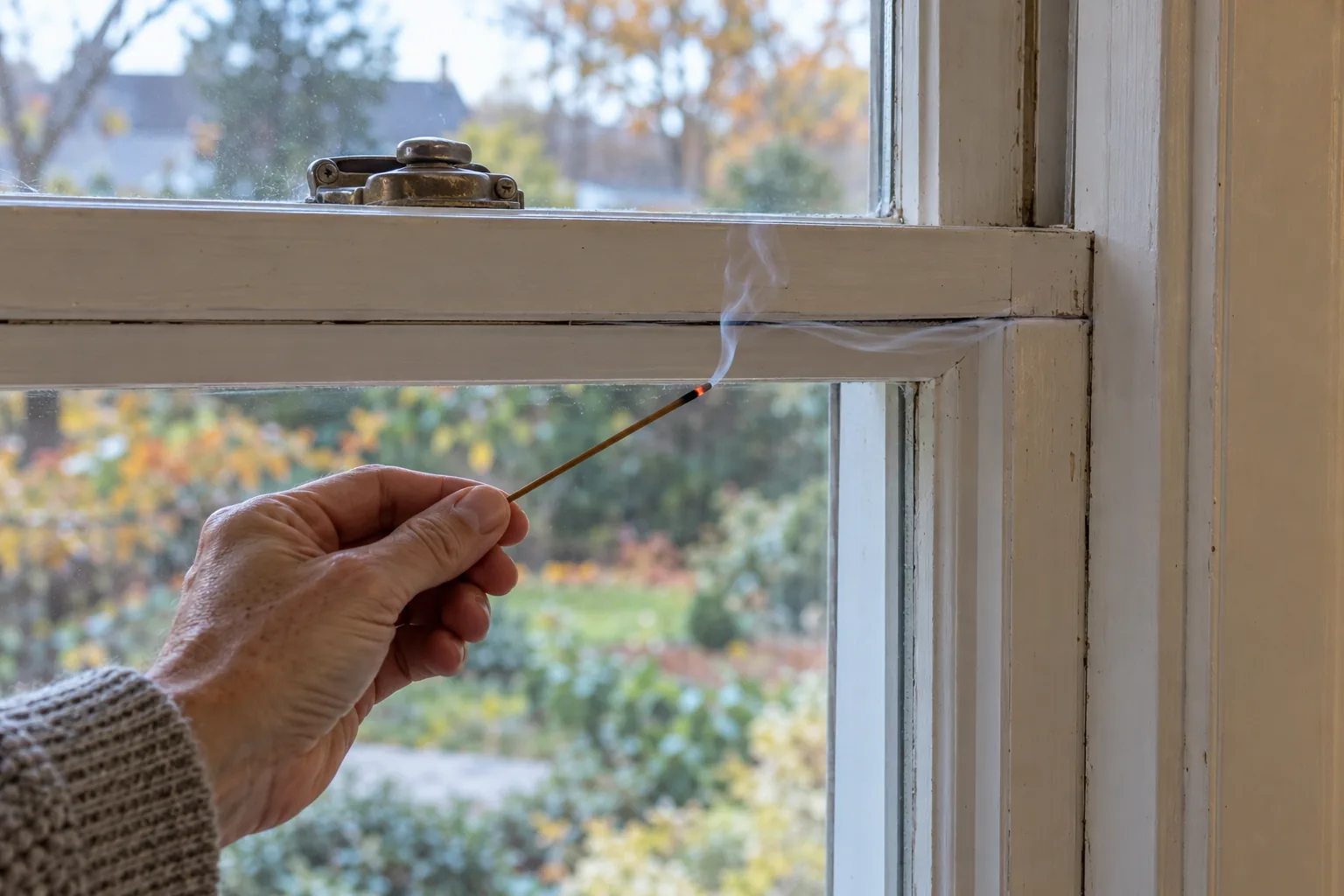
Drafty Windows? Find Which Gap the Air Uses Before You Price New Ones
A drafty window usually leaks through one of three paths, and the fix for each runs from a $5 strip to a new unit. Here's how to tell them apart with a sheet of paper and an incense stick, and when replacement actually pays.
Read guide
Window Won't Stay Up? Price the Balance Before You Price a Window
A double-hung sash that slides down on its own almost always means a failed balance, a part Andersen lists from about $21. Here's how to tell which balance system you have, what the fix costs, and when the window itself is the problem.
Read guide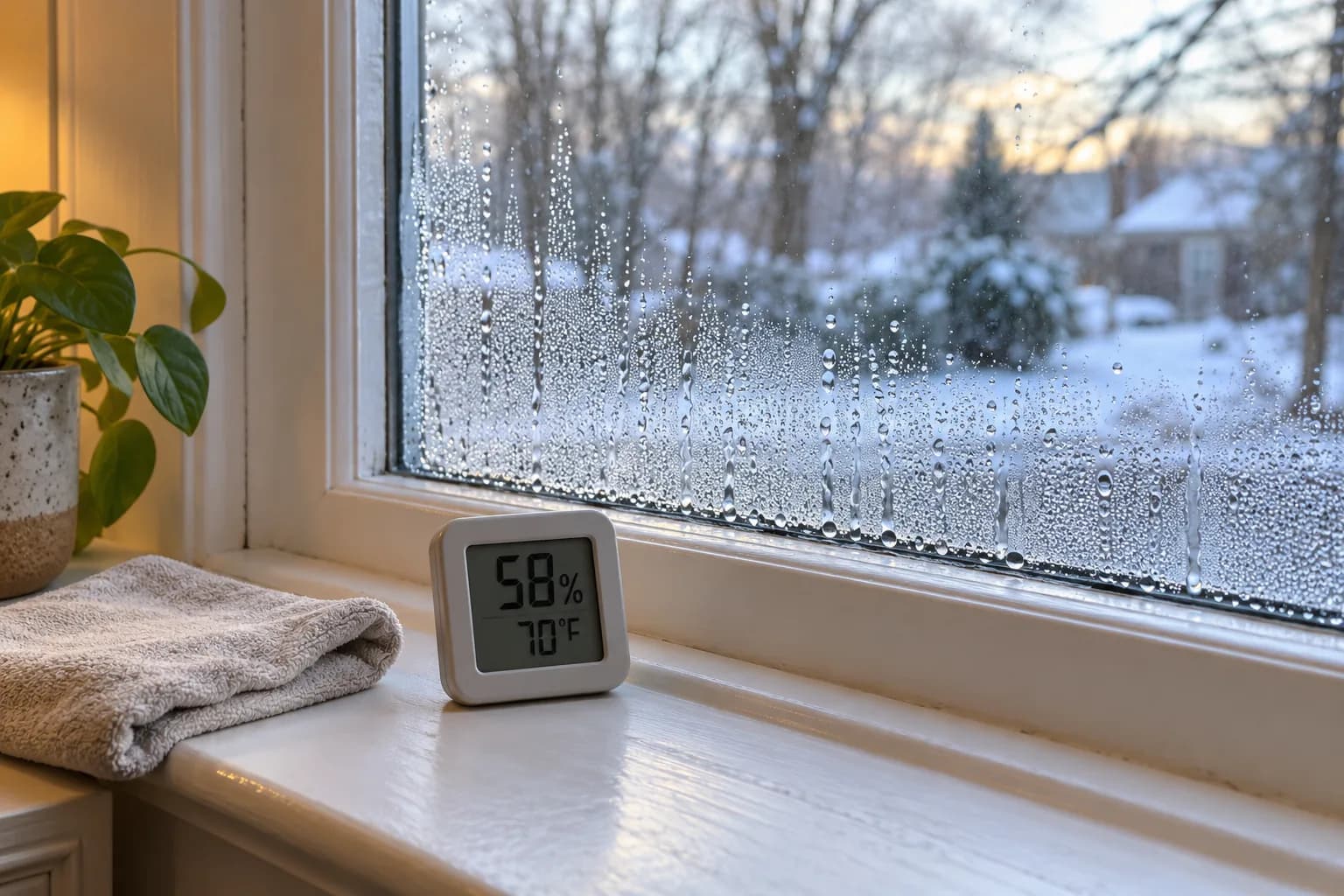
Condensation on the Inside of Your Windows? Read the Humidity Before the Glass
Water on the room side of the glass is usually a humidity number, not a window defect. Here's the ceiling for each outdoor temperature, where the moisture comes from, and when the window really is the problem.
Read guide