
What should a realistic whole-house window replacement budget include?
How much does window replacement really cost in 2026? We break down average prices by material, size, and installation type so you can build a realistic budget.
The short answer
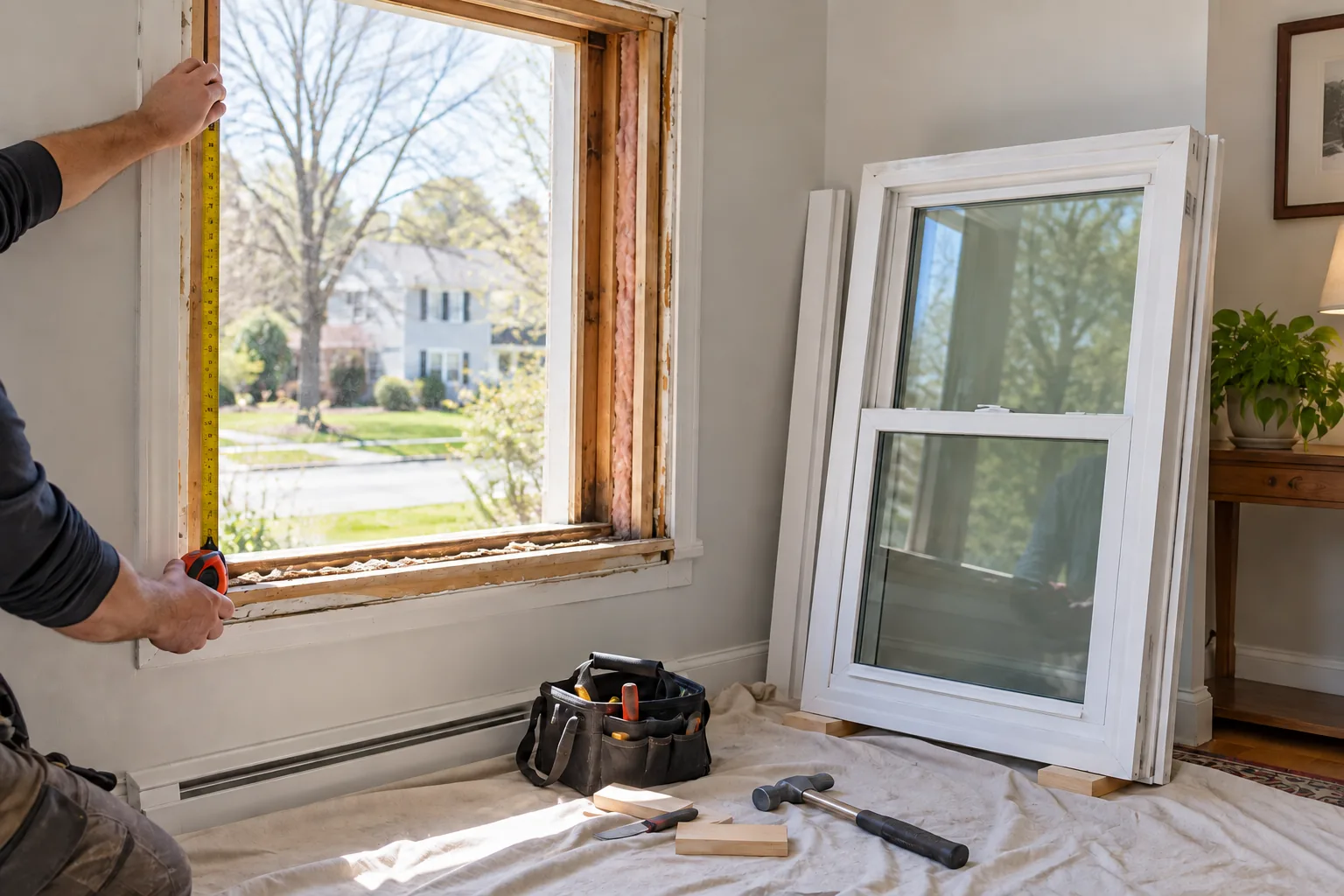
Budget for the exact window type and glass package, removal, opening preparation, insulation and flashing, interior and exterior trim, disposal, permits where required, and repair of concealed rot. Insert replacements can preserve sound frames; full-frame work costs more because it exposes and rebuilds the opening.
Estimate, not a final quote
This range is for planning. Final pricing depends on an on-site inspection, materials, permits, access, and contractor scope.
Compare written bids
Ask each contractor for the same scope, warranty terms, permit handling, cleanup details, and exclusions before choosing.
Source-backed guidance
Guides use public references and practical cost modeling, then point you to official sources where rules or rebates can change.
This article contains paid links to Amazon. As an Amazon Associate I earn from qualifying purchases.
Window quotes swing wider than almost any other home project: the same ten-window job can come back at $4,500 or $12,000. Here's what homeowners are actually paying in 2026, and what moves the number.
Average Window Replacement Costs by Material
Material choice is the single biggest cost driver for window replacement projects.
| Material | Cost Per Window (installed) | Lifespan |
|---|---|---|
| Vinyl | $300 – $800 | 20–40 years |
| Fiberglass | $600 – $1,500 | 40–70 years |
| Wood | $800 – $2,000+ | 30–60 years |
| Aluminum | $400 – $1,200 | 20–30 years |
Vinyl Windows: Best Value
Vinyl is the most popular choice for American homeowners for good reason. It's low-maintenance, offers excellent insulation, and doesn't warp or rot. Most homeowners replacing a full house of windows (10–15 windows) in vinyl spend between $4,500 and $12,000 total, installed.
Fiberglass Windows: Best Long-Term Choice
Fiberglass costs more upfront and its low expansion rate can suit large openings or climates with broad temperature swings. Whether the premium pays back depends on the full window specification, installation quality, energy prices, and how long you keep the home; do not treat a fixed payback period as guaranteed.
Wood Windows: Premium Aesthetic
Wood remains the gold standard for historical homes and high-end renovations. They require more maintenance (painting or staining every few years) but can last decades when properly cared for.
Key Factors That Change the Price
Beyond material, several other variables affect your final quote:
- Number of windows: Most contractors offer a per-window price that decreases as quantity increases.
- Window size: Larger windows (like picture windows or bay windows) cost significantly more than standard double-hungs.
- Installation type: "Pocket" or "insert" replacements (keeping the existing frame) are cheaper than full-frame replacements.
- Your location: Labor rates vary significantly by city and region. The estimator is a national planning tool; use local written bids to measure the market adjustment.
- Energy package: Triple-pane glass, Low-E coatings, and gas fills (argon/krypton) add cost but improve thermal performance.
Insert and full-frame work are different projects
An insert or pocket replacement fits a new unit inside an existing frame that is square, dry, and suitable to remain. It usually disturbs less trim and can reduce labor, but the retained frame reduces the glass opening and leaves concealed conditions largely undisturbed.
A full-frame replacement removes the old frame to the rough opening. It allows the installer to inspect the opening, rebuild flashing and insulation, and change the unit size or style. It can also require new interior casing, exterior trim, siding or stucco work, paint, and repair of discovered rot.
Ask every contractor to label each opening as insert or full-frame. A $650 insert bid and a $1,100 full-frame bid are not competing prices for the same scope.
Build a room-by-room worksheet
Window count alone is too crude for a reliable budget. Use one row per opening:
Keep a tape measure handy for accessible opening notes and label each room consistently. These are preliminary measurements for your worksheet; require the installer to verify the order dimensions and any safety or egress requirements.
| Opening | Operation and size | Install type | Glass/performance | Trim and finish | Quoted price |
|---|---|---|---|---|---|
| Living room | Picture, measured opening | ||||
| Bedroom 1 | Double-hung, egress check | ||||
| Kitchen | Casement over counter |
Record tempered-glass locations, egress requirements, grids, screens, hardware finish, and whether the interior needs stain-grade or paint-grade trim. Those details explain price differences better than brand names alone.
What a complete proposal should state
- Manufacturer, product line, operation, color, and quantity.
- Full-frame or insert installation for each opening.
- U-factor, solar heat gain coefficient, visible transmittance, and air-leakage rating for the exact configuration.
- Removal, disposal, opening preparation, insulation, pan or flashing method, sealants, and water-management details.
- Interior casing, exterior trim, siding or stucco repair, paint or stain, and cleanup.
- Unit price or approval process for concealed rot and framing repairs.
- Permit responsibility, installation schedule, payment milestones, and product and labor warranties.
Cost estimator
Window cost estimator
A budgeting range, not a quote. Move the inputs to see what changes the number.
Estimated national cost
Typical project lands near $6,500.
If a written quote comes in above the high end, that's not automatically wrong — ask what scope is driving it.
What this assumes
- 10 replacement windows selected.
- Vinyl frame material selected.
- Standard professional installation assumed.
What moves this price
- 01Pocket vs. full-frame installation method.
- 02Glass package, grid style, trim, and flashing details.
- 03Window size, access, permit requirements, and local labor rates.
Walk into your quotes ready
This range is your anchor. Bring these to every contractor conversation so you can tell a fair quote from a padded one.
- Is this full-frame or insert (pocket) replacement, and why for my openings?
- What's the frame material and glass package (low-E, gas fill, U-factor)?
- Is removal, disposal, and interior/exterior trim work included?
- What does the warranty cover: glass, frame, and the install labor?
- A per-window price with no mention of frame condition or install type.
- 'Today only' pricing that drops dramatically when you hesitate.
- Vague glass specs, with no U-factor or low-E details in writing.
Efficiency Research to Check Before You Buy
The Department of Energy recommends choosing windows based on climate, orientation, U-factor, solar heat gain coefficient, and air leakage. That means the best window in Phoenix may not be the best window in Boston. ENERGY STAR's product guidance can help you compare certified windows by climate zone.
Federal tax credit rules also change. Check the IRS Energy Efficient Home Improvement Credit page before assuming that a window or door project qualifies in the current tax year. For a 2026 installation, do not subtract the expired Section 25C credit.
Research sources
- ENERGY STAR: Residential Windows, Doors & Skylights
- ENERGY STAR: Storm Windows
- NFRC: Window Energy Performance Ratings. Independent label definitions for U-factor, solar heat gain, visible transmittance, condensation resistance, and air leakage.
- IRS: Energy Efficient Home Improvement Credit
Compare the final number without losing scope
- Get at least three written proposals: Normalize installation type, performance ratings, trim, flashing, repair allowances, and warranty before comparing totals.
- Ask for alternates: Price the same openings with one controlled change, such as vinyl versus fiberglass or double-pane versus triple-pane, so the premium is visible.
- Use payment milestones: Tie payments to ordering, delivery, installation, inspection, and completion rather than a large unexplained deposit.
- Verify incentives first: ENERGY STAR-certified products may qualify for some utility programs, but eligibility and funding vary. Get written confirmation before counting a rebate.
- Inspect before final payment: Operate every sash and lock, check screens and finishes, review sealant and flashing details that remain visible, and list corrections in writing.
Compare local quotes
Ready to compare real quotes from windows pros?
Use your estimate as a budget anchor, then compare written contractor bids against it before you decide. Free request, no obligation.
Disclosure: this button opens a third-party quote-matching service. If you submit its form, its contact and privacy terms apply, and SaveBricks may earn a referral fee. It never changes the prices you're quoted, and our cost ranges are set independently — see how we estimate.
The cost guide
Get the monthly cost briefing
One useful email a month: project cost ranges, contractor red flags, and practical ways to avoid an inflated quote.
No spam. Unsubscribe any time. Read our privacy policy.
More windows guides

Window Won't Stay Up? Price the Balance Before You Price a Window
A double-hung sash that slides down on its own almost always means a failed balance, a part Andersen lists from about $21. Here's how to tell which balance system you have, what the fix costs, and when the window itself is the problem.
Read guide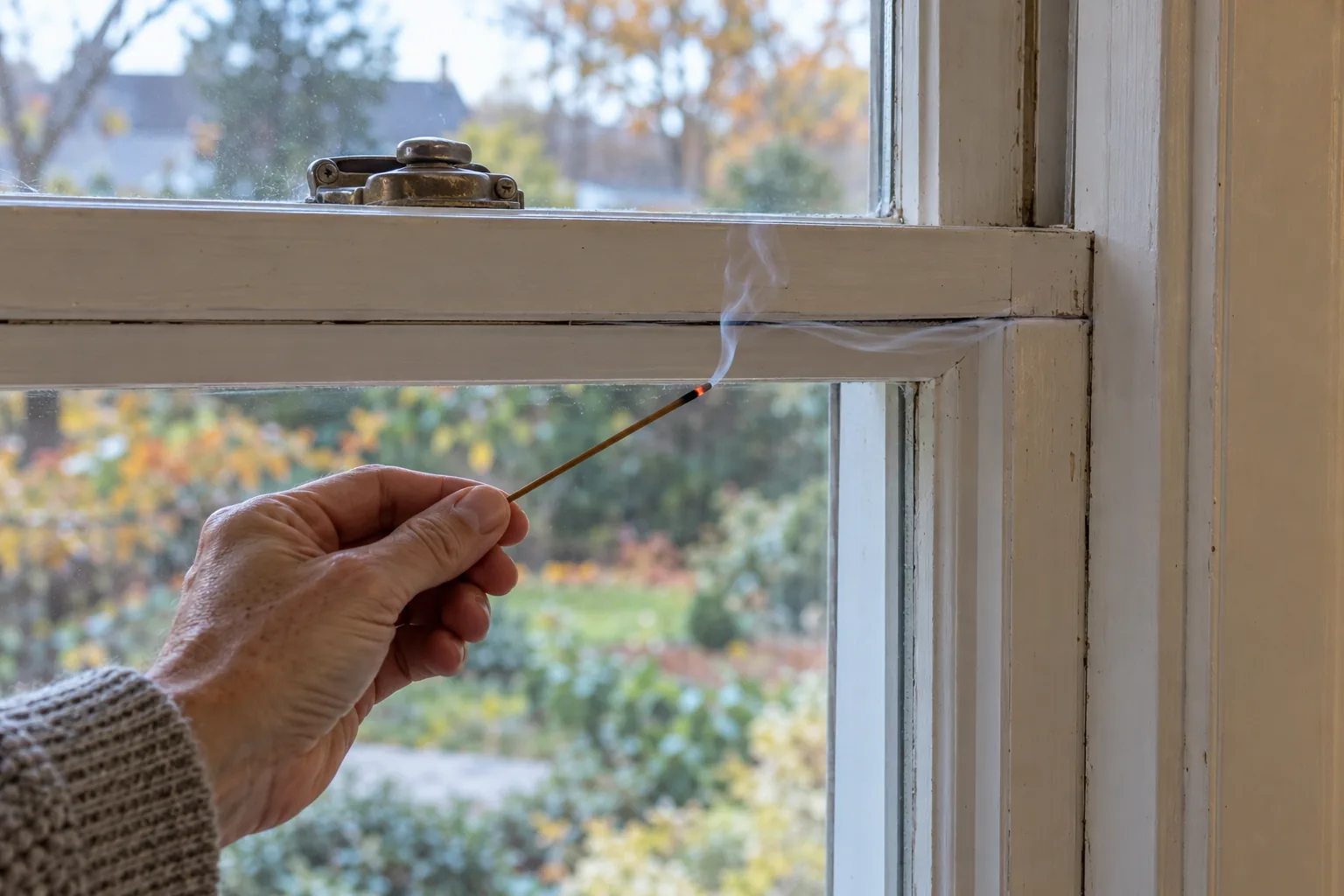
Drafty Windows? Find Which Gap the Air Uses Before You Price New Ones
A drafty window usually leaks through one of three paths, and the fix for each runs from a $5 strip to a new unit. Here's how to tell them apart with a sheet of paper and an incense stick, and when replacement actually pays.
Read guide
Window Leaking When It Rains? Where the Water Shows Up Names the Fix
Water at the sill, the head, or the lower corners points to different failures. Here's how to tell clogged weeps from failed caulk from missing flashing before you buy a tube of anything.
Read guide