
Is fiberglass worth paying more for than vinyl replacement windows?
Compare vinyl and fiberglass window quotes by frame construction, NFRC ratings, installation scope, finish options, warranty, and installed price.
The short answer
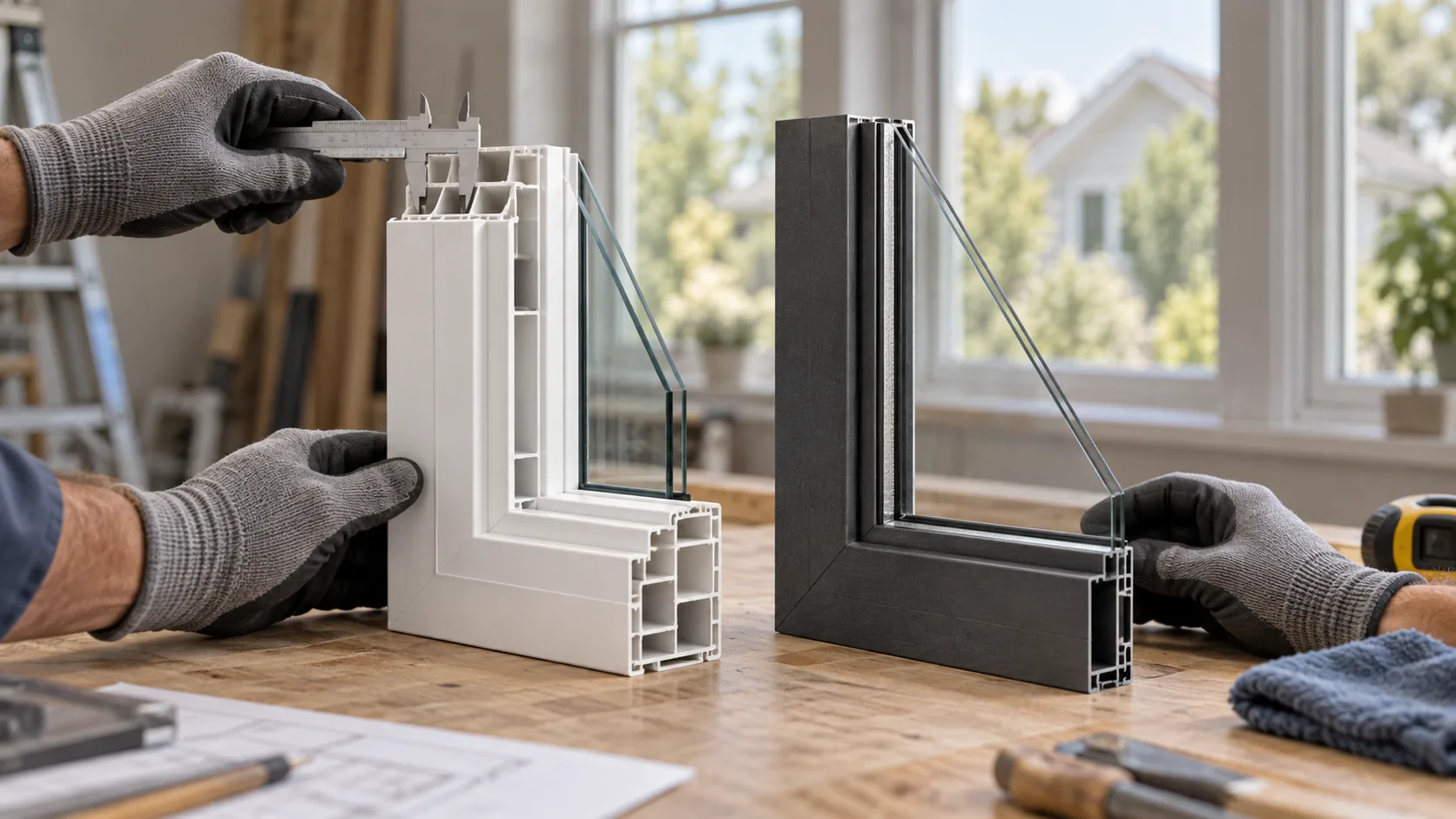
It can be, particularly when you value slimmer frame profiles, paintable finishes, or dimensional stability for large openings. Vinyl usually has the lower upfront price and wider installer availability. Compare the exact NFRC ratings, installation method, glass package, warranty, and total installed premium instead of assuming frame material alone determines performance.
Estimate, not a final quote
This range is for planning. Final pricing depends on an on-site inspection, materials, permits, access, and contractor scope.
Compare written bids
Ask each contractor for the same scope, warranty terms, permit handling, cleanup details, and exclusions before choosing.
Source-backed guidance
Guides use public references and practical cost modeling, then point you to official sources where rules or rebates can change.
This article contains paid links to Amazon. As an Amazon Associate I earn from qualifying purchases.
When shopping for replacement windows, you'll quickly land on the same question every homeowner faces: is fiberglass worth the premium over vinyl? The honest answer depends on your climate, your timeline, and what you're optimizing for.
The Price Gap
Fiberglass commonly carries a meaningful premium, but the percentage changes with brand, operation, glass, finish, size, and installer. Use this planning comparison for a standard double-hung opening, then replace it with like-for-like written quotes:
| Type | Window Cost | Installation | Total Per Window |
|---|---|---|---|
| Vinyl (standard) | $180 – $450 | $100 – $200 | ~$300 – $650 |
| Fiberglass (standard) | $350 – $900 | $100 – $200 | ~$450 – $1,100 |
For 12 openings, the planning table implies a premium that could range from roughly $1,800 to $5,400. That arithmetic is useful only when both proposals use the same opening sizes, operation, glass package, installation type, trim, and warranty.
Where Fiberglass Wins
1. Frame stability
Fiberglass frames generally change dimension less with temperature than vinyl. That can matter on large units and broad temperature swings, but it does not guarantee that an insulated-glass seal will last longer. Glass design, fabrication, drainage, installation, exposure, and maintenance also affect service life.
2. Finish options
Many fiberglass lines can be painted or ordered with durable factory finishes. Vinyl color choices are usually more limited, and field painting may conflict with manufacturer instructions or warranty terms.
3. Frame profile
Some fiberglass lines use slimmer profiles for a given opening. Compare the actual glass dimensions on the drawings; a material category does not ensure more visible glass in every product.
Where Vinyl Wins
1. Upfront Cost
Vinyl costs less. For homeowners on a budget, replacing all windows in vinyl is far more accessible than a fiberglass project.
2. Finish maintenance
Vinyl does not normally require painting. Both materials still need clean tracks, working drainage paths, maintained perimeter sealant, and attention to hardware and screens.
3. Availability and service
Vinyl is widely offered in many markets, which can make installer comparisons and replacement parts easier. Check local product support rather than assuming every national warranty is equally convenient to use.
Compare performance on the NFRC label
Frame material is only one part of a window. The National Fenestration Rating Council label lets you compare complete products with independent ratings.
| Rating | What it describes | How to use it |
|---|---|---|
| U-factor | Heat transfer through the complete window | Lower values indicate less heat transfer; compare products for the same climate and application |
| Solar heat gain coefficient | Solar heat admitted through the window | Lower or higher may be preferable depending on climate, orientation and shading |
| Visible transmittance | Daylight transmitted | Compare with tint, coatings and privacy needs |
| Air leakage | Air passing through the product under test conditions | Lower values indicate less leakage through the tested unit |
| Condensation resistance | Relative resistance to condensation | Higher values indicate greater resistance under the rating method |
Ask for the label values for the exact size and configuration in the proposal. A manufacturer's best-performing casement is not evidence for every double-hung, picture, or sliding unit in the same product family.
Installation can outweigh the frame decision
An insert replacement keeps the existing frame. A full-frame replacement exposes the rough opening so flashing, insulation, rot, and alignment can be addressed. If one bid is insert vinyl and the other is full-frame fiberglass, most of the price gap may come from installation scope rather than material.
For the glass-area comparison, use a tape measure to note the visible glass in safely accessible existing windows. Ask each bidder for the proposed unit's corresponding dimensions so a slimmer frame claim can be checked against the actual configuration.
For each opening, make both proposals state:
- Insert or full-frame installation.
- Removal, disposal, and protection of finishes.
- Opening preparation, sill pan or flashing method, insulation, and perimeter sealant.
- Interior casing and exterior trim material and finish.
- Unit price and approval process for concealed rot.
- Product warranty and separate installation-workmanship warranty.
- Who services a sash, glass unit, lock, or water leak after installation.
What the Efficiency Labels Mean
Do not compare frames by material alone. The Department of Energy recommends comparing window performance metrics such as U-factor, solar heat gain coefficient, visible transmittance, and air leakage. ENERGY STAR certification can help narrow the search, but the right choice still depends on climate zone, window orientation, shade, and installation quality.
Cost estimator
Window cost estimator
A budgeting range, not a quote. Move the inputs to see what changes the number.
Estimated national cost
Typical project lands near $6,500.
If a written quote comes in above the high end, that's not automatically wrong — ask what scope is driving it.
What this assumes
- 10 replacement windows selected.
- Vinyl frame material selected.
- Standard professional installation assumed.
What moves this price
- 01Pocket vs. full-frame installation method.
- 02Glass package, grid style, trim, and flashing details.
- 03Window size, access, permit requirements, and local labor rates.
Walk into your quotes ready
This range is your anchor. Bring these to every contractor conversation so you can tell a fair quote from a padded one.
- Is this full-frame or insert (pocket) replacement, and why for my openings?
- What's the frame material and glass package (low-E, gas fill, U-factor)?
- Is removal, disposal, and interior/exterior trim work included?
- What does the warranty cover: glass, frame, and the install labor?
- A per-window price with no mention of frame condition or install type.
- 'Today only' pricing that drops dramatically when you hesitate.
- Vague glass specs, with no U-factor or low-E details in writing.
Work through the premium with real bids
Assume two normalized proposals for 12 full-frame windows:
| Option | Installed total | Difference |
|---|---|---|
| Vinyl, same glass and scope | $10,200 | — |
| Fiberglass, same glass and scope | $13,800 | $3,600 |
The fiberglass premium is $300 per opening. Now ask what the $3,600 buys: a preferred finish, a slimmer profile, different hardware, stronger warranty terms, or performance ratings that actually improve the design? If the salesperson cannot identify the differences in the written specifications, the premium is not yet justified.
Run the comparison again if the glass, install type, trim, or warranty differs. “Same number of windows” does not mean same project.
Decision guide
- Price vinyl first when: upfront budget is the priority, local choices are broad, and a suitable product meets the needed NFRC ratings and design requirements.
- Price fiberglass alongside it when: paintable finishes, narrower profiles, large units, or frame stability are important enough to measure against the installed premium.
- Pause either proposal when: the contractor cannot provide exact product ratings, the installation method is vague, rot is open-ended, or warranty responsibility is unclear.
ENERGY STAR certification can help screen products for a climate zone, but it does not replace installation details or a like-for-like bid comparison. Verify current federal, state, and utility rules before assuming an incentive applies. For the whole-project budget, use the window replacement cost guide; for opening scope, compare insert and full-frame replacement.
Research sources
- NFRC: Residential Product Certification. Independent ratings and label verification for complete window products.
- ENERGY STAR: Residential Windows, Doors & Skylights. Climate-zone product guidance.
- DOE: Update or Replace Windows. Window condition, performance, and replacement considerations.
Compare local quotes
Ready to compare real quotes from windows pros?
Use your estimate as a budget anchor, then compare written contractor bids against it before you decide. Free request, no obligation.
Disclosure: this button opens a third-party quote-matching service. If you submit its form, its contact and privacy terms apply, and SaveBricks may earn a referral fee. It never changes the prices you're quoted, and our cost ranges are set independently — see how we estimate.
The cost guide
Get the monthly cost briefing
One useful email a month: project cost ranges, contractor red flags, and practical ways to avoid an inflated quote.
No spam. Unsubscribe any time. Read our privacy policy.
More windows guides
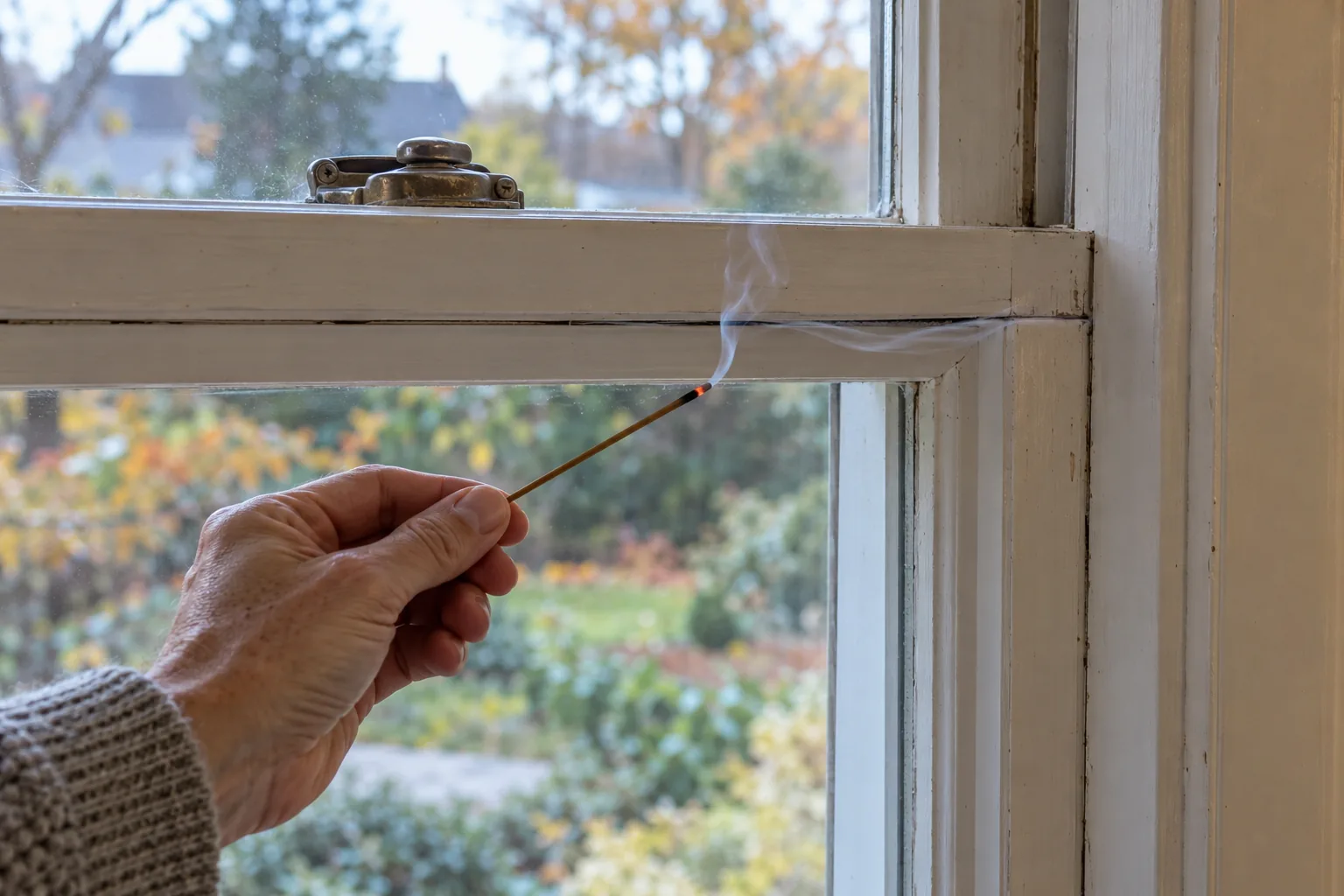
Drafty Windows? Find Which Gap the Air Uses Before You Price New Ones
A drafty window usually leaks through one of three paths, and the fix for each runs from a $5 strip to a new unit. Here's how to tell them apart with a sheet of paper and an incense stick, and when replacement actually pays.
Read guide
Window Won't Stay Up? Price the Balance Before You Price a Window
A double-hung sash that slides down on its own almost always means a failed balance, a part Andersen lists from about $21. Here's how to tell which balance system you have, what the fix costs, and when the window itself is the problem.
Read guide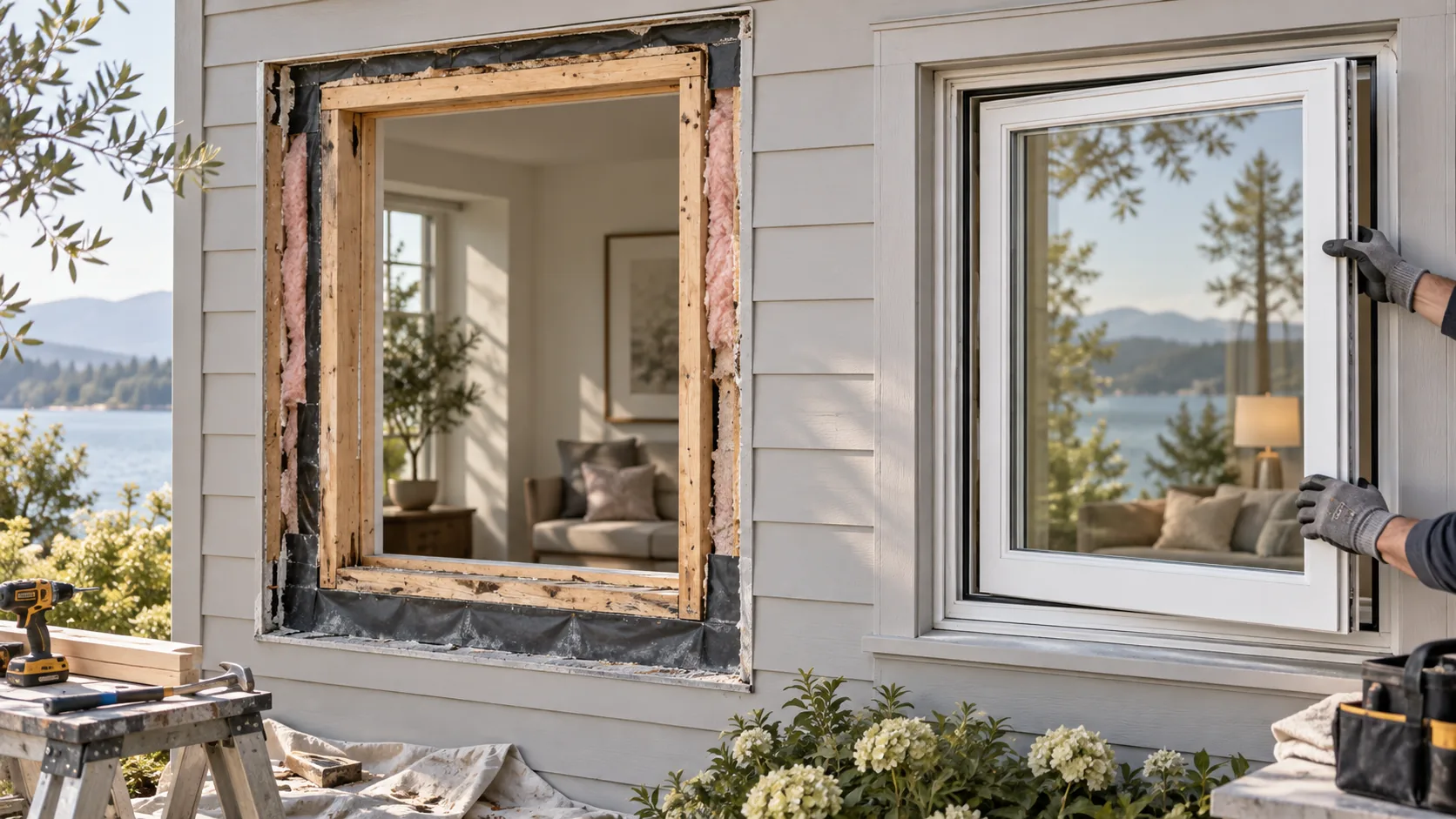
Full-Frame vs Pocket Window Replacement: Cost and When Each Makes Sense
Compare full-frame and pocket window replacement costs, hidden labor differences, energy performance factors, and questions to ask before hiring an installer.
Read guide