
What is the cost difference between pocket and full-frame window replacement?
Compare full-frame and pocket window replacement costs, hidden labor differences, energy performance factors, and questions to ask before hiring an installer.
The short answer
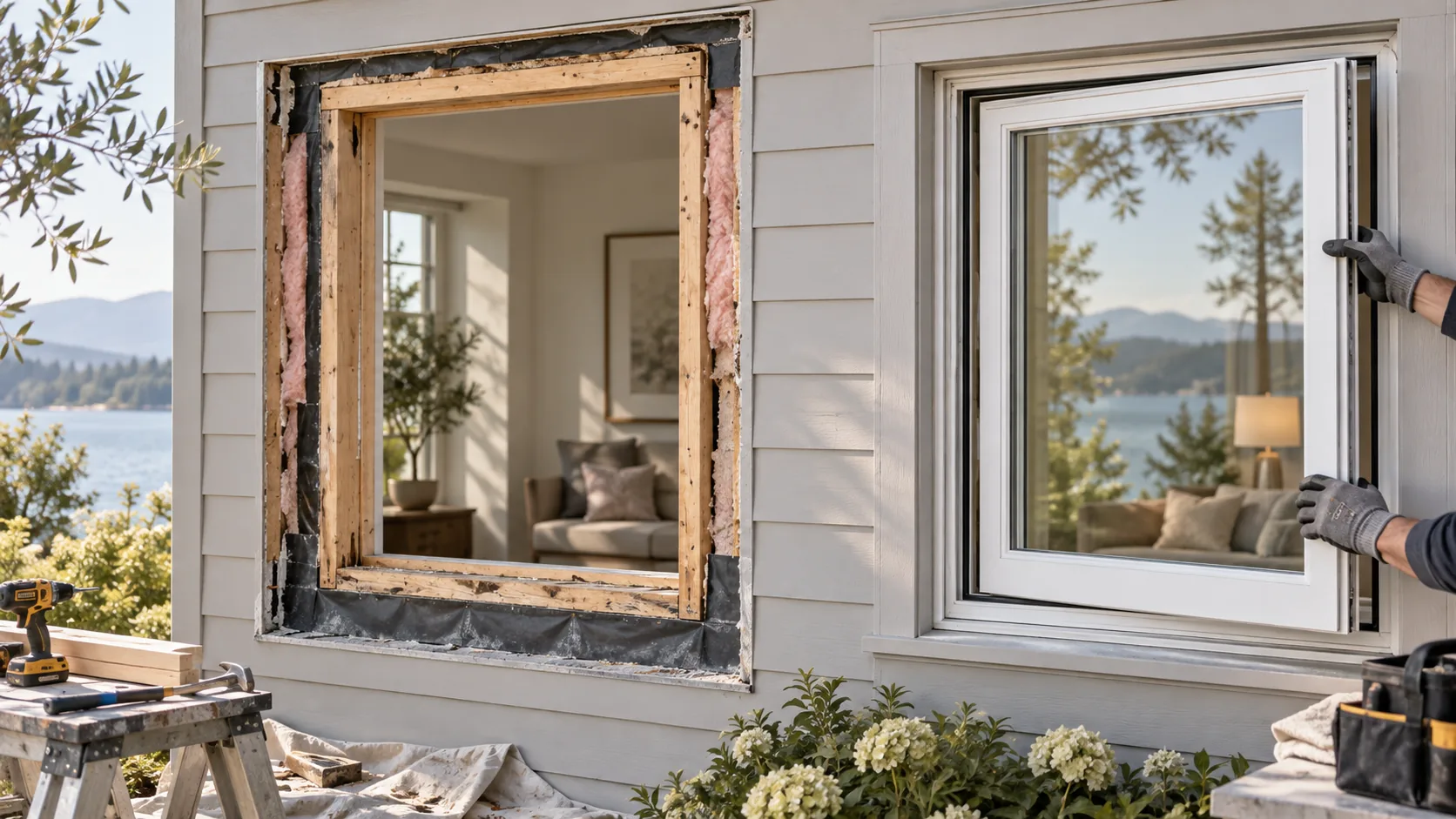
Pocket replacement commonly uses the lower end of the installed window range because the existing frame and trim stay. Full-frame work often adds several hundred dollars per opening for demolition, flashing, insulation, and new trim—and more when rot or siding repairs are uncovered.
Estimate, not a final quote
This range is for planning. Final pricing depends on an on-site inspection, materials, permits, access, and contractor scope.
Compare written bids
Ask each contractor for the same scope, warranty terms, permit handling, cleanup details, and exclusions before choosing.
Source-backed guidance
Guides use public references and practical cost modeling, then point you to official sources where rules or rebates can change.
This article contains paid links to Amazon. As an Amazon Associate I earn from qualifying purchases.
One of the biggest window replacement cost differences is not the window brand. It is the installation method. Pocket replacement and full-frame replacement can look similar in a quote summary, but the labor, trim work, flashing, and long-term performance can be very different.
The planning cost difference
The ranges below are for a standard-size opening before unusually large units, specialty glass, structural changes, or extensive rot repair.
| Installation method | Typical installed planning range | What stays or comes out |
|---|---|---|
| Pocket / insert | $300–$900 per opening | Existing main frame, exterior cladding, and much of the trim stay |
| Full-frame | $700–$1,800+ per opening | Window is removed to the rough opening; flashing, insulation, and trim are rebuilt |
These ranges overlap because window material and glass package still matter. A premium fiberglass pocket unit can cost more than a basic vinyl full-frame unit. Compare the installation scope and product specification separately.
What Is Pocket Window Replacement?
Pocket replacement, also called insert replacement, keeps the existing window frame in place and installs a new window unit inside that opening. It is usually faster and cheaper because the installer removes less material and often avoids exterior siding or interior trim work.
Pocket replacement may make sense when:
- Existing frames are square, dry, and structurally sound.
- You want lower labor cost and less disruption.
- The current opening already has good flashing and no signs of rot.
- Slightly reduced glass area is acceptable.
Pocket replacement is not a shortcut for damaged frames. The installer should probe the sill and lower corners for moisture damage, check that the frame is square, and explain how the new insert drains. Covering a soft frame with a new unit preserves the failure behind it.
What Is Full-Frame Window Replacement?
Full-frame replacement removes the window down to the rough opening. This allows the contractor to inspect framing, replace damaged materials, update flashing, and address air or water leaks around the opening.
Full-frame replacement may make sense when:
- Frames are rotted, warped, or leaking.
- You are changing window size or style.
- You need better air sealing and flashing details.
- You are already replacing siding or doing a major exterior renovation.
Full-frame work costs more because it gives the installer access to the water-management layers around the opening. A complete bid should state who replaces interior casing, exterior trim or cladding, sill pan, flashing tape, insulation, sealant, and paint or stain.
Cost estimator
Window cost estimator
A budgeting range, not a quote. Move the inputs to see what changes the number.
Estimated national cost
Typical project lands near $6,500.
If a written quote comes in above the high end, that's not automatically wrong — ask what scope is driving it.
What this assumes
- 10 replacement windows selected.
- Vinyl frame material selected.
- Standard professional installation assumed.
What moves this price
- 01Pocket vs. full-frame installation method.
- 02Glass package, grid style, trim, and flashing details.
- 03Window size, access, permit requirements, and local labor rates.
Walk into your quotes ready
This range is your anchor. Bring these to every contractor conversation so you can tell a fair quote from a padded one.
- Is this full-frame or insert (pocket) replacement, and why for my openings?
- What's the frame material and glass package (low-E, gas fill, U-factor)?
- Is removal, disposal, and interior/exterior trim work included?
- What does the warranty cover: glass, frame, and the install labor?
- A per-window price with no mention of frame condition or install type.
- 'Today only' pricing that drops dramatically when you hesitate.
- Vague glass specs, with no U-factor or low-E details in writing.
Where the extra cost hides
Rot allowance
The old frame can conceal damage until demolition. Require a per-linear-foot or time-and-material rate, an approval threshold, and photos before repair. “Rot extra” without a rate is not a usable allowance.
Interior and exterior trim
Full-frame work may disturb casing, stools, aprons, siding returns, brick mould, or stucco. Ask whether the quote includes replacement, finishing, and color matching. A window can be installed correctly and still leave a separate finish-carpentry bill.
Flashing and water management
The full-frame advantage exists only if the opening is rebuilt correctly. The proposal should name sill-pan treatment, jamb and head flashing, integration with the water-resistive barrier, and exterior sealant. “Caulk around window” is not the same scope.
Egress and opening size
A pocket unit fits inside the old frame and reduces the clear opening slightly. That can matter in bedrooms and basements. Ask the installer to state the net clear opening when egress is relevant, especially if the existing window is already close to the minimum.
Energy Performance Still Depends on the Whole Assembly
The Department of Energy recommends comparing U-factor, solar heat gain coefficient, air leakage, and climate suitability. Those ratings matter, but even a strong window can underperform if it is installed into a damaged or poorly flashed opening.
Ask every installer:
- Is this pocket or full-frame replacement?
- What trim, flashing, insulation, and sealant are included?
- How will you handle hidden rot if you find it?
- Which ENERGY STAR climate zone does this product meet?
- What is the written unit price for hidden rot or framing repair?
- Who finishes interior and exterior trim after installation?
How to choose
Choose pocket replacement when the existing frame is demonstrably dry, square, well flashed, and worth preserving. Choose full-frame when there is leakage, rot, frame distortion, poor flashing, a planned size change, or siding work that already exposes the opening.
A tape measure can help you note the existing visible glass area before comparing drawings for insert and full-frame options. Take accessible measurements from inside, and have the installer verify order sizes and any required escape-opening dimensions.
If bids use different methods, they are not competing quotes. Ask each contractor to price the same method, product tier, glass package, trim scope, and rot allowance before comparing totals. Our window quote checklist covers the rest of the specification.
Research sources
Compare local quotes
Ready to compare real quotes from windows pros?
Use your estimate as a budget anchor, then compare written contractor bids against it before you decide. Free request, no obligation.
Disclosure: this button opens a third-party quote-matching service. If you submit its form, its contact and privacy terms apply, and SaveBricks may earn a referral fee. It never changes the prices you're quoted, and our cost ranges are set independently — see how we estimate.
The cost guide
Get the monthly cost briefing
One useful email a month: project cost ranges, contractor red flags, and practical ways to avoid an inflated quote.
No spam. Unsubscribe any time. Read our privacy policy.
More windows guides

Drafty Windows? Find Which Gap the Air Uses Before You Price New Ones
A drafty window usually leaks through one of three paths, and the fix for each runs from a $5 strip to a new unit. Here's how to tell them apart with a sheet of paper and an incense stick, and when replacement actually pays.
Read guide
Condensation on the Inside of Your Windows? Read the Humidity Before the Glass
Water on the room side of the glass is usually a humidity number, not a window defect. Here's the ceiling for each outdoor temperature, where the moisture comes from, and when the window really is the problem.
Read guide
Window Leaking When It Rains? Where the Water Shows Up Names the Fix
Water at the sill, the head, or the lower corners points to different failures. Here's how to tell clogged weeps from failed caulk from missing flashing before you buy a tube of anything.
Read guide