
Why is there condensation on the inside of my windows, and do I need new ones?
Water on the room side of the glass is usually a humidity number, not a window defect. Here's the ceiling for each outdoor temperature, where the moisture comes from, and when the window really is the problem.
The short answer
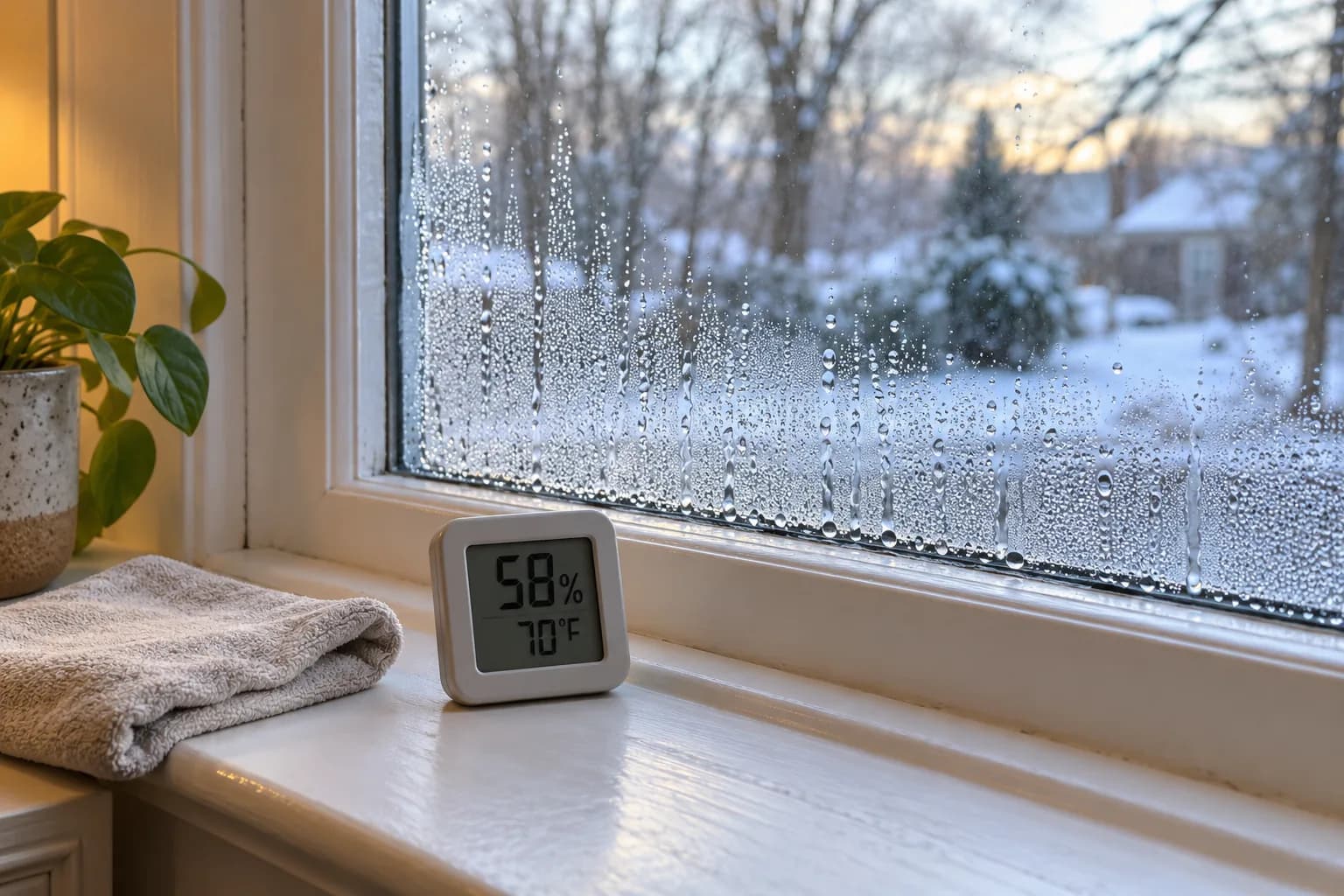
Water that wipes off the room side of the glass means your indoor air holds more moisture than that cold glass can tolerate, and the safe ceiling drops as it gets colder outside: glass manufacturer Cardinal puts it at 35-40% relative humidity at 20°F and above, falling to 15% at -20°F. Most cases are fixed by lowering a humidifier setting, running bath and kitchen fans, or removing a moisture source, which costs little or nothing. New windows help only when the glass itself runs cold, such as single-pane or aluminum-framed units.
Estimate, not a final quote
This range is for planning. Final pricing depends on an on-site inspection, materials, permits, access, and contractor scope.
Compare written bids
Ask each contractor for the same scope, warranty terms, permit handling, cleanup details, and exclusions before choosing.
Source-backed guidance
Guides use public references and practical cost modeling, then point you to official sources where rules or rebates can change.
This article contains paid links to Amazon. As an Amazon Associate I earn from qualifying purchases.
At 20°F outside, your indoor air can hold about 35 to 40% relative humidity before the room side of your window glass starts to bead. At -20°F, that ceiling falls to 15%. That's the whole problem in two numbers, and it's why a house that was fine in October can drip in January without anything having broken.
Before anything else, do the wipe test. If a dry cloth clears the water, it's on the room side and this article is for you. If the haze stays put no matter which side you wipe, the seal between the panes has failed, and that's a different repair covered in our foggy window guide.
The humidity ceiling, by outdoor temperature
Glass is the coldest surface in most rooms in winter. When warm indoor air touches it and cools below its dew point, the water vapor in that air condenses. Cardinal, which makes the coated glass inside many major window brands, publishes the indoor humidity ceilings that window and humidifier makers have used for decades:
| Outdoor temperature | Maximum indoor relative humidity |
|---|---|
| 20°F and above | 35% to 40% |
| 10°F | 30% |
| 0°F | 25% |
| -10°F | 20% |
| -20°F | 15% |
You can't use that table without a number for your house, so put a digital hygrometer in the room with the worst windows. And the ceiling moves: a setting that's safe at 25°F will fog the glass during a cold snap.
EPA's general guidance is to keep indoor humidity below 60%, ideally 30 to 50%, and to treat condensation on windows, walls, or pipes as a sign that humidity is too high. In a cold climate, the window chart is the stricter of the two limits, so go by the chart.
Flat rule: if your hygrometer reads above the chart, fix the humidity first. A window company can't sell you a cure for that.
Where the water shows up tells you where it came from
Every window, every room. House-wide humidity. Check the furnace humidifier first, then whatever is adding moisture faster than the house exhausts it.
One or two rooms. Bathrooms, kitchens, and bedrooms with the door closed overnight are the usual suspects. People breathe and showers steam. A closed bedroom with two sleepers can fog its own windows on a night when the rest of the house stays dry.
Only along the bottom edge of the glass. The bottom few inches sit next to the spacer and frame, the coldest part of the glass, and Andersen points to poor airflow at the window as a common cause. Heavy drapes, cellular shades pulled down all night, or a deep sill blocking the heat register under the window all keep warm room air off the glass. Open the coverings during the day and see if it clears.
Frost or ice on the inside. This is the same physics with glass below 32°F. It usually means the humidity is well above the chart for that night, or the window has a cold aluminum frame or single pane.
What's putting the moisture in the air
Work down this list in order. It's sorted roughly from free to expensive.
| Moisture source | What to do | What it costs |
|---|---|---|
| Whole-house humidifier set too high | Lower the setting as outdoor temps drop; Carrier says winter settings may need to come down in very cold weather | Free |
| Bath fan missing, too small, or not run | IRC M1505.4.4 requires 50 cfm intermittent or 20 cfm continuous for bathrooms; run it through the shower and after | Free if it works; replacement varies with ducting and attic access |
| Kitchen cooking without exhaust | IRC requires 100 cfm intermittent or 25 cfm continuous in kitchens; use the range hood every time | Free if it vents outdoors |
| New house or fresh renovation | Andersen says building materials take a year or two to dry out; ventilate and expect it to fade | Free, plus patience |
| Unvented ("vent-free") gas or kerosene heater | EPA says these produce water vapor and recommends against them; have it replaced with vented equipment | Varies; get a licensed gas contractor's bid |
| Damp basement or crawlspace, summer humidity | Whole-home dehumidifier on the HVAC system | $1,000–$3,000 installed, by Carrier's range |
Bath fans are the most common miss. A fan's cfm rating is measured at a set static pressure, and IRC Section M1505.4.4 says the bathroom rate has to be met at 0.25 inch of water column. A cheap fan pushing through a long, kinked flex duct to a roof cap may move a fraction of what its box says. Broan's own sizing guide uses 1 cfm per square foot of floor for bathrooms up to 100 square feet. So an 80-square-foot bath with a 50 cfm fan is undersized on the manufacturer's math, even though it meets the code minimum. If the mirror is still fogged ten minutes after a shower with the fan running, the fan or its duct is the problem. Check that the duct ends outdoors, not in the attic. Running new duct through an attic or replacing a ceiling fan means working near wiring, so hire an electrician or HVAC contractor for it.
The humidifier is the most common overshoot. A furnace-mounted humidifier keeps adding moisture to hit whatever number you set. Its control has no idea it's -5°F outside unless you turn it down or it has an outdoor temperature sensor. Many have neither. If you set it to 45% in November and left it there, that's your condensation.
Unvented gas heaters are the one source that's also a safety issue. Burning gas produces water vapor along with other combustion gases. EPA advises against installing vent-free space or water heating appliances, and ASHRAE has a position document on the indoor air problems they create. If one is running in a house with dripping windows, don't try to work around it with fans. Shut it off and have a licensed gas contractor look at replacing it with vented, sealed-combustion equipment. Make sure there's a working CO alarm in the house.
When condensation becomes a repair
The damage comes from water running off the glass. Wood sills and the bottom rail of a wood sash absorb it, paint peels, and the drywall below the stool can grow mold. EPA's advice is to dry the wet surface quickly and reduce the moisture source. Wipe the sill every morning while you work on the humidity. A soft, dark, or crumbling sill is no longer a condensation problem. It's rot, and a carpenter should probe how far it goes.
Flat rule: if mold keeps coming back on the same sill after the humidity reads within the chart, have the window opening inspected. At that point, an air leak or a flashing defect around the frame may be keeping that spot colder or wetter than the glass alone explains.
Cost estimator
Window cost estimator
A budgeting range, not a quote. Move the inputs to see what changes the number.
Estimated national cost
Typical project lands near $6,500.
If a written quote comes in above the high end, that's not automatically wrong — ask what scope is driving it.
What this assumes
- 10 replacement windows selected.
- Vinyl frame material selected.
- Standard professional installation assumed.
What moves this price
- 01Pocket vs. full-frame installation method.
- 02Glass package, grid style, trim, and flashing details.
- 03Window size, access, permit requirements, and local labor rates.
Walk into your quotes ready
This range is your anchor. Bring these to every contractor conversation so you can tell a fair quote from a padded one.
- Is this full-frame or insert (pocket) replacement, and why for my openings?
- What's the frame material and glass package (low-E, gas fill, U-factor)?
- Is removal, disposal, and interior/exterior trim work included?
- What does the warranty cover: glass, frame, and the install labor?
- A per-window price with no mention of frame condition or install type.
- 'Today only' pricing that drops dramatically when you hesitate.
- Vague glass specs, with no U-factor or low-E details in writing.
When the window really is the problem
Sometimes the humidity is fine and the glass still runs cold. Single-pane glass, metal frames with no thermal break, and old double-pane units that lost their gas fill all fall in this group. Cardinal says double- or triple-pane glass with low-E coatings and argon fill keeps the room-side glass warmer, and that warmer glass is what resists condensation.
If you're shopping, read the NFRC label. Every ENERGY STAR certified window carries one. The label can include a Condensation Resistance rating, and a higher number means the room-side surface stays drier at a given humidity. Not every label lists it, so ask for it if yours doesn't. Cardinal also cites the Condensation Resistance Factor, a separate rating that runs from 30 to 80, so compare numbers only on the same scale.
Flat rule: don't buy new windows to fix condensation until your hygrometer shows the humidity is within the chart and the glass still sweats. If it does, our window replacement cost guide covers the budget, and the line-by-line quote guide covers what belongs on the bid. Budget without a federal credit: the Section 25C Energy Efficient Home Improvement Credit doesn't apply to windows placed in service after December 31, 2025.
Research sources
- Cardinal Glass Industries: Indoor Condensation
- Cardinal Glass Industries: Condensation Resistance and Ratings
- Andersen: Window Condensation 101
- EPA: A Brief Guide to Mold, Moisture and Your Home
- EPA: Moisture, Mold and Mildew (Appendix C, PDF)
- ASHRAE: Position Document on Unvented Combustion Devices and Indoor Air Quality (PDF)
- ICC: 2018 IRC Section M1505.4.4, Local Exhaust Rates
- Broan-NuTone: Bathroom Exhaust Fan Buying Guide
- Carrier: Whole House Humidifier Costs
- Carrier: How Much Is a Dehumidifier?
- ENERGY STAR: Independently Tested and Certified Energy Performance
- IRS: Energy Efficient Home Improvement Credit
Compare local quotes
Ready to compare real quotes from window installer pros?
Use your estimate as a budget anchor, then compare written contractor bids against it before you decide. Free request, no obligation.
Disclosure: this button opens a third-party quote-matching service. If you submit its form, its contact and privacy terms apply, and SaveBricks may earn a referral fee. It never changes the prices you're quoted, and our cost ranges are set independently — see how we estimate.
The cost guide
Get the monthly cost briefing
One useful email a month: project cost ranges, contractor red flags, and practical ways to avoid an inflated quote.
No spam. Unsubscribe any time. Read our privacy policy.
More windows guides
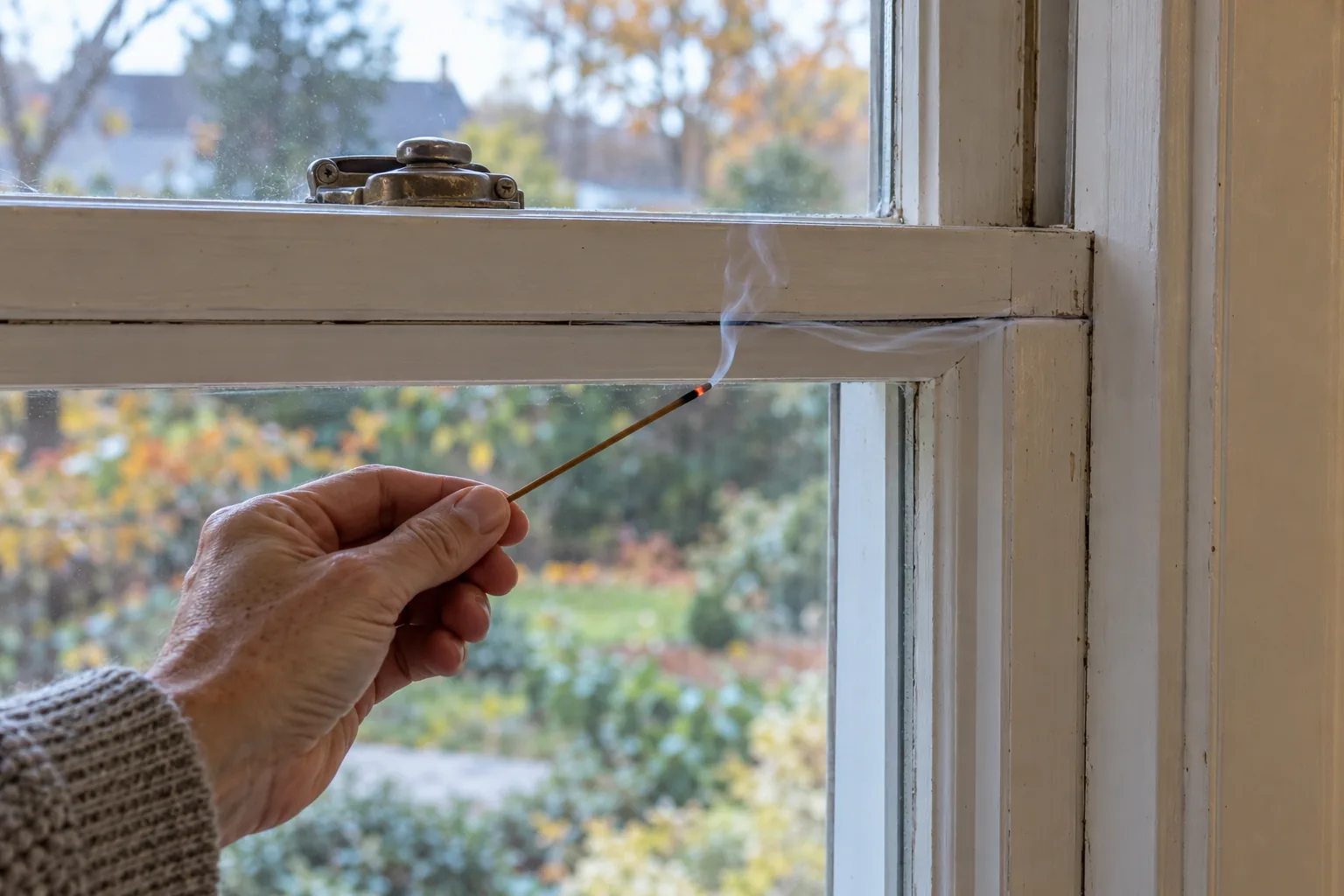
Drafty Windows? Find Which Gap the Air Uses Before You Price New Ones
A drafty window usually leaks through one of three paths, and the fix for each runs from a $5 strip to a new unit. Here's how to tell them apart with a sheet of paper and an incense stick, and when replacement actually pays.
Read guide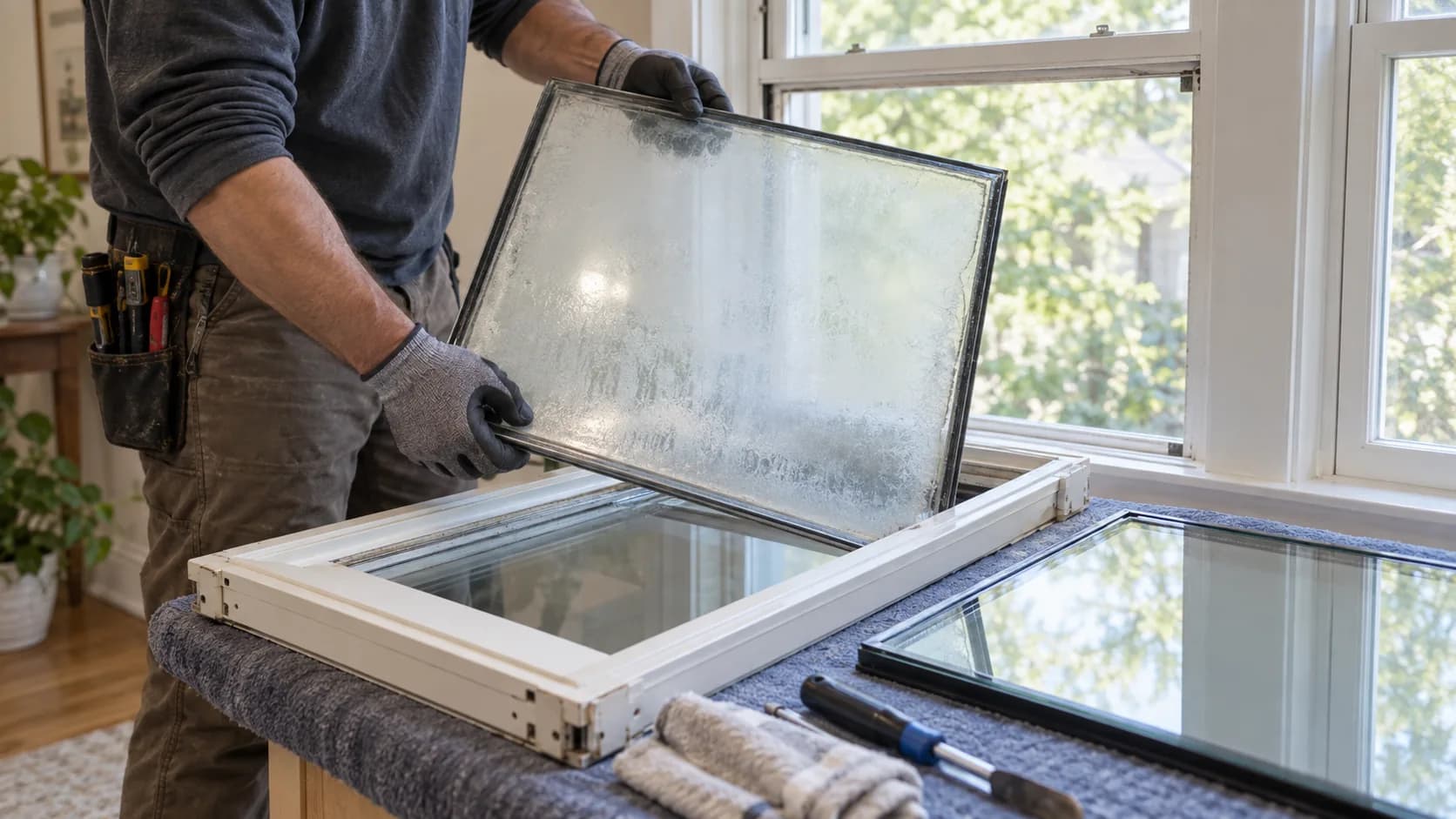
Foggy Window Between the Panes? The Seal Failed, Not the Window
Haze between two panes of glass means the sealed unit is breathing outdoor air. Here's how to tell it apart from ordinary condensation, what the warranty probably owes you, and when glass-only beats a new window.
Read guide
Window Leaking When It Rains? Where the Water Shows Up Names the Fix
Water at the sill, the head, or the lower corners points to different failures. Here's how to tell clogged weeps from failed caulk from missing flashing before you buy a tube of anything.
Read guide