
Why is there suddenly no hot water from my water heater?
A tank that suddenly runs cold has usually lost one specific part, and the fuel type tells you which ones to suspect. Here's how to narrow it down before the service call.
The short answer
On an electric tank, the usual suspects are a tripped breaker, a tripped high-limit (ECO) switch, or a burned-out heating element or thermostat. On a gas tank, it's usually a pilot that went out, a worn thermocouple or thermopile, a tripped flame-arrestor thermal switch, or no gas reaching the unit. Check the breaker or the gas valve's status light yourself, then let a pro handle anything past that, and if the tank is more than 10 years old, price a replacement before you pay for a part.
Estimate, not a final quote
This range is for planning. Final pricing depends on an on-site inspection, materials, permits, access, and contractor scope.
Compare written bids
Ask each contractor for the same scope, warranty terms, permit handling, cleanup details, and exclusions before choosing.
Source-backed guidance
Guides use public references and practical cost modeling, then point you to official sources where rules or rebates can change.
This article contains paid links to Amazon. As an Amazon Associate I earn from qualifying purchases.
A.O. Smith puts the life of a standard tank water heater at 8 to 12 years. So when the shower runs cold, the first number to find isn't a plumber's phone number. It's the manufacture date on the data plate, because that decides whether you're shopping for a part or a new heater.
The second thing to figure out is what powers the heater. Gas and electric tanks fail in completely different ways, and the list of suspects for one has almost nothing in common with the other.
Name the symptom exactly
"No hot water" covers three different complaints, and each one points to a different part. Before you call anyone, run a hot tap for a couple of minutes and match what you get.
| What you get at the tap | Electric tank: likely cause | Gas tank: likely cause |
|---|---|---|
| Stone cold, nothing at all | Tripped breaker, tripped ECO high-limit, failed upper element or upper thermostat | Pilot out, failed thermocouple/thermopile, tripped thermal switch, gas supply off |
| Lukewarm at best | Failed lower element or lower thermostat, thermostat set too low | Thermostat set too low, dirty air intake screen starving the burner |
| Hot for a few minutes, then cold | Failed lower element or lower thermostat | Undersized tank for the household, or heavy sediment (see our popping-noise guide) |
That split matters on electric units in particular. On a standard two-element tank, the upper element heats first and hands power to the lower element only once the top of the tank is satisfied. If the upper circuit dies, you get nothing. If only the lower one dies, you get a small batch of hot water from the top of the tank and then cold.
Electric tank: breaker, then the red button
A.O. Smith lists a tripped breaker as a very common reason an electric heater stops working, and it's the one fault you can clear yourself without opening anything. Check the heater's dedicated breaker in the panel. If it's tripped, reset it once. If it trips again, stop there: a breaker that won't hold on a water heater circuit is often a shorted element, and that's a job for an electrician or plumber.
If the breaker is fine, the next suspect is the ECO (energy cut-off), a manual-reset high-limit switch built into the upper thermostat. On typical residential units it opens when the water tops about 170°F, which means something let the water overheat: usually a thermostat stuck closed or an element shorted to the tank. The reset button sits behind the upper access panel and insulation, right next to live terminals, and manufacturers say to shut the power off at the breaker before touching it. If you're not comfortable working inside an electrical enclosure, this is where the service call starts.
The rule on the ECO is flat: one reset, never two. A high-limit that trips again is telling you a thermostat or element has failed.
One more electric failure is self-inflicted. If a tank was drained for a flush or a repair and the power came back on before the tank was full, the elements "dry fire": with no water around them to carry the heat away, they overheat and burn out. Rheem publishes a whole technical bulletin (TB 1308) on field element failures for this kind of reason. If your hot water quit right after someone drained the tank, a burned-out element is the first suspect.
Gas tank: read the status light first
Most modern gas tanks have a status light on the gas control valve, and it's the fastest diagnostic you have. On A.O. Smith units, one blink every three seconds means the pilot is lit and the valve is working normally. Any other pattern is a code, and the key to it is printed on a label on the valve itself. Write the pattern down before you call.
If the pilot is out, the thermocouple (or thermopile, on electronic valves) has stopped generating current, so the valve shuts off gas to the pilot and burner by design. The lighting instructions are printed on a label on the heater. Follow that label exactly, and if you smell gas at any point, don't light anything. Leave the house and call the gas utility from outside.
A pilot that lights but won't stay lit is a parts problem, not a technique problem. A.O. Smith's own technician test is that a healthy thermopile should read at least 350 millivolts after a few minutes of continuous pilot operation, and anything below that means replacing the pilot assembly. That test happens with the gas control held open, which is why it's a technician's test, not yours.
The last gas-side suspect is the one that fools people. Water heaters built to flammable-vapor-ignition-resistant (FVIR) standards have a thermal switch that shuts the heater down and has to be reset before it will relight. A.O. Smith lists a restricted air supply, negative air pressure in the house, or a blocked vent as the reasons it trips. It also says that if gasoline, paint, solvents, or glue are stored near the heater, you remove them and do not relight the unit. Treat a tripped thermal switch as a venting or combustion-air problem that needs a qualified gas technician, not as a button to press.
Repair or replace
This is where the data plate from the first paragraph earns its keep. A.O. Smith's own rule is that repairs are usually worth it when the heater is under 8 years old and the repair costs less than half the price of a new unit. Past 10 years, it recommends replacement. We'd put it more simply:
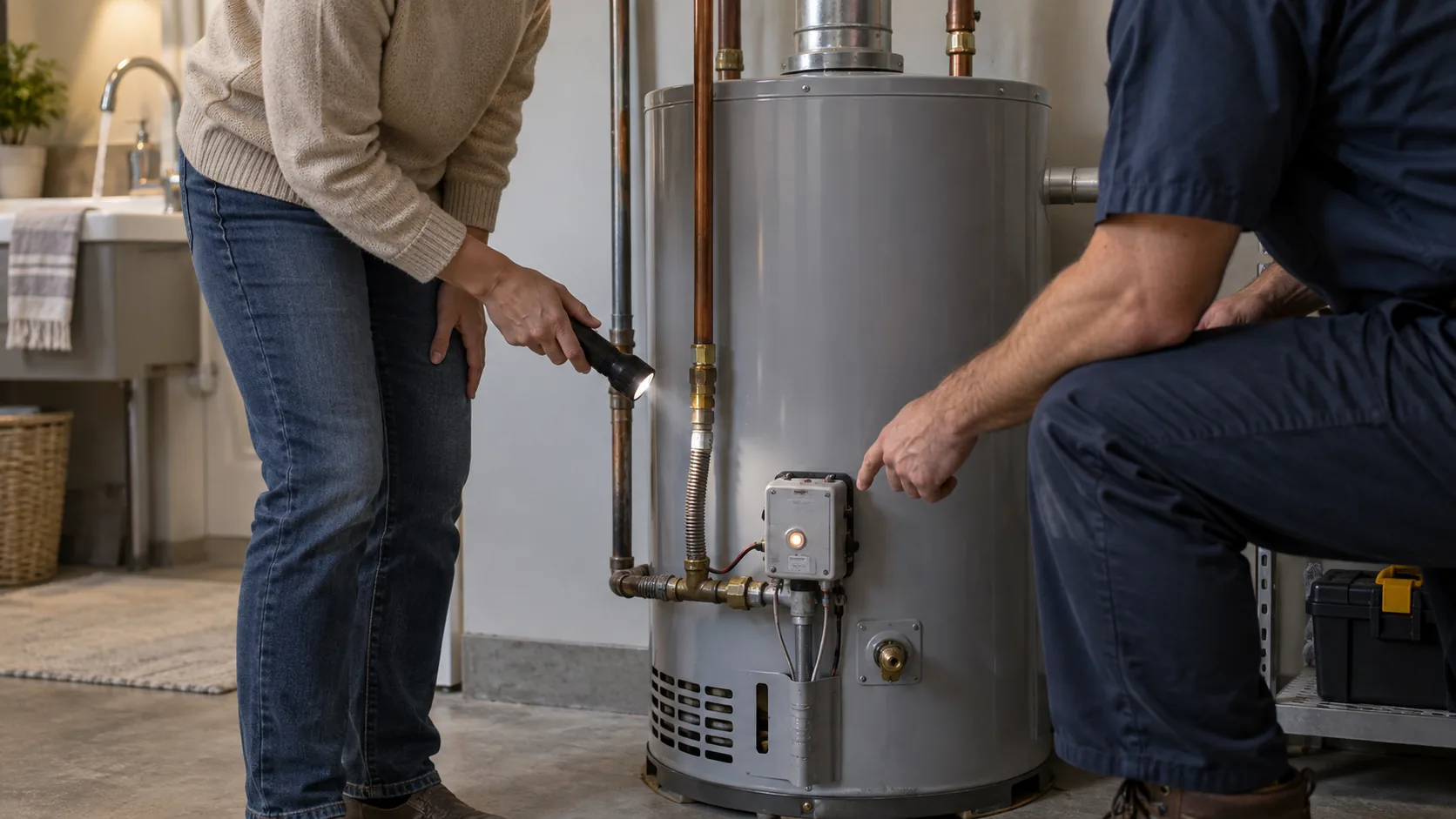
A flashlight can help you photograph a safely accessible model and serial label for the warranty lookup. Stay outside service panels, keep clear of wet electrical equipment, and leave the building if you suspect a gas leak.
| Tank age | Failed part: element, thermostat, thermocouple, igniter | Tank itself leaking |
|---|---|---|
| Under 8 years | Repair it if the quote is under half of replacement. Check the warranty first. | Warranty claim, then replace |
| 8 to 10 years | Repair if the quote is under half of replacement; get a replacement bid anyway | Replace |
| Over 10 years | Replace. A new thermostat doesn't reset the clock on a 10-year-old tank. | Replace |
Check the warranty before you authorize anything. A.O. Smith's standard residential limited warranty covers component parts for one year and the tank for three, and many higher-tier product lines run longer. It generally covers the original owner in the home where the heater was installed, and it covers the part, not the labor. So a warranted thermostat on a two-year-old tank can still come with a service bill. Have the model and serial number ready; the warranty lookup needs both.
If the answer is replacement, A.O. Smith puts most unit-plus-installation costs between $960 and $3,910, with electric installs at the low end and gas installs averaging around $2,607. Where you land depends on fuel type, capacity, whether the venting or gas line has to be brought up to current code, and whether you're switching technologies. Our replacement cost guide breaks that down, and our quote guide shows what a complete bid should list.
Cost estimator
Water heater cost estimator
A budgeting range, not a quote. Move the inputs to see what changes the number.
Household size sets the capacity: tank gallons or tankless flow rate.
Estimated national cost
Typical project lands near $1,280.
If a written quote comes in above the high end, that's not automatically wrong — ask what scope is driving it.
What this assumes
- Like-for-like swap of an existing gas tank, with no new gas line or venting route.
- Sized for a 3-person household.
- Permit and haul-away of the old unit included; no drywall or repiping.
What moves this price
- 01Switching fuel or moving the unit: new gas line, venting, or circuit adds $500–$2,500.
- 02Code catch-ups: expansion tank, drain pan, seismic straps, shut-off valve.
- 03Emergency same-day replacement vs. a scheduled install.
Walk into your quotes ready
This range is your anchor. Bring these to every contractor conversation so you can tell a fair quote from a padded one.
- Is this a like-for-like swap, or does my setup need venting, gas, or electrical changes?
- Which code updates are included: expansion tank, drain pan, straps, shut-off valve?
- What's the tank warranty (6, 9, or 12 years), and does labor have its own warranty?
- Is the permit, haul-away of the old unit, and any condensate drain work in the price?
- A flat phone price that doesn't ask what fuel type or where the unit sits.
- "Code upgrades" as one unexplained lump sum instead of itemized parts.
- Pushing a tankless conversion hard without checking your gas line size first.
When to stop diagnosing
Some no-hot-water situations aren't a parts problem, and they stop being a DIY question the moment you see them:
- You smell gas. Get out, then call the gas utility from outside. Don't touch switches on the way.
- Water or steam is coming from the temperature-and-pressure (T&P) relief valve's discharge pipe. IRC Section P2804.6.1 requires that pipe to end no more than 6 inches above the floor or drain so a scalding discharge lands somewhere harmless. If it's running, the tank overheated or overpressurized. Shut off the gas or power and the cold supply if you can reach them safely, and call a plumber the same day.
- Water is pooling under the tank body. That's usually a corroded tank, not a failed part, and no repair fixes it.
- Scorch marks, soot, or melted wire insulation near the burner door or the electrical panel. That's a combustion or wiring fault, and it needs a pro.
Once hot water is back, check the setting. A.O. Smith ships its heaters preset to 120°F, and says that setting suits most households while keeping scald risk and sediment buildup down. If a technician turned it up during the repair, turn it back down.
Research sources
- A.O. Smith: Is Your Hot Water Not Getting Hot? Common Causes & What To Do About Them — tripped breakers, failed elements, ignition failures, blocked air screens.
- A.O. Smith: Water Heater Repair — Things to Consider — status-light check, repair-vs-replace guidance, why component repairs belong with a technician.
- A.O. Smith: When to Repair or Replace Your Water Heater — 8-to-12-year lifespan; under-8-years / half-the-price repair rule; over-10-years replacement guidance.
- A.O. Smith: How Much Does a Water Heater Cost to Replace? — $960–$3,910 unit-plus-installation range; ~$2,607 average gas install.
- A.O. Smith: How To Relight A Water Heater's Pilot Light — how the thermocouple/thermopile shuts off gas when the pilot goes out.
- A.O. Smith University: Status Light Does Not Blink (technician troubleshooting) — normal one-blink-per-three-seconds status; 350-millivolt thermopile threshold.
- A.O. Smith: Residential Gas Water Heater with Flammable Vapor Ignition Resistance — manual — thermal switch trip causes and the do-not-relight rule when flammable vapors are present.
- A.O. Smith: Residential Limited Warranty — one-year component parts and three-year tank coverage on the standard residential line.
- A.O. Smith: How to Adjust Temperature on Gas Water Heater Safely — 120°F factory preset.
- Rheem: Why Water Heaters Fail Suddenly (Without Warning Signs) — elements, thermostats, gas valves, and igniters failing abruptly at end of life.
- Rheem: Water Heater Technical Bulletins — TB 1307 (residential electric troubleshooting) and TB 1308 (electric heating element failures, including dry fire).
- Bradford White: Residential Electric Service Manual — upper/lower element sequencing and the manual-reset ECO.
- ICC: 2018 International Residential Code, Section P2804.6.1 — Requirements for discharge pipe — T&P discharge termination within 6 inches of the floor or receptor.
Compare local quotes
Ready to compare real quotes from water heater pros?
Use your estimate as a budget anchor, then compare written contractor bids against it before you decide. Free request, no obligation.
Disclosure: this button opens a third-party quote-matching service. If you submit its form, its contact and privacy terms apply, and SaveBricks may earn a referral fee. It never changes the prices you're quoted, and our cost ranges are set independently — see how we estimate.
The cost guide
Get the monthly cost briefing
One useful email a month: project cost ranges, contractor red flags, and practical ways to avoid an inflated quote.
No spam. Unsubscribe any time. Read our privacy policy.
More water heaters guides
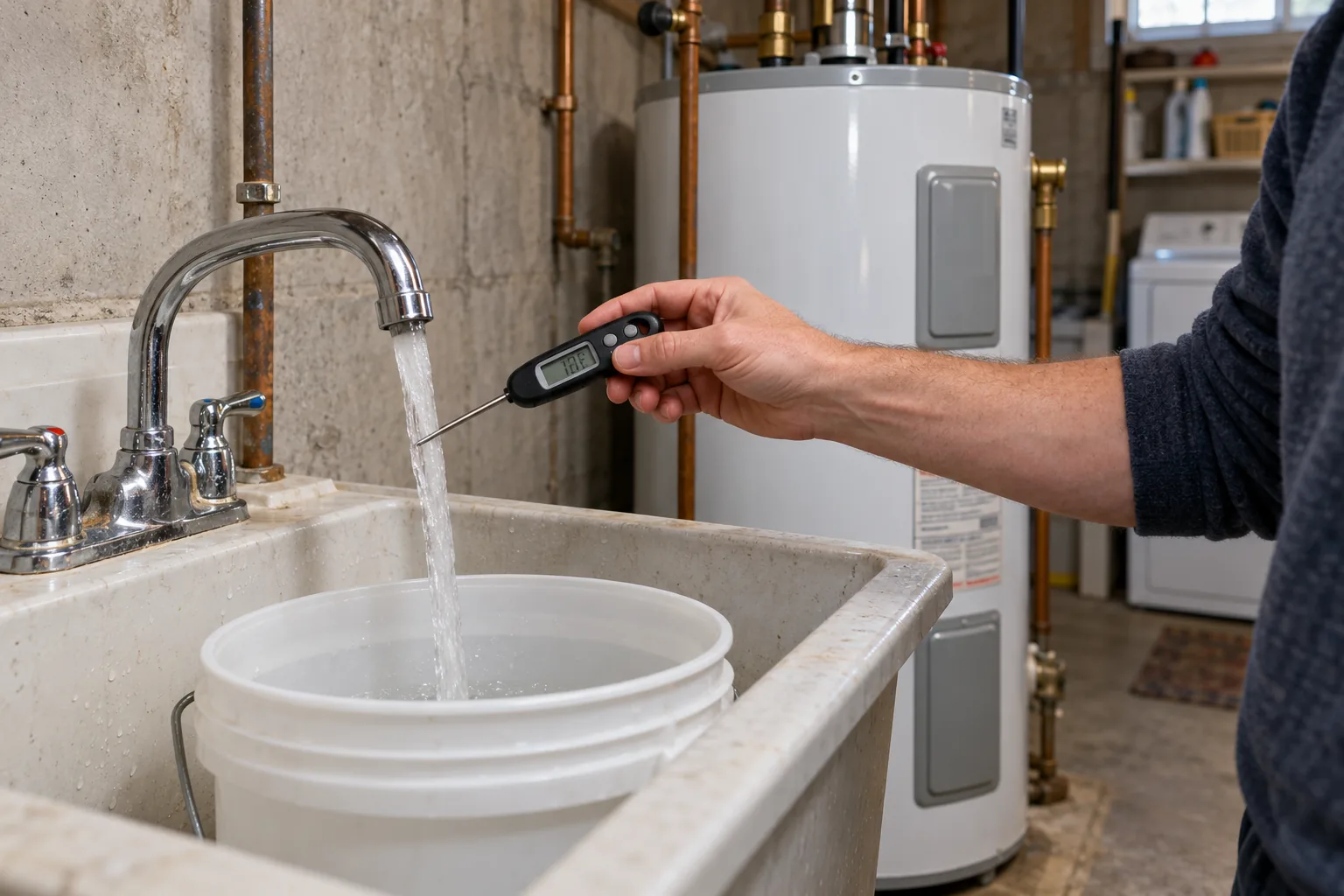
Hot Water Runs Out Fast? Do the Gallon Math Before You Buy a Part
A shower that goes cold halfway through is either a tank that's too small for the hour you ask of it or a part that's quietly stealing capacity. A bucket, a thermometer, and the data plate tell you which.
Read guide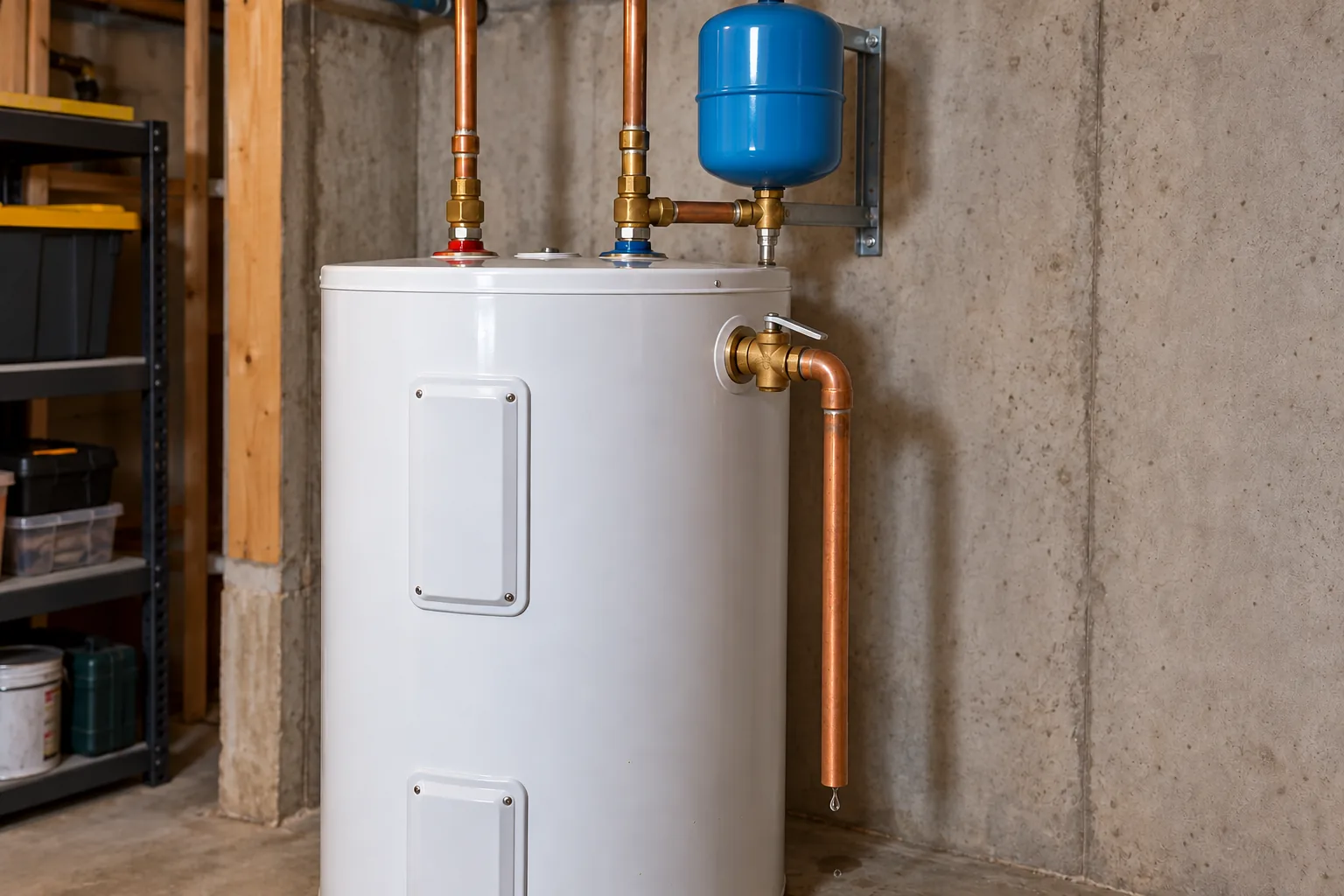
Water Heater Relief Valve Dripping? Read the Pressure Before You Replace the Valve
A T&P valve that weeps a little every heating cycle is usually doing its job in a closed system. Here's how to tell expansion from a failed valve, an overheating tank, or a bad weld.
Read guide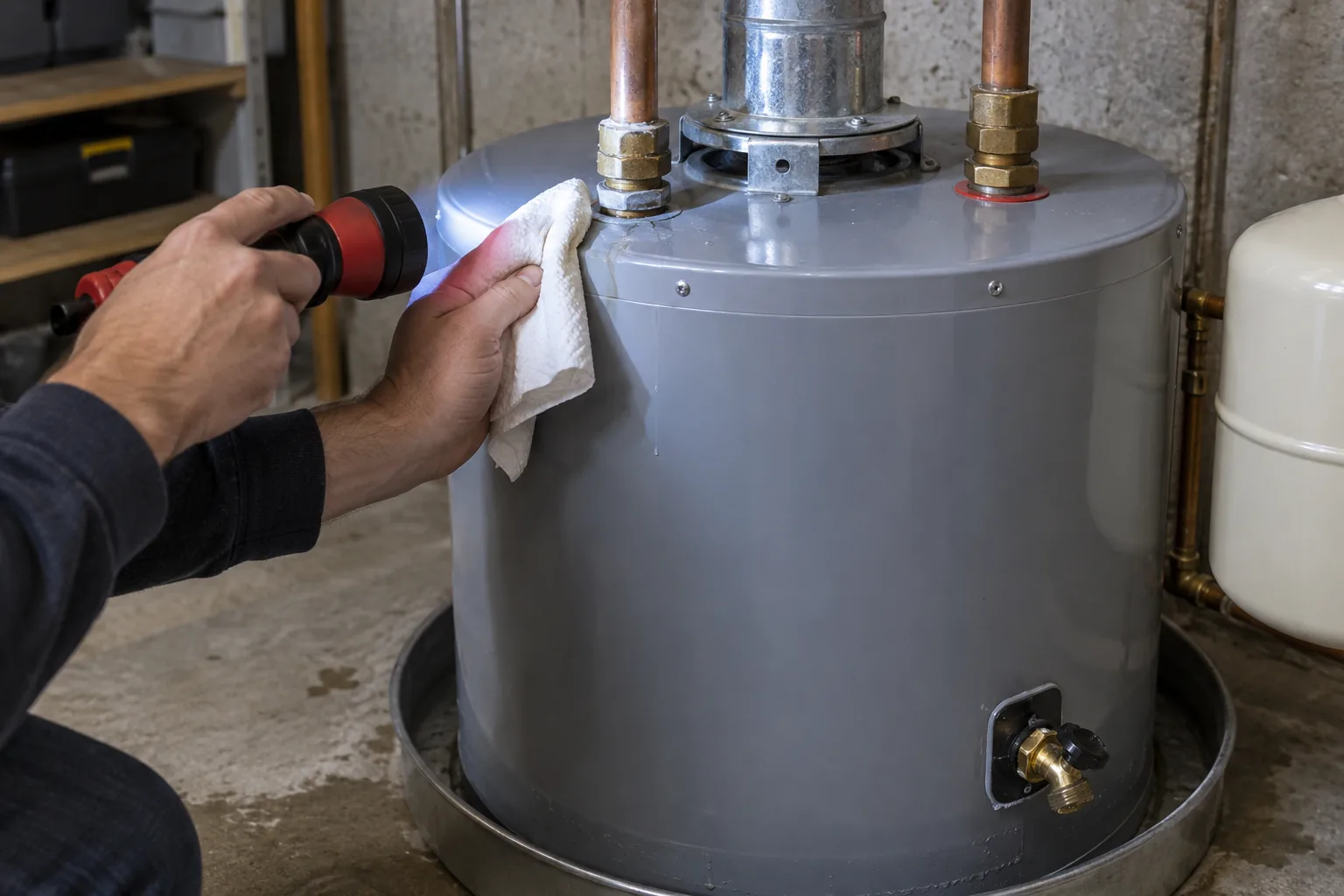
Water Heater Leaking? Where the Water's From Decides Everything
A leak from a fitting is a $150 fix. A leak from the tank body is a replacement, today. How to tell the difference in five minutes, before you call.
Read guide