
How much does it cost to replace a water heater in 2026?
Real installed prices for gas, electric, tankless, and heat pump water heaters, plus the code-upgrade line items that quietly add $200 to $800.
The short answer
A like-for-like swap of a standard 40–50 gallon tank runs $900 to $1,900 installed. Tankless and heat pump units run $2,000 to $4,500 before incentives. The quiet budget-killer is code upgrades (expansion tank, pan, straps), which add $200 to $800 to almost every quote.
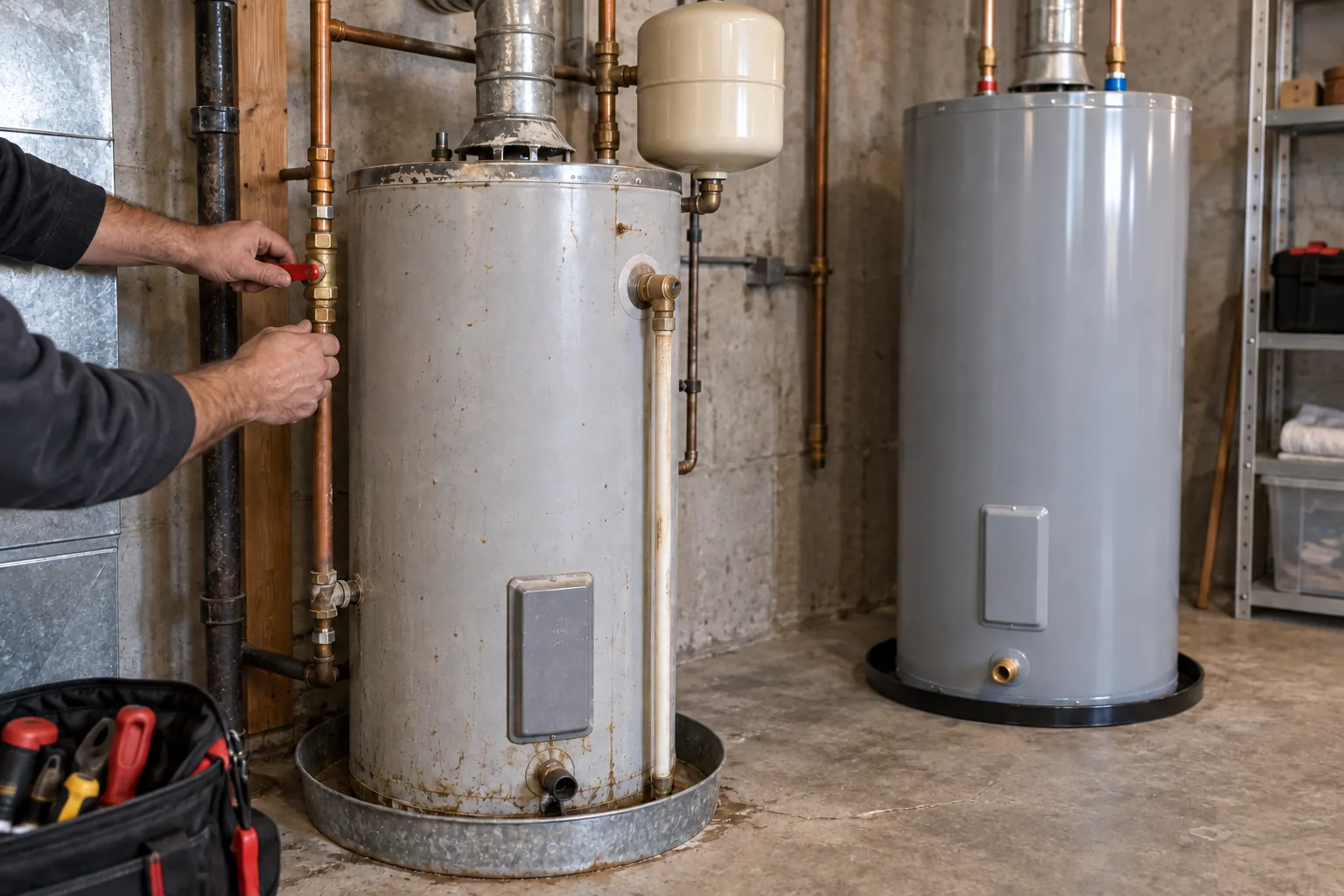
Estimate, not a final quote
This range is for planning. Final pricing depends on an on-site inspection, materials, permits, access, and contractor scope.
Compare written bids
Ask each contractor for the same scope, warranty terms, permit handling, cleanup details, and exclusions before choosing.
Source-backed guidance
Guides use public references and practical cost modeling, then point you to official sources where rules or rebates can change.
This article contains paid links to Amazon. As an Amazon Associate I earn from qualifying purchases.
Water heaters fail on their own schedule, not yours. Most people shop for one exactly once a decade, standing in a garage with a wet floor, which is why this is one of the easiest projects to overpay for. Here's what the job actually costs, piece by piece.
The installed price, by type
These are full installed prices (unit, labor, permit, haul-away) for a straightforward replacement where the new unit matches the old one's fuel and location.
| Type | Installed cost | Typical lifespan |
|---|---|---|
| Gas tank, 40 gal | $900 – $1,600 | 8–12 years |
| Gas tank, 50 gal | $1,000 – $1,900 | 8–12 years |
| Electric tank, 40–50 gal | $800 – $1,700 | 10–15 years |
| Tankless, gas | $2,500 – $4,500 | 15–20 years |
| Heat pump (hybrid), 50–65 gal | $2,000 – $3,500 | 12–15 years |
Two things to notice. First, the unit itself is often less than half the number. A 50-gallon gas tank wholesales around $550 to $900. The rest is labor, parts, permit, and disposal. Second, the ranges overlap a lot, which is why two honest plumbers can quote the same job $400 apart.
Cost estimator
Water heater cost estimator
A budgeting range, not a quote. Move the inputs to see what changes the number.
Household size sets the capacity: tank gallons or tankless flow rate.
Estimated national cost
Typical project lands near $1,280.
If a written quote comes in above the high end, that's not automatically wrong — ask what scope is driving it.
What this assumes
- Like-for-like swap of an existing gas tank, with no new gas line or venting route.
- Sized for a 3-person household.
- Permit and haul-away of the old unit included; no drywall or repiping.
What moves this price
- 01Switching fuel or moving the unit: new gas line, venting, or circuit adds $500–$2,500.
- 02Code catch-ups: expansion tank, drain pan, seismic straps, shut-off valve.
- 03Emergency same-day replacement vs. a scheduled install.
Walk into your quotes ready
This range is your anchor. Bring these to every contractor conversation so you can tell a fair quote from a padded one.
- Is this a like-for-like swap, or does my setup need venting, gas, or electrical changes?
- Which code updates are included: expansion tank, drain pan, straps, shut-off valve?
- What's the tank warranty (6, 9, or 12 years), and does labor have its own warranty?
- Is the permit, haul-away of the old unit, and any condensate drain work in the price?
- A flat phone price that doesn't ask what fuel type or where the unit sits.
- "Code upgrades" as one unexplained lump sum instead of itemized parts.
- Pushing a tankless conversion hard without checking your gas line size first.
Where quotes grow: the code catch-up
The line items that surprise people aren't padding. They're the plumbing code catching up with your house. If your old heater went in twelve years ago, some of these probably weren't required then. They are now, and the permit inspection will check for them:
- Thermal expansion tank: $100 to $350 installed. Required in most jurisdictions on closed systems (homes with a pressure regulator or backflow preventer).
- Drain pan and drain line: $50 to $250. Usually required when the heater sits above living space or in an attic.
- Seismic straps: $50 to $150. Standard in earthquake states, common elsewhere.
- New shut-off valve or supply lines: $50 to $200. Old valves frequently won't fully close, and no plumber will reuse a corroded flex line.
- Venting corrections (gas units): $100 to $600. Modern draft standards sometimes require rework of older vent runs.
Add it up and a "simple swap" honestly lands $200 to $800 above the bare install. What matters is that these appear itemized on the quote. One unexplained "code compliance package, $750" line is a red flag; five named parts with prices is a plumber doing it right.
When the price jumps by thousands
Three situations move you out of swap territory entirely:
- Switching fuel or technology. Tank to tankless means upsizing the gas line and new venting, commonly $1,000 to $2,500 on top of the unit. Gas to electric heat pump means a dedicated 240V circuit, sometimes a panel upgrade.
- Moving the unit. Relocating from a closet to a garage means new water, gas, and vent runs. Every foot is labor.
- Emergency same-day service. A burst tank on a Sunday can carry a 20–50% premium. If your heater is past 10 years old, replacing it on your schedule instead of the tank's is worth real money.
The incentive that changes the math
The federal Section 25C credit is not available for equipment placed in service in 2026. It covered qualifying heat pump water heaters through December 31, 2025. State and utility rebates are separate and may still apply, but do not subtract one from your budget until the program confirms the exact model, installation date, contractor requirement, and payment method. Check the ENERGY STAR rebate finder and the program administrator directly; our heat pump incentives guide explains the verification steps.
What a fair quote looks like
Before you sign, the written quote should name:
Ask whether the installation includes leak detection or an automatic shutoff and have that scope priced separately. A simple water-leak alarm is an optional monitoring purchase after installation; it does not perform the same job as a shutoff valve or replace a correctly installed drain pan.
- The exact brand, model, and gallon capacity (or GPM for tankless).
- The tank warranty: 6, 9, or 12 years. Longer-warranty tanks have thicker anodes and cost more for a reason.
- Each code item as its own line.
- Permit and haul-away included, in writing.
- The labor warranty, separate from the manufacturer's.
If a company quotes a flat price over the phone without asking your fuel type, where the unit sits, or how old the house is, that price will change when the truck arrives.
Repair or replace?
Under 8 years old with a bad element, thermostat, or valve: repair, usually $150 to $600. Past 10 years, or any leak from the tank body itself: replace. The tank is a sealed unit. Once the lining fails there is nothing to fix, and the failure mode is your floor. If you're seeing water now, read our leaking water heater guide before you call anyone.
Research sources
- EIA: Residential Energy Consumption Survey
- ENERGY STAR: Water Heaters
- IRS: Energy Efficient Home Improvement Credit (25C)
Compare local quotes
Ready to compare real quotes from water heater pros?
Use your estimate as a budget anchor, then compare written contractor bids against it before you decide. Free request, no obligation.
Disclosure: this button opens a third-party quote-matching service. If you submit its form, its contact and privacy terms apply, and SaveBricks may earn a referral fee. It never changes the prices you're quoted, and our cost ranges are set independently — see how we estimate.
The cost guide
Get the monthly cost briefing
One useful email a month: project cost ranges, contractor red flags, and practical ways to avoid an inflated quote.
No spam. Unsubscribe any time. Read our privacy policy.
More water heaters guides
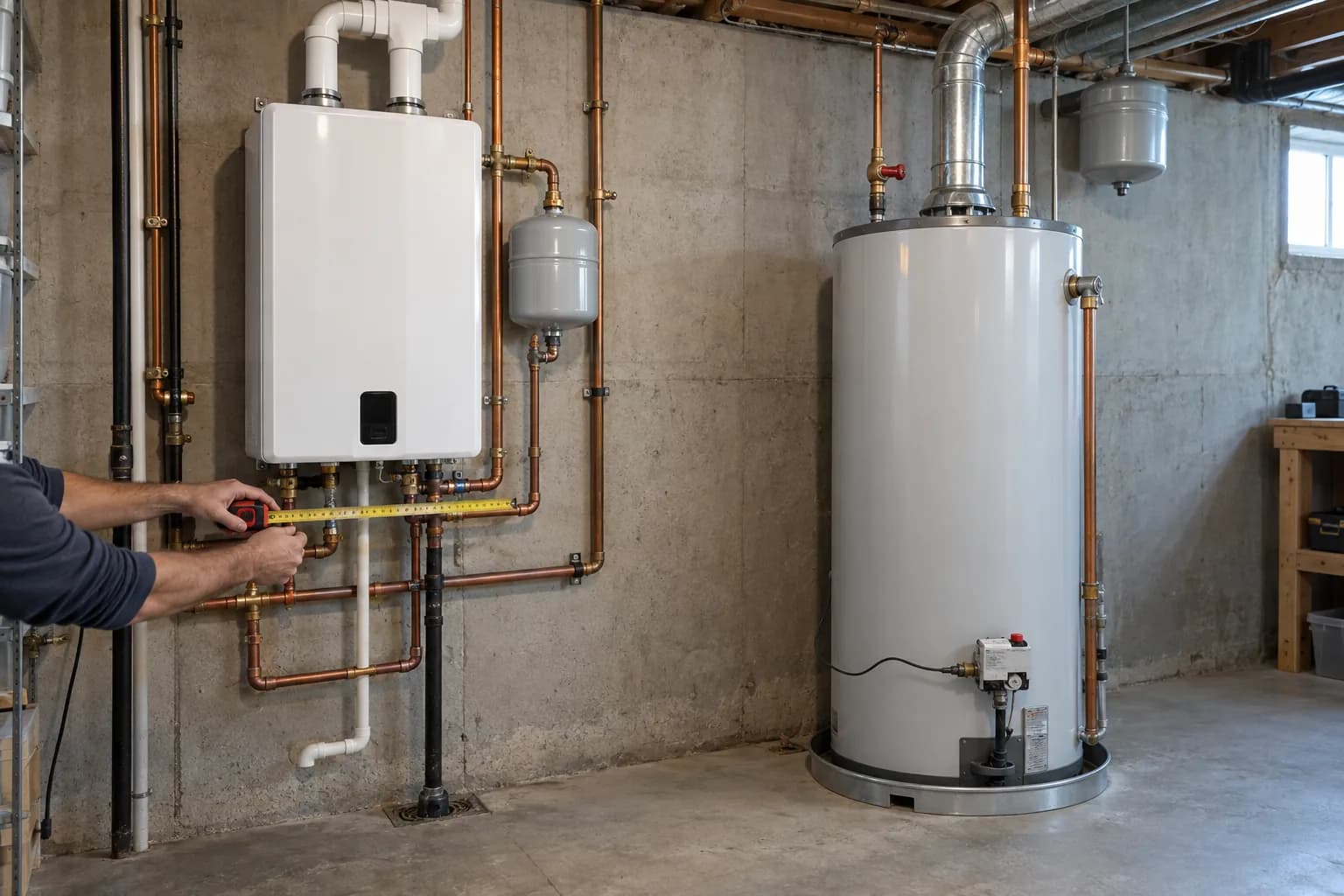
Tankless vs. Tank Water Heater: The 10-Year Cost Math
Tankless costs $1,500–$2,500 more installed. Whether you ever get that back depends on three things most sales pitches skip. Run the 10-year math first.
Read guide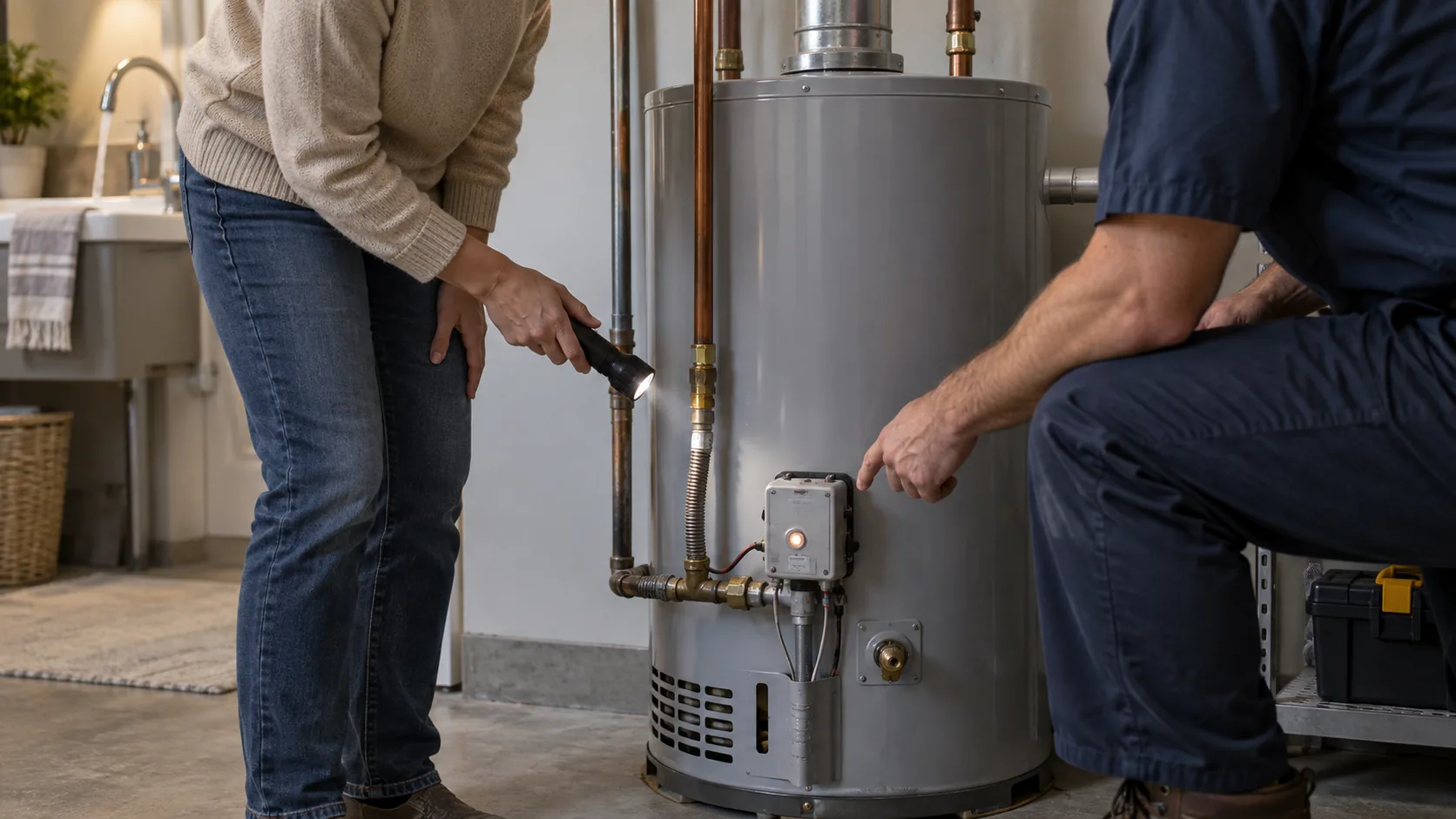
No Hot Water? Gas or Electric Decides Which Part Quit
A tank that suddenly runs cold has usually lost one specific part, and the fuel type tells you which ones to suspect. Here's how to narrow it down before the service call.
Read guide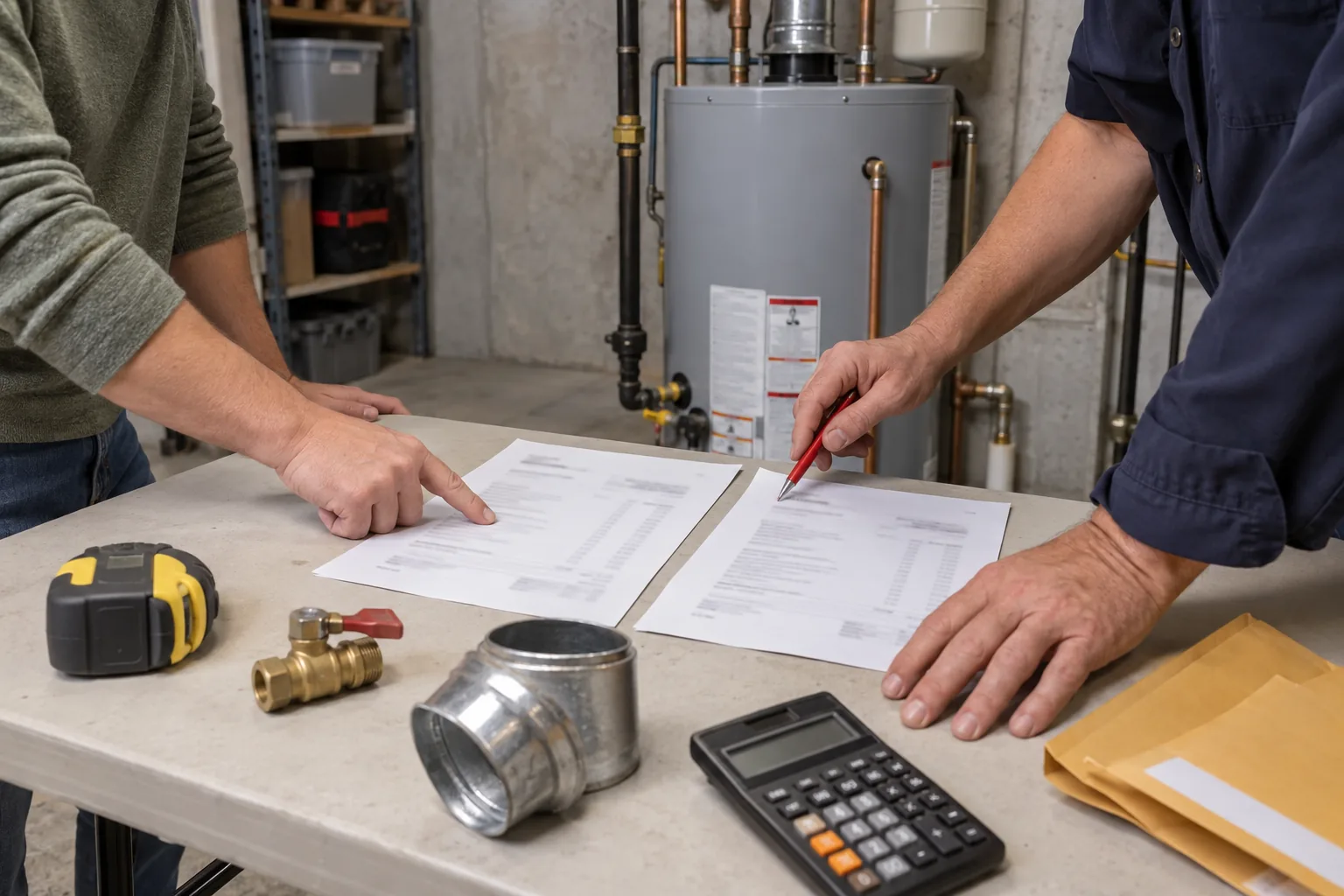
How to Read a Water Heater Quote, Line by Line
A complete water heater quote itemizes eight things; most people get three. Here's what belongs on the page and where a bare number hides code work.
Read guide