
Is a tankless water heater worth the extra cost?
Tankless costs $1,500–$2,500 more installed. Whether you ever get that back depends on three things most sales pitches skip. Run the 10-year math first.
The short answer
Usually yes if you'll stay in the home 7+ years and your gas line and venting can support one without major rework. Usually no if you're selling soon, or if the conversion needs a gas-line upsize, because that $1,000–$2,500 of extra plumbing rarely pays itself back.
Estimate, not a final quote
This range is for planning. Final pricing depends on an on-site inspection, materials, permits, access, and contractor scope.
Compare written bids
Ask each contractor for the same scope, warranty terms, permit handling, cleanup details, and exclusions before choosing.
Source-backed guidance
Guides use public references and practical cost modeling, then point you to official sources where rules or rebates can change.
This article contains paid links to Amazon. As an Amazon Associate I earn from qualifying purchases.
Every tankless pitch leads with "endless hot water" and "20-year lifespan." Both are true. Neither answers the question you're actually asking, which is whether the extra two thousand dollars comes back to you. Run the numbers and the answer splits cleanly on three factors.
The upfront gap
| 50-gal gas tank | Gas tankless | |
|---|---|---|
| Installed cost (like-for-like) | $1,000 – $1,900 | $2,500 – $4,500 |
| Conversion extras (first time going tankless) | n/a | +$1,000 – $2,500 |
| Expected lifespan | 8–12 years | 15–20 years |
| Annual energy cost (gas, family of 4) | ~$250 – $300 | ~$150 – $200 |
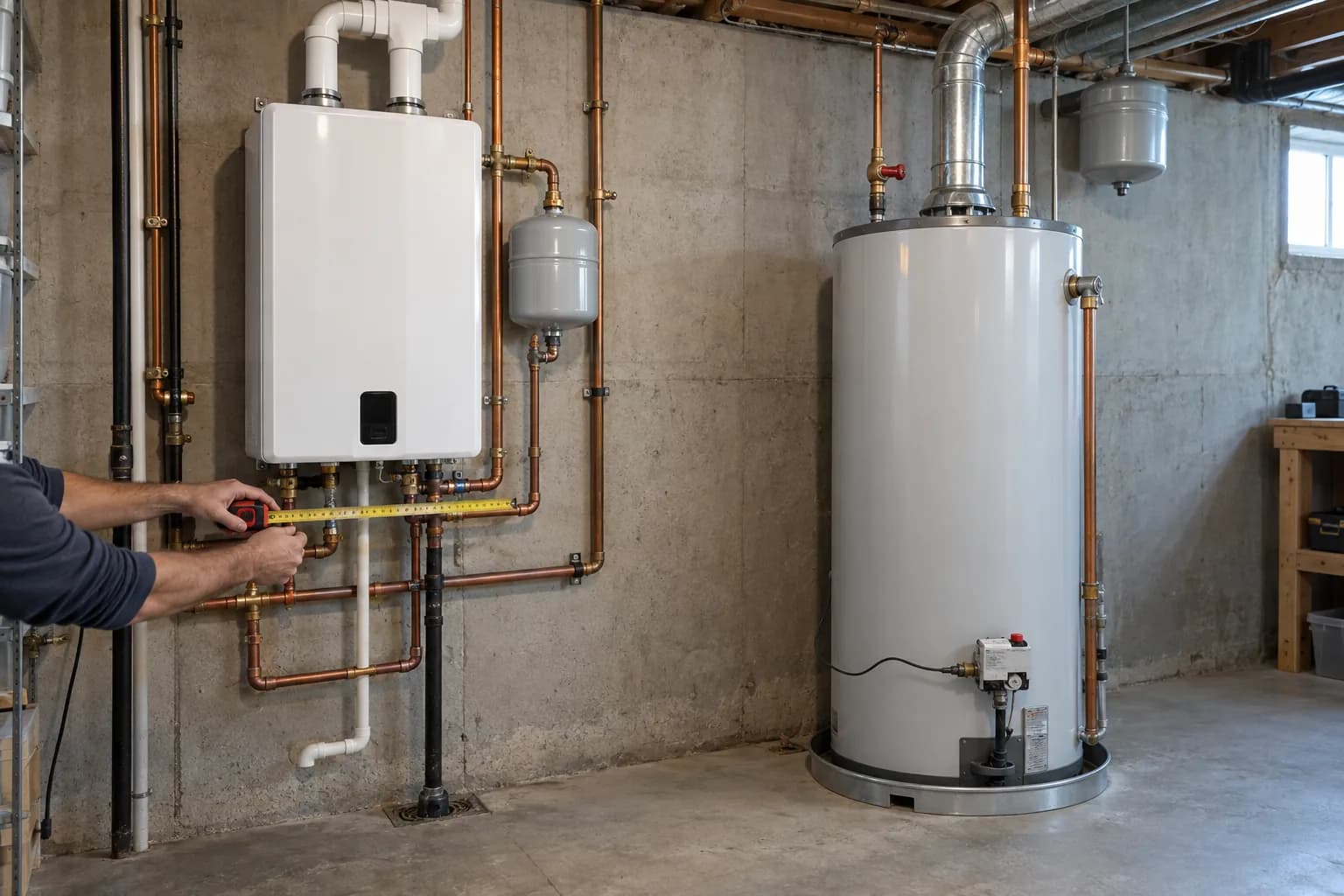
The conversion line is the one salespeople whisper past. A tankless unit fires at 150,000–199,000 BTU, three to five times the draw of a tank. Many homes need the gas line from the meter upsized to feed it, plus new stainless or PVC venting. If your quote jumped past $5,000, that's why.
Cost estimator
Water heater cost estimator
A budgeting range, not a quote. Move the inputs to see what changes the number.
Household size sets the capacity: tank gallons or tankless flow rate.
Estimated national cost
Typical project lands near $1,280.
If a written quote comes in above the high end, that's not automatically wrong — ask what scope is driving it.
What this assumes
- Like-for-like swap of an existing gas tank, with no new gas line or venting route.
- Sized for a 3-person household.
- Permit and haul-away of the old unit included; no drywall or repiping.
What moves this price
- 01Switching fuel or moving the unit: new gas line, venting, or circuit adds $500–$2,500.
- 02Code catch-ups: expansion tank, drain pan, seismic straps, shut-off valve.
- 03Emergency same-day replacement vs. a scheduled install.
Walk into your quotes ready
This range is your anchor. Bring these to every contractor conversation so you can tell a fair quote from a padded one.
- Is this a like-for-like swap, or does my setup need venting, gas, or electrical changes?
- Which code updates are included: expansion tank, drain pan, straps, shut-off valve?
- What's the tank warranty (6, 9, or 12 years), and does labor have its own warranty?
- Is the permit, haul-away of the old unit, and any condensate drain work in the price?
- A flat phone price that doesn't ask what fuel type or where the unit sits.
- "Code upgrades" as one unexplained lump sum instead of itemized parts.
- Pushing a tankless conversion hard without checking your gas line size first.
Factor 1: How long you'll stay
The energy savings run $100 to $200 a year for a typical family on gas. Against a $1,500 premium (no conversion work needed), that's a 8–12 year payback on energy alone. What actually closes the gap faster is lifespan: the tank you didn't buy at year 10 is worth another $1,000–$1,900.
- Staying 10+ years: tankless wins the total-cost race in most cases.
- Selling within 5: you will not recover the premium. Buy the tank.
- In between: it's a comfort purchase, not a financial one. That's a fine reason; just call it what it is.
Factor 2: What your house already has
The economics are completely different for a second tankless install than a first. If the venting and gas line are already sized right (or you're building new), the premium shrinks to the unit cost difference and the math tilts hard toward tankless. If your plumber has to open walls, the conversion cost can eat two decades of energy savings.
Ask one question before anything else: "Can my existing gas line feed this unit, yes or no?" A pro who says "we'll figure it out during install" is telling you the quote isn't final.
Factor 3: Your hot water pattern
Tankless units heat water as it flows, rated in gallons per minute. A 7–8 GPM unit handles a shower and a dishwasher together; two showers plus laundry at once will stretch it. Households that stagger usage feel nothing. Households of six with morning pileups sometimes need two units, and now the math is a different conversation.
Tanks have the opposite failure mode: the fourth consecutive shower goes cold, but three things running at once is fine.
The maintenance nobody mentions
Tankless units want annual descaling in hard-water areas: a $150–$250 service call, or a DIY afternoon with a pump and vinegar. Skip it for a few years in a hard-water city and the heat exchanger clogs, which can void the warranty. A tank asks for nothing and quietly rusts. Factor $0–$200/year into the tankless column if you won't do it yourself.
Before buying a tankless descaling kit, read the exact model's maintenance instructions and confirm the required solution, service-valve arrangement, and procedure. A generic kit is not guaranteed to suit every heater. Use a qualified plumber if the procedure or access is unclear.
The third option worth pricing
If your water heater is electric, the comparison isn't tank vs. tankless. Electric tankless needs enormous amperage and is rarely the right call. It's standard electric tank vs. heat pump water heater, which can cut water-heating energy use substantially. The federal Section 25C credit ended for equipment placed in service after December 31, 2025, so a 2026 budget should count only state or utility rebates that the program has confirmed. Our water heater cost guide has the current incentive check.
Bottom line
Tankless is a good product with an honest 7–12 year payback when the install is simple and you're staying put. It's a poor deal bolted onto a house that needs $2,000 of gas and vent work to accept it. The quote itself tells you which house you have. Read the line items, not the brochure.
Research sources
- EIA: Residential Energy Consumption Survey. Household water-heating energy use.
- ENERGY STAR: High-Efficiency Gas Storage Water Heaters
- ENERGY STAR: Water Heaters
Compare local quotes
Ready to compare real quotes from water heater pros?
Use your estimate as a budget anchor, then compare written contractor bids against it before you decide. Free request, no obligation.
Disclosure: this button opens a third-party quote-matching service. If you submit its form, its contact and privacy terms apply, and SaveBricks may earn a referral fee. It never changes the prices you're quoted, and our cost ranges are set independently — see how we estimate.
The cost guide
Get the monthly cost briefing
One useful email a month: project cost ranges, contractor red flags, and practical ways to avoid an inflated quote.
No spam. Unsubscribe any time. Read our privacy policy.
More water heaters guides
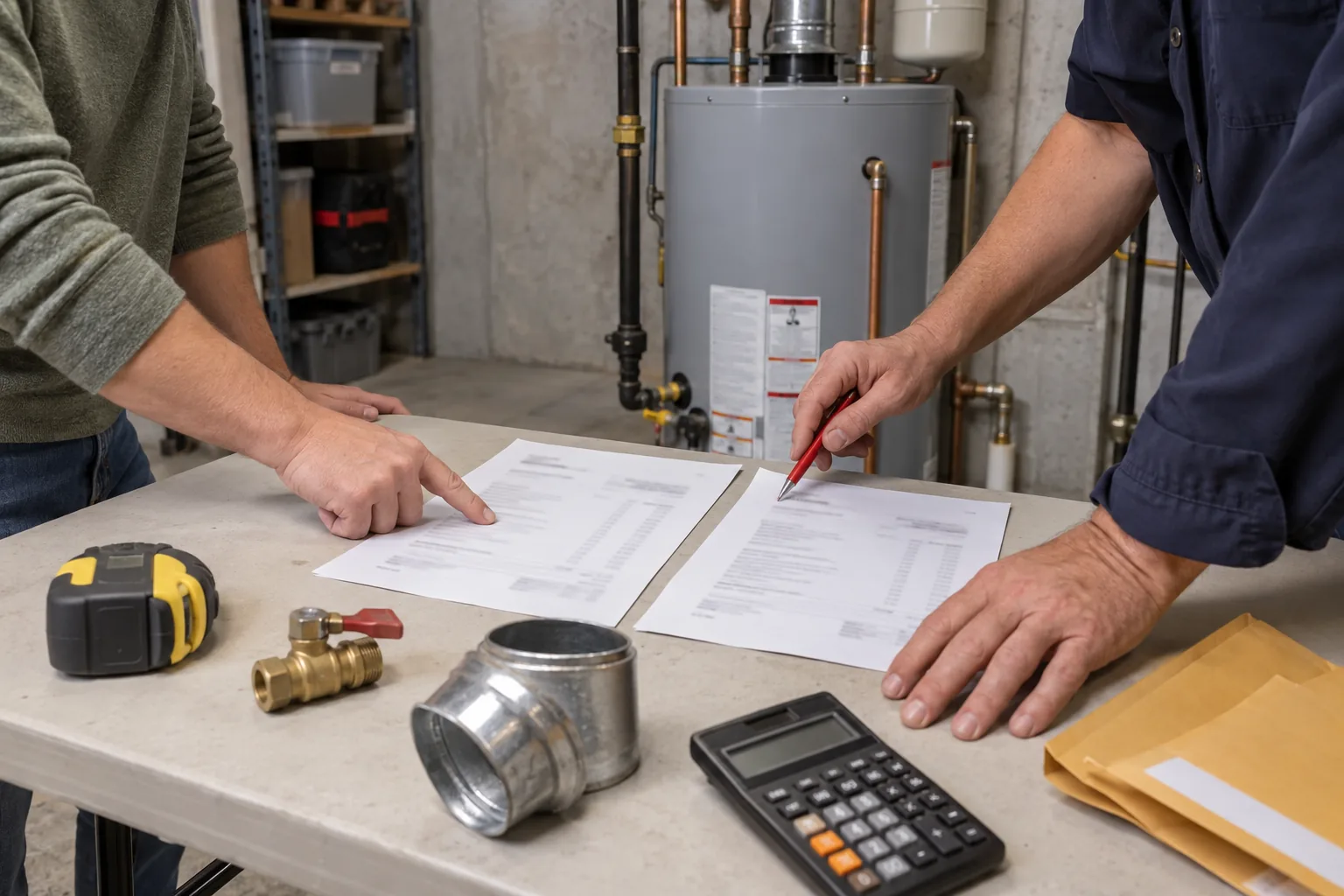
How to Read a Water Heater Quote, Line by Line
A complete water heater quote itemizes eight things; most people get three. Here's what belongs on the page and where a bare number hides code work.
Read guide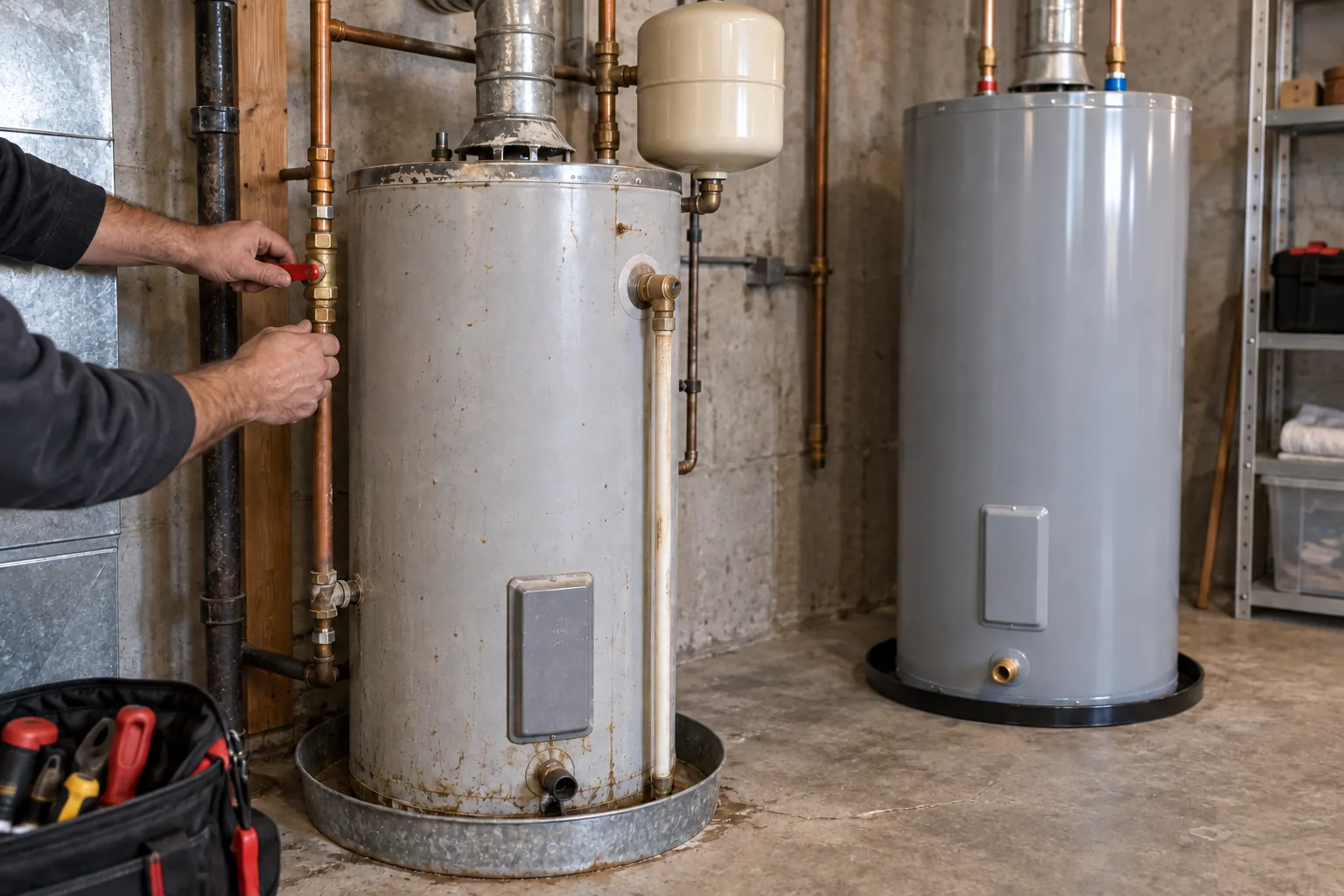
Water Heater Replacement Cost: What You'll Actually Pay in 2026
Real installed prices for gas, electric, tankless, and heat pump water heaters, plus the code-upgrade line items that quietly add $200 to $800.
Read guide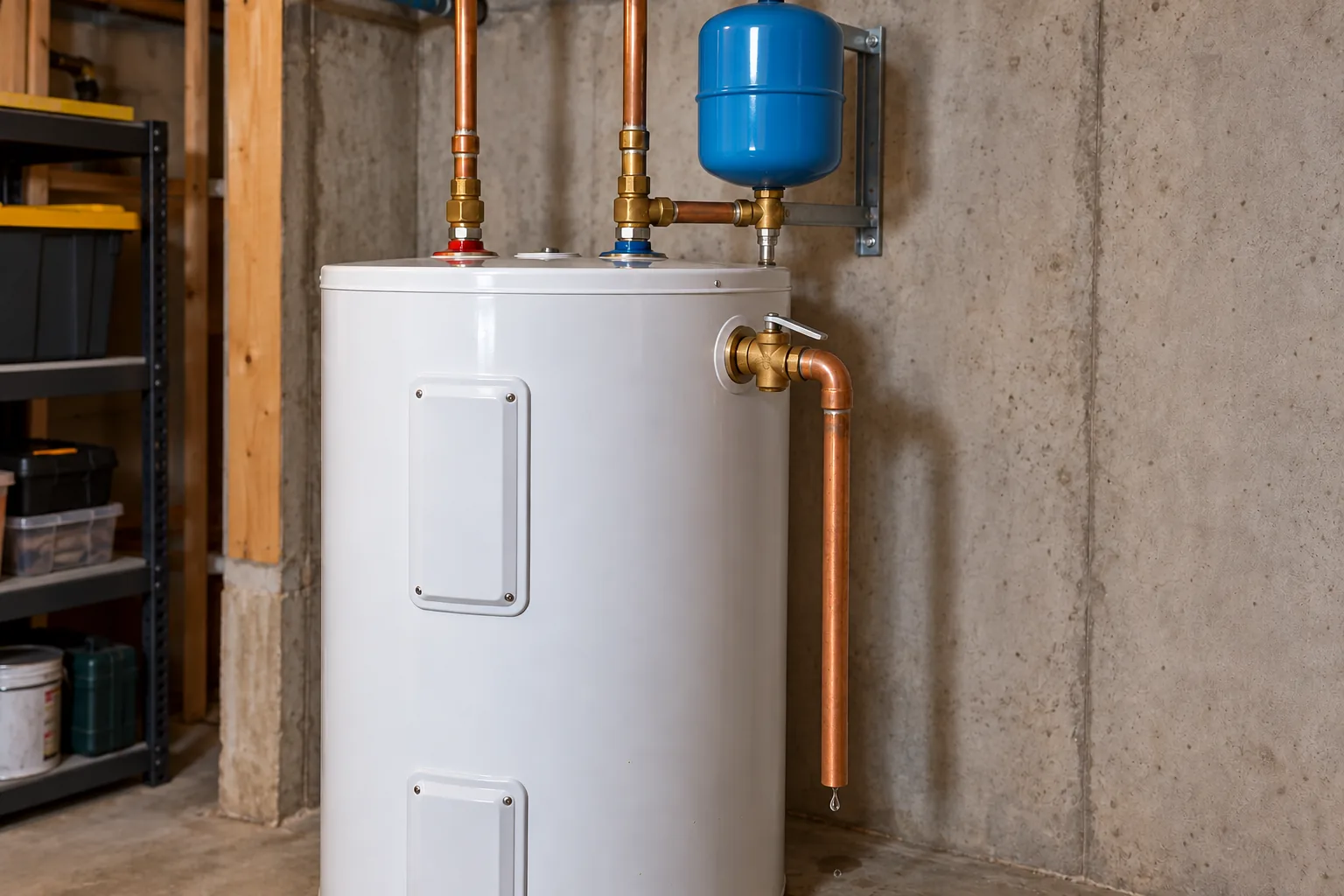
Water Heater Relief Valve Dripping? Read the Pressure Before You Replace the Valve
A T&P valve that weeps a little every heating cycle is usually doing its job in a closed system. Here's how to tell expansion from a failed valve, an overheating tank, or a bad weld.
Read guide