
Why is the relief valve on my water heater dripping?
A T&P valve that weeps a little every heating cycle is usually doing its job in a closed system. Here's how to tell expansion from a failed valve, an overheating tank, or a bad weld.
The short answer
A small drip during each heating cycle usually means thermal expansion in a closed system, and the fix is a correctly charged expansion tank, not a new valve. A large, sporadic gush of hot water points to a failed thermostat, and seepage where the valve threads into the tank can mean a failed weld. What you do next depends on which of those three patterns you see and whether house pressure is above 80 psi.
Estimate, not a final quote
This range is for planning. Final pricing depends on an on-site inspection, materials, permits, access, and contractor scope.
Compare written bids
Ask each contractor for the same scope, warranty terms, permit handling, cleanup details, and exclusions before choosing.
Source-backed guidance
Guides use public references and practical cost modeling, then point you to official sources where rules or rebates can change.
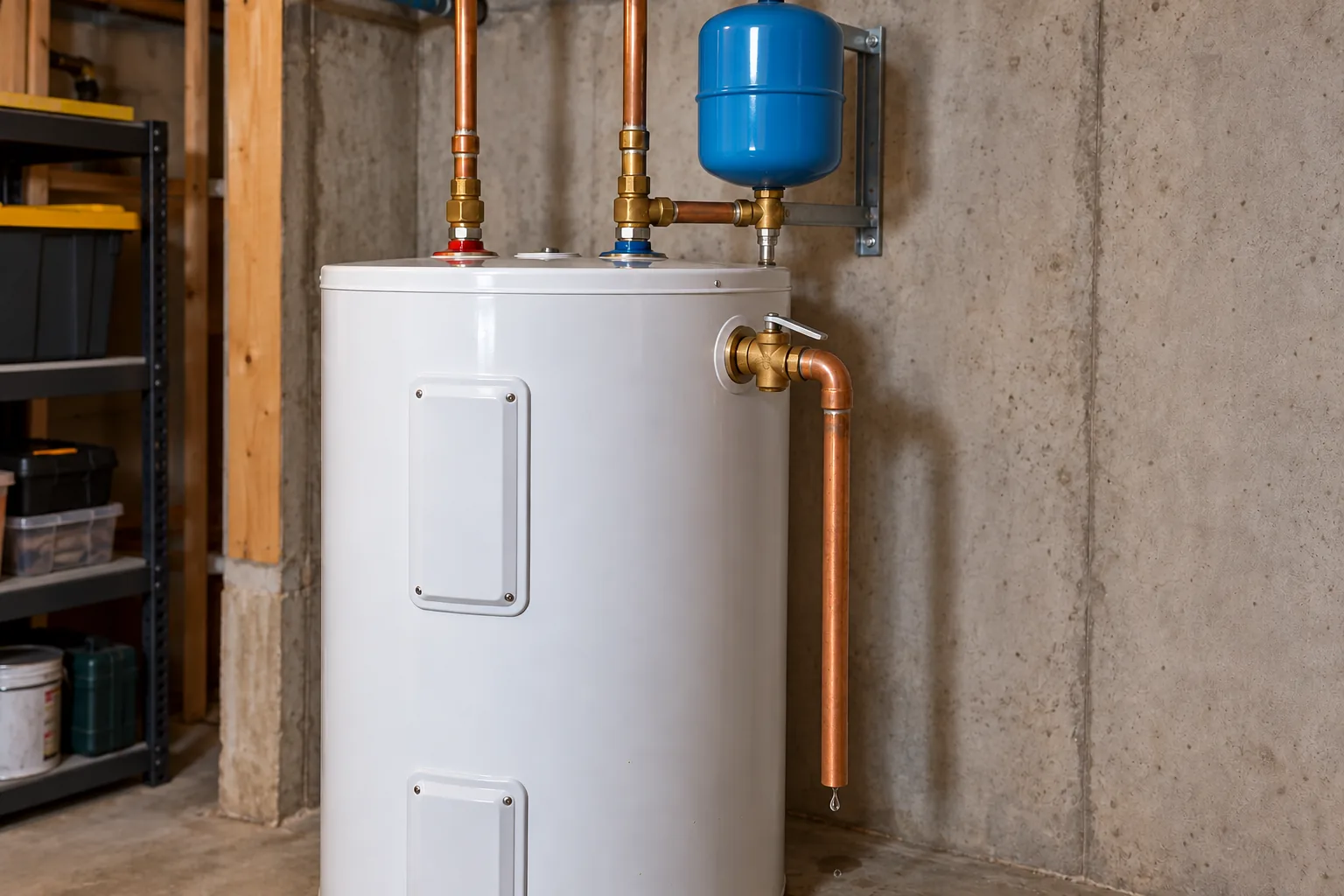
Rheem's own rule of thumb for a dripping relief valve is about one cup of water for every 10 gallons of tank capacity, every time the heater fires. On a 50-gallon tank, that's roughly five cups per heating cycle. If that's what you're seeing, the valve probably isn't broken. It's relieving pressure that has nowhere else to go, and replacing it, in Rheem's words, "WILL NOT correct the problem."
The temperature-and-pressure (T&P) relief valve is the brass fitting near the top of the tank with a lever and a pipe running down toward the floor. On a common residential valve like the Watts 100XL, it opens at 210°F or at its pressure setting, which for most residential tanks is 150 psi. It's the last line of defense against a tank failing under pressure, so never cap it, plug it, or put a valve on its discharge pipe. Every manufacturer manual says so, and so does the code.
Match the drip to the cause
A.O. Smith's Technical Bulletin 52 sorts relief-valve leaks by what the water is doing. Watch the end of the discharge pipe and the valve body for one heating cycle and match what you see.
| What you see | Most likely cause | Typical fix |
|---|---|---|
| A trickle or weep while the burner or elements run, with no tap open | Thermal expansion in a closed system | Expansion tank, plus a pressure-reducing valve if house pressure is high |
| Occasional large bursts of very hot water | Thermostat failure letting the water overheat | Shut the heater down; same-day service call |
| Water at the threads where the valve screws into the tank | Thread seal failure | Plumber removes the valve and reseals the threads |
| Seepage from the tank fitting (the spud) itself | Failed weld on the tank fitting | Replace the heater; the spud can't be repaired |
| Constant drip, worse after someone tested the lever | Mineral deposit on the valve seat | Replace the valve, then recheck for expansion |
The first row is the most common case. The second is the dangerous one. Bulletin 52 names a malfunctioning thermostat as the only cause of large, sporadic hot-water discharges, so don't treat them as a nuisance leak.
Why a "closed" system makes the valve drip
Water expands when it heats. In older houses, that extra volume pushed back out the supply line into the street main. Many homes now have a check valve, a backflow preventer at the meter, or a pressure-reducing valve (PRV) that blocks that path. Once the path is closed, the expanding water has to go somewhere, and the pressure climbs until the T&P valve opens.
The code recognizes this. IRC Section P2903.4.2 requires a device for controlling thermal-expansion pressure wherever a backflow preventer or check valve sits on a system with a storage water heater, and P2903.4.1 requires one where expansion pushes pressure past a PRV's setting. In practice that device is almost always an expansion tank: a small steel tank with an air bladder, plumbed into the cold line near the heater, that soaks up the extra volume.
Bradford White's position is blunt. It doesn't want its heaters operated in a closed system without a way to control expansion. A.O. Smith's manuals add that periodic weeping caused by thermal expansion isn't covered by the limited warranty. So a dripping valve on a closed system can also become a warranty problem.
How a pro confirms it
The diagnostic in A.O. Smith's Technical Bulletin 45 is simple, but a plumber should run it. They turn the thermostat down, thread a pressure gauge with a dead (maximum-reading) hand onto the drain valve, and draw off 15% to 20% of the tank. Then they let the heater recover with every fixture closed. On a system with expansion control, pressure rises slightly and holds. On a closed system without it, the needle climbs fast until the relief valve opens. The dead hand records the peak, so you can see the spike even if you weren't watching.
The same gauge gives you the static house pressure, and that number decides half the fix:
- Above 80 psi: IRC P2903.3.1 caps static water pressure at 80 psi and requires a PRV at the service connection above that. Bulletin 45 recommends bringing supply down to 40 to 60 psi.
- Already have a PRV: You have a closed system by definition, and you need expansion control under P2903.4.1.
- Have an expansion tank already: Its air charge may have bled down, or the bladder may have failed. Rheem's installation bulletin says the precharge must match system pressure and can only be set with the tank isolated at zero water pressure. It also notes that all expansion tanks may eventually leak.
What the fix costs
The part itself isn't the expensive bit. A.O. Smith says expansion tanks cost less than $100, and Rheem's parts store lists its 2-gallon tank at $30.27 and its 4.5-gallon tank at $42.18. Most of the bill is labor: cutting into the cold line, mounting and supporting the tank, setting the precharge, and checking the result. BLS puts the median plumber wage at $30.67 an hour (May 2025), but that's what the plumber earns, not what the shop bills. Your bill also includes the service call, overhead, and travel.
That's why the range at the top of this page is our estimate, not a published figure. A tank-only job on accessible copper or PEX sits toward the low end. Adding a PRV at the main, working in a cramped closet, or replacing a failed relief valve in the same visit pushes it up. Ask for the tank size and the precharge setting in writing. Tank sizing depends on heater capacity, supply pressure, and water temperature, and Amtrol sizes its Therm-X-Trol tanks on exactly those inputs.
Cost estimator
Water heater cost estimator
A budgeting range, not a quote. Move the inputs to see what changes the number.
Household size sets the capacity: tank gallons or tankless flow rate.
Estimated national cost
Typical project lands near $1,280.
If a written quote comes in above the high end, that's not automatically wrong — ask what scope is driving it.
What this assumes
- Like-for-like swap of an existing gas tank, with no new gas line or venting route.
- Sized for a 3-person household.
- Permit and haul-away of the old unit included; no drywall or repiping.
What moves this price
- 01Switching fuel or moving the unit: new gas line, venting, or circuit adds $500–$2,500.
- 02Code catch-ups: expansion tank, drain pan, seismic straps, shut-off valve.
- 03Emergency same-day replacement vs. a scheduled install.
Walk into your quotes ready
This range is your anchor. Bring these to every contractor conversation so you can tell a fair quote from a padded one.
- Is this a like-for-like swap, or does my setup need venting, gas, or electrical changes?
- Which code updates are included: expansion tank, drain pan, straps, shut-off valve?
- What's the tank warranty (6, 9, or 12 years), and does labor have its own warranty?
- Is the permit, haul-away of the old unit, and any condensate drain work in the price?
- A flat phone price that doesn't ask what fuel type or where the unit sits.
- "Code upgrades" as one unexplained lump sum instead of itemized parts.
- Pushing a tankless conversion hard without checking your gas line size first.
Three flat rules
A dripping valve on a closed system gets an expansion tank, not a new valve. Swapping the valve without fixing the pressure just gives you a new valve that drips.
Hot water bursting from the discharge pipe means shut it down today. If you can reach the controls safely, turn off the gas or the breaker and close the cold supply, then call a plumber. Don't touch the lever on a tank that's discharging scalding water.
Seepage from the tank fitting itself means replace the heater. A.O. Smith says the spud welds can't be repaired. On a young tank, file the warranty claim first. Past 10 years, you're already near the end of the 8-to-12-year life A.O. Smith gives standard tanks, so skip the claim paperwork and price the replacement. Our replacement cost guide and quote guide cover what that job should include.
The valve still needs checking, even when it's dry
A valve that never drips isn't necessarily a valve that works. Watts's water-heater tag tells owners to lift the test lever at least once a year so the waterways stay clear. It also says a licensed plumber should inspect the valve at least every three years and replace it if needed, because mineral deposits can leave it unable to open, and corrosion usually isn't visible until the valve comes out. If you've never tested yours, have the plumber do it during the expansion-tank visit. An old valve that has sat closed for a decade can fail to reseat after its first test and start dripping on its own.
While they're there, have them check the discharge pipe too. IRC P2804.6.1 requires it to run full size to an air gap in the same room, with no valves, tees, or threaded end. It has to end no more than 6 inches and no less than twice its diameter above the floor or receptor, where you can actually see it. If yours ends inside a wall or ties straight into a drain, you'd never notice the drip that told you something was wrong. For water coming from anywhere else on the heater, start with our leak diagnosis guide.
Research sources
- A.O. Smith: Technical Bulletin #52, Leaking Temperature and Pressure Relief Valve: leak patterns, thermostat cause of large discharges, unrepairable spud welds.
- A.O. Smith: Technical Bulletin #45, Thermal Expansion: dead-hand gauge test; 40–60 psi supply recommendation.
- A.O. Smith: Residential water heater instruction manual: thermal-expansion weeping excluded from warranty; never plug the valve or valve the discharge line.
- A.O. Smith: How Much Does a Water Heater Cost to Replace?: expansion tanks under $100.
- A.O. Smith: When to Repair or Replace Your Water Heater: 8-to-12-year tank life.
- Rheem: Thermal Expansion technical bulletin: one cup per 10 gallons per heating cycle.
- Rheem: Installation of an Expansion Tank: precharge to system pressure, set at zero water pressure.
- Rheem: Hybrid water heater Use & Care Manual: replacing the relief valve will not correct thermal expansion.
- Rheem Parts: 2-gallon expansion tank (60022) and 4.5-gallon expansion tank (60023): list prices.
- Bradford White: Do I need / what is a thermal expansion tank?
- Watts: Series 1L, 1XL, 10L and 100XL T&P Relief Valves specification: 210°F temperature relief, 75–150 psi settings, three-year reinspection.
- Watts: T&P relief valve warning tag: annual lever test; inspection by a licensed plumber every three years.
- Amtrol: Therm-X-Trol sizing guide: sizing inputs.
- ICC: 2018 IRC Section P2903.3.1, Maximum pressure
- ICC: 2018 IRC Section P2903.4, Thermal expansion control
- ICC: 2018 IRC Section P2903.4.2, Backflow prevention device or check valve
- ICC: 2018 IRC Section P2804.6.1, Requirements for discharge pipe
- BLS: Occupational Outlook Handbook, Plumbers, Pipefitters, and Steamfitters: $30.67 median hourly wage, May 2025.
Compare local quotes
Ready to compare real quotes from water heater pros?
Use your estimate as a budget anchor, then compare written contractor bids against it before you decide. Free request, no obligation.
Disclosure: this button opens a third-party quote-matching service. If you submit its form, its contact and privacy terms apply, and SaveBricks may earn a referral fee. It never changes the prices you're quoted, and our cost ranges are set independently — see how we estimate.
The cost guide
Get the monthly cost briefing
One useful email a month: project cost ranges, contractor red flags, and practical ways to avoid an inflated quote.
No spam. Unsubscribe any time. Read our privacy policy.
More water heaters guides
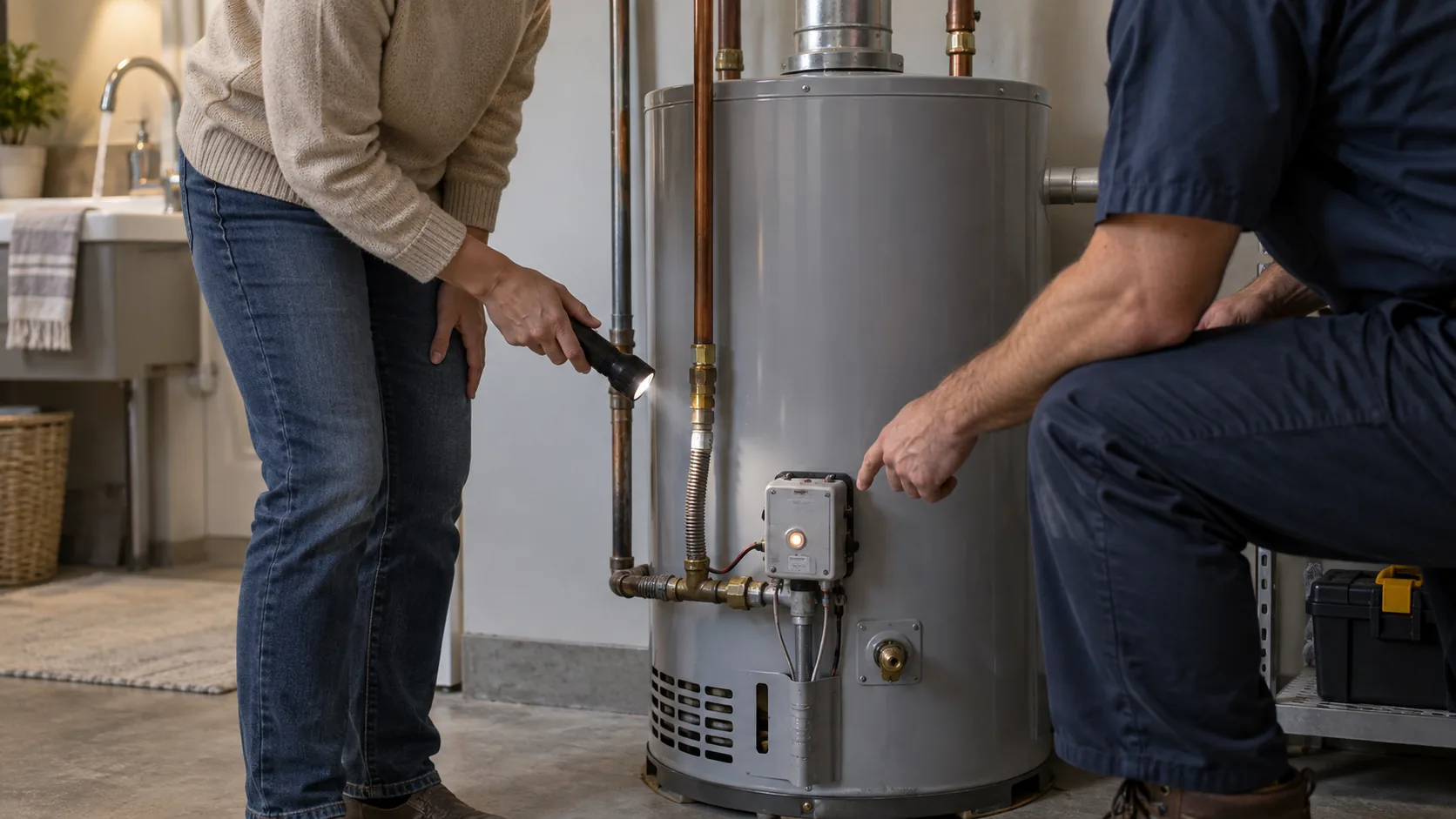
No Hot Water? Gas or Electric Decides Which Part Quit
A tank that suddenly runs cold has usually lost one specific part, and the fuel type tells you which ones to suspect. Here's how to narrow it down before the service call.
Read guide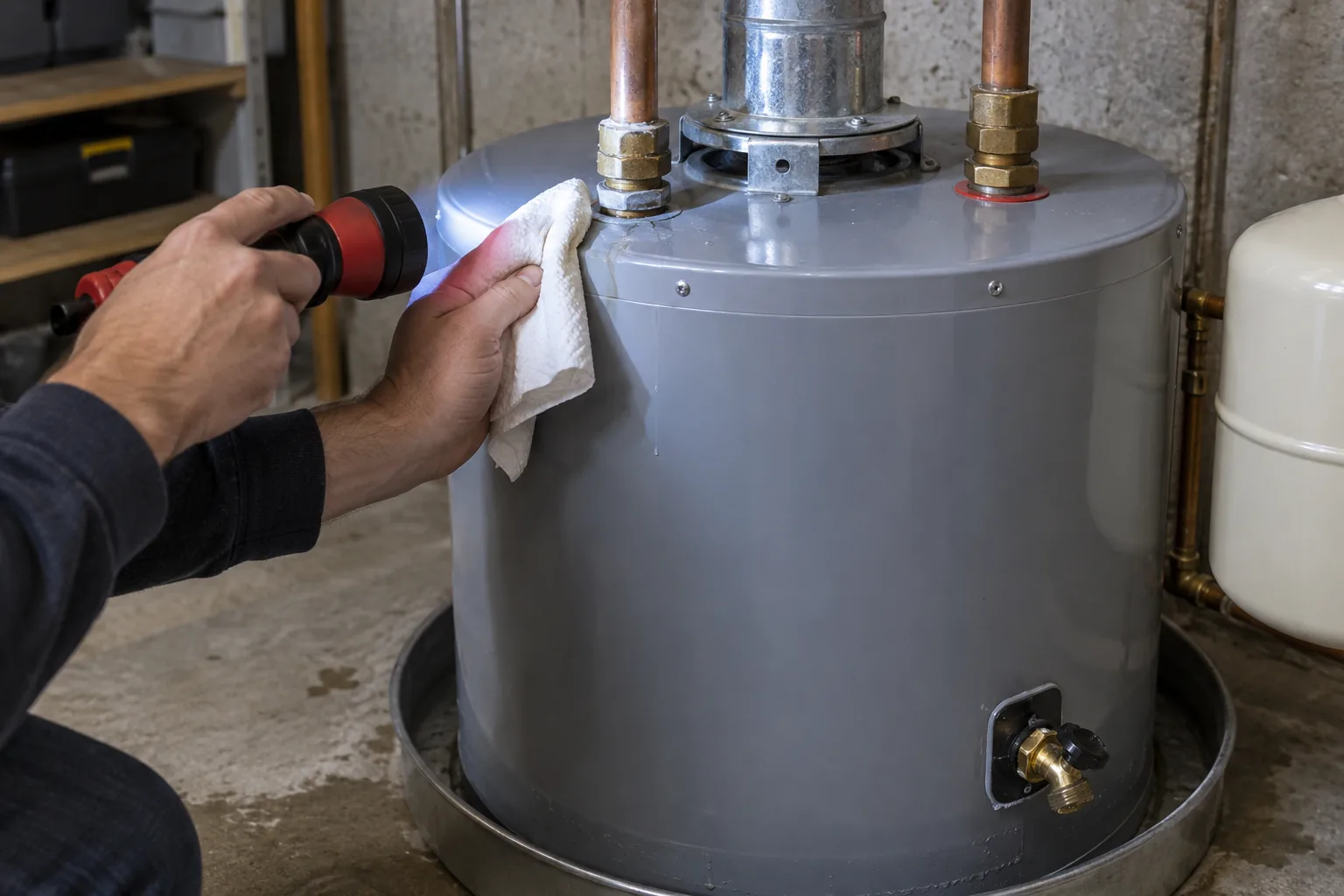
Water Heater Leaking? Where the Water's From Decides Everything
A leak from a fitting is a $150 fix. A leak from the tank body is a replacement, today. How to tell the difference in five minutes, before you call.
Read guide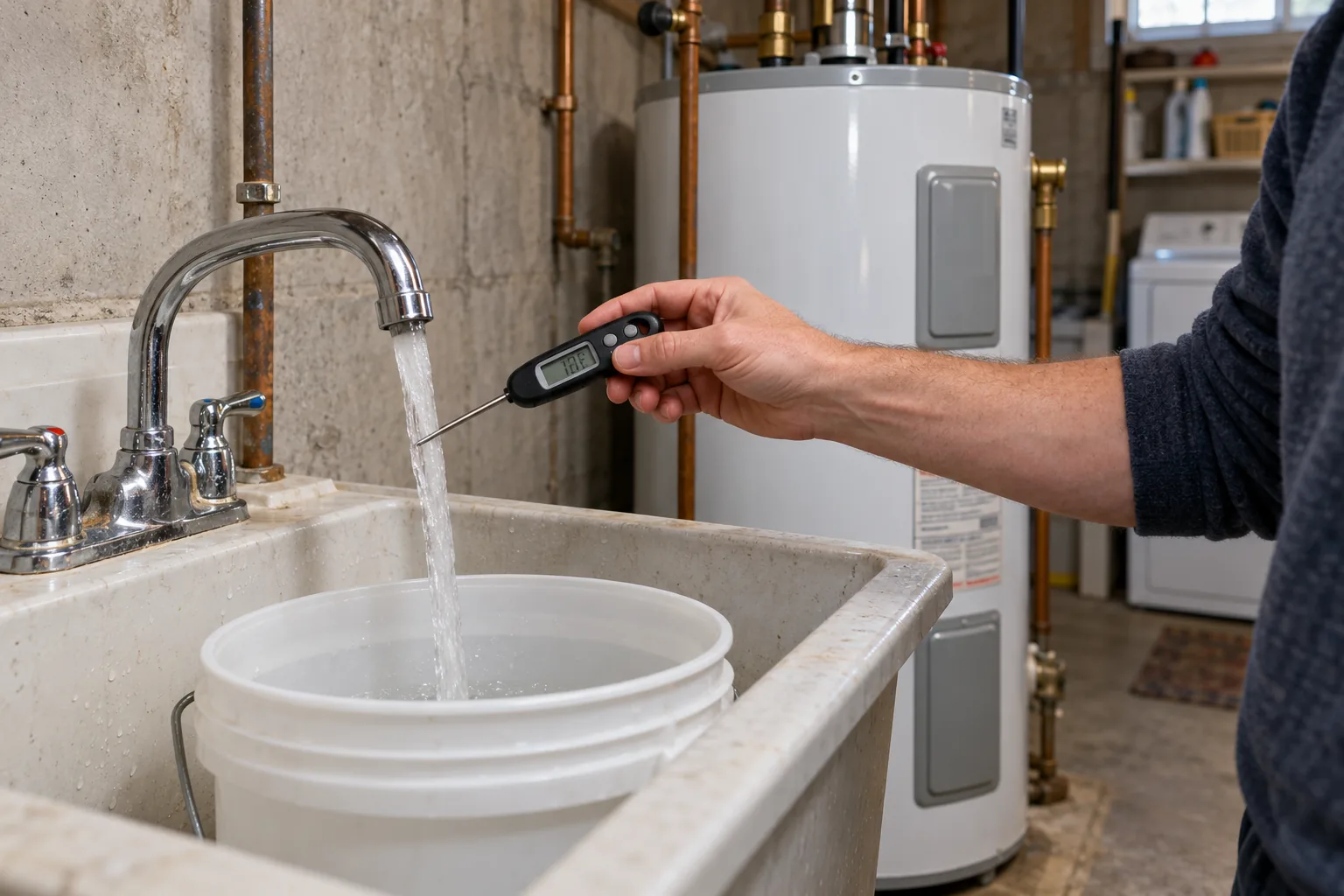
Hot Water Runs Out Fast? Do the Gallon Math Before You Buy a Part
A shower that goes cold halfway through is either a tank that's too small for the hour you ask of it or a part that's quietly stealing capacity. A bucket, a thermometer, and the data plate tell you which.
Read guide