
Which heat-pump incentives can I count on for a 2026 installation?
The federal 25C heat-pump credit ended for 2026 installations. Use this workflow to verify current state and utility rebates before putting them into a project budget.
The short answer
Do not subtract the expired federal Section 25C credit from a 2026 project. Verify state, utility, manufacturer, and income-qualified programs directly with each administrator. Confirm the exact matched equipment, application deadline, contractor rules, pre-approval requirement, stacking rules, and whether payment arrives at purchase or after completion.

Estimate, not a final quote
This range is for planning. Final pricing depends on an on-site inspection, materials, permits, access, and contractor scope.
Compare written bids
Ask each contractor for the same scope, warranty terms, permit handling, cleanup details, and exclusions before choosing.
Source-backed guidance
Guides use public references and practical cost modeling, then point you to official sources where rules or rebates can change.
This article contains paid links to Amazon. As an Amazon Associate I earn from qualifying purchases.
An incentive is real only when your project, equipment, contractor, timing, and household meet the written program rules. A rebate advertised as “up to” a large amount is not the same as money available for the system in your proposal.
For equipment placed in service in 2026, the federal Energy Efficient Home Improvement Credit under Section 25C is no longer available. The IRS says qualifying improvements had to be placed in service by December 31, 2025. State, utility, manufacturer, and income-qualified programs are separate and may still be available.
Build the budget from the gross price
Start with the full installed price before incentives. Separate required work from optional upgrades so you can see which costs a program includes.
| Project line | Contractor amount | Incentive-eligible? | Written program proof |
|---|---|---|---|
| Outdoor and indoor matched equipment | |||
| Thermostat and controls | |||
| Duct repair or replacement | |||
| Electrical circuit or panel work | |||
| Backup heat | |||
| Permit and commissioning | |||
| Total gross project |
Do not use the net number in a financing decision until the program administrator has confirmed eligibility. Some rebates reduce the invoice, while others reimburse after installation. A household may need enough cash or credit to carry the gross price until payment arrives.
Cost estimator
HVAC cost estimator
A budgeting range, not a quote. Move the inputs to see what changes the number.
Estimated national cost
Typical project lands near $8,250.
If a written quote comes in above the high end, that's not automatically wrong — ask what scope is driving it.
What this assumes
- Standard central HVAC replacement scope.
- 1,500 sq ft home size selected.
- No major duct, electrical, or structural repairs included.
What moves this price
- 01Equipment tier, SEER2 rating, and brand.
- 02Ductwork condition and attic or crawlspace access.
- 03Permit requirements, refrigerant changes, and local labor rates.
Walk into your quotes ready
This range is your anchor. Bring these to every contractor conversation so you can tell a fair quote from a padded one.
- What SEER2 rating and tonnage are you quoting, and why that size for my home?
- Is a full load calculation (Manual J) included, or are you sizing by rule of thumb?
- Does the price include new line sets, a permit, and haul-away of the old unit?
- What's the labor warranty, and is it separate from the manufacturer's parts warranty?
- A quote given over the phone without seeing your ductwork or home.
- Pressure to decide today or 'lose' a discount.
- An oversized system pitched as 'more powerful'. Bigger isn't better for comfort.
Search programs in the right order
- Federal rules: Check the current IRS page for the installation year. For 2026, do not use the old 25C heat-pump credit.
- State energy office: DOE's Home Energy Rebates resources link to state-administered programs. Availability, launch dates, funding, income rules, and covered work differ by state.
- Electric or gas utility: Search the utility serving the installation address. Confirm that the tariff or rebate is active and funded on the application date.
- ENERGY STAR Rebate Finder: Use it to discover utility and partner offers, then verify the result on the administrator's own page.
- Manufacturer or distributor: Treat instant discounts separately from government or utility rebates and ask whether combining them changes eligibility.
Take a PDF or screenshot of the terms used for the decision and record the date. Program pages can change after budgets are exhausted or a new program year begins.
Verify the exact system, not the brand family
Heat-pump eligibility can depend on the matched indoor unit, outdoor unit, coil, air handler, furnace pairing, capacity, and regional designation. Similar model numbers can produce different performance ratings.
Ask the contractor for:
- Complete indoor and outdoor model numbers.
- The matched-system certificate or directory reference requested by the program.
- Capacity and efficiency ratings for the proposed combination.
- Cold-climate designation when the program requires it.
- An itemized proposal separating equipment, labor, duct, electrical, controls, and permit work.
- Written confirmation that the contractor meets any program enrollment or licensing rule.
Do this before paying a non-refundable deposit. A verbal assurance that “all our heat pumps qualify” is not enough.
Ask these questions before applying
| Requirement | Question for the program administrator |
|---|---|
| Reservation | Must funds be reserved before contract signing, purchase, permit, or installation? |
| Applicant | Does the homeowner, contractor, landlord, tenant, or utility-account holder apply? |
| Income | Is eligibility based on household income, area median income, tax records, or program enrollment? |
| Contractor | Must the installer appear on an approved list before work begins? |
| Equipment | Which certificate, product list, or matched-system number proves qualification? |
| Existing system | Must the project replace resistance heat, fossil fuel, or failed equipment? |
| Stacking | Can this offer be combined with utility, state, manufacturer, or financing incentives? |
| Payment | Is it an invoice discount, rebate check, tax benefit, or contractor payment? |
| Completion | Which invoice, permit, photos, commissioning report, or inspection closes the application? |
Worked budget example
Suppose a proposal totals $14,800: $11,500 for the matched heat-pump system and installation, $1,800 for duct repairs, and $1,500 for electrical work. A utility advertises a $1,200 equipment rebate, while a state program may cover qualifying electrical work.
The safe planning number remains $14,800 until both administrators confirm that the exact equipment and electrical scope qualify. If the $1,200 utility rebate is reserved in writing but paid after completion, the homeowner still needs a plan for the full invoice. If the state program requires pre-approval and the contract was signed too early, the $1,500 electrical line may receive nothing.
This example shows why “project price minus every advertised maximum” is unreliable. Eligibility, timing, and cash flow are separate calculations.
Avoid five common failures
- Using the old federal credit: Section 25C does not cover equipment placed in service in 2026 under the current IRS guidance.
- Applying after the trigger date: Some programs require approval before purchase, contract, permit, or installation.
- Submitting one model number: Programs may require proof of the complete matched system.
- Assuming rebates stack: One program can reduce the eligible cost basis or prohibit combination with another.
- Ignoring non-equipment scope: Duct, electrical, backup heat, abatement, and finish repairs can determine the real out-of-pocket total even when equipment qualifies.
Keep the completion packet
Save the approved application, terms in effect on the approval date, reservation number, itemized contract, change orders, final paid invoice, model and serial numbers, permit sign-off, commissioning documents, and proof of payment. Ask when reimbursement should arrive and how to escalate a missing payment.
For paper originals, an expanding file organizer lets you separate the application, approval, invoices, and completion records. Keep digital copies too; use a folder you already own if it serves the same purpose.
If rules conflict, the current program document and a written answer from its administrator should control your budget—not an installer handout, an old article, or a generalized calculator.
Research sources
- IRS: Energy Efficient Home Improvement Credit. Current federal eligibility dates and covered improvements.
- DOE: Home Energy Rebates. State program status and consumer resources.
- ENERGY STAR Rebate Finder. Utility and partner offer discovery.
- ENERGY STAR: Air-Source Heat Pumps. Certified-product and cold-climate performance context.
Compare local quotes
Ready to compare real quotes from hvac pros?
Use your estimate as a budget anchor, then compare written contractor bids against it before you decide. Free request, no obligation.
Disclosure: this button opens a third-party quote-matching service. If you submit its form, its contact and privacy terms apply, and SaveBricks may earn a referral fee. It never changes the prices you're quoted, and our cost ranges are set independently — see how we estimate.
The cost guide
Get the monthly cost briefing
One useful email a month: project cost ranges, contractor red flags, and practical ways to avoid an inflated quote.
No spam. Unsubscribe any time. Read our privacy policy.
More hvac guides
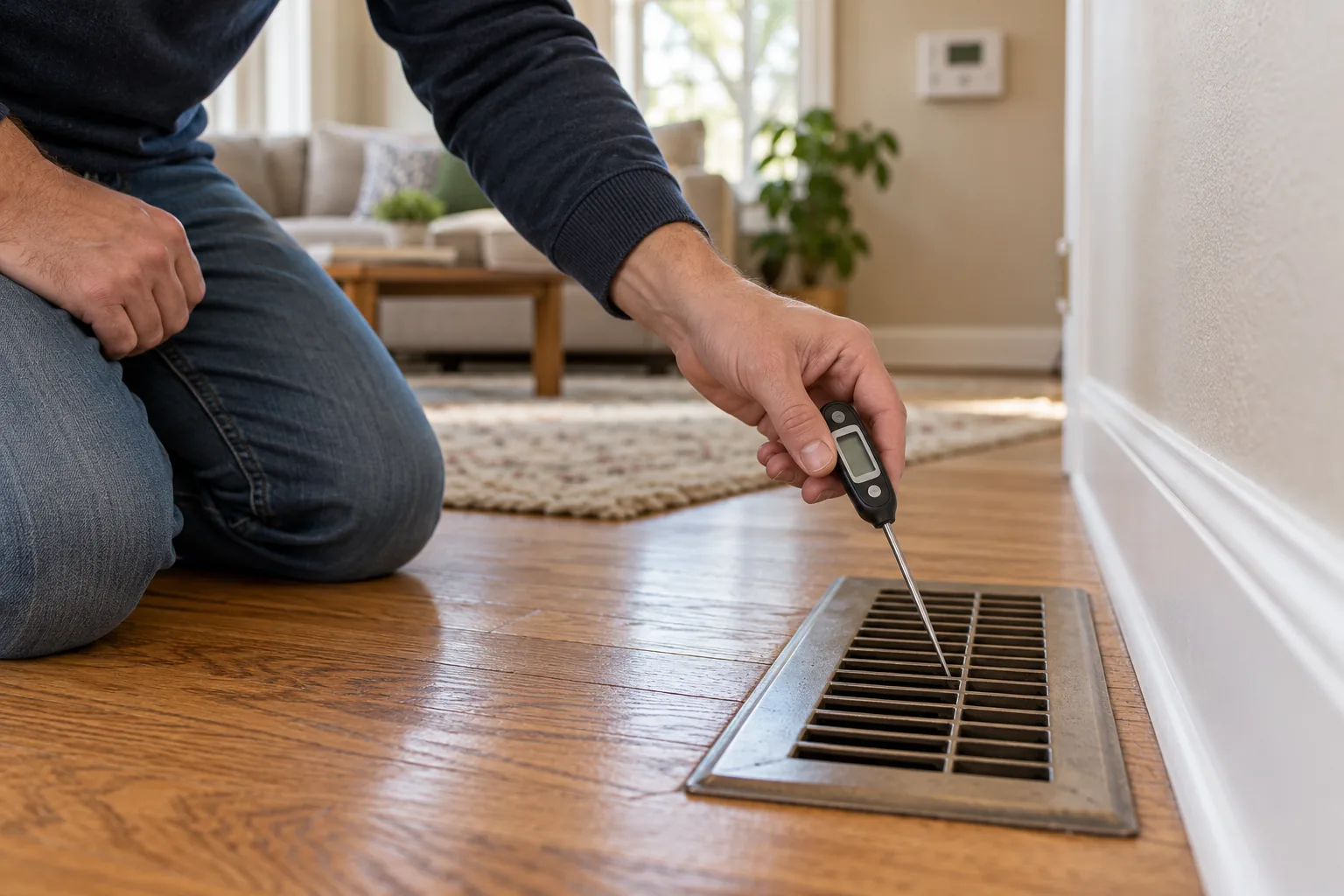
Furnace Blowing Cold Air? Measure the Temperature Rise Before You Call
A working gas furnace heats the air 40 to 70 degrees on many models. A kitchen thermometer tells you whether yours is heating at all, heating then quitting, or losing heat in the ducts.
Read guide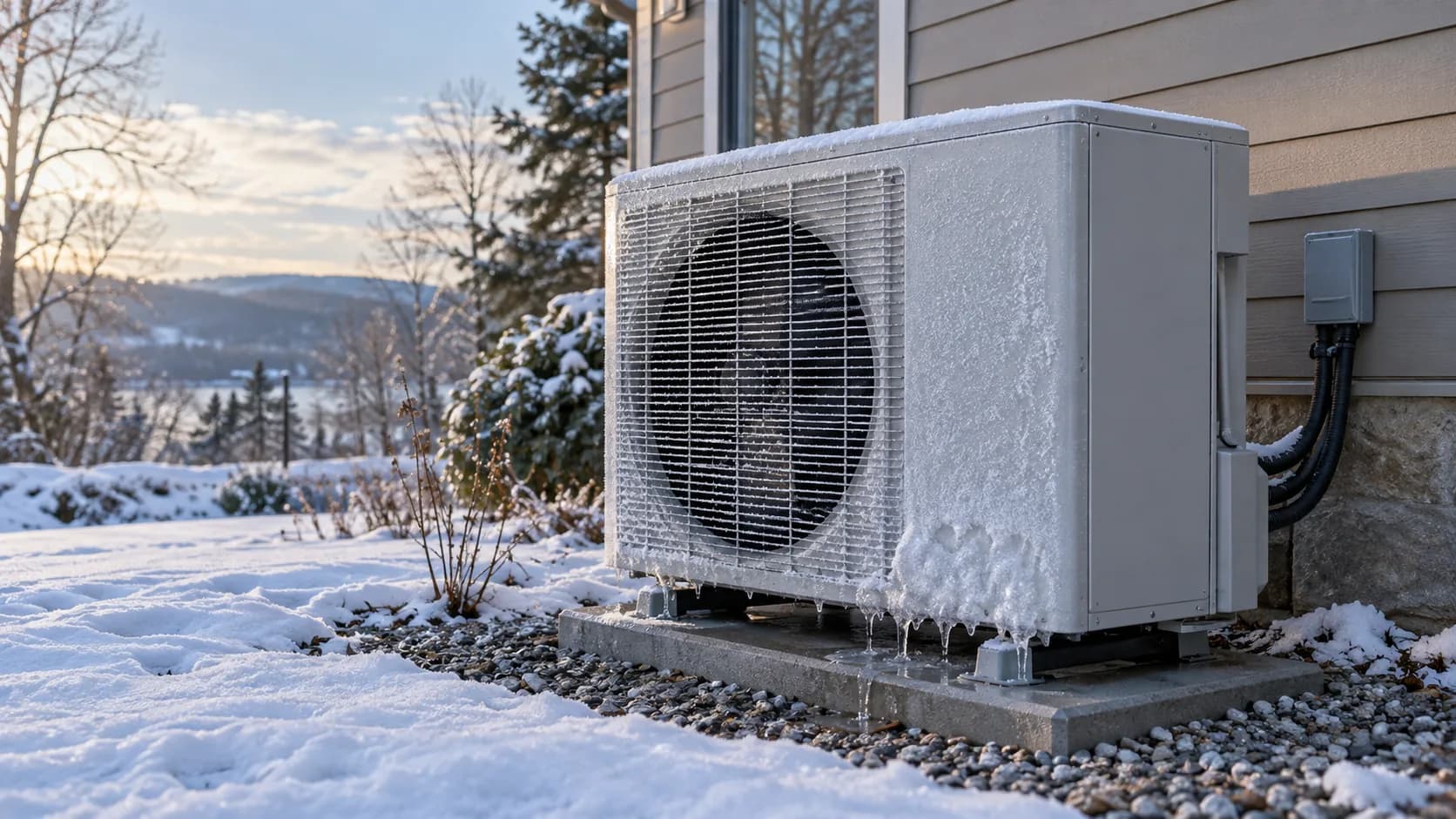
Heat Pump Covered in Ice? Frost Is Normal, a Block Is Not
A thin layer of frost on a heat pump in winter is the defrost cycle waiting to run. Ice that survives a defrost is a failed part. Here's how to tell the two apart.
Read guide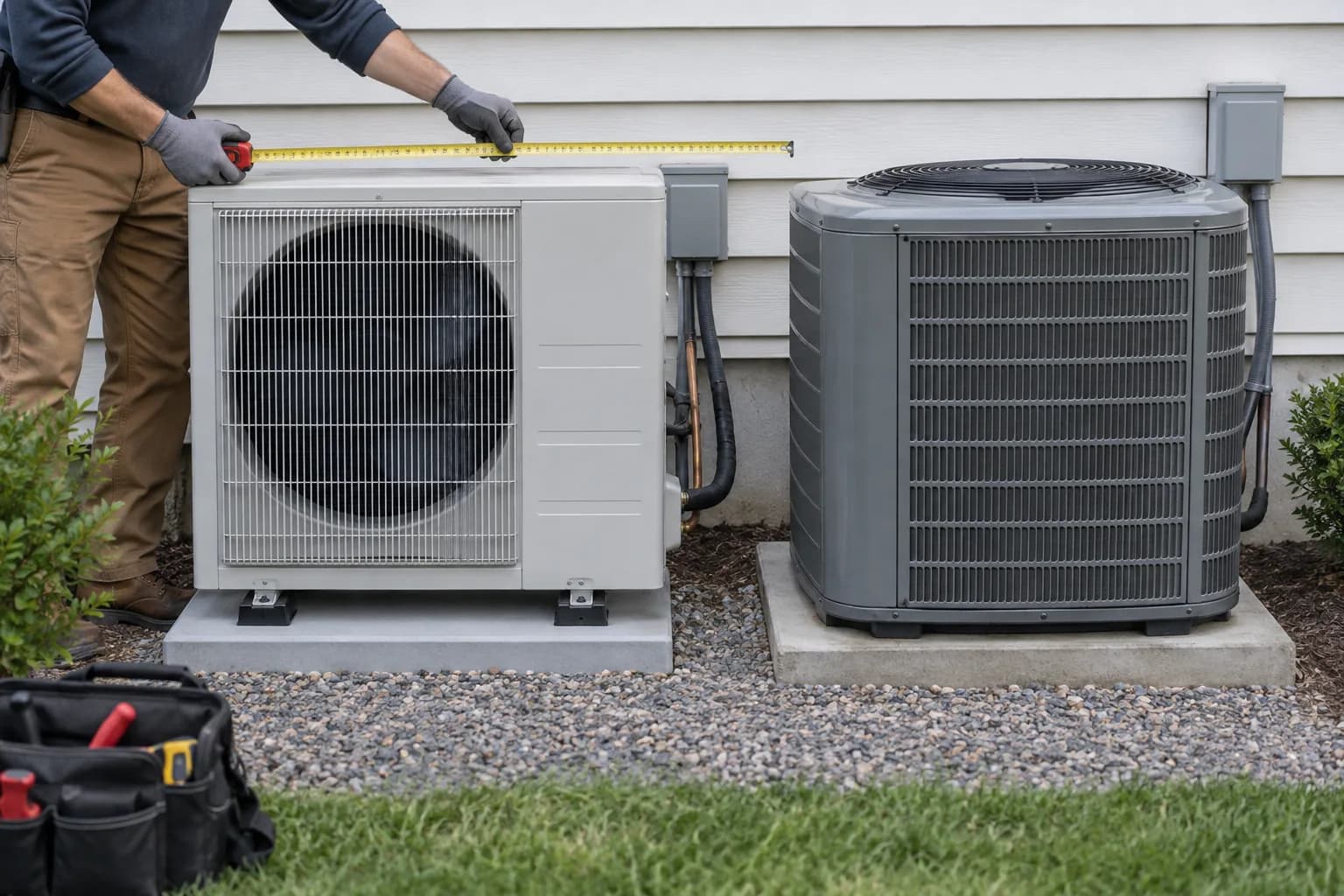
Heat Pump vs. Central AC: Cost Breakdown
Heat pumps are becoming the standard for modern climate control. Compare the upfront costs and long-term savings of a Heat Pump versus traditional Central Air.
Read guide