
Which HVAC warning signs mean I should shut the system down now?
A safety-first HVAC triage guide for smoke, gas odors, electrical faults, grinding equipment, frozen coils, water leaks, and ordinary comfort problems.
The short answer
Shut the system down for burning odors, smoke, sparking, grinding metal, a tripping breaker, or suspected combustion-gas problems. Warm air, short cycling, and higher bills need diagnosis, but they are not automatically emergencies unless safety, extreme weather, or a vulnerable occupant changes the risk.
Estimate, not a final quote
This range is for planning. Final pricing depends on an on-site inspection, materials, permits, access, and contractor scope.
Compare written bids
Ask each contractor for the same scope, warranty terms, permit handling, cleanup details, and exclusions before choosing.
Source-backed guidance
Guides use public references and practical cost modeling, then point you to official sources where rules or rebates can change.
This article contains paid links to Amazon. As an Amazon Associate I earn from qualifying purchases.
Not every HVAC symptom is an emergency. The useful distinction is whether continued operation could create an electrical, fire, combustion, refrigerant, or mechanical hazard—or cause much more damage to the equipment.
The 5 Major Warning Signs
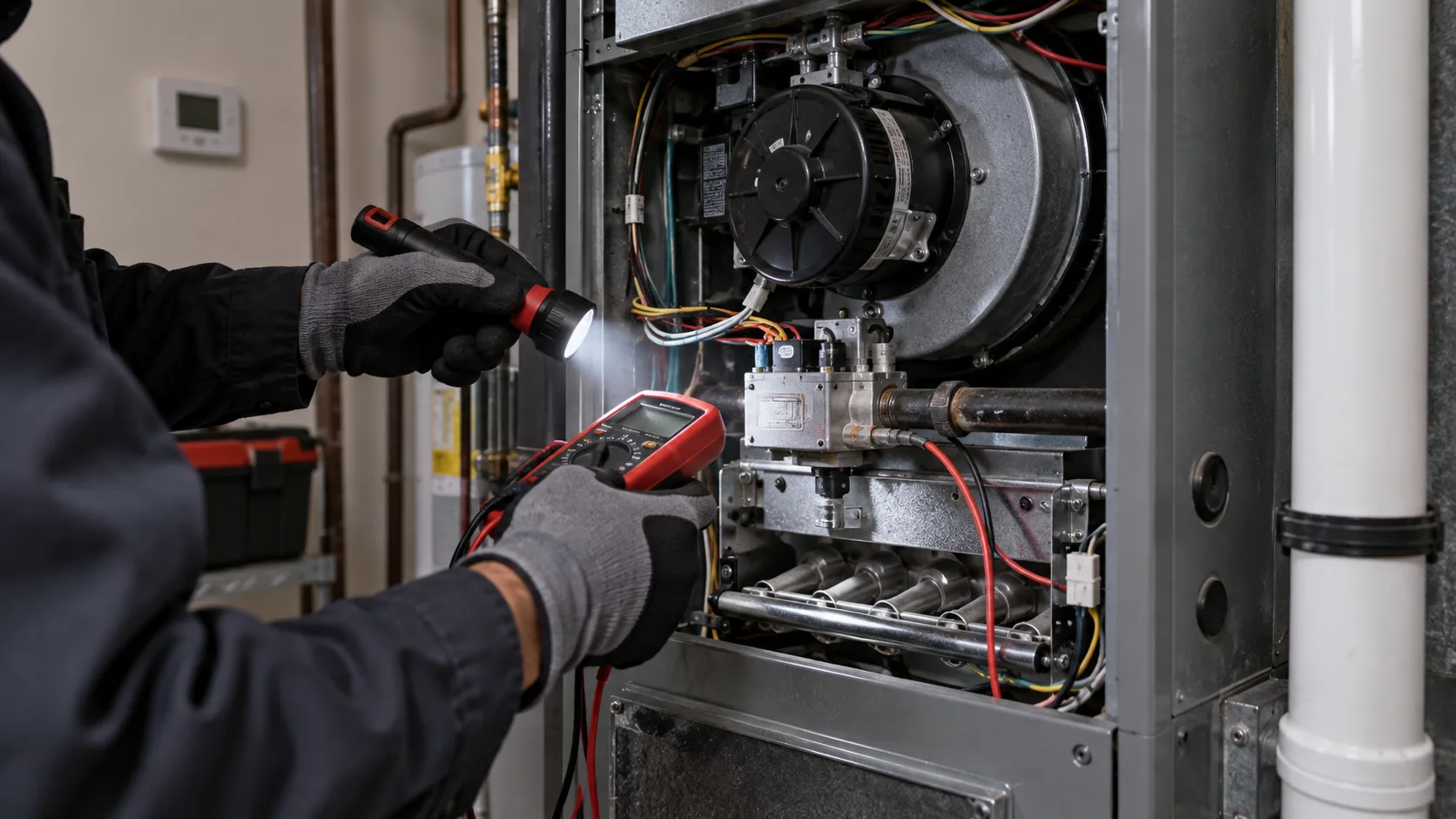
- Burning smell, smoke, sparking, or a breaker that trips again. Turn the system off at the thermostat. Do not repeatedly reset the breaker; an electrical fault needs diagnosis.
- Grinding, metal-on-metal impact, or a fan striking its housing. Shut it down before a loose part damages the motor, coil, or compressor.
- Gas odor, soot, or a carbon-monoxide alarm near fuel-burning equipment. Leave the area and follow the alarm or utility's emergency instructions. Do not use the furnace while investigating.
Stop guessing. Get a planning range.
Use our free HVAC cost estimator for a national planning range in seconds.
- Ice spreading beyond the evaporator cabinet or refrigerant line. Turn cooling off and let the coil thaw. Running against severe airflow restriction or low charge can damage the compressor.
- Water reaching electrical components, ceilings, or finished spaces. Shut cooling off and stop the water path before diagnosing the drain, pump, pan, or frozen coil.
Urgent, but usually safe to schedule
Warm air, reduced airflow, short cycling, a musty odor, a noisy startup, or an unexplained bill increase needs service soon. First check the thermostat mode, filter, open registers, and visible outdoor obstructions. Do not open electrical compartments or handle refrigerant.
If there is no safety symptom and the filter is due for replacement, use a filter matching the equipment's specified size and rating. Shopping or replacing a filter should never delay an emergency call or evacuation.
Extreme outdoor temperatures, infants, older adults, medical needs, and frozen-pipe risk can turn an ordinary loss of heating or cooling into a household emergency. Treat the people and building conditions, not only the equipment symptom.
What to ask on the call
Describe the exact sound, smell, location, thermostat setting, breaker behavior, and whether the indoor and outdoor units are running. Ask for the diagnostic fee, after-hours rate, and approval threshold before dispatch. After diagnosis, ask for the failed component and test result in writing.
An emergency visit does not justify an immediate full replacement without a scope. If replacement is recommended, ask what failed, why repair is unsuitable, and whether the system can be made safe while you collect a second bid.
Use this shut-down checklist
The safest control depends on the symptom. Do only what you can reach without opening equipment or entering a hazardous area.
| Symptom | Immediate homeowner action | Who to call |
|---|---|---|
| Smoke, sparking, melted wiring odor, or repeated breaker trip | Move people away; turn the system off only from a safe control and do not reset the breaker | Emergency services for active fire; licensed HVAC or electrical service afterward |
| Gas odor, soot, or carbon-monoxide alarm | Leave the building and follow the utility or alarm instructions; do not operate switches near a suspected gas release | Emergency services or gas utility, then qualified fuel-burning-equipment service |
| Grinding, fan impact, or violent vibration | Stop the system at the thermostat before more mechanical damage occurs | HVAC service |
| Ice on the indoor coil or refrigerant line | Turn cooling off; leave the fan setting alone unless a technician instructs otherwise; protect finishes from meltwater | HVAC service, usually during normal hours if no water or safety hazard exists |
| Drain overflow or water near electrical parts | Stop cooling and keep clear of wet electrical equipment | HVAC service; emergency help if water is entering a ceiling or electrical assembly |
| Warm air with no safety symptom | Check thermostat mode, filter, registers, and outdoor obstruction without opening panels | Schedule diagnosis based on weather and household needs |
Never use an oven, grill, generator, or unvented combustion appliance to heat the home. Never handle refrigerant lines or remove a service panel to look for the fault.
Decide whether the after-hours fee is justified
After-hours service is reasonable when waiting creates a credible safety risk, threatens major water or equipment damage, or exposes occupants to dangerous indoor temperatures. A normal-hours appointment may be appropriate when the system is safely off, weather is moderate, and the household has a safe temporary plan.
Before dispatch, ask:
- What is the diagnostic or after-hours fee?
- Does that fee apply toward the repair?
- What amount can the technician approve without calling me?
- Are parts likely to be available tonight, or is the visit only to make the system safe?
- Will I receive the measurements, fault code, and proposed repair in writing?
Those questions separate an urgent safety visit from a pressured replacement sale.
Record evidence before the symptom disappears
From a safe distance, capture a short video of the sound, the thermostat display, visible ice or water, and the breaker or alarm behavior. Note the outdoor temperature, when the system last worked normally, and any recent filter, electrical, thermostat, or renovation work. Do not recreate smoke, odor, or breaker trips for the camera.
The technician should be able to connect the recommendation to evidence: an electrical reading, pressure or temperature measurement, fault code, visible failed part, drainage blockage, or combustion test. “Old system” is context; it is not a diagnosis.
For warm-air symptoms, use the seven-cause checklist. For a major repair on older equipment, compare it with the repair-versus-replace guide.
Research sources
- ENERGY STAR: HVAC Maintenance Checklist. Airflow and filter symptoms.
- EPA: Mold. Musty odors and moisture in coils and ductwork.
- EPA: Section 608 Refrigerant Handling. Suspected refrigerant leaks require a certified technician.
- CPSC: Carbon Monoxide Questions and Answers. Alarm response and combustion-safety context.
The cost guide
Get the monthly cost briefing
One useful email a month: project cost ranges, contractor red flags, and practical ways to avoid an inflated quote.
No spam. Unsubscribe any time. Read our privacy policy.
Cost estimator
HVAC cost estimator
A budgeting range, not a quote. Move the inputs to see what changes the number.
Estimated national cost
Typical project lands near $8,250.
If a written quote comes in above the high end, that's not automatically wrong — ask what scope is driving it.
What this assumes
- Standard central HVAC replacement scope.
- 1,500 sq ft home size selected.
- No major duct, electrical, or structural repairs included.
What moves this price
- 01Equipment tier, SEER2 rating, and brand.
- 02Ductwork condition and attic or crawlspace access.
- 03Permit requirements, refrigerant changes, and local labor rates.
Walk into your quotes ready
This range is your anchor. Bring these to every contractor conversation so you can tell a fair quote from a padded one.
- What SEER2 rating and tonnage are you quoting, and why that size for my home?
- Is a full load calculation (Manual J) included, or are you sizing by rule of thumb?
- Does the price include new line sets, a permit, and haul-away of the old unit?
- What's the labor warranty, and is it separate from the manufacturer's parts warranty?
- A quote given over the phone without seeing your ductwork or home.
- Pressure to decide today or 'lose' a discount.
- An oversized system pitched as 'more powerful'. Bigger isn't better for comfort.
More hvac guides
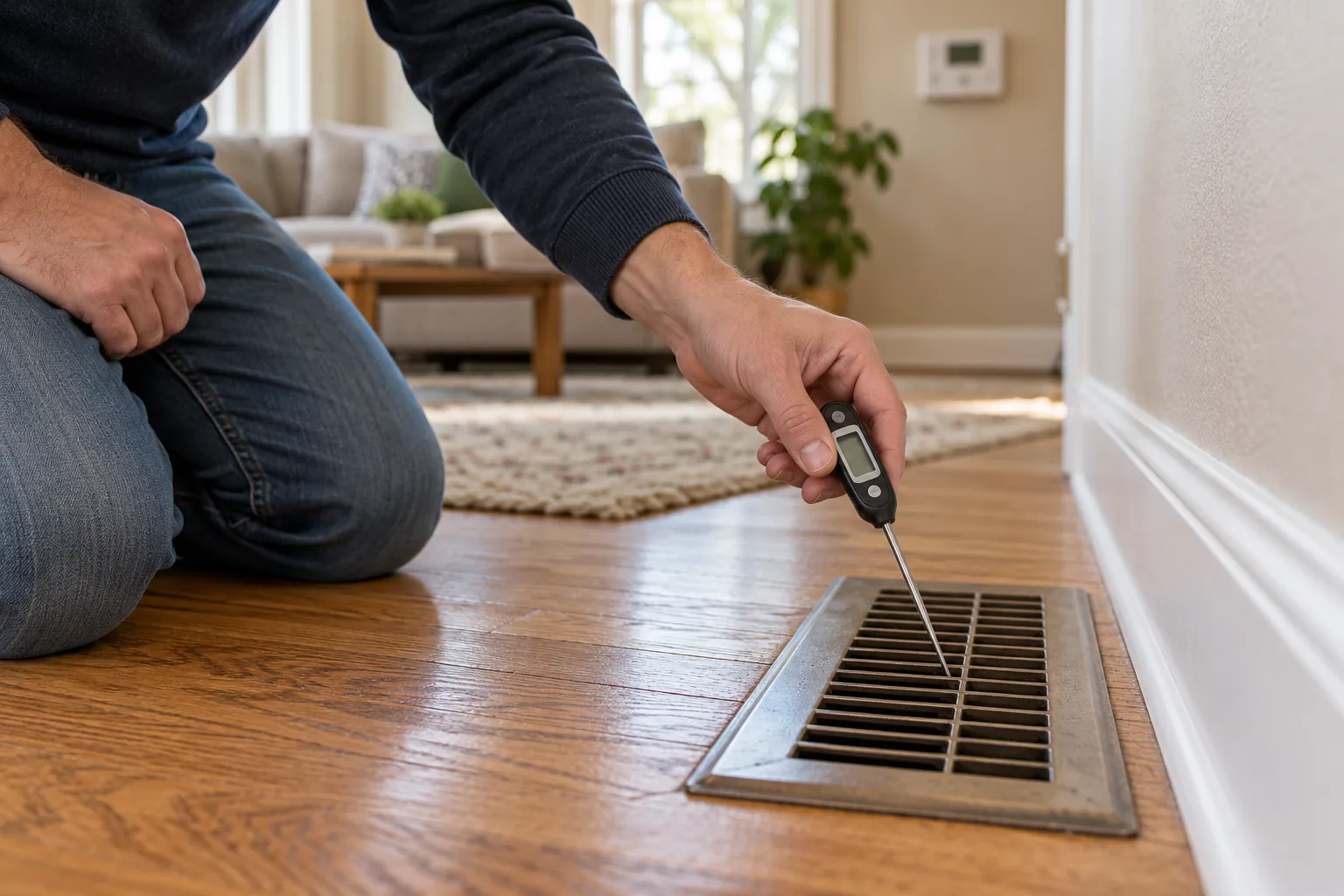
Furnace Blowing Cold Air? Measure the Temperature Rise Before You Call
A working gas furnace heats the air 40 to 70 degrees on many models. A kitchen thermometer tells you whether yours is heating at all, heating then quitting, or losing heat in the ducts.
Read guide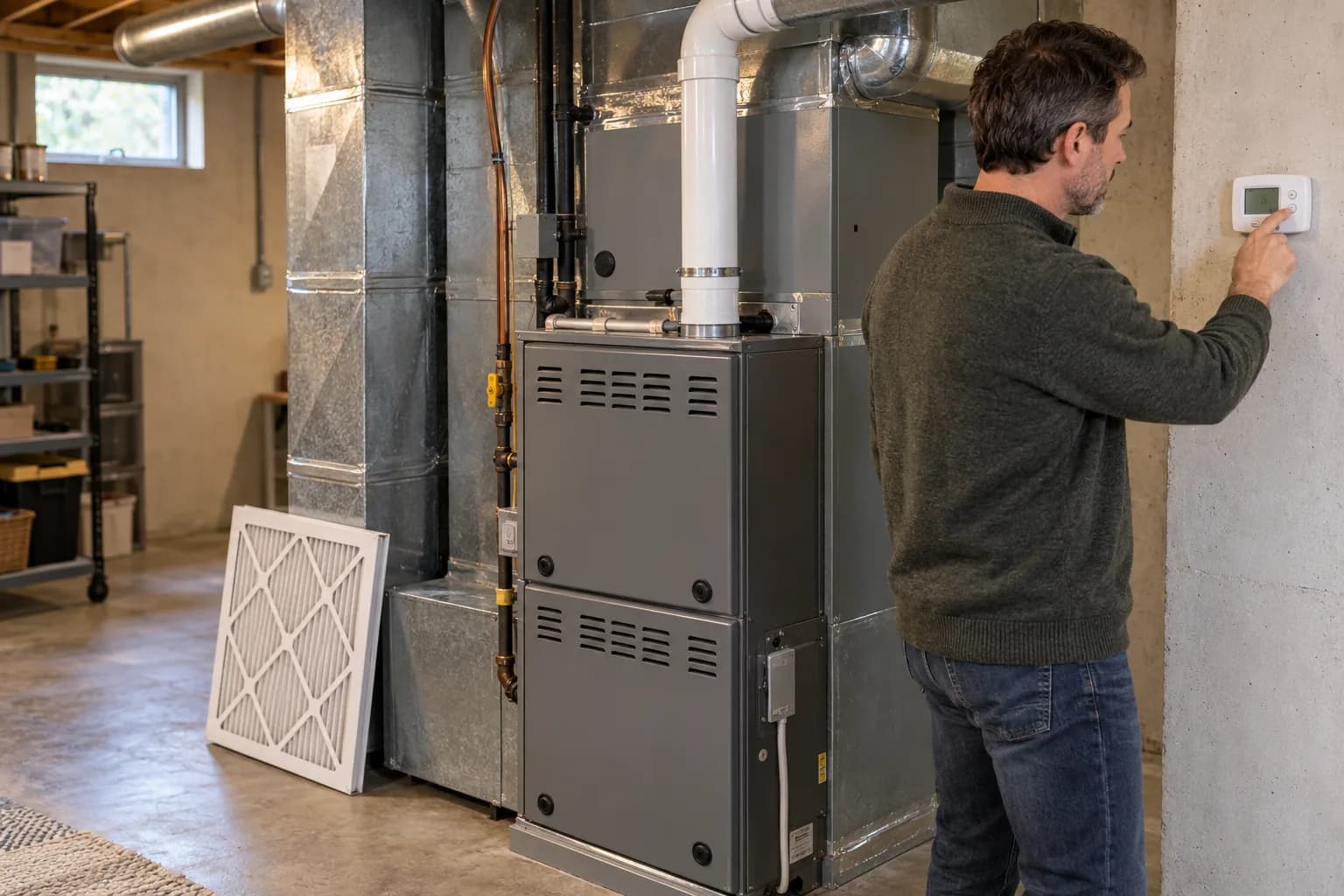
Furnace Smells Like Burning? Give It Three Hours, Then Name the Smell
Burning dust on the first cold night is normal and fades within a few hours. Hot plastic, hot wiring, or rotten eggs isn't. Here's how to tell them apart and what each repair costs.
Read guide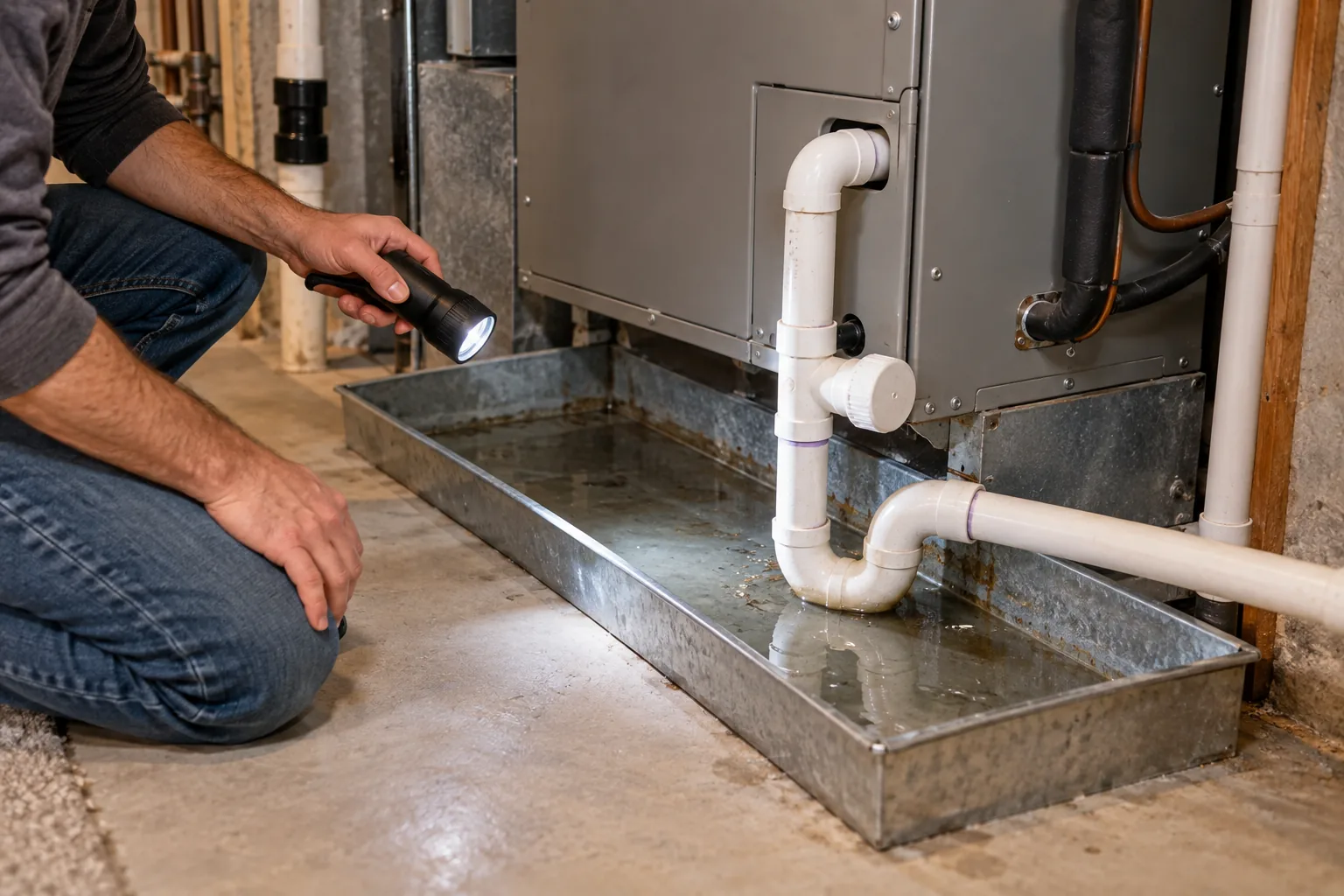
AC Leaking Water Inside? Find Where the Water Stops Moving
Most indoor AC leaks come from a clogged condensate drain, not a broken system. Here's how to tell a drain clog from a cracked pan or an iced coil, and what each costs.
Read guide