
Why is my furnace blowing cold air?
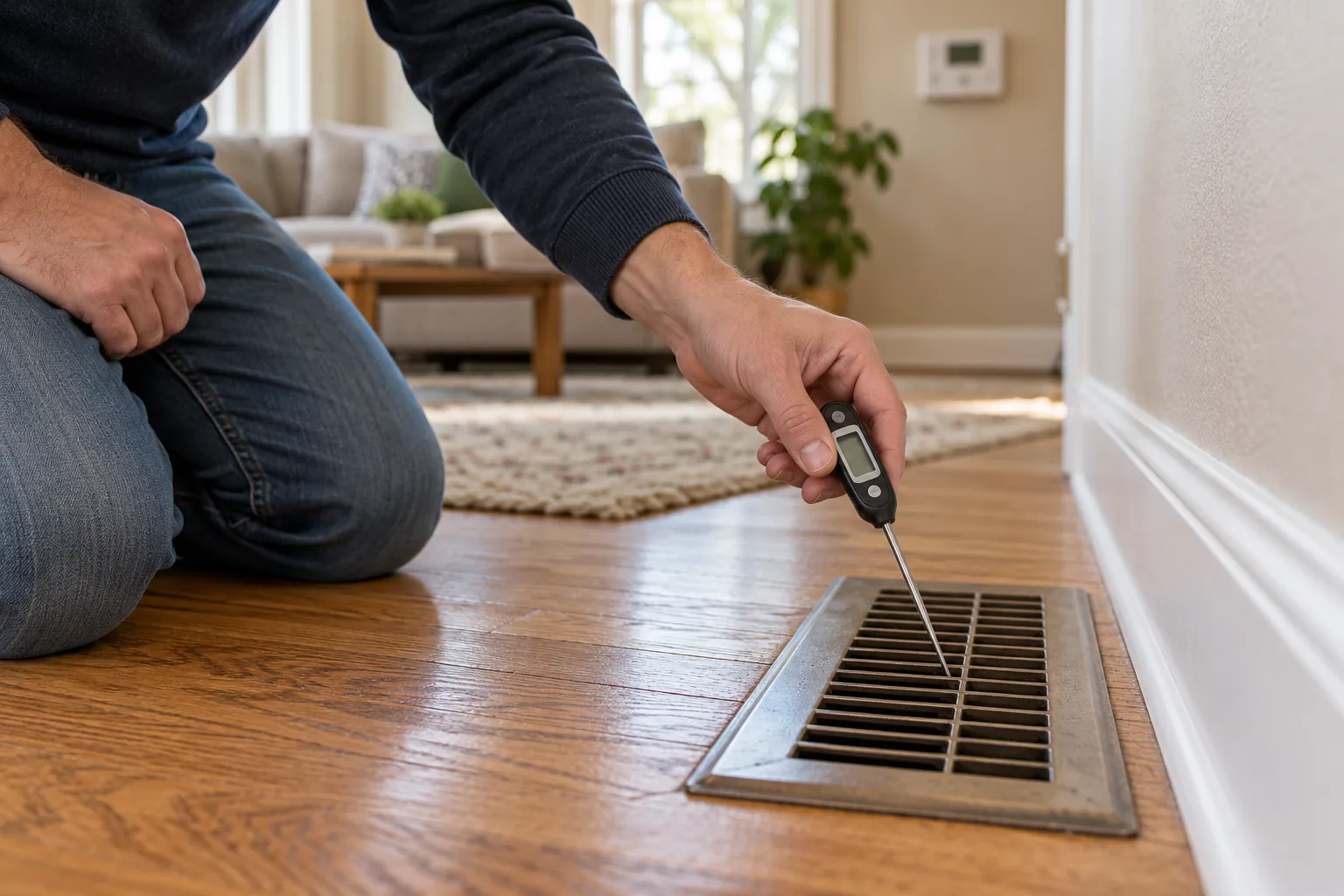
A working gas furnace heats the air 40 to 70 degrees on many models. A kitchen thermometer tells you whether yours is heating at all, heating then quitting, or losing heat in the ducts.
The short answer
Check the thermostat first: a fan set to On instead of Auto blows room-temperature air between heating cycles, and Carrier names it the most common cause. If the setting is right, compare the air at a supply register with the air at the return. No temperature difference means the burners never lit (gas supply, ignitor, or a clogged condensate drain on a high-efficiency furnace). Warm air that turns cool mid-cycle points to overheating and the limit switch. Normal heat at the furnace but cold air in one room points to the ductwork. Trane puts most of the parts involved at $100 to $900 installed.
Estimate, not a final quote
This range is for planning. Final pricing depends on an on-site inspection, materials, permits, access, and contractor scope.
Compare written bids
Ask each contractor for the same scope, warranty terms, permit handling, cleanup details, and exclusions before choosing.
Source-backed guidance
Guides use public references and practical cost modeling, then point you to official sources where rules or rebates can change.
This article contains paid links to Amazon. As an Amazon Associate I earn from qualifying purchases.
Carrier's Comfort 59SC5B gas furnace is certified for a temperature rise of 40 to 70°F. That means the air leaving the furnace should be 40 to 70 degrees warmer than the air going in. Carrier describes typical gas-furnace supply air as roughly 120 to 140°F. If your registers feel cool, an ordinary probe thermometer will narrow down the problem before anyone bills you a service fee.
First, make sure it's actually a furnace problem
Four normal behaviors account for a lot of "cold air" service calls, and none of them needs a part.
The fan is set to On. Carrier calls this the most common cause. With the fan on, the blower runs all the time and pushes room-temperature air between burner cycles. Trane gives the same fix: switch it to Auto so the furnace controls the fan. Also check that the mode says Heat, not Cool.
It's the first minute of the cycle. Carrier says some furnaces delay the blower about 30 to 60 seconds after the burners light, so the heat exchanger can warm up first. Lennox's SL280DFV runs on a fixed 30-second blower-on delay. Air that blows cool for a moment at startup is just the air that was sitting in the ducts.
It's the end of the cycle. After the thermostat is satisfied, the blower keeps running to pull leftover heat out of the heat exchanger. Lennox ships that furnace with a 90-second blower-off delay and tells installers to tune it so the supply air is 90 to 110°F when the blower stops. Lukewarm air right before the fan shuts off is the system working as designed.
You have a heat pump, not a furnace. Carrier puts heat-pump supply air at about 85 to 100°F, which feels cool on your hand compared with furnace air. If the outdoor unit is also coated in ice, our frozen heat pump guide covers the defrost cycle.
Measure the rise
Set the thermostat to Heat, a few degrees above room temperature, with the fan on Auto. Wait until the burners have been lit for about five minutes. Then hold a probe thermometer in the supply register closest to the furnace and write down the reading. Next, take a reading at the return grille, where air is pulled back to the furnace. Subtract the return reading from the supply reading.
It's rougher than a technician's plenum reading but close enough to sort the problem. Compare it with the certified range on your furnace's own rating plate, usually inside the blower door.
| What you measure | What it means | Likely parts | Trane's published repair cost |
|---|---|---|---|
| Almost no rise, ever | Burners aren't lighting | Gas supply, ignitor, gas valve, control board, or a condensate safety switch | Ignitor $100–$250; gas valve $200–$800; control board $300–$650 |
| Good rise that drops to near zero partway through | Furnace overheats and shuts off the burners while the fan keeps running | Clogged filter, blocked returns, or a failing high-limit switch | Filter only, or $150–$400 for the switch (Carrier's estimate) |
| Rise well below the nameplate range for the whole cycle | Burner isn't getting enough fuel, or too much air for the heat | Dirty burners, low gas pressure, or the blower set too fast | Service call; gas valve $200–$800 if that's the fault |
| Normal rise near the furnace, cold air in one or two rooms | Heat is leaving through the ducts | Disconnected or leaky ductwork | Depends on access and length of the run |
Trane also puts a typical service fee at $50 to $200 and labor at $75 to $150 an hour. Both come on top of the part costs in the table.
Zero rise: the burners never lit
Listen: inducer hum, ignitor glow or click, then the burners' soft whoosh. No whoosh means the sequence is breaking somewhere.
Start with the fuel, since that's the one cause you can check without opening anything. Trane says to make sure the furnace gas valve is open on a natural gas furnace, and that the tank isn't empty on a propane or oil furnace.
On a high-efficiency condensing furnace, also look at the condensate drain line. Trane notes that a clogged drain triggers a safety switch that keeps the burners from lighting, while the blower still pushes cool air through the registers. ENERGY STAR's maintenance checklist lists the condensate drain as something a tune-up should check. A clog that's slow to drain or backing up is a normal service-call fix. If water is pooling around the furnace, shut it off at the thermostat before you call.
This is where you stop. The ignitor, gas valve, and control board all sit in the burner compartment. If the gas valve is open and the burners still won't light, that's a technician's job. If the burners light for a few seconds and then go out, the flame sensor is the usual suspect. That's a different symptom, and our short-cycling guide explains how to time it.
Cost estimator
HVAC cost estimator
A budgeting range, not a quote. Move the inputs to see what changes the number.
Estimated national cost
Typical project lands near $8,250.
If a written quote comes in above the high end, that's not automatically wrong — ask what scope is driving it.
What this assumes
- Standard central HVAC replacement scope.
- 1,500 sq ft home size selected.
- No major duct, electrical, or structural repairs included.
What moves this price
- 01Equipment tier, SEER2 rating, and brand.
- 02Ductwork condition and attic or crawlspace access.
- 03Permit requirements, refrigerant changes, and local labor rates.
Walk into your quotes ready
This range is your anchor. Bring these to every contractor conversation so you can tell a fair quote from a padded one.
- What SEER2 rating and tonnage are you quoting, and why that size for my home?
- Is a full load calculation (Manual J) included, or are you sizing by rule of thumb?
- Does the price include new line sets, a permit, and haul-away of the old unit?
- What's the labor warranty, and is it separate from the manufacturer's parts warranty?
- A quote given over the phone without seeing your ductwork or home.
- Pressure to decide today or 'lose' a discount.
- An oversized system pitched as 'more powerful'. Bigger isn't better for comfort.
Warm, then cold: the limit switch tripped
Carrier explains the high-limit switch this way: when the heat exchanger gets too hot, the switch cuts power to the gas valve and the burners go out. The blower keeps running to cool things down, so from your couch it feels like the furnace is blowing cold air. Trane adds that repeated overheating from a dirty filter can eventually wear out the switch, leaving the furnace blowing cool air without ever burning fuel.
So start with the filter. Put in a fresh filter matching the equipment's specified size and rating, open any closed supply registers, and clear furniture away from the return grille. Then measure again over a full cycle.
Flat rule: if the rise drops off mid-cycle on a clean filter with open registers, book the service call. Don't try a third filter brand. At that point the switch, the blower, or the duct system is the problem, and Carrier puts a professional switch replacement at $150 to $400. Our filter habit guide explains how a clogged filter turns into a much bigger repair bill.
Good rise, cold room: look at the ducts
If the register nearest the furnace reads well above the return but a bedroom at the far end of the house blows cool air, the furnace is fine. The heat is getting lost on the way. ENERGY STAR estimates that in a typical house, about 20 to 30 percent of the air moving through the duct system is lost to leaks, holes, and poorly connected ducts. Ducts running through an unheated attic or crawlspace lose the most heat.
A disconnected flex duct in the attic can make one room feel like the furnace failed. Getting into an attic or crawlspace is a fall and tight-space hazard, so if the run isn't visible from a safe floor, have a contractor inspect it. Ask them to seal the joints with mastic or foil tape. ENERGY STAR says never to use ordinary duct tape for this, because it does not last.
Flat rule: if the temperature rise at the furnace is inside the nameplate range, you probably don't need a new furnace. That reading shows the furnace is producing heat. Fix where the heat is going before you pay for more heating capacity. If you're comparing bids anyway, our HVAC quote guide shows what a real one should list.
When cold air is a safety call
Cold air on its own isn't an emergency. Cold air along with a rotten-egg smell is. Leave the house and call your gas utility from outside. Do the same if your carbon monoxide alarm sounds. EPA recommends a CO alarm certified to UL 2034 in the hallway near every separate sleeping area, and treats it as a backup to proper maintenance of fuel-burning appliances, not a replacement for it. ENERGY STAR's checklist has a tune-up check gas pressure, burner combustion, and the heat exchanger.
When you book the call, tell the dispatcher your fan setting, your supply and return readings, and whether the rise ever showed up at all. "Zero rise, no burner sound, gas valve open" sends a technician to the ignition sequence first.
Research sources
- Carrier: Why Is My Furnace Blowing Cold Air?
- Carrier: What Is a Furnace Limit Switch?
- Carrier: Heat Pump Not Heating? Troubleshooting Cold Air Issues
- Carrier: 59SC5B Comfort Gas Furnace Product Data
- Lennox: SL280DFV Installation Instructions (508246-01)
- Trane: Furnace Not Blowing Hot Air
- Trane: Average Furnace Repair Cost
- ENERGY STAR: Duct Sealing
- ENERGY STAR: Heating and Cooling Maintenance Checklist
- EPA: What About Carbon Monoxide Detectors?
Compare local quotes
Ready to compare real quotes from HVAC contractor pros?
Use your estimate as a budget anchor, then compare written contractor bids against it before you decide. Free request, no obligation.
Disclosure: this button opens a third-party quote-matching service. If you submit its form, its contact and privacy terms apply, and SaveBricks may earn a referral fee. It never changes the prices you're quoted, and our cost ranges are set independently — see how we estimate.
The cost guide
Get the monthly cost briefing
One useful email a month: project cost ranges, contractor red flags, and practical ways to avoid an inflated quote.
No spam. Unsubscribe any time. Read our privacy policy.
More hvac guides
Why Is Your AC Blowing Warm Air? 7 Causes, Ranked by Cost
Warm air from the vents has one of seven causes, and the most common ones are also the cheapest to fix. Here's how to tell which one you have before a technician tells you.
Read guide
House Humid With the AC Running? Read the Hygrometer Before You Buy Anything
A cool, clammy house usually points to the fan setting, an oversized AC, or air leaking in. Here's how to tell which one you have and what each fix really costs.
Read guide
Furnace Smells Like Burning? Give It Three Hours, Then Name the Smell
Burning dust on the first cold night is normal and fades within a few hours. Hot plastic, hot wiring, or rotten eggs isn't. Here's how to tell them apart and what each repair costs.
Read guide