
Is it normal for my heat pump to be covered in ice?
A thin layer of frost on a heat pump in winter is the defrost cycle waiting to run. Ice that survives a defrost is a failed part. Here's how to tell the two apart.
The short answer
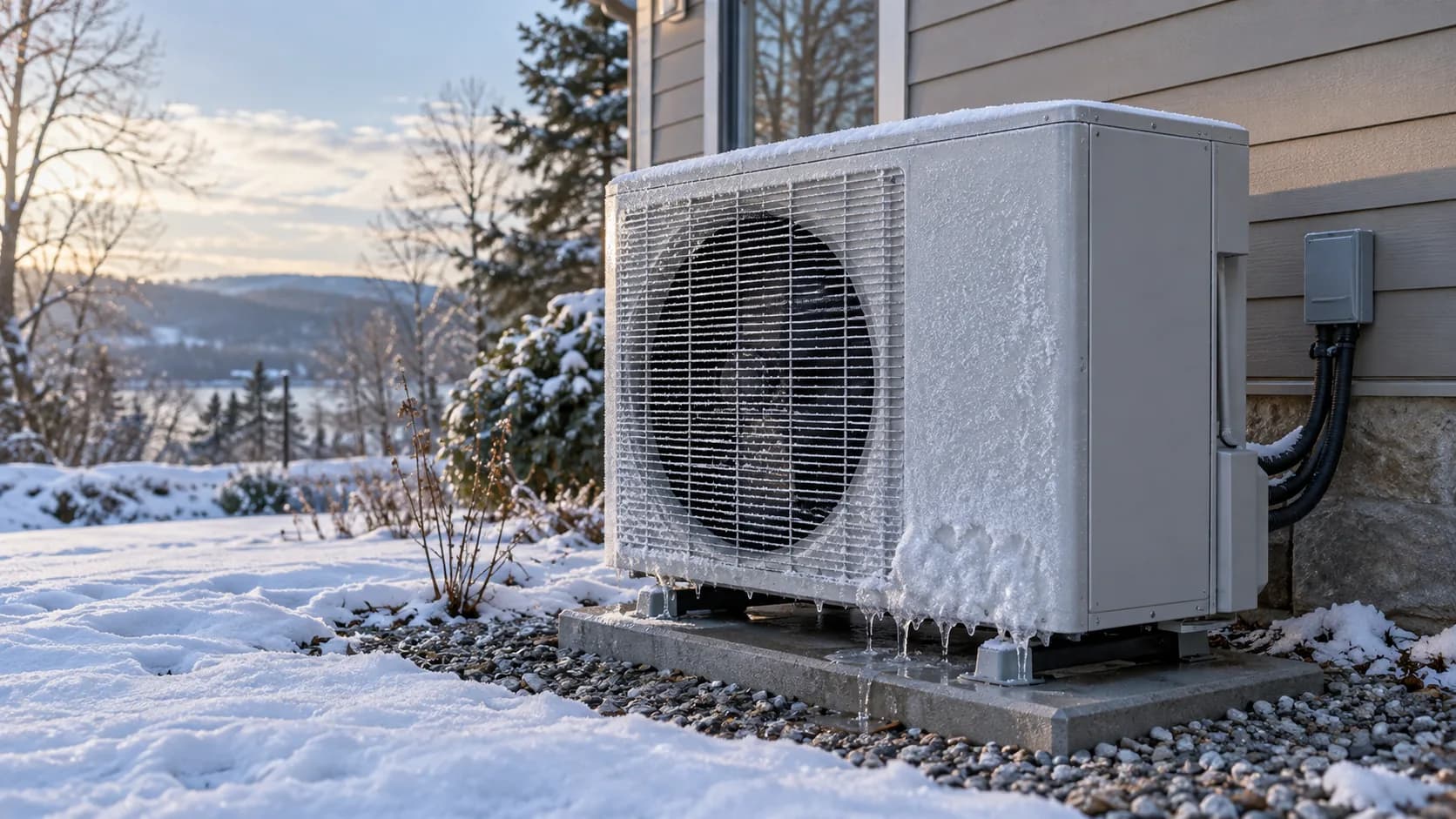
A light frost, generally under 1/4 inch, is normal in winter. A normal defrost cycle should clear it, and manufacturers put that cycle at anywhere from under a minute to about 15 minutes. Ice that is thicker than that, or that's still there after a defrost, points to blocked airflow, a failed defrost control or sensor, a stuck reversing valve, or low refrigerant. Those repairs often run $200 to $700 each.
Estimate, not a final quote
This range is for planning. Final pricing depends on an on-site inspection, materials, permits, access, and contractor scope.
Compare written bids
Ask each contractor for the same scope, warranty terms, permit handling, cleanup details, and exclusions before choosing.
Source-backed guidance
Guides use public references and practical cost modeling, then point you to official sources where rules or rebates can change.
This article contains paid links to Amazon. As an Amazon Associate I earn from qualifying purchases.
Carrier draws the line at a quarter of an inch. Frost thinner than that on a heat pump's outdoor coil is normal winter operation. Ice thicker than that, or ice still there after the unit has run a defrost, means something has failed. That one measurement is most of the diagnosis, and you can check it from your back step with a flashlight.
Why a working heat pump frosts over
In heat mode, the outdoor coil is the cold side of the system. Trane notes the coil typically runs 10 to 20 degrees colder than the outdoor air. So moisture in the air can freeze onto the fins even on a 38-degree morning, not just below freezing. Frost on the coil blocks airflow, and blocked airflow cuts heating capacity. That's why every air-source heat pump has a defrost mode.
During defrost, the reversing valve flips the refrigerant flow. For a few minutes, the heat pump runs in cooling mode, pushing hot refrigerant through the outdoor coil to melt the frost. Three things tell you it's working as designed, and none of them is a problem:
- A cloud of steam rising off the outdoor unit. That's melted frost hitting cold air, not smoke.
- The outdoor fan stops while the compressor keeps running, then restarts when defrost ends.
- "AUX" or "Aux Heat" on the thermostat. Your backup electric heat strips keep the house warm while the heat pump is borrowing heat to clear the coil.
How long a defrost takes depends on how much frost there is. Trane puts it at 30 seconds to 10 minutes, Carrier at about 5 to 10, and Lennox at 5 to 15. So a cycle that ends inside 15 minutes is within what the manufacturers describe. Trane's defrost control uses two sensors, one reading outdoor air temperature and one clamped to the coil. The control starts a defrost when the combination says the coil is icing, not on a fixed clock.
The test: watch one defrost cycle
If you're not sure whether what you're seeing is normal, give it an hour of watching. That's long enough to catch at least one defrost on almost any system. Then compare what you saw to this table.
| What you see | What it usually means | Typical cost, per Trane | Your move |
|---|---|---|---|
| Thin white frost that clears, with steam, and comes back later | Normal defrost operation | $0 | Nothing |
| Ice on the bottom rows only, pooled water refreezing under the unit | Blocked drain path, unit sitting low or unlevel, snow drifted against the base | $0 to clear, more to re-level the pad | Clear snow by hand; call if the pad has settled |
| Ice sheet on one side, under a roofline | Gutter or roof runoff dripping onto the coil | $0 for the unit; gutter repair is separate | Fix the gutter |
| Frost builds and never clears, no steam, no fan pause | Failed defrost control board or coil sensor | $200 – $650 (defrost board) | Call a technician |
| Unit tries to defrost but ice stays; poor heat in heat mode | Stuck or failed reversing valve | $400 – $700 | Call a technician |
| Outdoor fan not spinning, coil icing fast | Failed fan motor or capacitor | $200 – $700 (motor); $100 – $400 (capacitor) | Call a technician |
| Whole coil iced, weak heat, unit runs constantly | Low refrigerant from a leak | Varies; line repair $1,500 – $3,000+ | Call a technician |
Trane is also clear that these are ranges and that your actual bill depends on your region, labor rates, access to the unit, and whether the part is still under warranty.
Cost estimator
HVAC cost estimator
A budgeting range, not a quote. Move the inputs to see what changes the number.
Estimated national cost
Typical project lands near $8,250.
If a written quote comes in above the high end, that's not automatically wrong — ask what scope is driving it.
What this assumes
- Standard central HVAC replacement scope.
- 1,500 sq ft home size selected.
- No major duct, electrical, or structural repairs included.
What moves this price
- 01Equipment tier, SEER2 rating, and brand.
- 02Ductwork condition and attic or crawlspace access.
- 03Permit requirements, refrigerant changes, and local labor rates.
Walk into your quotes ready
This range is your anchor. Bring these to every contractor conversation so you can tell a fair quote from a padded one.
- What SEER2 rating and tonnage are you quoting, and why that size for my home?
- Is a full load calculation (Manual J) included, or are you sizing by rule of thumb?
- Does the price include new line sets, a permit, and haul-away of the old unit?
- What's the labor warranty, and is it separate from the manufacturer's parts warranty?
- A quote given over the phone without seeing your ductwork or home.
- Pressure to decide today or 'lose' a discount.
- An oversized system pitched as 'more powerful'. Bigger isn't better for comfort.
The two fixes that are actually yours
Only two causes on that list are safe to handle yourself, and neither involves touching the coil.
Snow and drift. Carrier calls for at least 24 inches of clear space around the outdoor unit, or whatever your model's installation manual specifies. Heavy snow banked against the base blocks the air intake, and it traps meltwater from each defrost right where it will refreeze. Shovel the area around the unit, not the unit itself. If ice builds from the bottom up every storm, the pad may have settled. Lennox notes a unit that isn't level can't drain its defrost water properly. Re-leveling or raising a pad means disconnecting refrigerant and electrical lines, so that's a contractor job.
Roof runoff. Carrier specifically names water from melting snow or ice dripping onto the coil as a freeze cause. A heat pump installed under a gutterless eave, or under a gutter that overflows, gets a steady drip that freezes faster than any defrost can clear it. The fix is at the roofline: a gutter, a diverter, or a clean downspout. If the gutter is overflowing because of ice, our ice dam guide covers what's happening up there.
Where you stop
Every manufacturer says the same thing here: never chip, pry, or hammer ice off the coil. Don't pour hot water on it, and don't aim a hair dryer, heat gun, or space heater at it. The aluminum fins bend at a touch. The copper tubing behind them carries refrigerant under pressure, and one puncture turns a free problem into a line repair. Carrier also warns that heat sources can shock and crack components.
If the unit is encased in ice, Carrier says a frozen heat pump can't heat and may be badly damaged if you leave it running. Your thermostat's Emergency Heat setting (often labeled "EM Heat") shuts off the outdoor compressor and runs the backup heat strips alone. That keeps the house warm and takes the load off a unit that can't defrost, but it's expensive to run for long. Treat it as a way to wait for the technician, not a way to get through the winter. Diagnosing a defrost board, a reversing valve, or a refrigerant charge takes gauges and live electrical testing. That's work for a licensed HVAC technician.
Repair or replace: the refrigerant line decides it
Most frozen-coil repairs are worth doing. A capacitor, fan motor, or defrost board on a working system is a one-visit fix. The decision gets harder when the diagnosis is a refrigerant leak on an older unit.
Trane and Carrier both put a typical heat pump's life at about 10 to 15 years. Here's the flat rule: past 12 years, a refrigerant leak or a failed reversing valve is a replacement quote, not a repair quote. You'd be paying $400 to $3,000 to keep a system near the end of its life running. Under 8 years, fix it, and check the warranty first, because both parts are often covered.
If your system uses R-410A, it can still be serviced. The EPA's Technology Transitions rule restricts new equipment, not repairs to systems already installed. But most manufacturers have moved new heat pumps to R-454B, so a replacement quote will usually specify the newer refrigerant. Our guide to reading an HVAC quote covers what should be itemized. If you're comparing repair against a new heat pump, check current heat pump incentives before you sign. The federal Section 25C credit doesn't cover heat pumps placed in service after December 31, 2025, so for a 2026 install, look at state and utility programs instead.
Research sources
- Carrier: Heat Pump Troubleshooting Guide
- Carrier: How Long Do Heat Pumps Last?
- Trane: What Is the Heat Pump Defrost Cycle?
- Trane: Heat Pump Troubleshooting
- Trane: Homeowner's Guide to Heat Pump Repair
- Trane: Average Heat Pump Repair Cost
- Trane: How Long Do Heat Pumps Last?
- Lennox: Understanding the Heat Pump Defrost Cycle
- Lennox: What to Do If Your Heat Pump Is Frozen
- EPA: Technology Transitions HFC Restrictions by Sector
- IRS: Energy Efficient Home Improvement Credit
Compare local quotes
Ready to compare real quotes from HVAC contractor pros?
Use your estimate as a budget anchor, then compare written contractor bids against it before you decide. Free request, no obligation.
Disclosure: this button opens a third-party quote-matching service. If you submit its form, its contact and privacy terms apply, and SaveBricks may earn a referral fee. It never changes the prices you're quoted, and our cost ranges are set independently — see how we estimate.
The cost guide
Get the monthly cost briefing
One useful email a month: project cost ranges, contractor red flags, and practical ways to avoid an inflated quote.
No spam. Unsubscribe any time. Read our privacy policy.
More hvac guides
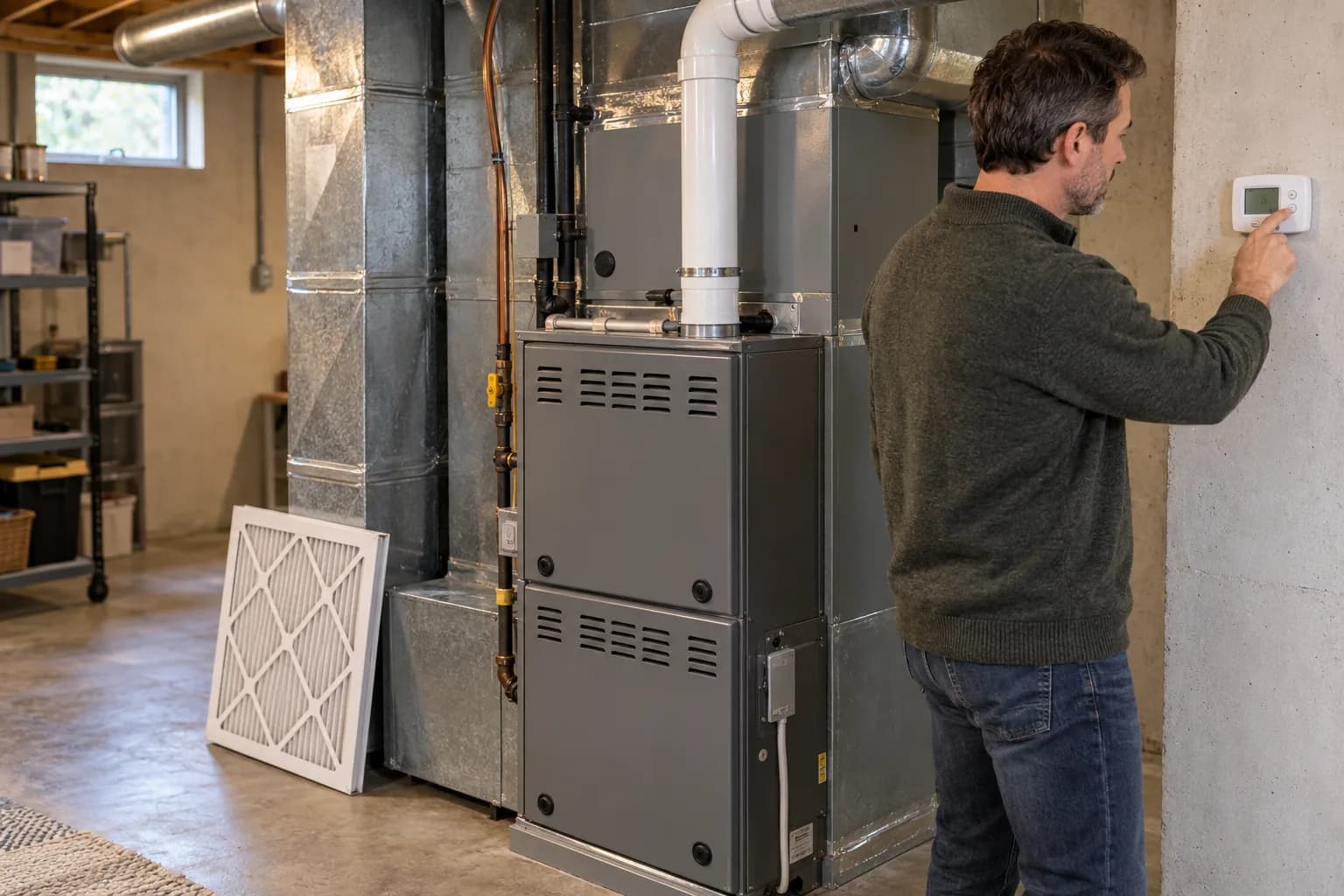
Furnace Smells Like Burning? Give It Three Hours, Then Name the Smell
Burning dust on the first cold night is normal and fades within a few hours. Hot plastic, hot wiring, or rotten eggs isn't. Here's how to tell them apart and what each repair costs.
Read guide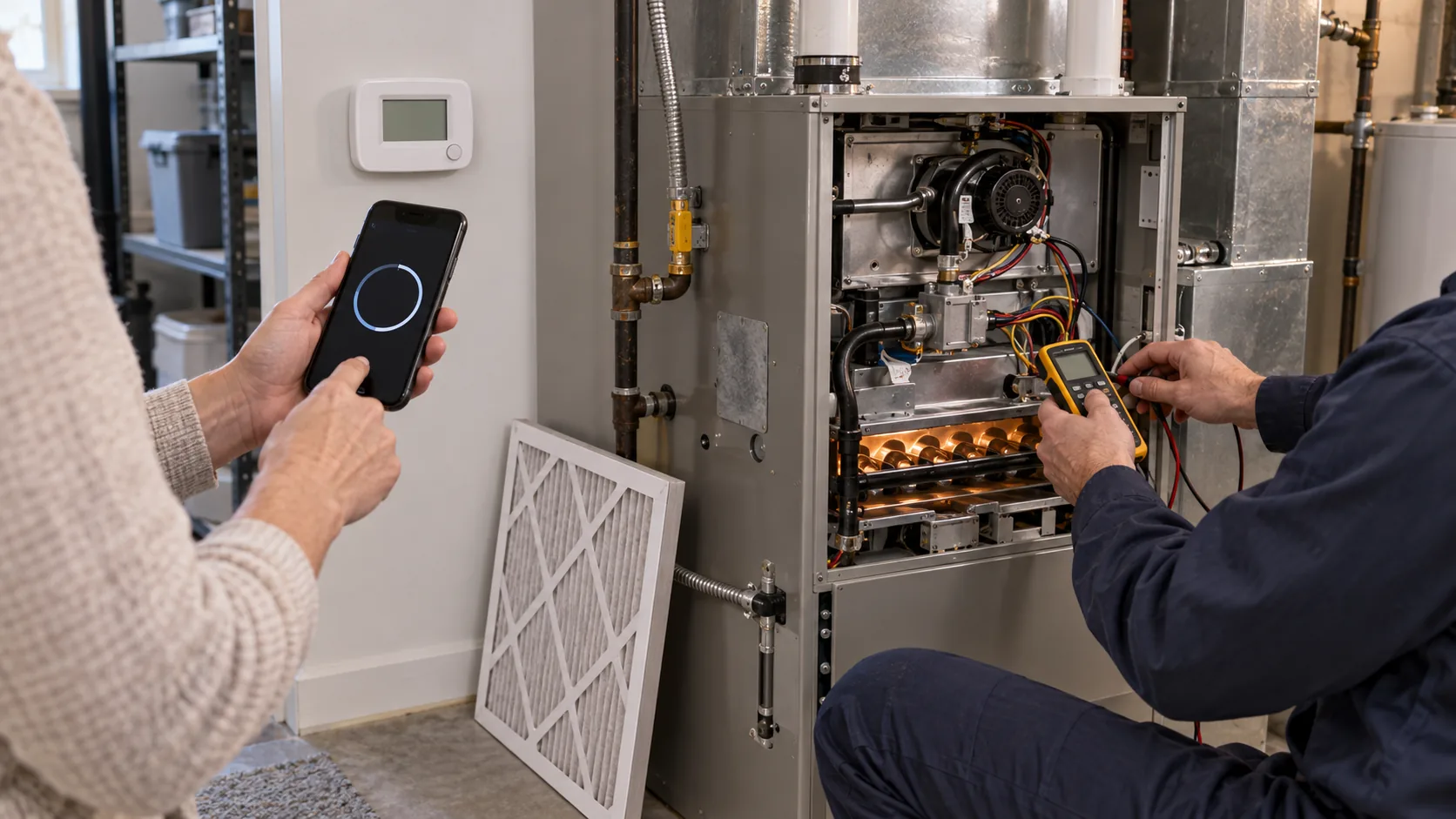
Furnace Short Cycling? Time the Cycle Before You Pay for a Part
How long your furnace runs before it quits points to the failed part. Here's how to read the timing, what each fix costs, and when the answer is the furnace itself.
Read guide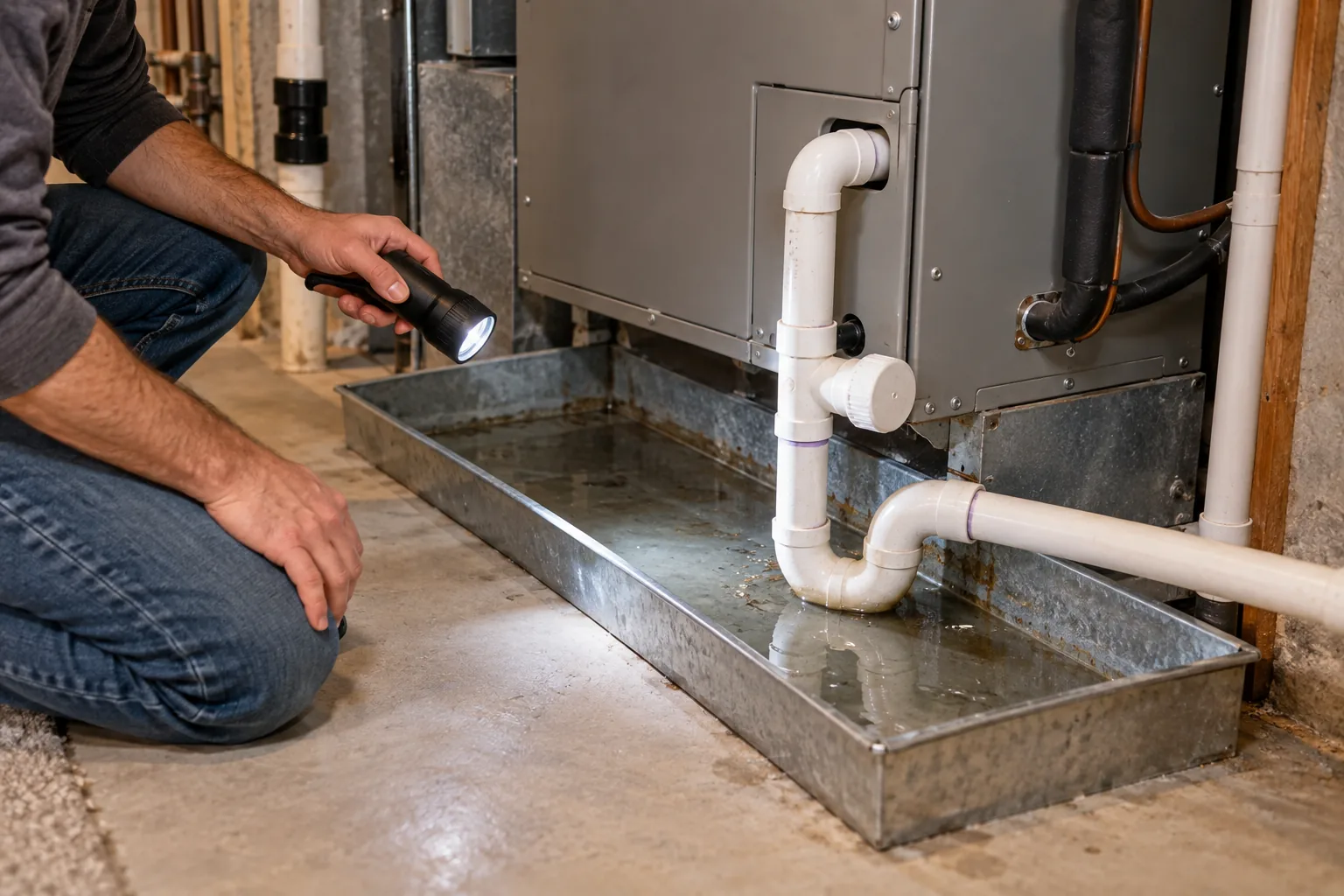
AC Leaking Water Inside? Find Where the Water Stops Moving
Most indoor AC leaks come from a clogged condensate drain, not a broken system. Here's how to tell a drain clog from a cracked pan or an iced coil, and what each costs.
Read guide