
What causes ice dams, and how do I stop them for good?
An ice dam is an attic heat problem showing up at the gutter line. Here's what removal costs this winter, and the fix that keeps it from coming back.
The short answer
Ice dams form when heat escaping from the living space melts snow on the upper roof and the meltwater refreezes on the cold eave overhang. Steam removal by a pro handles this winter's dam; air sealing the attic floor and topping up insulation is the fix that usually stops it from coming back. Heat cable and gutter guards treat the symptom and depend on how much heat your attic is leaking.
Estimate, not a final quote
This range is for planning. Final pricing depends on an on-site inspection, materials, permits, access, and contractor scope.
Compare written bids
Ask each contractor for the same scope, warranty terms, permit handling, cleanup details, and exclusions before choosing.
Source-backed guidance
Guides use public references and practical cost modeling, then point you to official sources where rules or rebates can change.
This article contains paid links to Amazon. As an Amazon Associate I earn from qualifying purchases.
The building code draws a line 24 inches inside your exterior wall, and that line marks where ice-dam water ends up. IRC Section R905.1.2 requires an ice barrier (a self-adhering polymer-modified bitumen sheet, or two layers of underlayment cemented together) from the roof edge to at least that point in areas with a history of ice along the eaves.
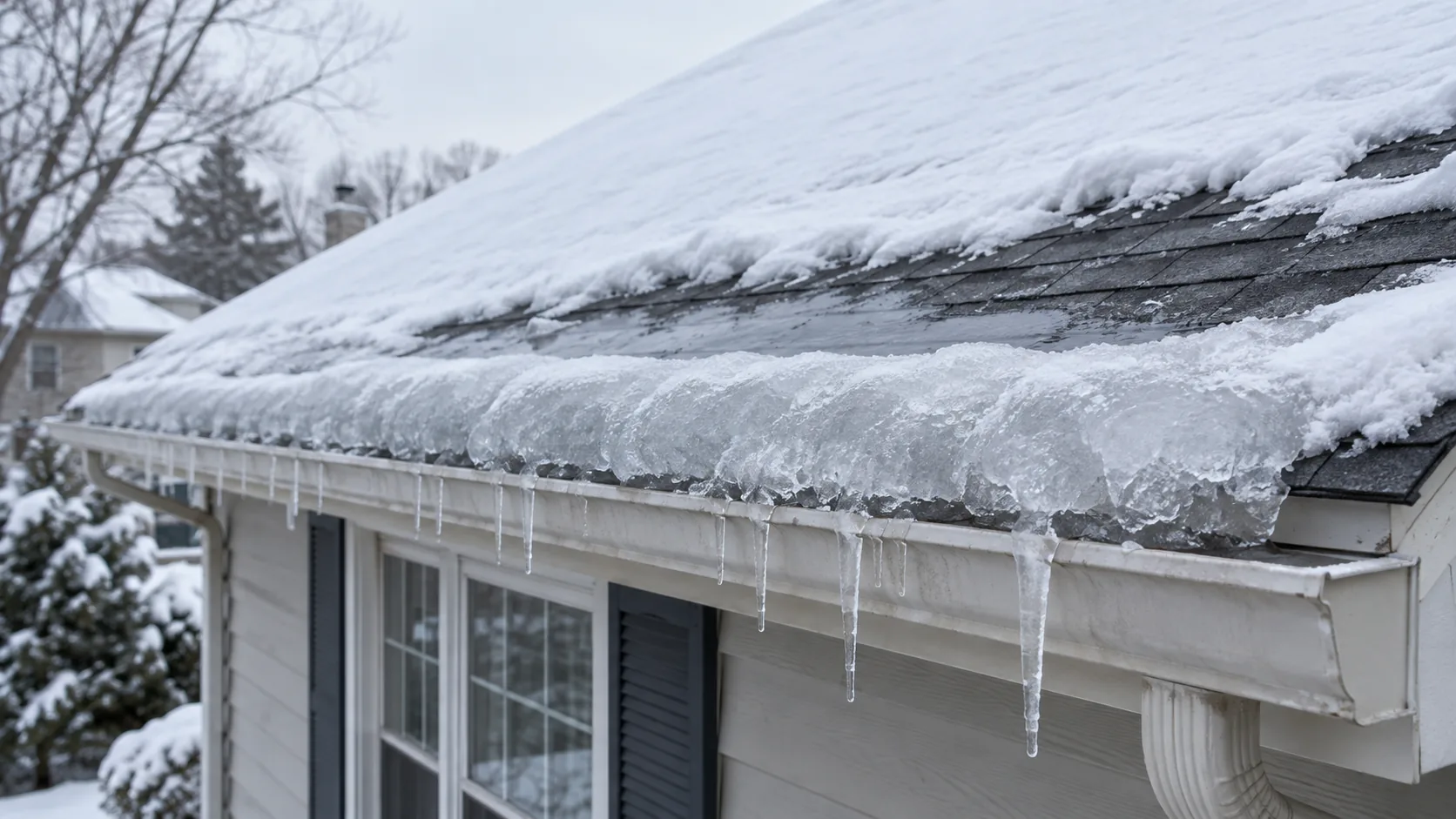
A ridge of ice along your gutters isn't a gutter problem, and it's usually not a shingle problem either. The cause is heat, and most of it is coming from your attic.
How an ice dam actually forms
Picture your roof in two zones. The upper part sits over the attic, and if that attic is warm, the roof deck above it runs above 32°F even when the air outside is well below freezing. Snow on that part melts from underneath and runs downhill. The overhang past the exterior wall sits over nothing but outdoor air, so it stays as cold as the day. The meltwater hits that cold edge and freezes.
Each melt cycle adds another layer. Eventually the ridge gets tall enough that new meltwater pools behind it, and asphalt shingles are built to shed water, not hold back standing water. It backs up under the shingle laps, past the nails, and into the wall cavity or the ceiling just inside the exterior wall.
That's why ice dam stains show up in a specific place: on the ceiling or the top of the wall along an exterior wall, often in a line, often after a sunny day following heavy snow. A stain in the middle of a room under a pipe vent is a different problem.
NRCA's guidance names three things that prevent ice dams: enough roof pitch, enough insulation right above the exterior wall, and air sealing where the wall meets the roof. Pitch is fixed once the house is built. The other two are an attic job.
Where the heat is coming from
Warm attics are rarely caused by missing insulation alone. They're caused by warm, moist house air getting into the attic through gaps: the plumbing chase, the open top of an interior wall, recessed can lights, the attic hatch, the bath fan duct, and the gap around a chimney. ENERGY STAR's attic guidance says it plainly: seal the air leaks first, then add insulation. Insulation slows heat moving through it; it does very little to stop air moving around it.
The eave itself is the weak spot. At the exterior wall the rafters come down to meet the top plate, which leaves the least room for insulation right where the roof needs to stay coldest. ENERGY STAR's insulation table recommends R49 to R60 for attic floors in the colder climate zones, and it counts a lower R-value as meeting the higher one only when the full height of uncompressed insulation extends over the wall top plate at the eaves. If your insulation thins to a few inches at the eave, that's where the snow melts first.
Ventilation is the third leg. IRC Section R806.2 sets minimum net free vent area at 1/150 of the vented attic floor area. That drops to 1/300 only when both conditions are met: in Climate Zones 6 through 8, a Class I or II vapor retarder is installed on the warm-in-winter side of the ceiling; and 40 to 50 percent of the required vent area sits in the upper part of the attic, no more than 3 feet below the ridge, with the rest in the bottom third. Soffit vents buried under blown-in insulation, a common result of a DIY top-up done without baffles, cut off the cold air that's supposed to sweep the underside of the deck.
What each fix costs and what it actually does
| Fix | Typical cost | What it addresses | Verdict |
|---|---|---|---|
| Steam removal by a crew | Often $400–$800 per hour; many jobs run $800–$2,400 total | This winter's ice, right now | Worth it when water is already coming inside |
| Attic air sealing | Often $350–$1,200 for a typical house | The heat source | The first dollar you should spend |
| Air sealing plus blown-in top-up | Often $1,000–$3,000 for a ~1,000 sq ft attic | Heat source, including the thin spot at the eaves | The fix for repeat ice dams |
| Roof and gutter heat cable | Often $13–$26 per linear foot installed | Keeps a drainage channel open through the dam | Treats the symptom; runs on electricity every storm |
| Ice barrier at re-roof | Included in any code-compliant re-roof in affected areas | Water that gets past the dam | Required anyway; ask to see it on the quote |
These ranges aren't from a primary source. They're what the market charges, and they vary a lot with your region, attic access, how much eave footage you have, and whether an electrician has to run a new circuit for heat cable.
Cost estimator
Roofing cost estimator
A budgeting range, not a quote. Move the inputs to see what changes the number.
Estimated national cost
Typical project lands near $11,750.
If a written quote comes in above the high end, that's not automatically wrong — ask what scope is driving it.
What this assumes
- Asphalt shingle material selected.
- 1,500 sq ft house size selected.
- Standard tear-off and replacement scope assumed.
What moves this price
- 01Roof pitch, height, access, and number of layers.
- 02Decking repairs, ventilation, flashing, and underlayment.
- 03Permit requirements, disposal fees, and local labor rates.
Walk into your quotes ready
This range is your anchor. Bring these to every contractor conversation so you can tell a fair quote from a padded one.
- Is this a full tear-off or a layover, and how many layers are on there now?
- What underlayment, flashing, and ventilation work is included?
- Who pulls the permit, and is disposal of old material in the price?
- What's the workmanship warranty versus the shingle manufacturer's warranty?
- A bid far below every other, usually meaning a layover or skipped flashing.
- Asking for a large deposit before any material is delivered.
- No written scope listing tear-off, underlayment, and ventilation.
The decision rule
If you've had ice dams two winters in a row, spend the money in the attic, not on the roof. Removing the ice every February and paying for heat cable is money you spend again every year. Air sealing and insulating the attic floor is a one-time project that also lowers your heating bill. ENERGY STAR estimates that sealing and insulating attics, floors over crawl spaces, and basements saves homeowners an average of 15% on heating and cooling costs.
Heat cable makes sense for a narrower set of houses: complex roofs with valleys dumping onto a short eave, cathedral ceilings with no attic to seal, or north-facing low-slope sections that never see sun. If you go that route, know what it draws. Raychem's IceStop self-regulating cable is rated at 18 watts per meter in 32°F air and 36 W/m in ice water, which works out to roughly 5.5 and 11 watts per foot. A 100-foot run in air draws about 550 watts, around 13 kWh for each 24 hours it's on. Multiply that by the rate on your electric bill and by the number of storm days you run it.
What to do this winter, and what not to
If a dam is already there and water is coming in, get it off with steam, not force. NRCA doesn't recommend chipping ice with picks, shovels, or anything with a sharp edge, because that damages shingles and flashing that are already under stress. Hammering or chopping on a frozen roof is also how people fall. Roof work in ice and snow is a job for a crew with fall protection and a low-pressure steamer. A pressure washer or a torch is not an acceptable substitute, so if someone shows up with one, send them away.
For photographs, use binoculars or your phone's zoom from the ground to locate the affected eave. Do not climb to get a closer look, and do not buy roof tools as a substitute for the professional removal described here.
Inside, deal with the water fast. EPA's guidance is to dry water-damaged materials within 24 to 48 hours. In most cases mold won't grow on materials dried within that window, though EPA notes it's a guideline, not a guarantee. Pull back wet insulation you can reach from the attic floor, and photograph the ceiling, the eave, and the dam itself before anything is removed. If you plan to file an insurance claim, the claims guide covers what adjusters look for, including dated photos.
Then write the attic work into your spring calendar. Get an air-sealing contractor or energy auditor to find the bypasses. A blower-door test is the standard way to find them. Make sure soffit baffles go in before any new insulation is blown over the eaves.
If you're replacing the roof anyway
A re-roof in an ice-dam area has to include the ice barrier under R905.1.2, measured to 24 inches inside the exterior wall line, and the 2021 IRC also requires roofs of 8:12 pitch or steeper to carry it at least 36 inches up the slope from the eave. Code editions and local amendments differ, so ask the roofer which edition your jurisdiction enforces. That is a real line item, and a bid that says "underlayment" without naming ice-and-water membrane at the eaves hasn't told you whether it's there. Our roofing estimate guide shows what else to look for on the page.
An ice barrier keeps backed-up water out of the house. It doesn't stop the dam from forming. A new roof over a leaky attic will still grow icicles; it just won't drip on your ceiling while it does.
Research sources
- ICC: 2021 International Residential Code, Section R905.1.2 — Ice barriers
- ICC: 2015 International Residential Code, Section R905.1.2 — Ice barriers
- ICC: 2021 International Residential Code, Section R806.2 — Minimum vent area
- NRCA: Preventing ice dams
- NRCA: Ice dams
- ENERGY STAR: Attic Air Sealing Project
- ENERGY STAR: Recommended Home Insulation R-Values
- ENERGY STAR: About Attic Ventilation
- ENERGY STAR: Why Seal and Insulate?
- Chemelex Raychem: IceStop Self-Regulating Heating Cable
- EPA: A Brief Guide to Mold, Moisture and Your Home
Compare local quotes
Ready to compare real quotes from roofing pros?
Use your estimate as a budget anchor, then compare written contractor bids against it before you decide. Free request, no obligation.
Disclosure: this button opens a third-party quote-matching service. If you submit its form, its contact and privacy terms apply, and SaveBricks may earn a referral fee. It never changes the prices you're quoted, and our cost ranges are set independently — see how we estimate.
The cost guide
Get the monthly cost briefing
One useful email a month: project cost ranges, contractor red flags, and practical ways to avoid an inflated quote.
No spam. Unsubscribe any time. Read our privacy policy.
More roofing guides
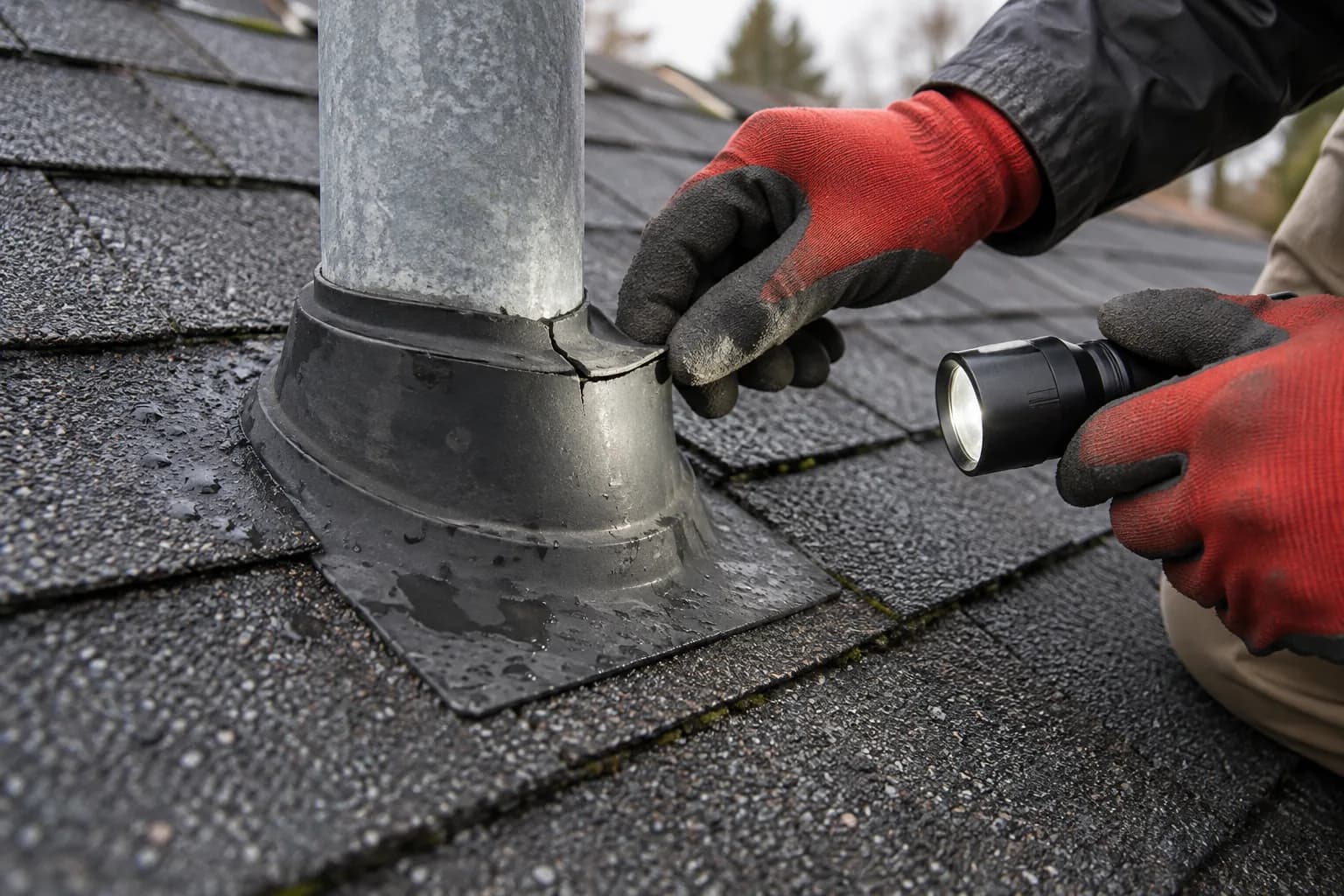
Roof Leak in One Spot? Here's What's Actually Wrong
A ceiling stain that shows up in the exact same place every time it rains is almost never the whole roof failing. Here's how to trace it to the six-inch patch of flashing actually causing it, and what fixing it costs.
Read guide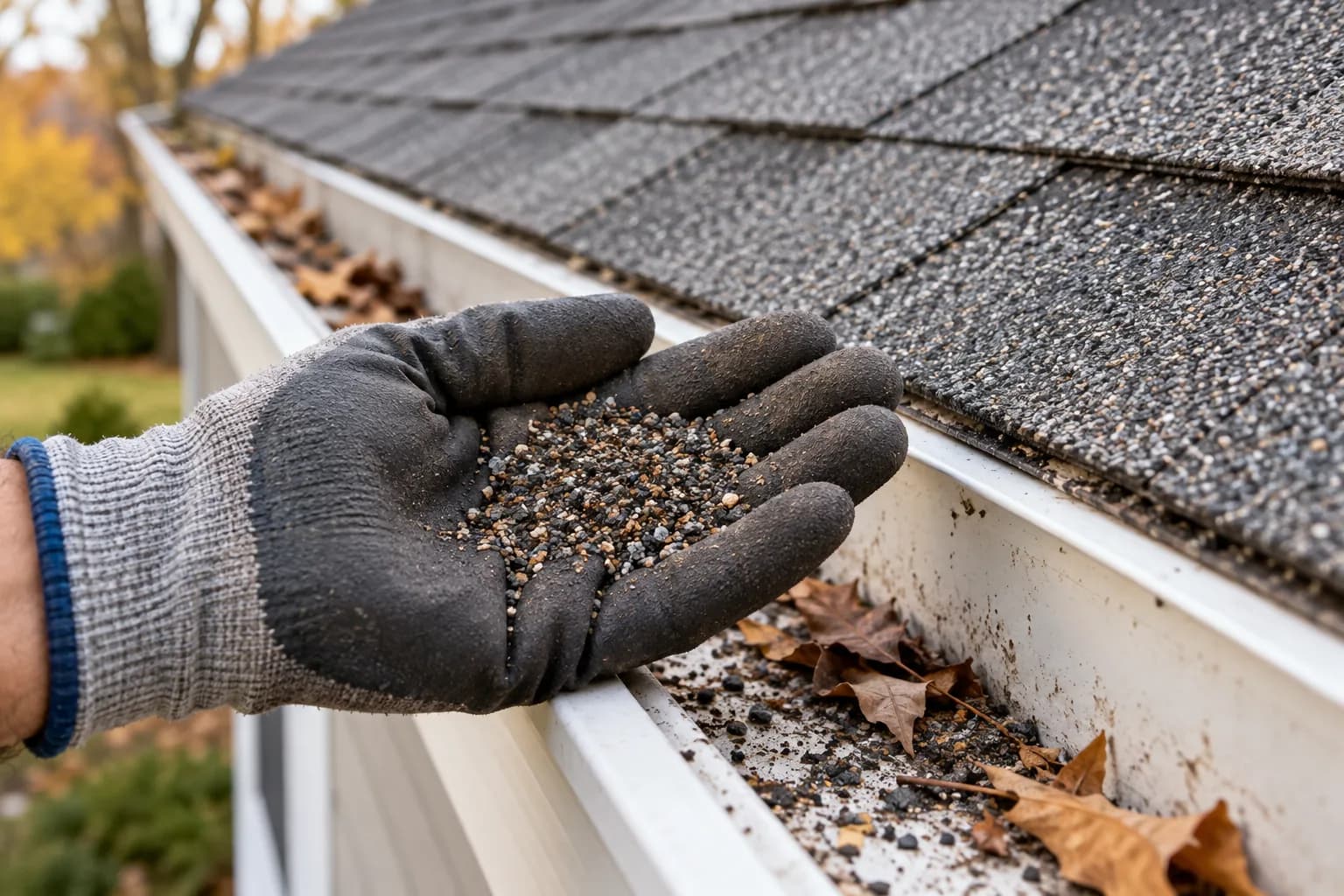
Shingle Granules in Your Gutters? Roof Age and Bare Spots Decide It
Grit at the downspout is normal on a new roof and a warning on a storm-hit one. Here's how to tell which, what an inspection costs, and who pays for the fix.
Read guide
Black Streaks on Your Roof? Check the Warranty Before You Pay a Cleaner
Dark streaks running down asphalt shingles are almost always algae, not damage. Here's how to tell it from moss, who may pay to clean it, and why it's never a reason to re-roof.
Read guide