
What should I document before and during a roof insurance claim?
A step-by-step homeowner workflow for documenting storm damage, reading ACV and replacement-cost payments, and reconciling the insurer's scope with roofing bids.
The short answer
Record the date and conditions, photograph damage and temporary protection, keep every receipt, and obtain both the insurer's itemized estimate and the roofer's itemized proposal. Then reconcile the scopes line by line. Your deductible, coverage basis, endorsements, limits, exclusions, and claim deadlines come from your policy—not from the contractor.
Estimate, not a final quote
This range is for planning. Final pricing depends on an on-site inspection, materials, permits, access, and contractor scope.
Compare written bids
Ask each contractor for the same scope, warranty terms, permit handling, cleanup details, and exclusions before choosing.
Source-backed guidance
Guides use public references and practical cost modeling, then point you to official sources where rules or rebates can change.
This article contains paid links to Amazon. As an Amazon Associate I earn from qualifying purchases.
A storm claim has two separate questions: Is the loss covered under your policy? and What work is required to restore the roof? The insurer answers the coverage question under the contract. The contractor scopes the construction. Keeping those roles separate makes it easier to catch omissions without letting a sales pitch become insurance advice.
This guide is a documentation workflow, not legal or coverage advice. Policies and state claim rules vary. Your declarations, forms, endorsements, insurer correspondence, and state insurance department are the controlling references.
Step 1: Protect people and prevent further damage
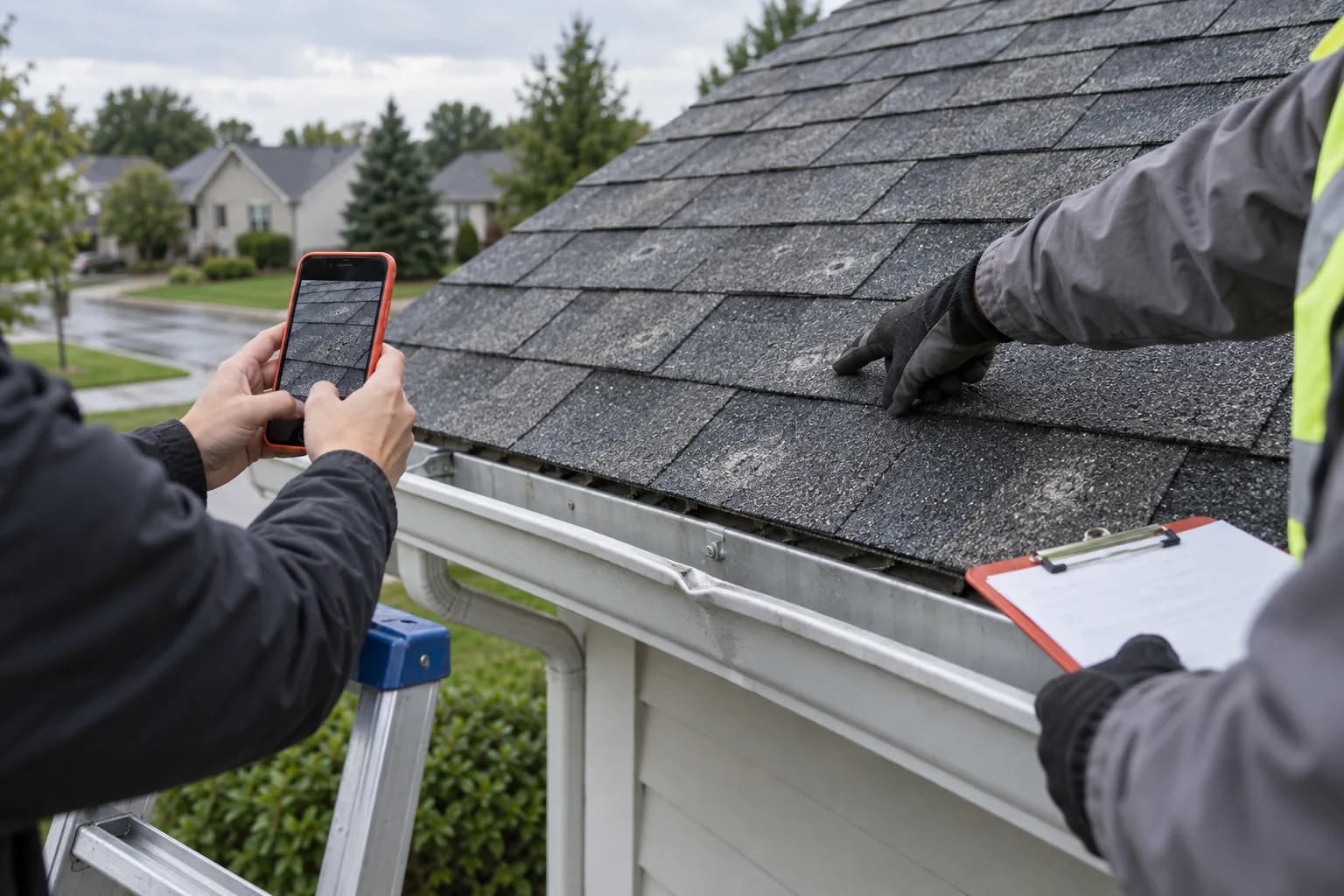
Stay off a wet, steep, or damaged roof. Photograph conditions from the ground and inside the attic only where access is safe. If water threatens electrical equipment or a ceiling is bulging, keep people away and call for urgent help.
Policies commonly require reasonable steps to prevent additional damage. That may mean a professional tarp, emergency dry-out, or moving belongings from an active leak. Keep before-and-after photos and every receipt. Temporary protection should preserve evidence and avoid unnecessary demolition until the insurer explains its inspection process.
Step 2: Build the claim file
Create one folder and keep the original files. Include:
An expanding file organizer can hold paper estimates and receipts, with a separate section for each revision. A folder you already own is enough. Preserve digital originals and back them up rather than relying only on printed photos.
- Date and approximate time of the event.
- Weather alert or storm information for context.
- Wide and close photos of exterior and interior damage.
- Photos of undamaged surrounding areas for orientation.
- Emergency invoices, receipts, and the reason each measure was necessary.
- Claim number, adjuster contact, inspection dates, and a call log.
- The complete policy declarations and relevant endorsements.
- Every insurer estimate, coverage letter, contractor proposal, and revision.
Write down what you observed without assigning a cause you cannot verify. “Water appeared below the east roof plane during the September 18 storm” is more useful than “hail destroyed the roof” unless a qualified inspection supports that conclusion.
Step 3: Identify the payment structure
The National Association of Insurance Commissioners distinguishes actual cash value (ACV) from replacement cost value (RCV). ACV reflects depreciation. RCV generally addresses the cost to repair or replace with like kind and quality, subject to the policy's terms, deductible, limits, and process.
Some replacement-cost claims are paid in stages: an initial payment may reflect ACV, with recoverable depreciation released after qualifying work and documentation. Roof surfaces can also have special schedules or endorsements even when other parts of the home have different coverage.
Use a worksheet like this with numbers from your own claim:
| Claim line | Example only | Your document |
|---|---|---|
| Insurer's replacement-cost estimate | $18,000 | |
| Less depreciation initially withheld | −$5,000 | |
| Less applicable deductible | −$2,000 | |
| Initial payment | $11,000 | |
| Potential recoverable depreciation | $5,000 | |
| Homeowner responsibility before upgrades or exclusions | $2,000 |
The example demonstrates the arithmetic, not what any policy must pay. Ask the adjuster which depreciation is recoverable, what documentation releases it, and what completion deadline applies.
Cost estimator
Roofing cost estimator
A budgeting range, not a quote. Move the inputs to see what changes the number.
Estimated national cost
Typical project lands near $11,750.
If a written quote comes in above the high end, that's not automatically wrong — ask what scope is driving it.
What this assumes
- Asphalt shingle material selected.
- 1,500 sq ft house size selected.
- Standard tear-off and replacement scope assumed.
What moves this price
- 01Roof pitch, height, access, and number of layers.
- 02Decking repairs, ventilation, flashing, and underlayment.
- 03Permit requirements, disposal fees, and local labor rates.
Walk into your quotes ready
This range is your anchor. Bring these to every contractor conversation so you can tell a fair quote from a padded one.
- Is this a full tear-off or a layover, and how many layers are on there now?
- What underlayment, flashing, and ventilation work is included?
- Who pulls the permit, and is disposal of old material in the price?
- What's the workmanship warranty versus the shingle manufacturer's warranty?
- A bid far below every other, usually meaning a layover or skipped flashing.
- Asking for a large deposit before any material is delivered.
- No written scope listing tear-off, underlayment, and ventilation.
Step 4: Reconcile the insurer and contractor scopes
Put both estimates into one table. Compare quantities and work descriptions before comparing totals.
| Scope item | Insurer estimate | Roofer proposal | Question to resolve |
|---|---|---|---|
| Roof area and waste | Are measurements and waste assumptions different? | ||
| Tear-off layers | How many layers are included? | ||
| Shingle product | Is the proposed material like kind and quality? | ||
| Underlayment and leak barrier | Are code- or manufacturer-required locations included? | ||
| Flashing and penetrations | Replace, detach/reset, or exclude? | ||
| Decking | What unit price and approval process apply after tear-off? | ||
| Ventilation | Is a change required for the proposed system? | ||
| Permit and disposal | Who handles each item? |
A difference is not automatically an insurer error or contractor padding. It may come from measurements, code requirements, hidden conditions, material assumptions, or work the policy does not cover. Ask each party to explain the specific line and supporting document.
Step 5: Handle newly discovered scope in writing
Roof decking and some flashing conditions become visible only after tear-off. Before work starts, the contract should state the unit price, photo requirement, authorization threshold, and person allowed to approve changes. If the contractor believes omitted work belongs in the claim, ask how the insurer wants supplements documented before the work is concealed.
Do not assume a supplement is guaranteed. Do not authorize an open-ended change order because someone says “insurance will pay.” You remain bound by the construction contract even if coverage differs.
Contract and sales red flags
- A contractor offers to absorb, waive, or disguise the deductible.
- You are asked to sign an assignment, direction-to-pay form, or broad repair authorization before price and scope are clear.
- The proposal gives one total without product names, quantities, exclusions, or unit prices.
- Someone guarantees coverage or tells you not to speak with your insurer.
- Payment demanded greatly exceeds delivered materials and completed work.
- The contractor will not provide licensing, insurance, references, or a written workmanship warranty where applicable.
Read cancellation rights and state-specific notices before signing. If a coverage dispute remains, use the insurer's escalation process and your state department of insurance. A public adjuster or attorney may be appropriate in some disputes, but their licensing, fees, and role vary by state.
Close the file only after reconciling documents
Before final payment, collect the final invoice, approved change orders, proof of permit completion where required, product and workmanship warranties, photos of concealed work if promised, and lien releases appropriate to your state and project. Send completion documents through the insurer's stated channel and retain the full file with the house records.
Research sources
- NAIC: Replacement Cost vs. Actual Cash Value. Coverage-basis definitions and depreciation.
- NAIC: Post-Disaster Claims Guide. Deductibles, claim payments, documentation, ACV, and RCV.
- FEMA: Protect Your Property From Severe Winds. Wind-damage mitigation and roof-system context.
- FTC: How to Avoid a Home Improvement Scam. Contractor checks, written estimates, and payment precautions.
Compare local quotes
Ready to compare real quotes from roofing pros?
Use your estimate as a budget anchor, then compare written contractor bids against it before you decide. Free request, no obligation.
Disclosure: this button opens a third-party quote-matching service. If you submit its form, its contact and privacy terms apply, and SaveBricks may earn a referral fee. It never changes the prices you're quoted, and our cost ranges are set independently — see how we estimate.
The cost guide
Get the monthly cost briefing
One useful email a month: project cost ranges, contractor red flags, and practical ways to avoid an inflated quote.
No spam. Unsubscribe any time. Read our privacy policy.
More roofing guides
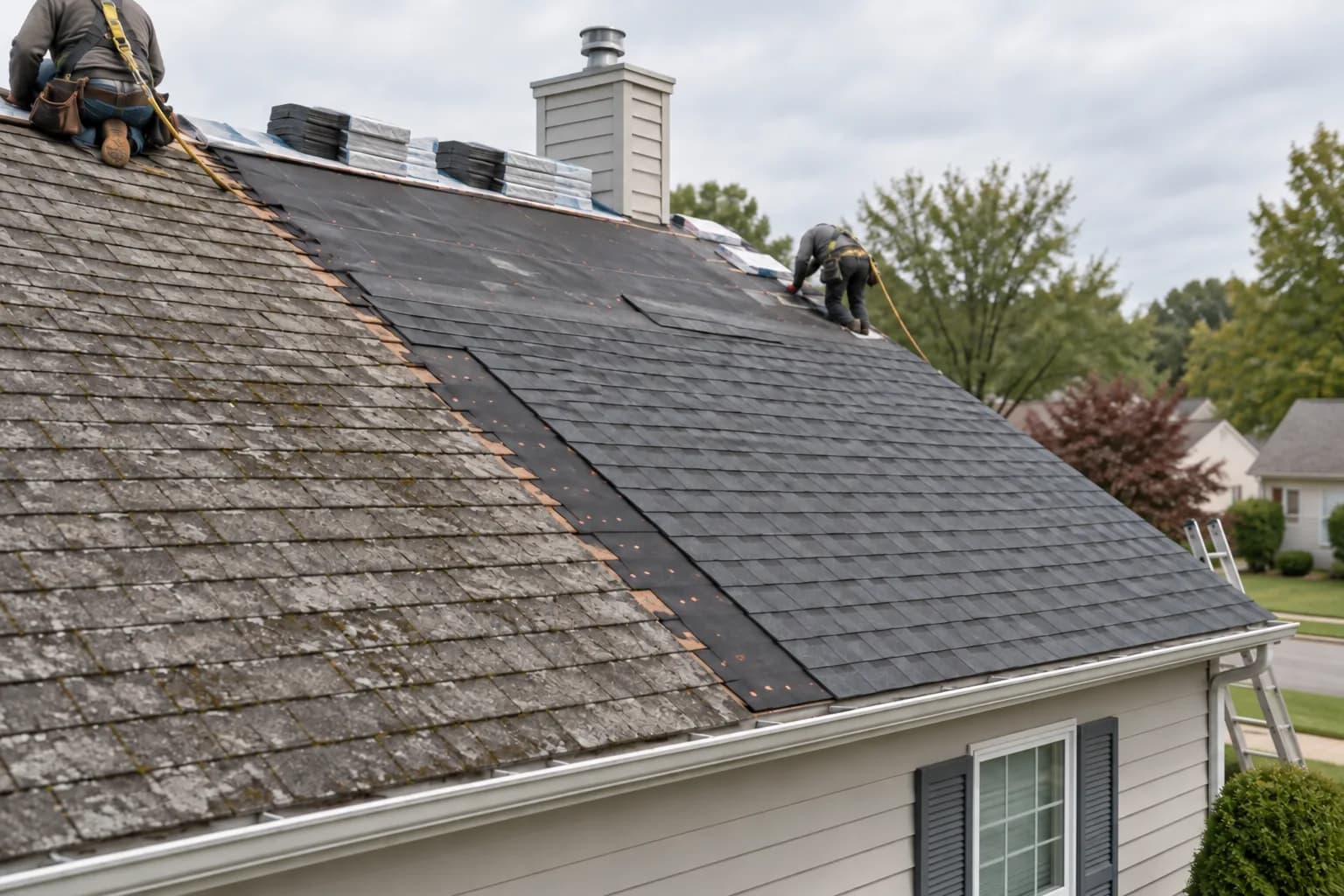
Average Roof Replacement Cost Guide
Detailed breakdown of residential roof replacement costs. Learn how square footage, pitch, and materials impact your final roofing estimate.
Read guide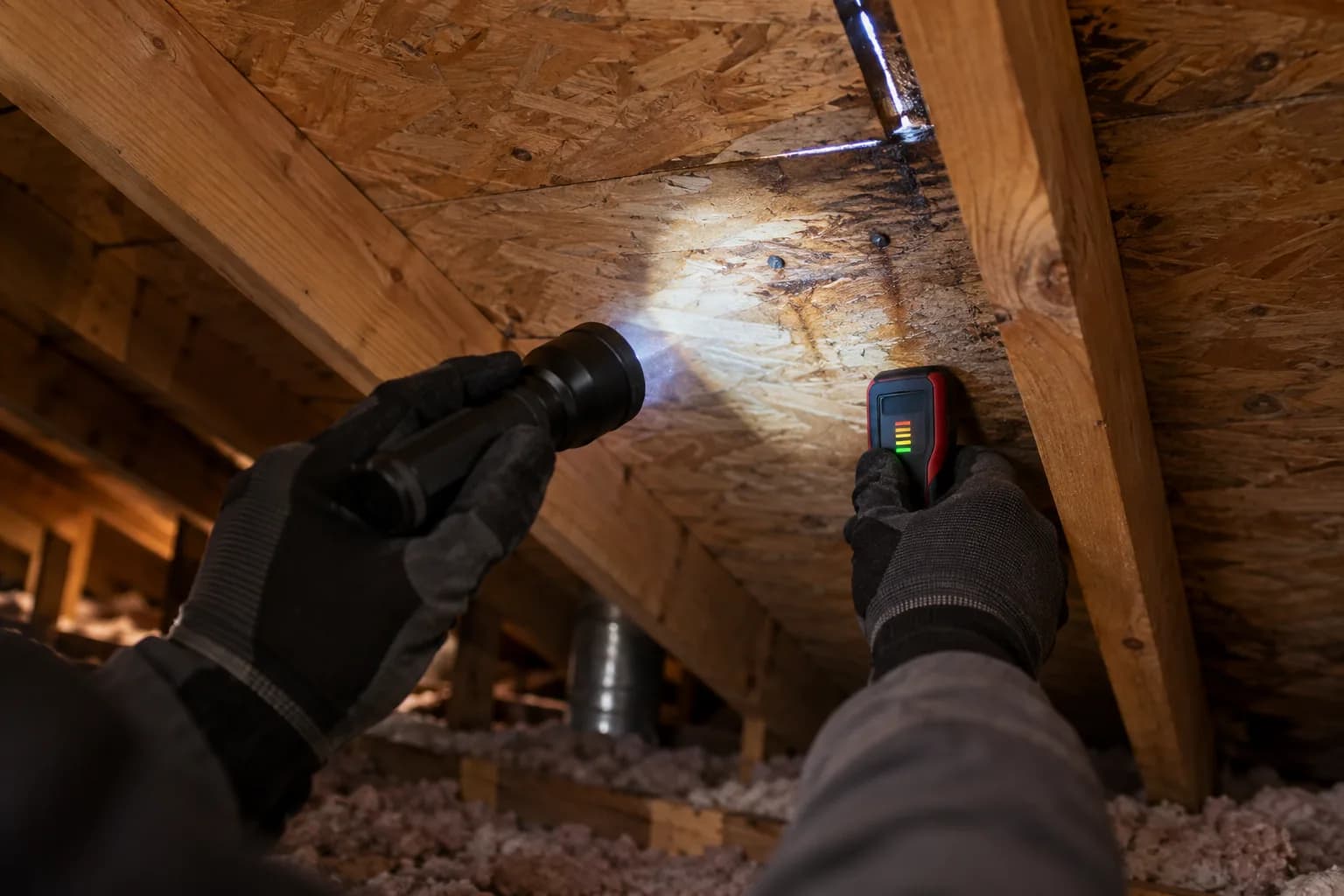
How to Inspect for Roof Damage Before You See a Leak
A safe attic-and-ground inspection checklist that separates urgent roof warning signs from ordinary wear and tells you what to document for a roofer.
Read guide
Black Streaks on Your Roof? Check the Warranty Before You Pay a Cleaner
Dark streaks running down asphalt shingles are almost always algae, not damage. Here's how to tell it from moss, who may pay to clean it, and why it's never a reason to re-roof.
Read guide