
How much should a roof replacement actually cost in 2026?
Detailed breakdown of residential roof replacement costs. Learn how square footage, pitch, and materials impact your final roofing estimate.
The short answer
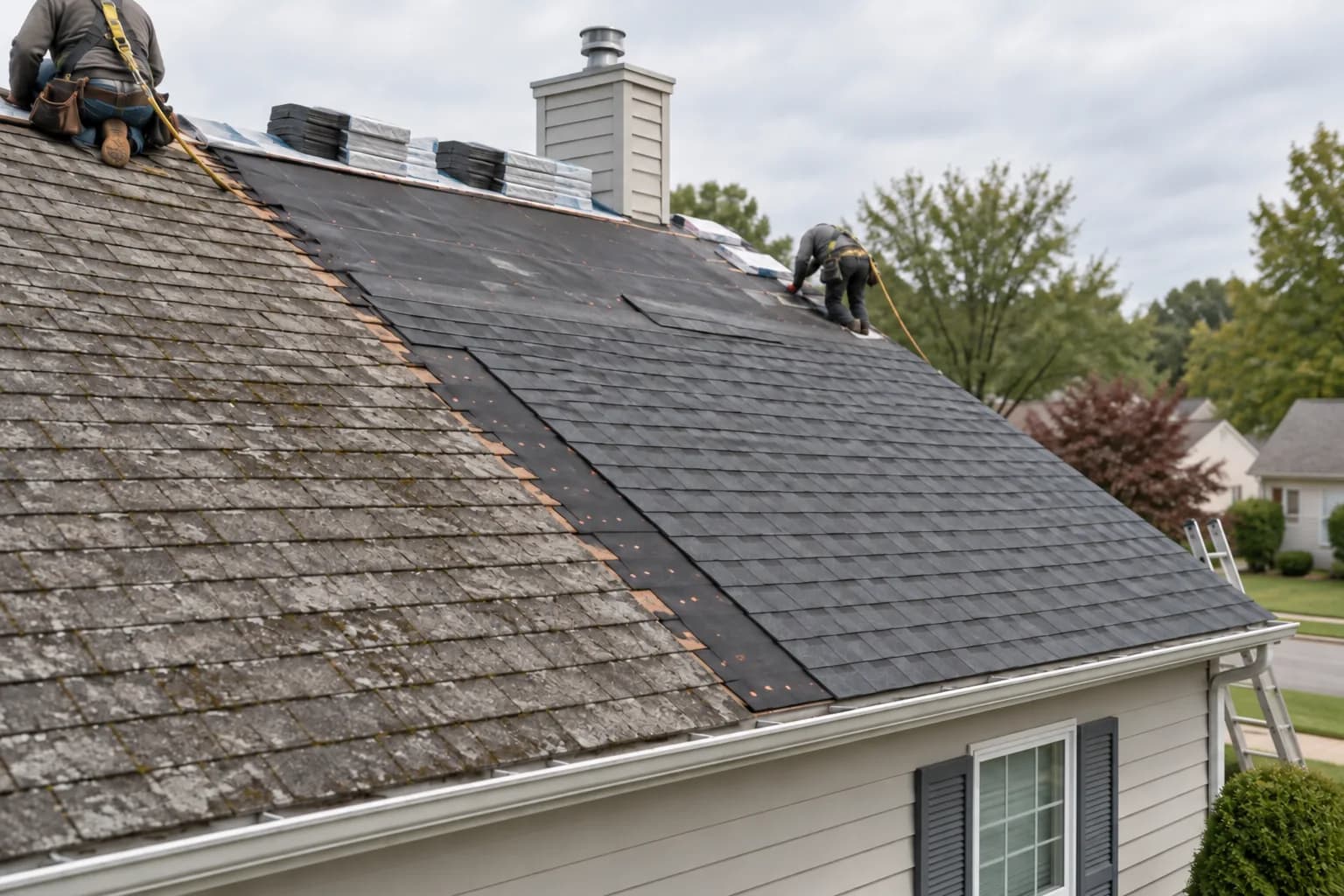
Most homeowners pay between $9,000 and $16,000 for a full asphalt-shingle roof replacement, depending on size, pitch, and whether it's a tear-off. Below, exactly what drives that range.
Estimate, not a final quote
This range is for planning. Final pricing depends on an on-site inspection, materials, permits, access, and contractor scope.
Compare written bids
Ask each contractor for the same scope, warranty terms, permit handling, cleanup details, and exclusions before choosing.
Source-backed guidance
Guides use public references and practical cost modeling, then point you to official sources where rules or rebates can change.
This article contains paid links to Amazon. As an Amazon Associate I earn from qualifying purchases.
Replacing an asphalt-shingle roof commonly costs $9,000 to $16,000, but the number is only useful when the scope is clear. Roof size, pitch, tear-off layers, deck repairs, flashing, ventilation, disposal, permits, and workmanship warranty can all move the final bid.
Start with roof area, not floor area
Roofing contractors price jobs by the square: 100 square feet of roof surface. A 1,800-square-foot house does not automatically have an 1,800-square-foot roof. Pitch, overhangs, attached garages, dormers, and waste cuts increase the material area.
Use binoculars or your phone's zoom to note visible dormers, valleys, and penetrations from the ground before the site visit. This helps you ask about scope; it does not measure roof area. Leave roof access and measurements to the contractor.
Ask every bidder for the measured square count and waste factor. If two contractors differ materially, ask them to show the measurement report before comparing price per square.
A planning range by scope
| Project condition | Where it tends to land |
|---|---|
| Walkable, simple roof; one-layer tear-off; sound deck | Lower part of the range |
| Multiple valleys, two stories, moderate flashing work | Middle of the range |
| Steep or difficult access; multiple layers; deck repairs | Upper part of the range or above it |
The calculator uses house size as a practical input, then shows a band rather than pretending it knows the roof geometry. A written proposal should replace that assumption with measured roof area.
The cost drivers that deserve their own lines
Pitch, height, and access
A walkable one-story gable is faster and safer than a steep two-story roof with dormers. Equipment, fall protection, staging, and material movement all add labor. The bid should describe access and pitch rather than bury them in a vague “complexity” premium.
Tear-off and disposal
One old layer is the baseline for many replacements. Extra layers mean more labor, weight, dumpsters, and disposal charges. The proposal should state how many layers are included and the unit price for an unexpected layer.
Deck repairs
Soft or delaminated sheathing cannot hold fasteners reliably. Since the deck is partly hidden until tear-off, the fair approach is an allowance or a written per-sheet price, with photos before additional work proceeds.
Flashing and penetrations
Chimneys, walls, valleys, plumbing vents, and skylights are common leak points. New shingles over reused, poorly integrated flashing do not create a new roof system. Require the flashing scope in writing.
Ventilation
Exhaust vents need enough intake air. Adding ridge vent while leaving blocked soffits can fail to improve airflow. Ask the contractor to state the intake and exhaust plan and whether old vents will be removed and decked over.
Climate and Resilience Factors
In hot climates, the Department of Energy notes that cool roofs can reflect more sunlight and absorb less heat than standard roofs, which may reduce cooling loads. In hurricane or high-wind areas, FEMA mitigation guidance emphasizes roof covering condition, roof deck attachment, and water intrusion prevention as part of a stronger roof system.
These details matter because two roof quotes with the same shingle brand can still be very different. Underlayment, deck fastening, flashing, ventilation, ridge details, and wind-rating choices can all change the final cost and long-term risk.
Architectural shingles versus premium materials
Architectural asphalt shingles are the standard reference point for the range above. Standing-seam metal, tile, and slate have different labor, structure, flashing, and accessory requirements, so a simple material multiplier is only an early planning shortcut. If changing systems, require the contractor to address deck suitability, underlayment, ventilation, and manufacturer-approved details.
The three-bid comparison
Before comparing totals, make each proposal answer the same questions: measured squares, tear-off layers, product line, underlayment, leak barrier, flashing, ventilation, decking unit price, permit, disposal, cleanup, and workmanship warranty. Our roof quote line-item guide turns that list into a side-by-side check.
Research sources
- EPA: Using Cool Roofs to Reduce Heat Islands
- FEMA: Protect Your Property From Severe Winds
- FEMA: Protect Your Property From Hurricanes
Stop guessing. Get a planning range.
Use our free roofing cost estimator for a national planning range in seconds.
Use the range as an anchor
If a proposal falls below the planning range, ask what is excluded. If it sits above the range, ask which measured conditions explain the difference. A price outside the band is not automatically wrong; an unexplained price is the problem.
The cost guide
Get the monthly cost briefing
One useful email a month: project cost ranges, contractor red flags, and practical ways to avoid an inflated quote.
No spam. Unsubscribe any time. Read our privacy policy.
Cost estimator
Roofing cost estimator
A budgeting range, not a quote. Move the inputs to see what changes the number.
Estimated national cost
Typical project lands near $11,750.
If a written quote comes in above the high end, that's not automatically wrong — ask what scope is driving it.
What this assumes
- Asphalt shingle material selected.
- 1,500 sq ft house size selected.
- Standard tear-off and replacement scope assumed.
What moves this price
- 01Roof pitch, height, access, and number of layers.
- 02Decking repairs, ventilation, flashing, and underlayment.
- 03Permit requirements, disposal fees, and local labor rates.
Walk into your quotes ready
This range is your anchor. Bring these to every contractor conversation so you can tell a fair quote from a padded one.
- Is this a full tear-off or a layover, and how many layers are on there now?
- What underlayment, flashing, and ventilation work is included?
- Who pulls the permit, and is disposal of old material in the price?
- What's the workmanship warranty versus the shingle manufacturer's warranty?
- A bid far below every other, usually meaning a layover or skipped flashing.
- Asking for a large deposit before any material is delivered.
- No written scope listing tear-off, underlayment, and ventilation.
More roofing guides
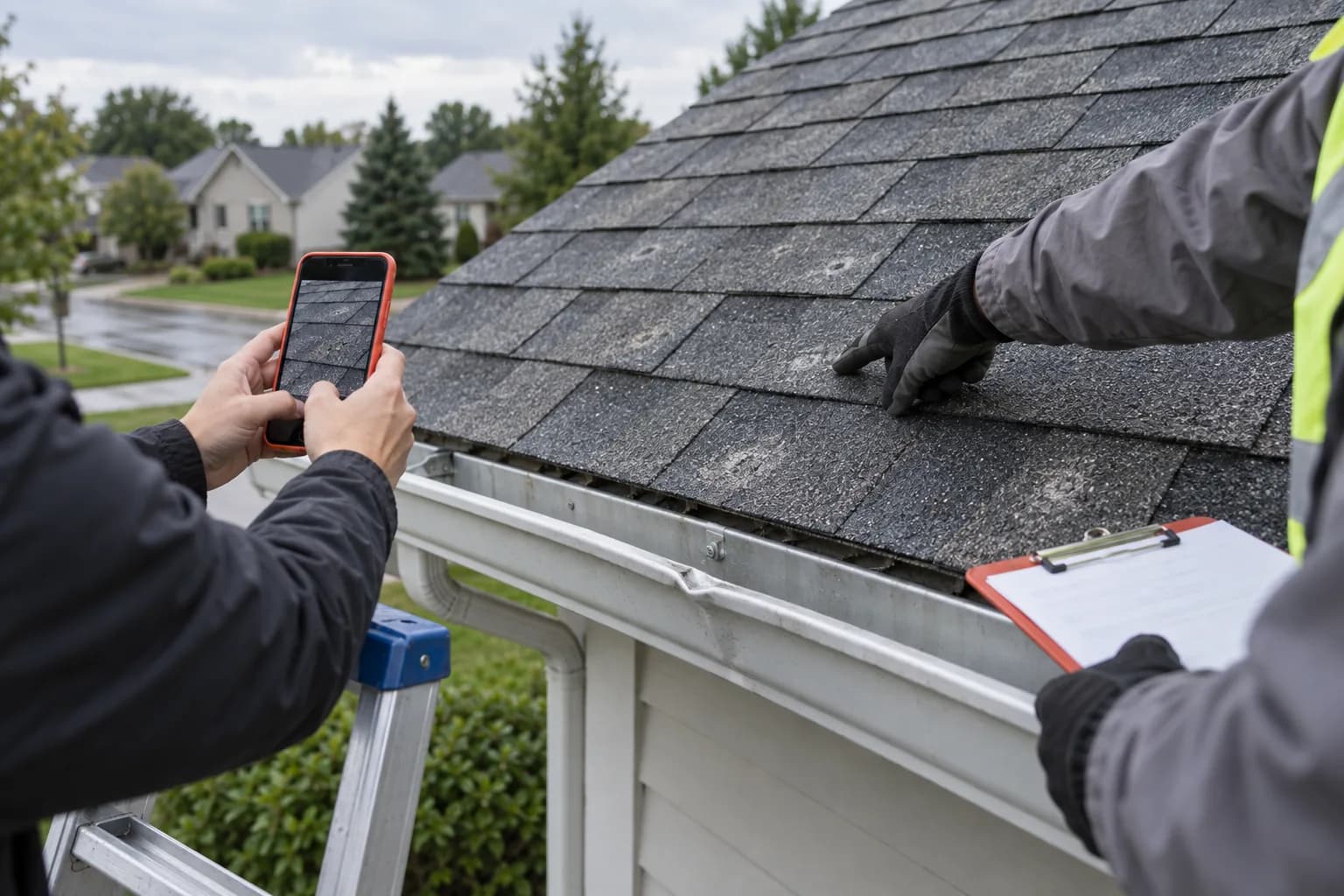
Roof Insurance Claim: Documentation and Estimate Checklist
A step-by-step homeowner workflow for documenting storm damage, reading ACV and replacement-cost payments, and reconciling the insurer's scope with roofing bids.
Read guide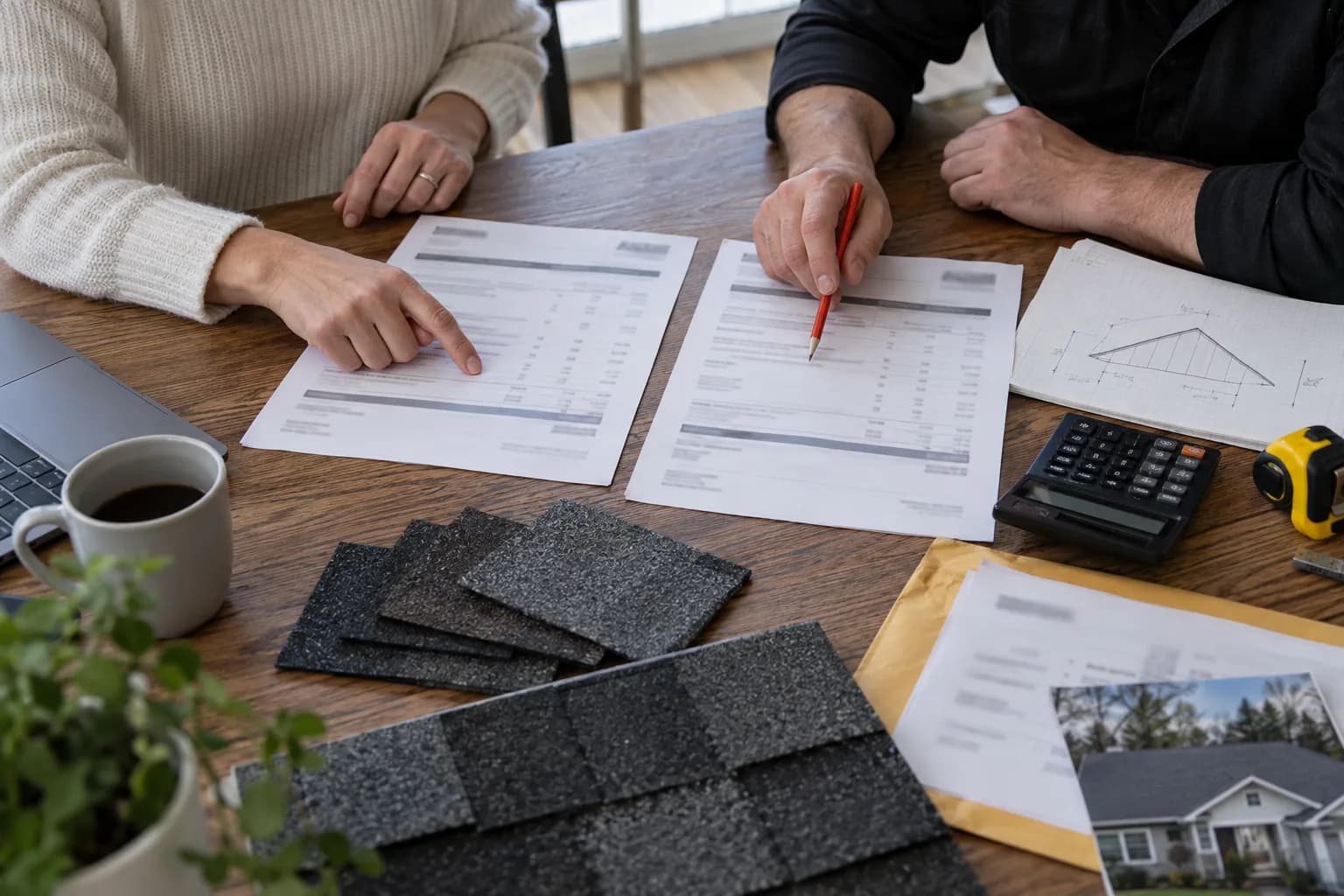
How to Read a Roofing Estimate, Line by Line
What each line on a roofing quote means, which numbers are negotiable, and the three places padding hides. Bring this to the kitchen table with the bid.
Read guide
Black Streaks on Your Roof? Check the Warranty Before You Pay a Cleaner
Dark streaks running down asphalt shingles are almost always algae, not damage. Here's how to tell it from moss, who may pay to clean it, and why it's never a reason to re-roof.
Read guide