
Are architectural shingles worth the extra cost over 3-tab shingles?
Compare 3-tab and architectural asphalt shingles by installed price, wind rating, warranty, roof details, and the line items that make two bids differ.
The short answer
Often, but compare complete roofing systems rather than the shingle price alone. Architectural shingles commonly offer a heavier laminated construction, more dimensional appearance, and higher product-specific wind ratings. The better buy depends on the exact product, installed-price difference, warranty terms, roof exposure, and how long you expect to own the home.
Estimate, not a final quote
This range is for planning. Final pricing depends on an on-site inspection, materials, permits, access, and contractor scope.
Compare written bids
Ask each contractor for the same scope, warranty terms, permit handling, cleanup details, and exclusions before choosing.
Source-backed guidance
Guides use public references and practical cost modeling, then point you to official sources where rules or rebates can change.
This article contains paid links to Amazon. As an Amazon Associate I earn from qualifying purchases.
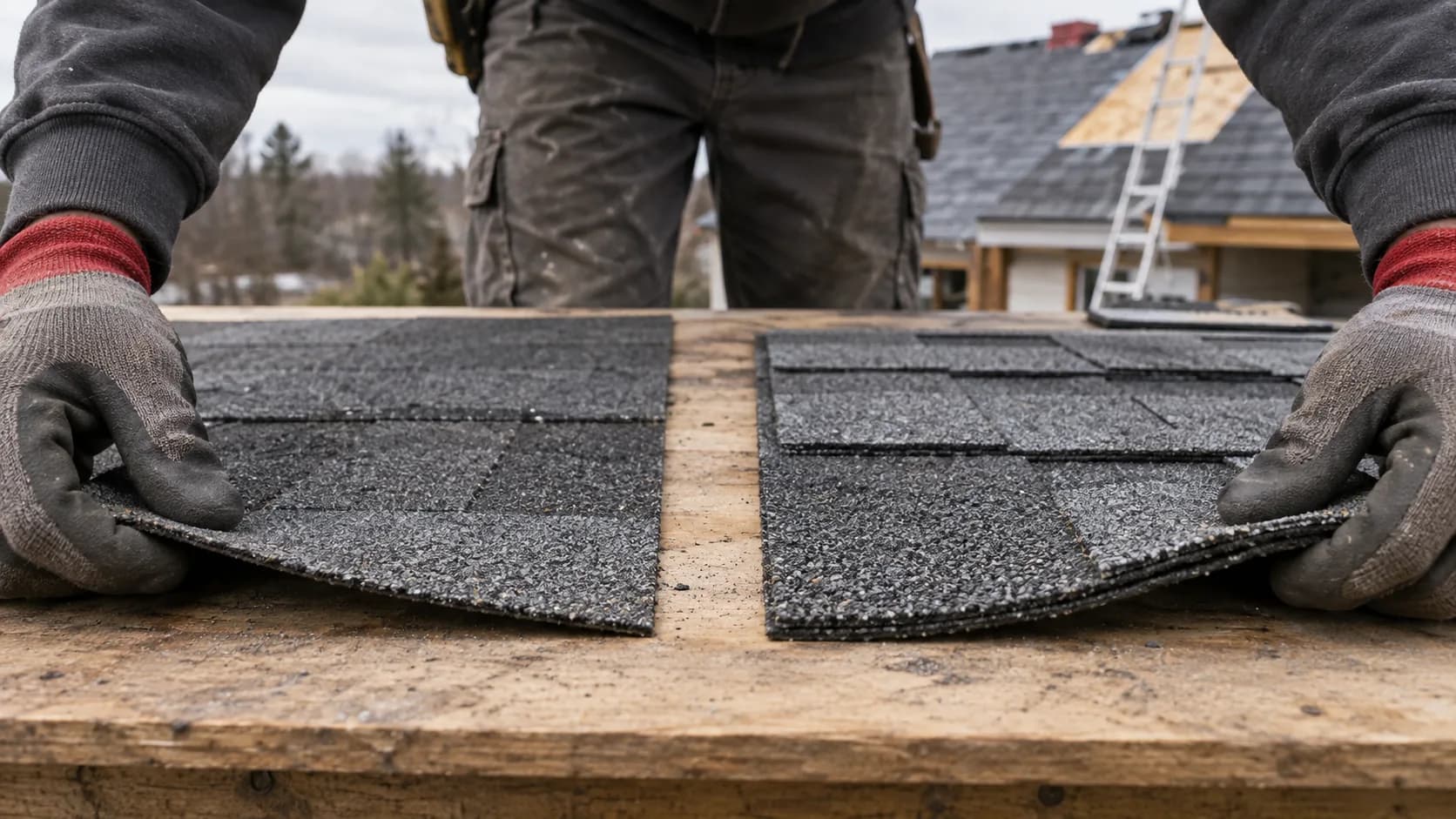
Both products are asphalt shingles, but they are built and sold differently. A 3-tab shingle uses a flatter, more uniform profile. An architectural or dimensional shingle uses laminated layers to create more depth and a less repetitive pattern. That construction can change the material price, weight, wind classification, installation instructions, and warranty—but the label alone does not prove one bid is better.
Start with the installed price, not the bundle price
Roofing is commonly measured in squares, with one square equal to 100 square feet of roof surface. A contractor's installed price includes much more than shingle bundles: tear-off, underlayment, starter, ridge cap, flashing, fasteners, ventilation work, disposal, permits, labor, overhead, and warranty support.
Use these broad planning ranges only as a first-pass comparison:
| Shingle type | Typical installed planning range | What the number must include |
|---|---|---|
| 3-tab asphalt | $380–$450 per square | Tear-off assumptions, complete accessory system, labor and disposal |
| Architectural asphalt | $450–$600 per square | Same scope, plus the named laminated shingle line and required accessories |
For a 20-square roof, a $60-per-square product difference is $1,200. That is the useful calculation: price the upgrade across the measured roof area, then compare it with the features and warranty actually written in the proposal. Do not compare a 3-tab materials-only price with an architectural full-system price.
Stop guessing. Get a planning range.
Use our free roofing cost estimator for a national planning range in seconds.
Compare the product data on the quote
Ask each roofer to name the manufacturer and exact product line. Then verify these items on the manufacturer's current technical sheet:
To discuss the roof's appearance, compare sample shingles on the ground and use binoculars or your phone's zoom to view nearby installations from a safe public location. Appearance does not establish the product's wind rating or warranty terms; verify those in the documents.
- Wind classification and installation method. The rating may depend on a specific fastener count, nail location, starter strip, deck type, and local conditions. A headline wind number is not useful if the proposal does not include the required installation method.
- Limited warranty terms. Separate the manufacturer's material warranty from the contractor's workmanship warranty. Read the transfer, registration, algae, wind, proration, and labor provisions rather than relying on the number of years in the brochure.
- Accessory requirements. Some enhanced warranty programs require matching starter, underlayment, ridge cap, ventilation products, or an approved contractor. Those items should appear in the bid.
- Color and availability. Confirm that the exact color is available for the project date. A substitution can change both appearance and product terms.
- Approved roof slope. Low-slope sections may need a different assembly. The shingle choice does not solve an unsuitable substrate or slope.
Where the upgrade can make sense
Architectural shingles are often worth pricing when the roof is visually prominent, the property is exposed to wind, or the owner expects to keep the roof for many years. They can also be the practical default when local distributors and crews stock more architectural products than 3-tab options.
The upgrade is less compelling when the roof will be removed soon for a planned addition, when the structure needs more urgent deck or flashing work, or when the higher bid simply substitutes a premium label without improving the rest of the roof system. Good flashing and ventilation details matter more than moving up one cosmetic product tier while leaving vulnerable intersections unchanged.
Normalize two bids before choosing
Copy both proposals into one table. If a cell is blank, ask the contractor to clarify it in writing.
| Scope item | Bid A | Bid B |
|---|---|---|
| Measured squares and waste assumption | ||
| Existing layers included in tear-off | ||
| Manufacturer and exact shingle line | ||
| Starter and ridge-cap products | ||
| Underlayment and leak barrier locations | ||
| Flashing replacement versus reuse | ||
| Decking unit price | ||
| Ventilation changes | ||
| Permit, disposal and cleanup | ||
| Material and workmanship warranties |
Only compare totals after the scope matches. A cheaper shingle bid can cost more after tear-off if its decking price is undefined or flashing is excluded. A higher architectural bid can also be poor value if it bundles the entire job into one line and makes the warranty impossible to verify.
Decision rule
Choose the proposal that provides the clearest complete system at a price you can support. If the architectural upgrade is modest after the scopes are normalized, its appearance and product-specific performance may justify it. If the premium is large, ask the roofer to identify exactly what changes besides the shingle wrapper. That answer is more useful than a generic claim that one category always lasts a fixed number of years longer.
For the rest of the scope, use the roof quote line-item checklist and the full roof replacement budget guide.
Research sources
- NRCA: National Roofing Contractors Association. Consumer roofing guidance and roof-system terminology.
- FEMA: Protect Your Property From Severe Winds. Wind-resistant roof-system details and mitigation context.
- FTC: How to Avoid a Home Improvement Scam. Written estimates, contractor checks, and payment precautions.
The cost guide
Get the monthly cost briefing
One useful email a month: project cost ranges, contractor red flags, and practical ways to avoid an inflated quote.
No spam. Unsubscribe any time. Read our privacy policy.
Cost estimator
Roofing cost estimator
A budgeting range, not a quote. Move the inputs to see what changes the number.
Estimated national cost
Typical project lands near $11,750.
If a written quote comes in above the high end, that's not automatically wrong — ask what scope is driving it.
What this assumes
- Asphalt shingle material selected.
- 1,500 sq ft house size selected.
- Standard tear-off and replacement scope assumed.
What moves this price
- 01Roof pitch, height, access, and number of layers.
- 02Decking repairs, ventilation, flashing, and underlayment.
- 03Permit requirements, disposal fees, and local labor rates.
Walk into your quotes ready
This range is your anchor. Bring these to every contractor conversation so you can tell a fair quote from a padded one.
- Is this a full tear-off or a layover, and how many layers are on there now?
- What underlayment, flashing, and ventilation work is included?
- Who pulls the permit, and is disposal of old material in the price?
- What's the workmanship warranty versus the shingle manufacturer's warranty?
- A bid far below every other, usually meaning a layover or skipped flashing.
- Asking for a large deposit before any material is delivered.
- No written scope listing tear-off, underlayment, and ventilation.
More roofing guides

Black Streaks on Your Roof? Check the Warranty Before You Pay a Cleaner
Dark streaks running down asphalt shingles are almost always algae, not damage. Here's how to tell it from moss, who may pay to clean it, and why it's never a reason to re-roof.
Read guide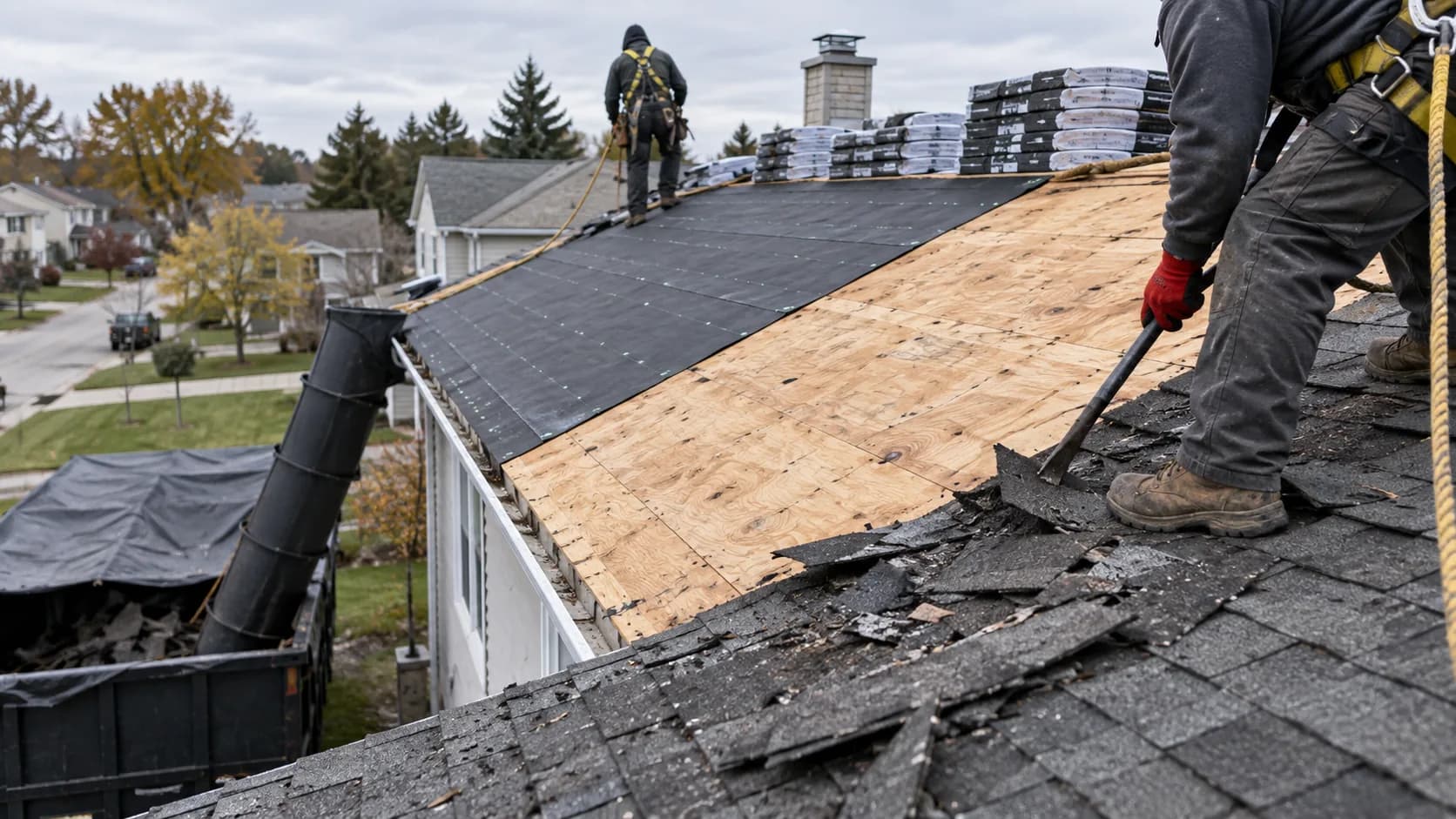
Roof Replacement Quote Line Items: What to Expect in 2026
The tear-off, decking, flashing, ventilation, permit, and cleanup lines that belong in a roof replacement quote before work starts.
Read guide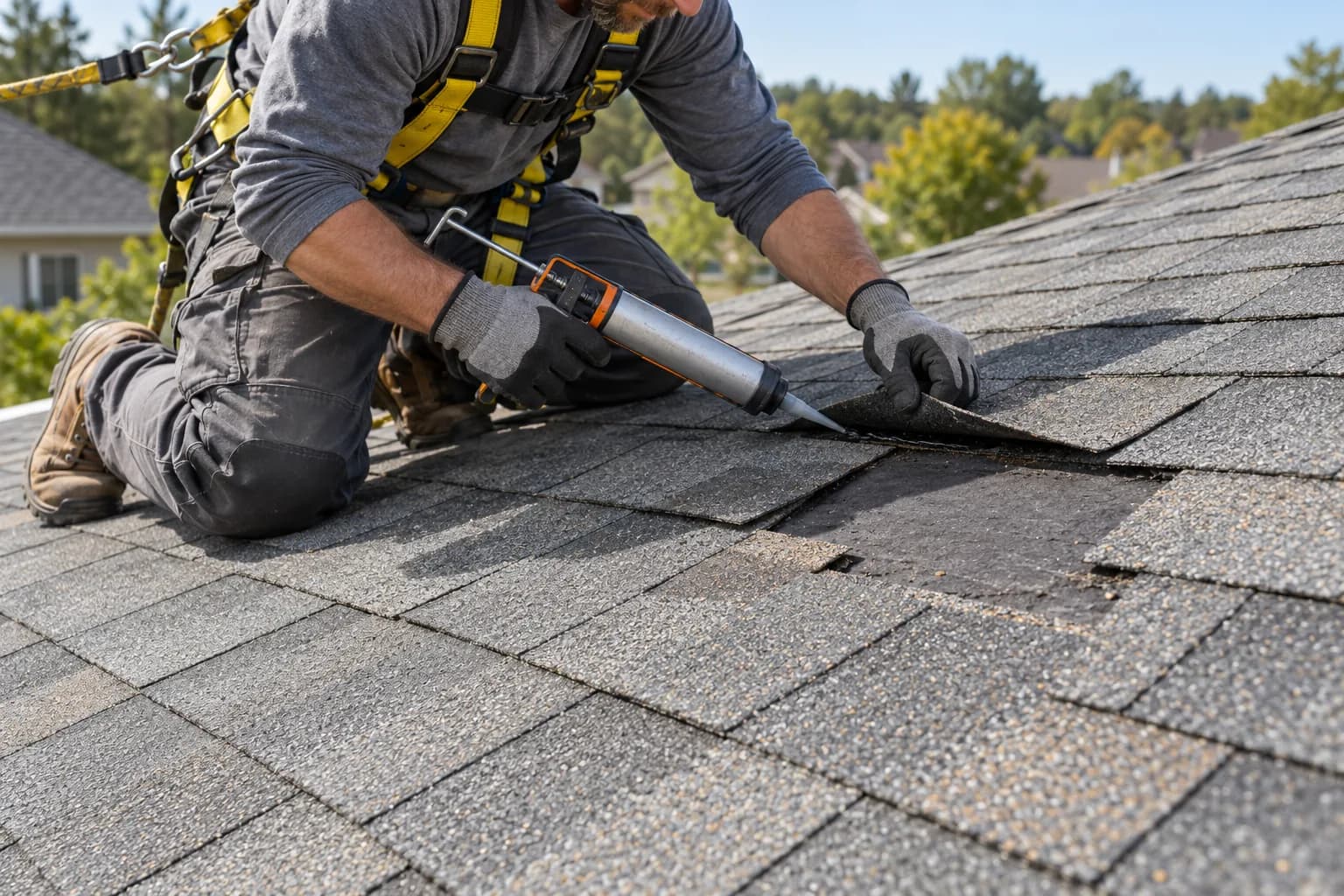
Shingles Blown Off in a Windstorm? Count the Lifted Tabs, Not the Missing Ones
The shingle on your lawn is the cheap part of wind damage. The broken sealant bonds still on the roof decide whether you need a patch, a slope, or a new roof.
Read guide