
Why is my air conditioner leaking water inside the house?
Most indoor AC leaks come from a clogged condensate drain, not a broken system. Here's how to tell a drain clog from a cracked pan or an iced coil, and what each costs.
The short answer
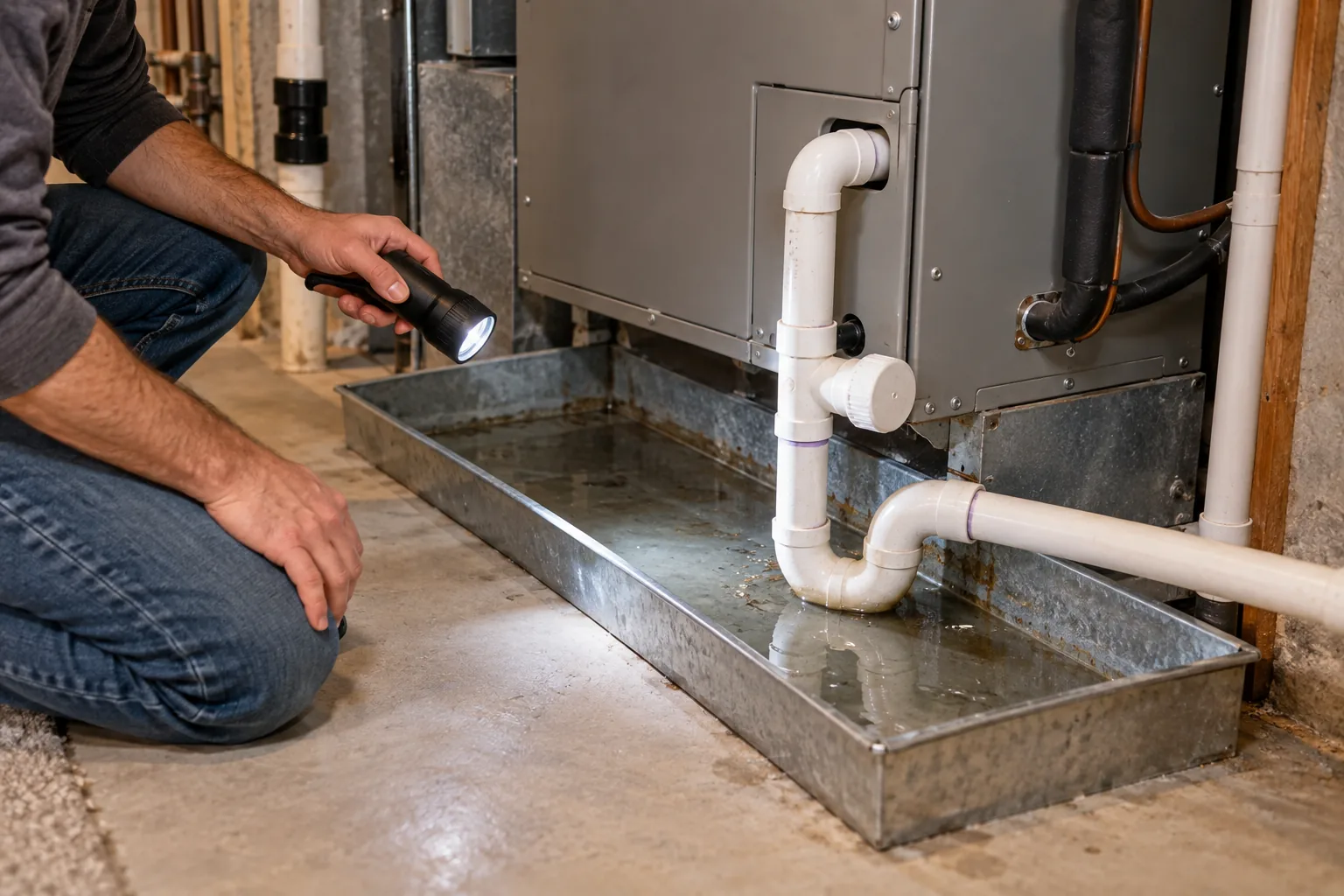
Most of the time the condensate drain line is clogged, so water backs up in the drain pan under the indoor coil until it spills over. Other causes are a cracked or rusted pan, a failed condensate pump, and an iced-over coil melting faster than the drain can keep up. Shut the system off at the thermostat. If the drain line is the only problem, clearing it is usually a small repair. A cracked primary pan costs much more.
Estimate, not a final quote
This range is for planning. Final pricing depends on an on-site inspection, materials, permits, access, and contractor scope.
Compare written bids
Ask each contractor for the same scope, warranty terms, permit handling, cleanup details, and exclusions before choosing.
Source-backed guidance
Guides use public references and practical cost modeling, then point you to official sources where rules or rebates can change.
This article contains paid links to Amazon. As an Amazon Associate I earn from qualifying purchases.
Your air conditioner pulls water out of the house every hour it runs. How much depends on how humid it is indoors and how long the system runs. When that water shows up on the floor, one part of a short path has failed: coil, pan, drain line, then outside or into a pump. Find where the water stopped moving and you've usually found the repair.
Trane and Carrier both list the same short set of causes. A clogged condensate drain line is the most common, then a damaged drain pan, a frozen evaporator coil, and, on systems that can't drain by gravity, a condensate pump that has quit or come unplugged.
First, turn it off at the thermostat
Trane's advice for a dripping air handler is to shut the system off at the thermostat or breaker before anything else, because running it keeps making water. Do that now. Then get the standing water up with towels or a wet/dry vac.
The clock matters more than the repair. EPA's mold guidance says wet materials dried within 24 to 48 hours usually won't grow mold. If water has soaked into drywall, carpet pad, or a ceiling below an attic unit, drying it within that window matters more than finding the cause the same afternoon. EPA also puts the limit on DIY mold cleanup at about 10 square feet. Beyond that, or after a lot of water damage, it's a job for a remediation pro.
Read the leak by where the water is
| What you see | Most likely cause | Who fixes it | Typical cost |
|---|---|---|---|
| Water in the pan, system shut itself off | Clogged primary drain; float switch did its job | Often you, then a tech if it won't clear | $0 DIY; roughly $75–$250 for a pro drain clearing |
| Water dripping from a secondary pan's drain over a window or eave | Clogged primary drain | Same as above | Same as above |
| Puddle next to a unit with an empty-looking pan | Cracked or rusted pan, or a disconnected drain fitting | HVAC tech | Roughly $250–$600 for a secondary pan; $600–$1,200 for a primary pan |
| Water near a small box with a tube, often by a basement or closet unit | Condensate pump unplugged, clogged, or failed | You can check the plug; a tech replaces the pump | Depends on pump model and access |
| Ice on the refrigerant lines or coil, water after it shuts off | Frozen coil melting faster than the drain can handle | Filter is yours; refrigerant is not | A filter if it's airflow; a leak repair if it's refrigerant |
| Water at the furnace in winter, AC off | Condensing furnace drain or trap, not the AC | HVAC tech | Separate diagnosis |
The drain-clearing and pan figures above are market ranges, not manufacturer prices. Carrier's own national range for common HVAC repairs is $150 to $1,200. Where your job lands in that range depends on access: a pan in a basement is a short job, but one above an attic furnace takes much longer.
Cost estimator
HVAC cost estimator
A budgeting range, not a quote. Move the inputs to see what changes the number.
Estimated national cost
Typical project lands near $8,250.
If a written quote comes in above the high end, that's not automatically wrong — ask what scope is driving it.
What this assumes
- Standard central HVAC replacement scope.
- 1,500 sq ft home size selected.
- No major duct, electrical, or structural repairs included.
What moves this price
- 01Equipment tier, SEER2 rating, and brand.
- 02Ductwork condition and attic or crawlspace access.
- 03Permit requirements, refrigerant changes, and local labor rates.
Walk into your quotes ready
This range is your anchor. Bring these to every contractor conversation so you can tell a fair quote from a padded one.
- What SEER2 rating and tonnage are you quoting, and why that size for my home?
- Is a full load calculation (Manual J) included, or are you sizing by rule of thumb?
- Does the price include new line sets, a permit, and haul-away of the old unit?
- What's the labor warranty, and is it separate from the manufacturer's parts warranty?
- A quote given over the phone without seeing your ductwork or home.
- Pressure to decide today or 'lose' a discount.
- An oversized system pitched as 'more powerful'. Bigger isn't better for comfort.
The drain line: what's yours and what isn't
The condensate line is usually white 3/4-inch PVC. It leaves the indoor unit, runs through a trap, and ends outside near the foundation or in a floor drain. Over a cooling season, algae, mold, dust, and debris build up inside it until the flow stops. Carrier lists the warning signs: a musty or swampy smell from the vents, standing water near the indoor unit, and a system that shuts off on its own.
Two maintenance steps are safe for a homeowner, and both are on Carrier's list. You can pull the clog out with a wet/dry vac at the outdoor end of the line, following the equipment and vacuum manufacturer's instructions. Keep powered cleanup equipment away from wet electrical components. You can also pour a cup of distilled vinegar into the indoor access port, usually a capped tee near the coil. Trane suggests a cup of hot water down the line about once a month as a preventive habit. ENERGY STAR puts checking the condensate drain on its standard maintenance checklist, because a plugged drain causes both water damage and higher indoor humidity.
Stop there. If the vac doesn't pull the clog, or the line is glued into the unit with no cleanout, it needs a technician with a snake or pressure tools and the panel open. That service is also the time to fix how the line was installed. IRC Section M1411.3 requires the drain to slope at least 1/8 inch per foot toward its outlet. A line that sags, runs flat, or has no cleanout will clog again next summer.
The float switch that turned your AC off
If the system stopped cooling and there's water in the pan, a float switch probably shut it off on purpose. IRC M1411.3.1 requires overflow protection wherever a backup could damage the building. That usually means attic and closet installs. The code allows three setups:
- A secondary pan under the unit with its own drain line to a conspicuous spot, often over a window.
- A secondary pan with no drain, fitted with a UL 508 water-level switch that shuts the unit off before the pan overflows.
- A water-level switch on the primary drain that shuts the unit off when the drain blocks.
A common version is the RectorSeal Safe-T-Switch SS2. Its specs list a 24-volt, 3/4-inch float switch that fits onto the pan's auxiliary drain outlet and cuts the thermostat circuit when water rises.
Here's the rule: never bypass a float switch to get the cooling back on. The switch is the only thing standing between a clogged drain and a ceiling collapse. Clear the drain and the switch resets itself.
The same logic applies to a secondary drain that drips over a window. That stream means your primary drain is clogged. Clearing the primary drain fixes it.
Pans and pumps: when it's hardware
Drain pans corrode and crack with age, according to both Carrier and Trane. A cracked secondary pan is a fairly simple swap. A cracked primary pan is harder, because it sits inside or directly under the evaporator coil. Replacing it can mean pulling the coil, which is why that line in the table runs to $1,200.
If your quote for a primary pan comes in near that top figure and the system is old enough that you're already weighing replacement, get a written replacement price before you approve the pan. Our AC replacement cost guide covers what that number should include.
A condensate pump is only there when gravity can't carry the water to a drain, usually because the unit sits in a basement below the nearest outlet. Many furnace-and-coil setups drain by gravity and have no pump at all, so look for a small box with a tube before assuming you have one. Trane notes the pump may simply be unplugged, or its line kinked or blocked. Check the plug and the tubing. If the pump hums but doesn't move water, or doesn't run at all while its reservoir fills, it needs replacing.
If the coil is iced
A frozen evaporator coil leaks in a different way. The ice melts after the system stops, and more water arrives at once than the pan and drain were built for. The cause is restricted airflow, usually a clogged filter, or low refrigerant. Carrier recommends replacing filters every one to three months.
Let the coil thaw with the system off. Change the filter using a replacement that matches the equipment's specified size and rating. If it ices again within a day or two, it's probably a refrigerant problem, and that's a certified technician's job, not yours. The full diagnosis for that case is in our AC blowing warm air guide.
What to tell the technician
Before you call, note three things: where the water was, whether the system shut itself off, and whether there was ice on the copper lines. A technician who knows it's a tripped float switch and a clogged drain arrives with a vac and a snake, not a refrigerant cart.
Ask them to confirm the drain's slope and trap and to add a cleanout tee if there isn't one. A drain that clogs every year is usually an installation problem, not bad luck.
Research sources
- Trane: AC Leaking Water? Find Out Why and What to Do
- Trane: AC Condensate Drain Line Clogged?
- Trane: Air Handler Dripping Water: Causes and Solutions
- Trane: Furnace Leaking Water?
- Carrier: Why Is My AC Leaking Water?
- Carrier: How to Clean AC Drain Line
- ICC Digital Codes: 2021 IRC Section M1411.3, Condensate Disposal
- RectorSeal: Safe-T-Switch condensate overflow protection
- ENERGY STAR: Maintenance Checklist
- EPA: Mold Cleanup in Your Home
- EPA: A Brief Guide to Mold, Moisture and Your Home
Compare local quotes
Ready to compare real quotes from HVAC contractor pros?
Use your estimate as a budget anchor, then compare written contractor bids against it before you decide. Free request, no obligation.
Disclosure: this button opens a third-party quote-matching service. If you submit its form, its contact and privacy terms apply, and SaveBricks may earn a referral fee. It never changes the prices you're quoted, and our cost ranges are set independently — see how we estimate.
The cost guide
Get the monthly cost briefing
One useful email a month: project cost ranges, contractor red flags, and practical ways to avoid an inflated quote.
No spam. Unsubscribe any time. Read our privacy policy.
More hvac guides
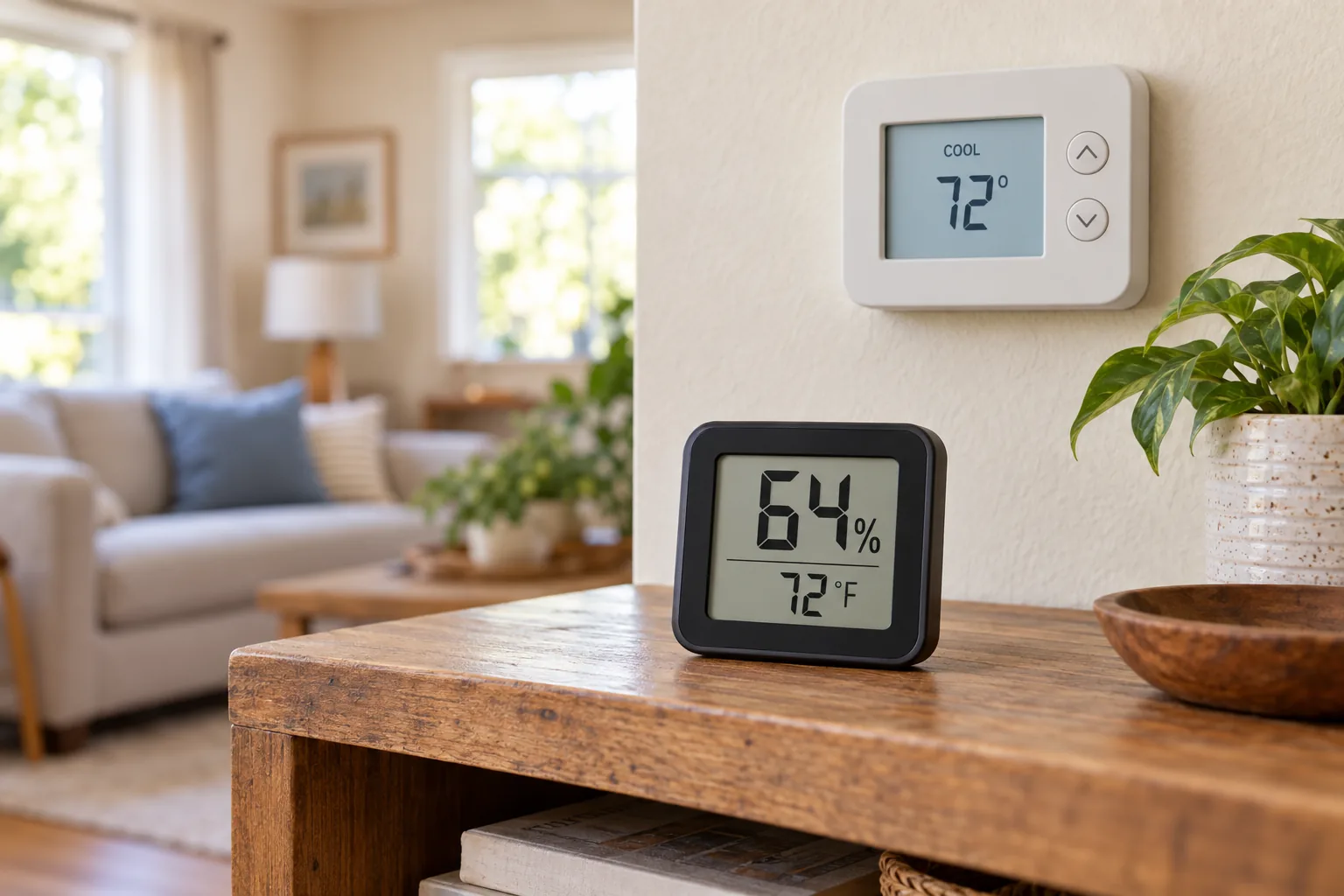
House Humid With the AC Running? Read the Hygrometer Before You Buy Anything
A cool, clammy house usually points to the fan setting, an oversized AC, or air leaking in. Here's how to tell which one you have and what each fix really costs.
Read guide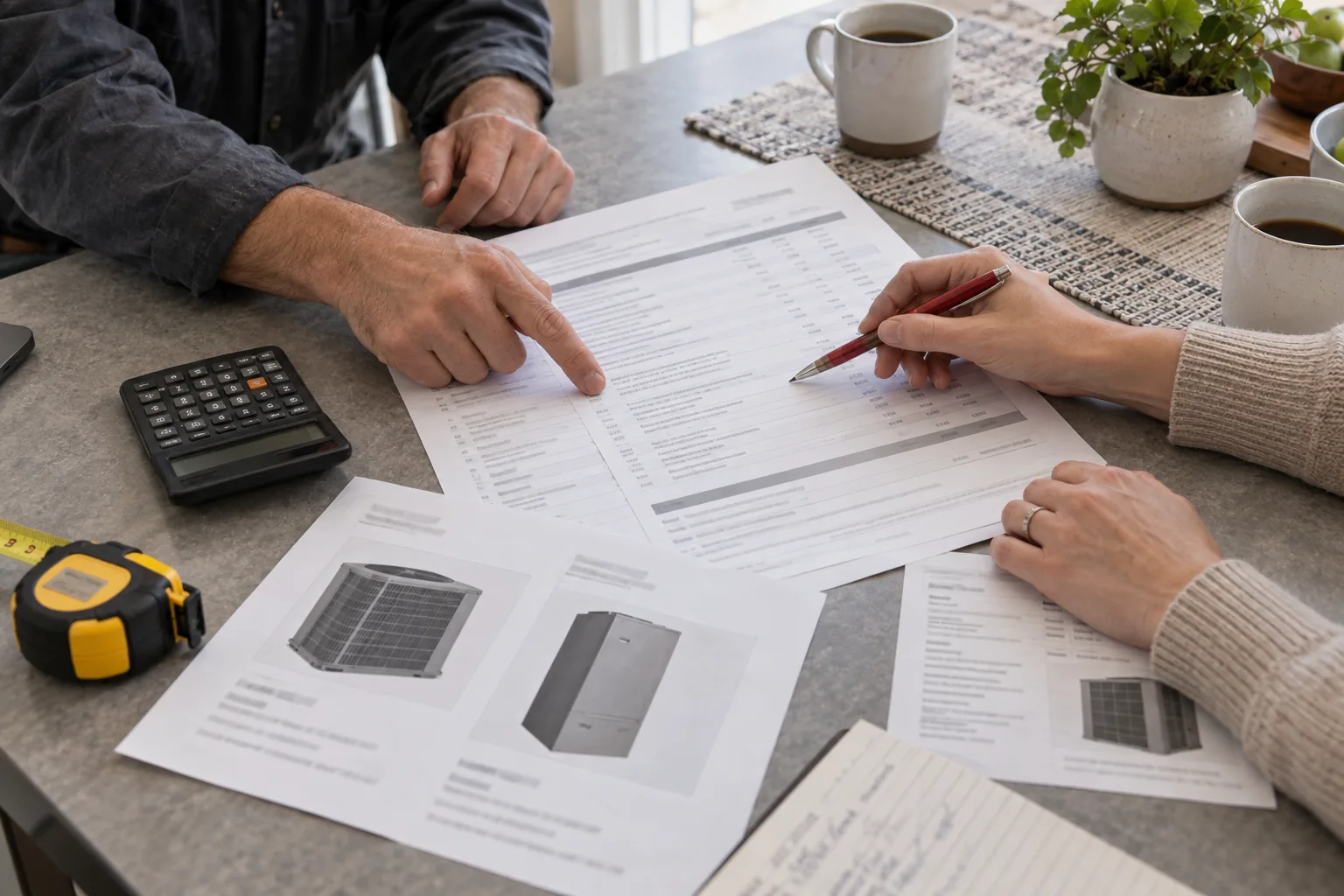
How to Read an HVAC Quote, Line by Line
A real HVAC bid itemizes nine things; most homeowners get four. Here's what belongs on the page, what's negotiable, and where a bare number hides a mismatched system.
Read guide
Furnace Leaking Water? Your Efficiency Rating Narrows It Down
A 90%-plus furnace makes water on purpose; an 80% furnace shouldn't make any. Here's how to read the leak by furnace type, and which fixes cost $0 versus $3,000.
Read guide