
Why is my house still humid when the air conditioner is running?
A cool, clammy house usually points to the fan setting, an oversized AC, or air leaking in. Here's how to tell which one you have and what each fix really costs.
The short answer
The most common causes are a thermostat fan left on ON instead of AUTO, an air conditioner too big for the house that shuts off before it can pull moisture out, and humid outdoor air getting in through leaky ducts or gaps. The fan fix is free. A whole-house dehumidifier runs about $1,000 to $4,000 installed, based on Carrier's and Trane's published ranges. If the AC has felt clammy since the day it was installed, the long-term fix is usually a correctly sized replacement, not another part.
Estimate, not a final quote
This range is for planning. Final pricing depends on an on-site inspection, materials, permits, access, and contractor scope.
Compare written bids
Ask each contractor for the same scope, warranty terms, permit handling, cleanup details, and exclusions before choosing.
Source-backed guidance
Guides use public references and practical cost modeling, then point you to official sources where rules or rebates can change.
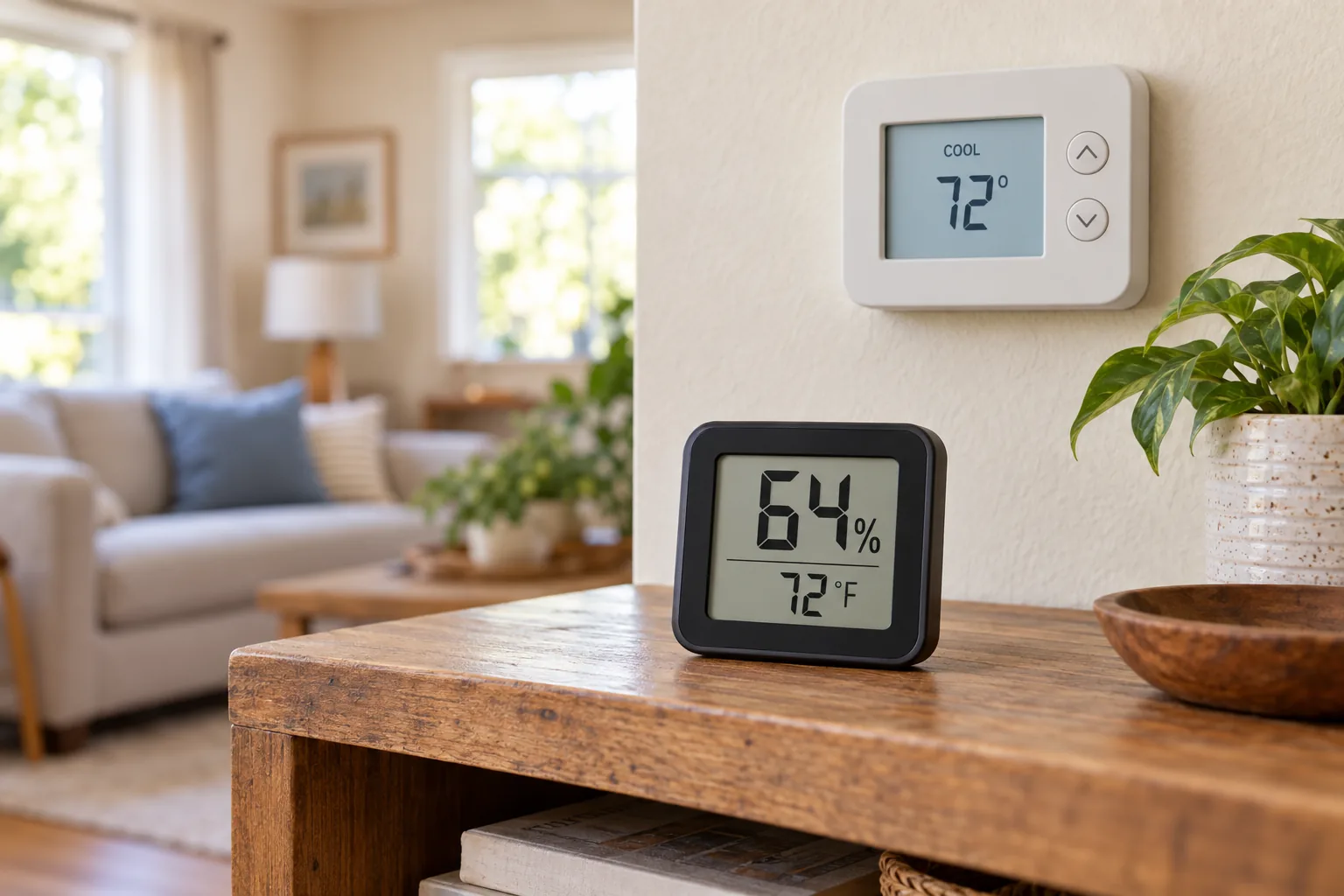
EPA's line is 60%: keep indoor relative humidity below it, ideally between 30% and 50%. If your AC holds the house at 72°F and it still feels sticky, odds are you're above that line. Before you call anyone or buy a dehumidifier, find out by how much and where.
Get a number, not a feeling
A digital hygrometer is cheap, and EPA calls moisture meters inexpensive in its mold guidance. Put one in the main living area, away from the kitchen and bathrooms, and check it at the same time each afternoon for three or four days with the AC on. If you can, borrow or buy a second one and put it in the basement or the most humid-feeling bedroom.
Your readings point you toward different causes:
| What the hygrometer shows | Most likely cause | Fix and published cost |
|---|---|---|
| 55–65% everywhere, thermostat fan set to ON | Fan blowing air over a wet coil and putting moisture back in the house | Switch the fan to AUTO: $0 |
| 55–65% everywhere, AC reaches setpoint fast and shuts off often | Oversized single-stage AC | Whole-house dehumidifier, $1,000–$2,800 (Carrier) or $1,000 to over $4,000 (Trane); or a correctly sized replacement |
| High in one zone only, such as a basement | That space isn't getting enough conditioned air | A supply vent added there, or a portable dehumidifier |
| Rising over the season, with a musty smell from vents | Duct leaks pulling in attic or crawlspace air | Professional duct sealing |
| Above 60% with water stains, damp walls, or visible mold | A moisture source, not just the AC | Find and fix the water first |
Write the readings down. You'll want them when you call a contractor.
The free fix: put the fan on AUTO
Your AC removes moisture by chilling the indoor evaporator coil below the dew point. Water condenses on the coil, runs into the drain pan, and leaves through the condensate line. When the compressor shuts off, that coil is still soaking wet.
On AUTO, the blower stops with the compressor and the water drains away. On ON, the blower keeps pushing warm air across the wet coil and the moisture goes straight back into your house. Trane's engineering guidance describes net dehumidification as everything that condenses on the coil minus what re-evaporates off it, and continuous fan is how a lot of it re-evaporates.
Manufacturers treat this seriously enough to build controls around it. Honeywell's T10+ thermostat has an installer setting that keeps the fan off for 5 to 90 minutes after a cooling call, specifically for very humid regions. Rheem's EcoNet thermostat has a drain timer that pauses continuous fan so the coil can drain.
Flat rule: in a humid summer, set the fan to AUTO and leave it there for a week before you spend money. If the readings drop under 55%, you're done.
The AC is too big for the house
If the fan is on AUTO and the house is still clammy, watch how the AC runs on a hot afternoon. A system that cools the house in a few minutes, shuts off, and repeats is probably oversized.
Here's why size matters. Your AC lowers the temperature fast, but the coil needs sustained run time before it condenses much water. Trane's engineering guidance shows that as compressor run time shrinks, dehumidification drops toward nothing, because the coil never makes enough condensate to drain. An oversized unit hits the thermostat setpoint and stops before that happens. Trane also notes that an improperly sized system can short-cycle from the day it's installed.
Sizing has a standard. ACCA's Manual S, checked by code officials against a Manual J load calculation, caps a standard air conditioner's total capacity at 115% of the calculated cooling load. ENERGY STAR's HVAC design rules for certified new homes use 90% to 115% as the recommended range for single-speed equipment in most climates. A 4-ton unit replacing a 4-ton unit "because that's what was there," with no load calculation, can easily fall outside that range. Trane names that same-size swap as a common cause of oversizing.
Trane is blunt about this: the only way to fix short cycling from an oversized system is to replace it with a correctly sized one. You don't have to do that tomorrow. A whole-house dehumidifier can handle the humidity while the AC lives out its life.
Flat rule: if the house has been clammy since the AC went in, stop paying for tune-ups to fix it. No refrigerant top-off or capacitor makes an oversized unit run longer. At replacement time, ask for the Manual J on paper and consider a two-stage or variable-speed system. Trane recommends those over single-stage equipment for homes that struggle with humidity. Our HVAC quote guide covers what that line item should look like.
Cost estimator
HVAC cost estimator
A budgeting range, not a quote. Move the inputs to see what changes the number.
Estimated national cost
Typical project lands near $8,250.
If a written quote comes in above the high end, that's not automatically wrong — ask what scope is driving it.
What this assumes
- Standard central HVAC replacement scope.
- 1,500 sq ft home size selected.
- No major duct, electrical, or structural repairs included.
What moves this price
- 01Equipment tier, SEER2 rating, and brand.
- 02Ductwork condition and attic or crawlspace access.
- 03Permit requirements, refrigerant changes, and local labor rates.
Walk into your quotes ready
This range is your anchor. Bring these to every contractor conversation so you can tell a fair quote from a padded one.
- What SEER2 rating and tonnage are you quoting, and why that size for my home?
- Is a full load calculation (Manual J) included, or are you sizing by rule of thumb?
- Does the price include new line sets, a permit, and haul-away of the old unit?
- What's the labor warranty, and is it separate from the manufacturer's parts warranty?
- A quote given over the phone without seeing your ductwork or home.
- Pressure to decide today or 'lose' a discount.
- An oversized system pitched as 'more powerful'. Bigger isn't better for comfort.
Air the system shouldn't be pulling in
ENERGY STAR estimates that in a typical house, 20% to 30% of the air moving through the duct system is lost to leaks, holes, and bad connections. A return duct leaking in a July attic pulls in hot, humid air and sends it through your house, so your AC is fighting outdoor humidity as well as indoor humidity. ENERGY STAR's duct-sealing guidance also notes it cuts down on pollutants from dusty attics and musty crawlspaces, so a musty vent smell is a clue.
The repair is mastic or metal foil tape on the joints, not cloth duct tape, which ENERGY STAR says doesn't last. Ducts in unconditioned space should also be insulated to R-6 or higher. Sealing ducts you can reach in a basement is reasonable DIY. Crawling through a hot attic over ceiling joists is a fall and heat-stress job, and ENERGY STAR publishes a separate guide to hiring a duct contractor for it.
Rule out the ordinary moisture sources too. EPA's mold guidance says to run bath fans during showers and the range hood while cooking. If you see water stains, damp drywall, or mold, you have a leak or seepage problem, and EPA says wet materials need to dry within 24 to 48 hours to prevent mold growth. Buying a dehumidifier before fixing the water just treats the symptom.
When a technician needs to look
Some causes aren't yours to find. A clogged filter cuts airflow, and you can change that yourself. A dirty evaporator coil, low refrigerant, or a blower set to the wrong speed all change how cold the coil runs and how much water it pulls out. Those need gauges and a licensed HVAC technician. If you're also seeing ice on the refrigerant lines or warm air from the vents, start with our AC blowing warm air guide, because that's a bigger failure than humidity.
Choosing the dehumidifier, if you need one
If the readings stay above 55% after the fan and duct fixes, a dehumidifier is the next step. ENERGY STAR says a whole-home unit makes the most sense in a relatively well-sealed house with central air and humidity consistently above 55% throughout. Whole-home units connect to your ductwork, need a drain or condensate pump, and should be sized and installed by a professional. Trane's whole-home line removes 70 to 120 pints a day for homes up to 3,000 square feet, and Carrier's comes in 80- and 100-pint models.
If the problem is one basement or one room, a portable unit is usually enough. ENERGY STAR suggests 20 to 30 pints a day for a moderately damp space under 2,000 square feet, and says it's better to oversize than undersize. Certified models use about 20% less energy than conventional ones. One catch: DOE changed the capacity test, so newer models can carry lower pint ratings than older units that remove about the same water. Compare ratings from the current test only.
Whatever you buy, set it to hold somewhere in Trane's 40% to 50% summer range, not 30%. Every extra point of dryness costs electricity, and that range keeps you well under EPA's 60% line.
Research sources
- EPA: Interactive Mold House Tour
- EPA: Mold Course Chapter 2
- EPA: Biological Pollutants' Impact on Indoor Air Quality
- ENERGY STAR: Dehumidifiers
- ENERGY STAR: Dehumidifier Testing and Capacity
- ENERGY STAR: Duct Sealing
- ENERGY STAR: Duct Sealing flyer
- ENERGY STAR: Hire a Professional Contractor for Duct Improvement Projects
- ENERGY STAR: National HVAC Design Supplement to Std. 310, Rev. 14
- ICC: Reviewing HVAC Designs for Compliance with ACCA Manual S
- ICC: ACCA Manual S Verification Checklist
- Trane: AC Short Cycling, Why and What to Do
- Trane: What Is HVAC Sizing?
- Trane: Better Part-Load Dehumidification (Engineers Newsletter)
- Trane: High Humidity in Your House, What to Do
- Trane: Whole Home Dehumidifiers
- Trane: How to Choose the Best Home Dehumidifier
- Carrier: How Much Is a Dehumidifier?
- Honeywell Home: T10/T10+ Pro Troubleshooting and Support
- Rheem: EcoNet Smart Thermostat User Guide
Compare local quotes
Ready to compare real quotes from HVAC contractor pros?
Use your estimate as a budget anchor, then compare written contractor bids against it before you decide. Free request, no obligation.
Disclosure: this button opens a third-party quote-matching service. If you submit its form, its contact and privacy terms apply, and SaveBricks may earn a referral fee. It never changes the prices you're quoted, and our cost ranges are set independently — see how we estimate.
The cost guide
Get the monthly cost briefing
One useful email a month: project cost ranges, contractor red flags, and practical ways to avoid an inflated quote.
No spam. Unsubscribe any time. Read our privacy policy.
More hvac guides
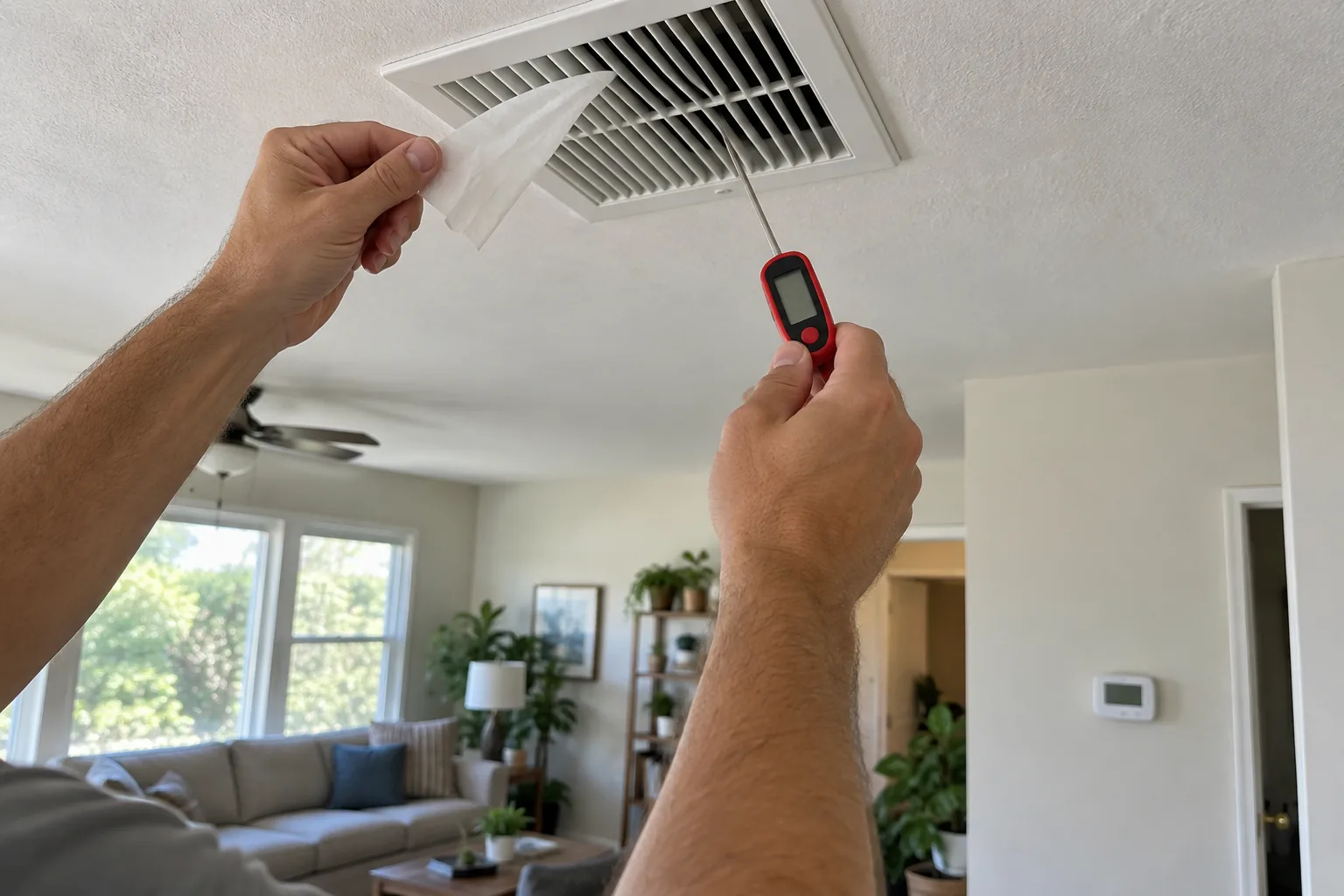
Why Is Your AC Blowing Warm Air? 7 Causes, Ranked by Cost
Warm air from the vents has one of seven causes, and the most common ones are also the cheapest to fix. Here's how to tell which one you have before a technician tells you.
Read guide
Furnace Short Cycling? Time the Cycle Before You Pay for a Part
How long your furnace runs before it quits points to the failed part. Here's how to read the timing, what each fix costs, and when the answer is the furnace itself.
Read guide
Furnace Leaking Water? Your Efficiency Rating Narrows It Down
A 90%-plus furnace makes water on purpose; an 80% furnace shouldn't make any. Here's how to read the leak by furnace type, and which fixes cost $0 versus $3,000.
Read guide