
What does it really cost to replace an AC system in 2026?
Rising equipment costs and new refrigerants are reshaping the HVAC market. Here is a practical budget range for a new AC system this year.
The short answer
A typical central AC replacement runs about $5,500 to $8,200 installed for an average home, before ductwork or electrical surprises. Here's what moves the number.
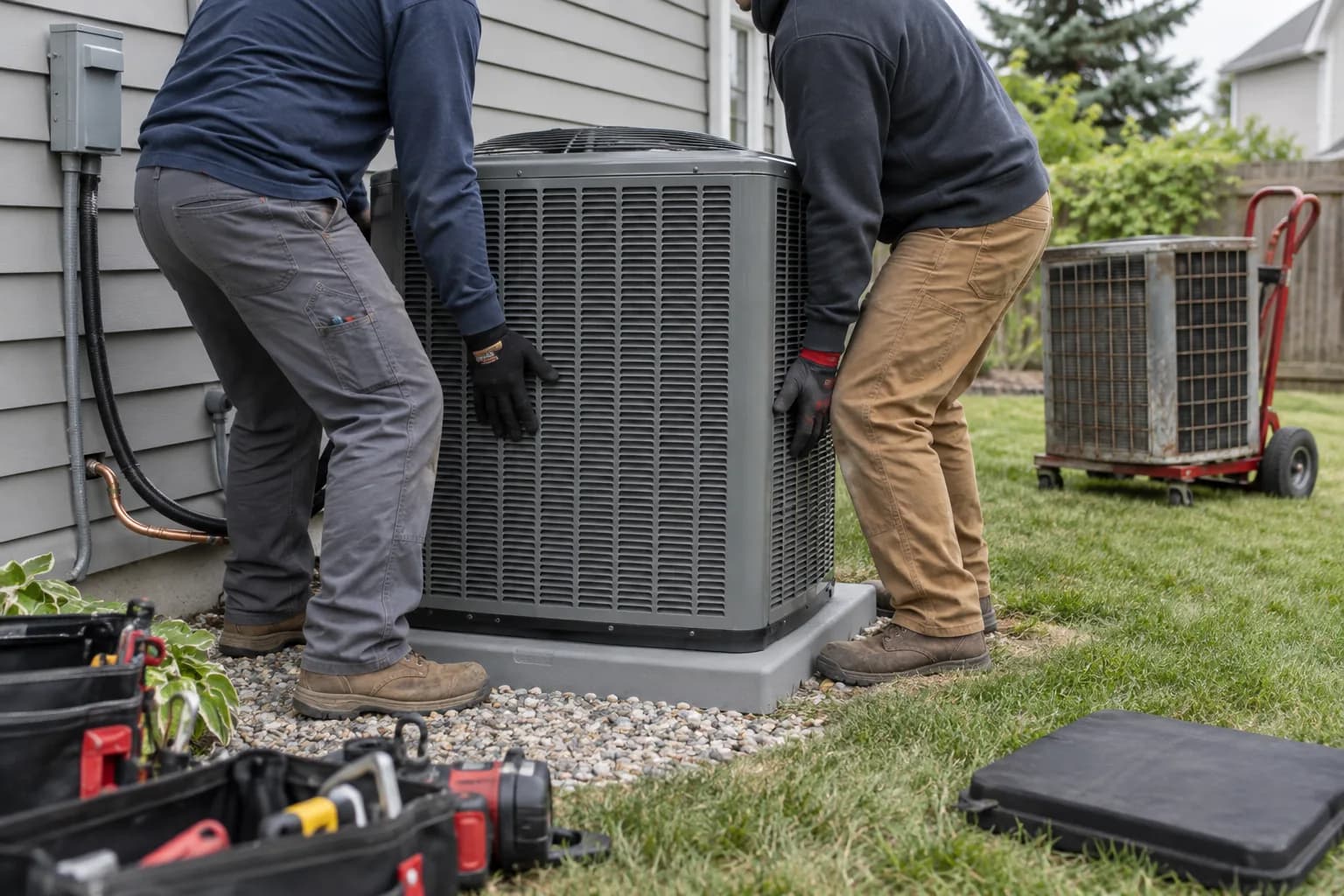
Estimate, not a final quote
This range is for planning. Final pricing depends on an on-site inspection, materials, permits, access, and contractor scope.
Compare written bids
Ask each contractor for the same scope, warranty terms, permit handling, cleanup details, and exclusions before choosing.
Source-backed guidance
Guides use public references and practical cost modeling, then point you to official sources where rules or rebates can change.
This article contains paid links to Amazon. As an Amazon Associate I earn from qualifying purchases.
Replacing central air conditioning is a system job, not an outdoor-unit purchase. The condenser, indoor coil, metering device, refrigerant, airflow, electrical supply, and controls have to work as one matched installation.
What the $5,500–$8,200 range assumes
A standard 3-ton, 14 SEER2 system replacement has a national planning range of $5,500 to $8,200 before ductwork, electrical work, or unusual access. Regional labor and the selected equipment tier can move a written bid outside that band.
The range assumes the equipment stays in the same location, the existing ducts and electrical service can be reused, the refrigerant line is either suitable or included in the base scope, and the job does not require structural repairs. It should include permit, removal of old equipment, installation materials, evacuation and charging, startup testing, and warranty registration.
| Cost driver | Lower-cost condition | Higher-cost condition |
|---|---|---|
| Capacity | Smaller matched system | Larger capacity after a documented load calculation |
| Equipment | Single-stage baseline tier | Two-stage or variable-capacity tier |
| Access | Ground-level condenser and open mechanical room | Tight attic, crawlspace, roof, or crane access |
| Ductwork | Existing ducts pass inspection and airflow checks | Returns, transitions, sealing, or replacement required |
| Electrical | Existing disconnect and circuit are adequate | New circuit, disconnect, surge protection, or panel work |
What Affects the Price?
- Tonnage (Size): Home size matters, but insulation, windows, orientation, infiltration, and design temperatures determine the actual load.
- Efficiency (SEER2 Rating): Higher efficiency costs more upfront; the payback depends on climate, electricity price, run time, and installation quality.
- Ductwork Modifications: If your existing ductwork is incompatible or leaking, expect an additional $1,500 - $3,000 to retrofit or seal the system.
Refrigerant changes in 2026
New residential equipment has moved away from R-410A toward lower-global-warming-potential refrigerants such as R-32 and R-454B. The quote should name the refrigerant and both indoor and outdoor model numbers. Old R-410A inventory can still appear in the market, so “new system” is not enough detail.
The refrigerant choice affects future service compatibility, line-set requirements, installation procedures, and sometimes placement or sensor requirements. It is a specification to compare, not a reason by itself to accept a vague premium.
Sizing comes before brand
The Department of Energy warns that oversized equipment can cool quickly without removing enough humidity, while undersized equipment may run continuously in peak conditions. Ask for an ACCA Manual J load calculation and a written explanation of the selected tonnage.
An indoor thermometer and hygrometer can help you record which rooms are uncomfortable and when. Give that record to the contractor, but let the load calculation determine equipment capacity; a room reading alone cannot size an AC system.
If every bidder recommends the same size simply because it matches the old nameplate, none has shown that the old system was correctly sized or that the house has not changed through insulation, window, or air-sealing work.
Research-Backed Planning Notes
The Department of Energy recommends professional sizing because oversized central AC systems can cool rooms too quickly without properly removing humidity, while undersized systems may run constantly. ENERGY STAR also emphasizes quality installation, including proper sizing, airflow, and refrigerant charge, because those installation details affect comfort and operating cost.
The federal Section 25C credit covered qualifying central AC and heat-pump equipment placed in service through December 31, 2025. Do not subtract it from a 2026 installation. State and utility programs are separate and should be verified directly before they enter the budget.
Research sources
- ENERGY STAR: Heating & Cooling
- ENERGY STAR: HVAC Quality Installation
- IRS: Energy Efficient Home Improvement Credit
Stop guessing. Get a planning range.
Use our free HVAC cost estimator for a national planning range in seconds.
When to repair instead
Age alone does not force replacement. A younger system with an isolated capacitor, contactor, drain, thermostat, or blower problem is usually worth repairing. Price replacement before approving a compressor, coil, or major refrigerant repair on an older system, especially when other components are out of warranty.
Use the repair-versus-replacement calculation to compare the two scopes. If you are already collecting bids, the HVAC quote checklist shows the model numbers, sizing, commissioning, and warranty lines that belong on the page.
The cost guide
Get the monthly cost briefing
One useful email a month: project cost ranges, contractor red flags, and practical ways to avoid an inflated quote.
No spam. Unsubscribe any time. Read our privacy policy.
Cost estimator
HVAC cost estimator
A budgeting range, not a quote. Move the inputs to see what changes the number.
Estimated national cost
Typical project lands near $8,250.
If a written quote comes in above the high end, that's not automatically wrong — ask what scope is driving it.
What this assumes
- Standard central HVAC replacement scope.
- 1,500 sq ft home size selected.
- No major duct, electrical, or structural repairs included.
What moves this price
- 01Equipment tier, SEER2 rating, and brand.
- 02Ductwork condition and attic or crawlspace access.
- 03Permit requirements, refrigerant changes, and local labor rates.
Walk into your quotes ready
This range is your anchor. Bring these to every contractor conversation so you can tell a fair quote from a padded one.
- What SEER2 rating and tonnage are you quoting, and why that size for my home?
- Is a full load calculation (Manual J) included, or are you sizing by rule of thumb?
- Does the price include new line sets, a permit, and haul-away of the old unit?
- What's the labor warranty, and is it separate from the manufacturer's parts warranty?
- A quote given over the phone without seeing your ductwork or home.
- Pressure to decide today or 'lose' a discount.
- An oversized system pitched as 'more powerful'. Bigger isn't better for comfort.
More hvac guides

How to Read an HVAC Quote, Line by Line
A real HVAC bid itemizes nine things; most homeowners get four. Here's what belongs on the page, what's negotiable, and where a bare number hides a mismatched system.
Read guide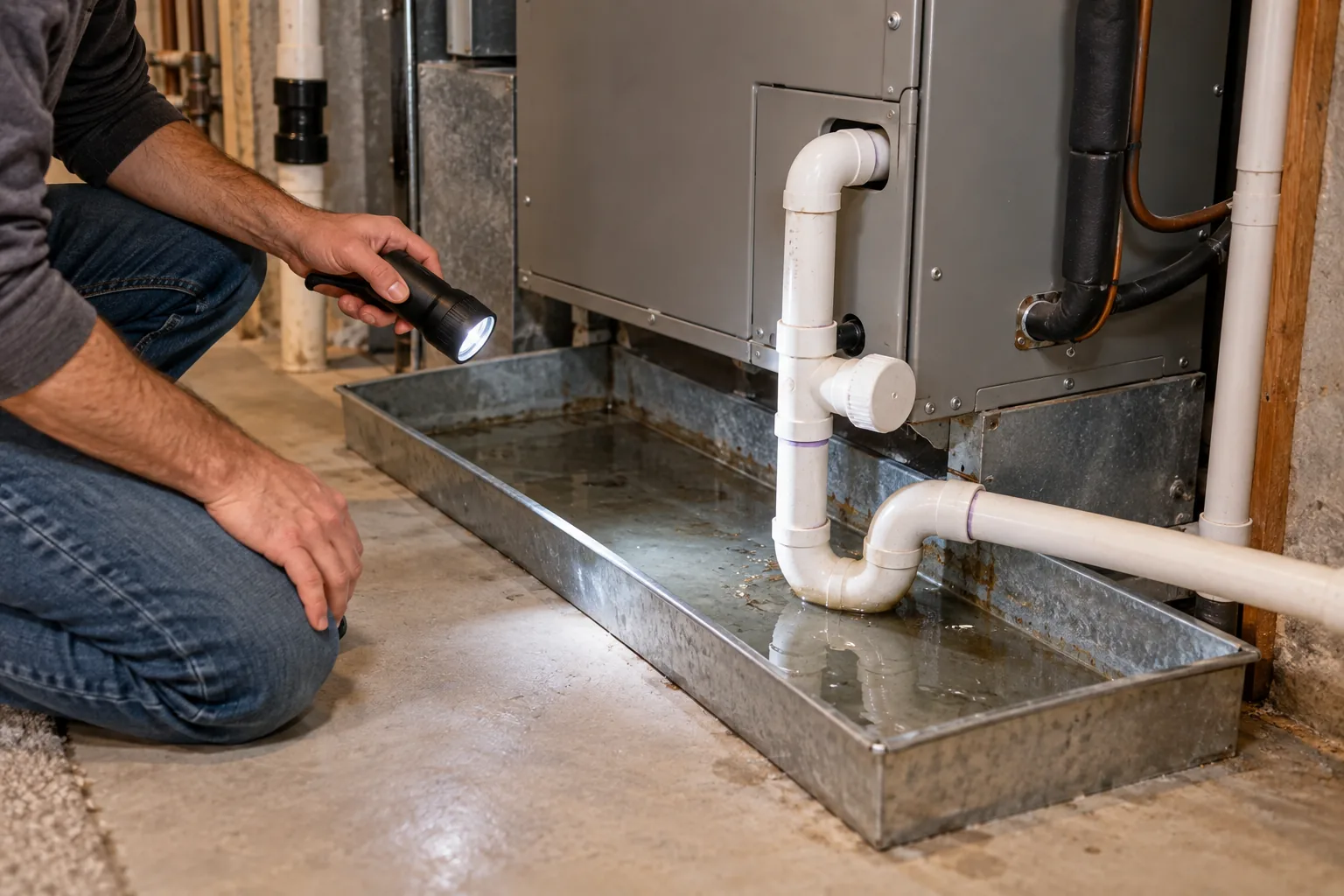
AC Leaking Water Inside? Find Where the Water Stops Moving
Most indoor AC leaks come from a clogged condensate drain, not a broken system. Here's how to tell a drain clog from a cracked pan or an iced coil, and what each costs.
Read guide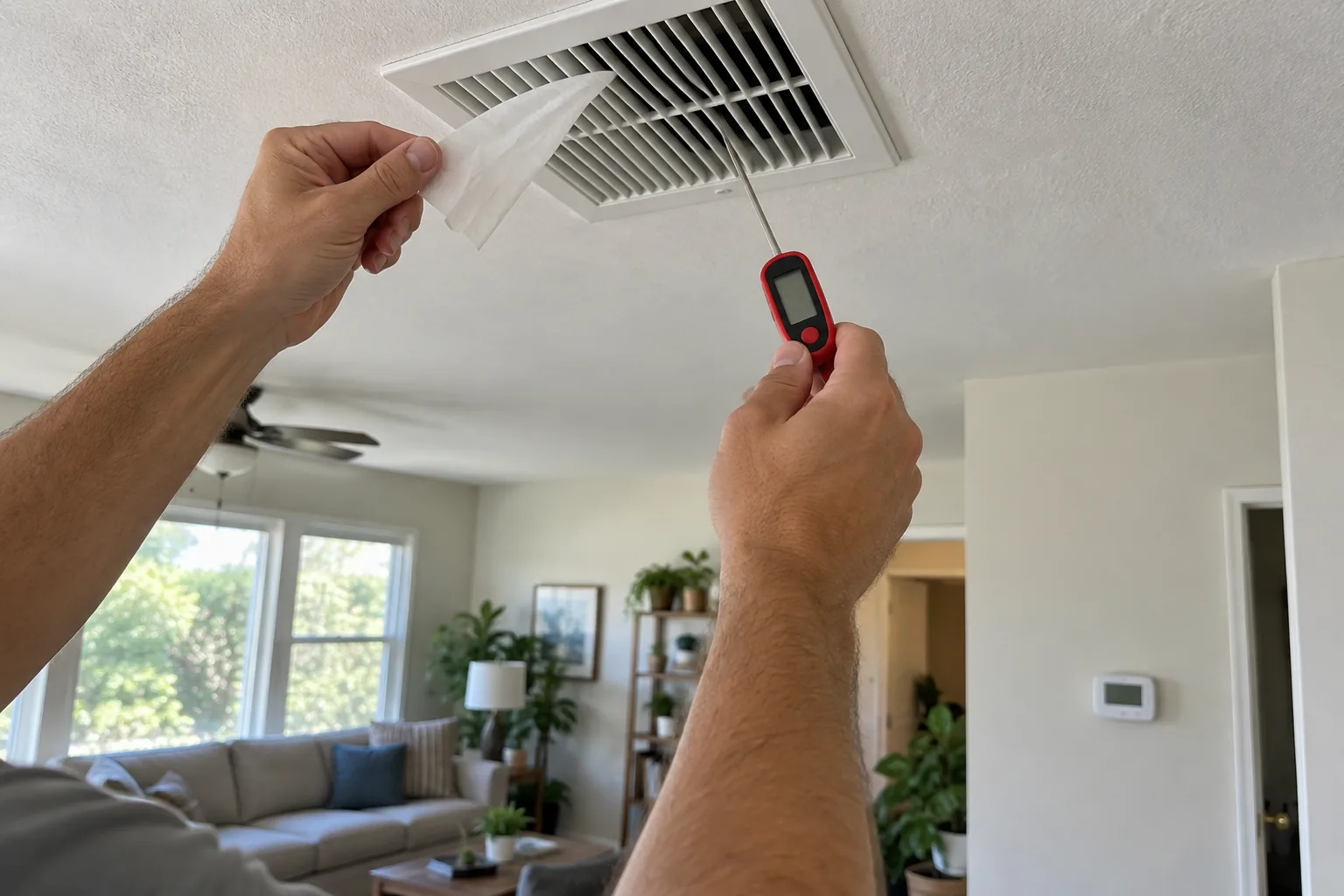
Why Is Your AC Blowing Warm Air? 7 Causes, Ranked by Cost
Warm air from the vents has one of seven causes, and the most common ones are also the cheapest to fix. Here's how to tell which one you have before a technician tells you.
Read guide