
Should I repair my air conditioner or replace it?
Use equipment age, diagnosis, warranty, repair scope, and replacement bids to decide whether an air-conditioner repair is still worth making.
The short answer
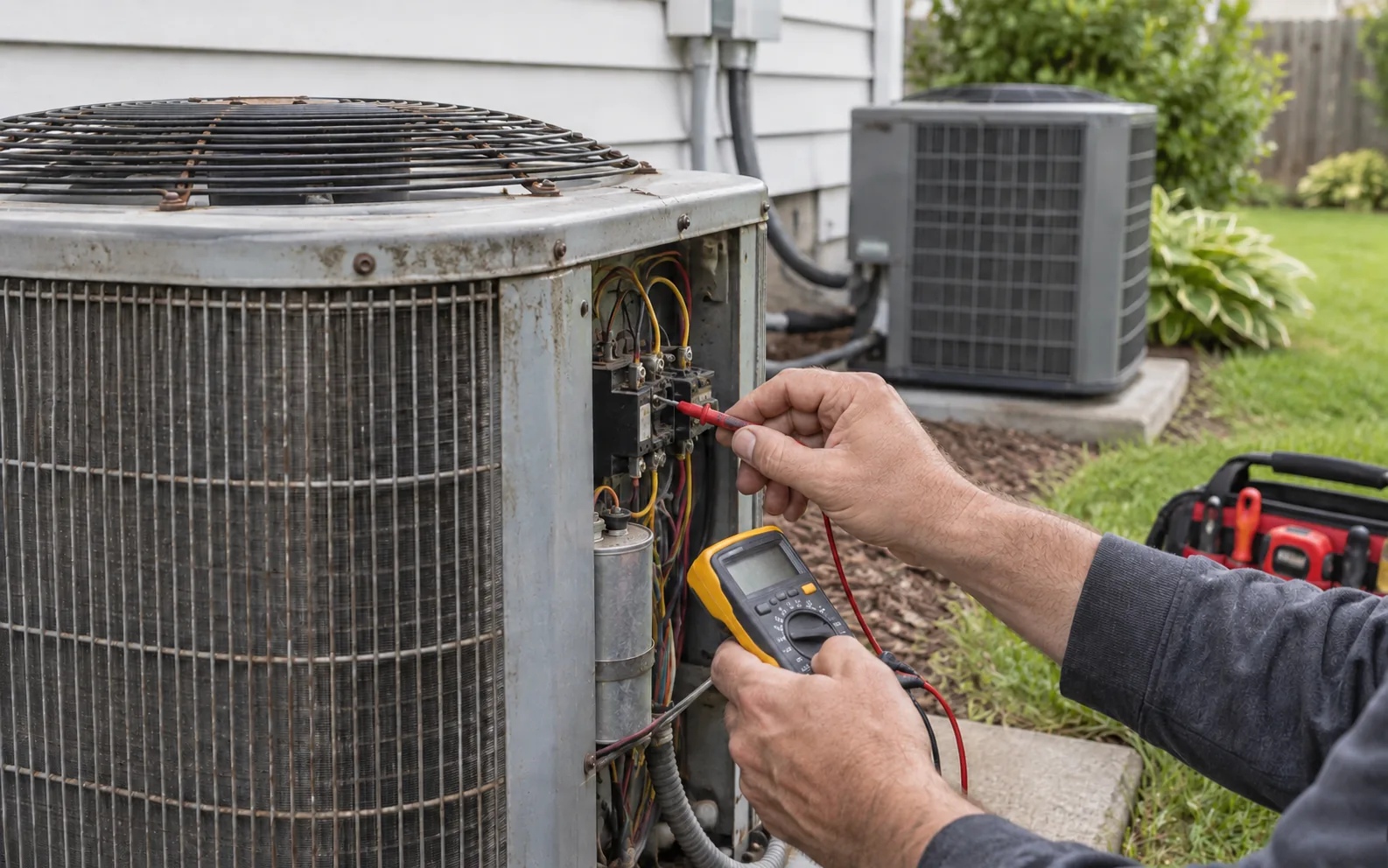
Repair a younger system when the failed part is modest and the rest of the equipment is sound. Price replacement before approving a major compressor, coil, or refrigerant repair on a system around 10 years old or older. The age-times-repair-cost rule is a screening tool, not a verdict.
Estimate, not a final quote
This range is for planning. Final pricing depends on an on-site inspection, materials, permits, access, and contractor scope.
Compare written bids
Ask each contractor for the same scope, warranty terms, permit handling, cleanup details, and exclusions before choosing.
Source-backed guidance
Guides use public references and practical cost modeling, then point you to official sources where rules or rebates can change.
This article contains paid links to Amazon. As an Amazon Associate I earn from qualifying purchases.
The repair-or-replace decision is a comparison between two imperfect options: pay less now to keep an aging system alive, or pay more for a new system before the old one becomes unrepairable. You can narrow it quickly, but no single rule replaces a diagnosis.
Start with the age-times-repair-cost rule
A common screening rule multiplies the equipment age by the proposed repair cost. A result above 5,000 is a reason to price replacement before approving the repair.
For example, a $500 repair on a 12-year-old system produces 6,000. That does not prove replacement is cheaper, but it says the repair is large enough relative to the system's remaining life that you should get a replacement quote before deciding.
The rule is most useful as a pause button. It is weakest when a system has an unusually strong warranty, excellent maintenance history, or a single replaceable part that failed early.
Cost estimator
HVAC cost estimator
A budgeting range, not a quote. Move the inputs to see what changes the number.
Estimated national cost
Typical project lands near $600.
If a written quote comes in above the high end, that's not automatically wrong — ask what scope is driving it.
What this assumes
- Typical diagnostic and repair visit scope.
- 1,500 sq ft home size selected.
- No major duct, electrical, or structural repairs included.
What moves this price
- 01Equipment tier, SEER2 rating, and brand.
- 02Ductwork condition and attic or crawlspace access.
- 03Permit requirements, refrigerant changes, and local labor rates.
Walk into your quotes ready
This range is your anchor. Bring these to every contractor conversation so you can tell a fair quote from a padded one.
- What SEER2 rating and tonnage are you quoting, and why that size for my home?
- Is a full load calculation (Manual J) included, or are you sizing by rule of thumb?
- Does the price include new line sets, a permit, and haul-away of the old unit?
- What's the labor warranty, and is it separate from the manufacturer's parts warranty?
- A quote given over the phone without seeing your ductwork or home.
- Pressure to decide today or 'lose' a discount.
- An oversized system pitched as 'more powerful'. Bigger isn't better for comfort.
Repairs that usually make sense
Repair is usually the better first move when the equipment is under about eight years old, the failed part is isolated, and the technician can explain why the failure did not damage anything else. Common examples include a capacitor, contactor, condensate switch, thermostat, drain blockage, or a modest blower repair.
A refrigerant recharge belongs in a different category. Residential air conditioners do not consume refrigerant. If the charge is low, refrigerant leaked out. Ask for the leak location and the cost to repair it before paying for a refill that may escape again.
Repairs that justify pricing replacement
Get a full replacement proposal before authorizing any of these on an older system:
| Diagnosis | Why the decision changes |
|---|---|
| Failed compressor | Labor, refrigerant, and cleanup can put the repair close to replacement territory. |
| Leaking indoor or outdoor coil | The repair replaces a major heat-exchange component while leaving the rest of the system old. |
| Obsolete refrigerant plus a major leak | Availability and service cost may worsen over the remaining life of the equipment. |
| Repeated electrical failures | Multiple failures can point to heat, voltage, airflow, or installation problems that one new part will not solve. |
| Major duct or electrical correction | If the house needs supporting work either way, compare the complete scopes rather than only the equipment line. |
Compare two written scopes
Ask the contractor to write down the failed part, the cause, the labor and parts warranty on the repair, and what remains excluded. Then ask for a replacement proposal with the same clarity: both model numbers, sizing method, efficiency, refrigerant, permit, startup testing, and warranty.
Do not compare a $1,500 repair to a $7,000 headline replacement price. Compare the repair to the full installed replacement scope for your house. Likewise, do not assume a new system automatically cuts bills enough to repay the difference; the result depends on climate, utility rates, duct losses, existing efficiency, and installation quality.
A practical decision order
- Confirm the diagnosis and ask to see the failed part or test result.
- Check the parts and labor warranty before paying out of pocket.
- Use the age-times-cost rule to decide whether to price replacement.
- Compare the remaining-life risk, not just today's invoice.
- If replacing, require proper sizing and startup measurements in writing.
Keep the diagnosis, service history, warranty, and both proposals together. A document organizer can hold the paper records; a folder on your phone works just as well. You do not need to buy anything to run the comparison.
If the system is blowing warm air but has not been diagnosed yet, start with our seven causes ranked by cost. If you are ready to compare a full bid, use the HVAC quote checklist.
Research sources
- ENERGY STAR: Heating & Cooling. When age and efficiency start favoring replacement.
- ENERGY STAR: HVAC Quality Installation. Why install quality drives realized savings.
- EPA: Section 608 Refrigerant Handling. Refrigerant work is restricted to certified technicians, which is why a "simple recharge" is never DIY.
The cost guide
Get the monthly cost briefing
One useful email a month: project cost ranges, contractor red flags, and practical ways to avoid an inflated quote.
No spam. Unsubscribe any time. Read our privacy policy.
More hvac guides
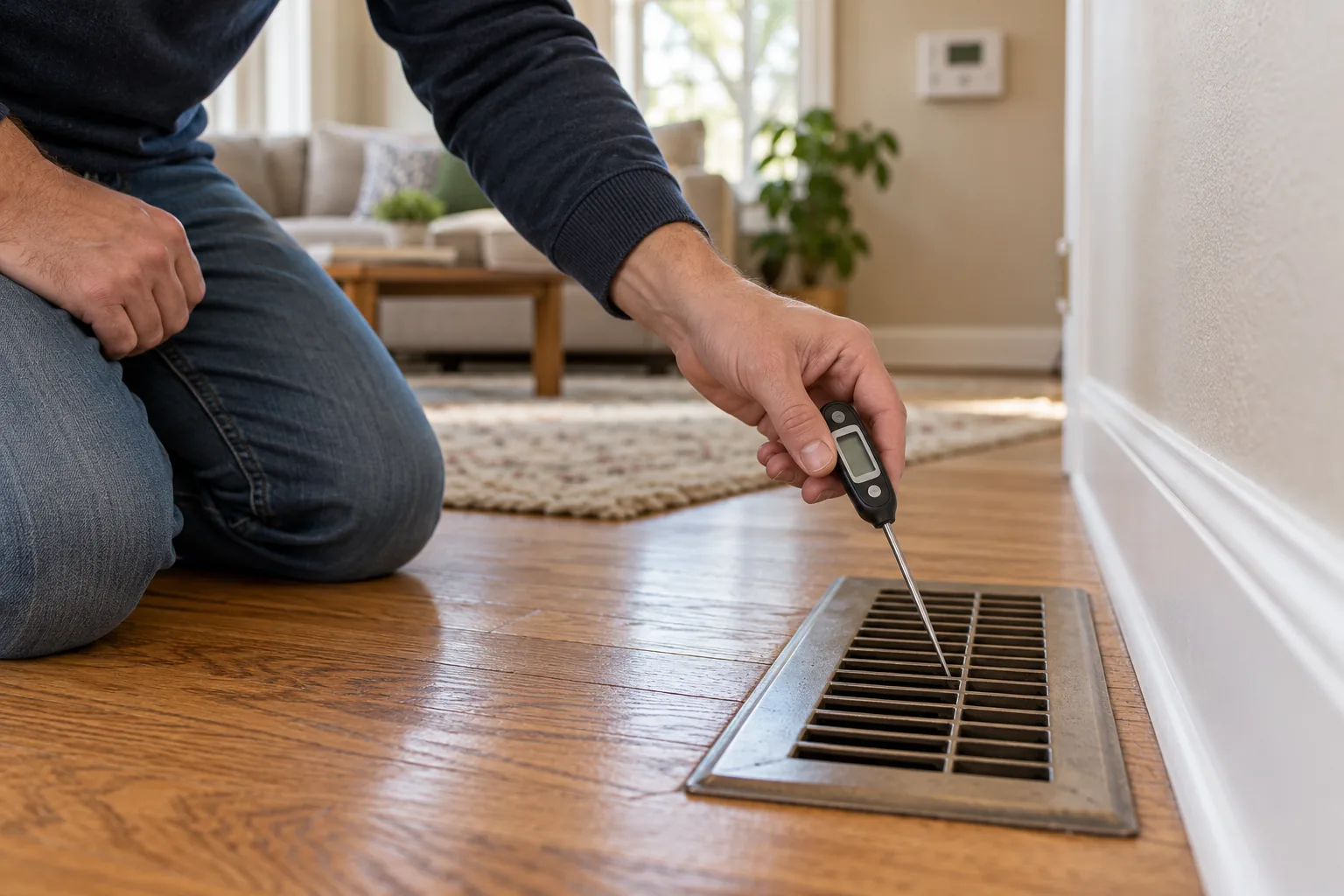
Furnace Blowing Cold Air? Measure the Temperature Rise Before You Call
A working gas furnace heats the air 40 to 70 degrees on many models. A kitchen thermometer tells you whether yours is heating at all, heating then quitting, or losing heat in the ducts.
Read guide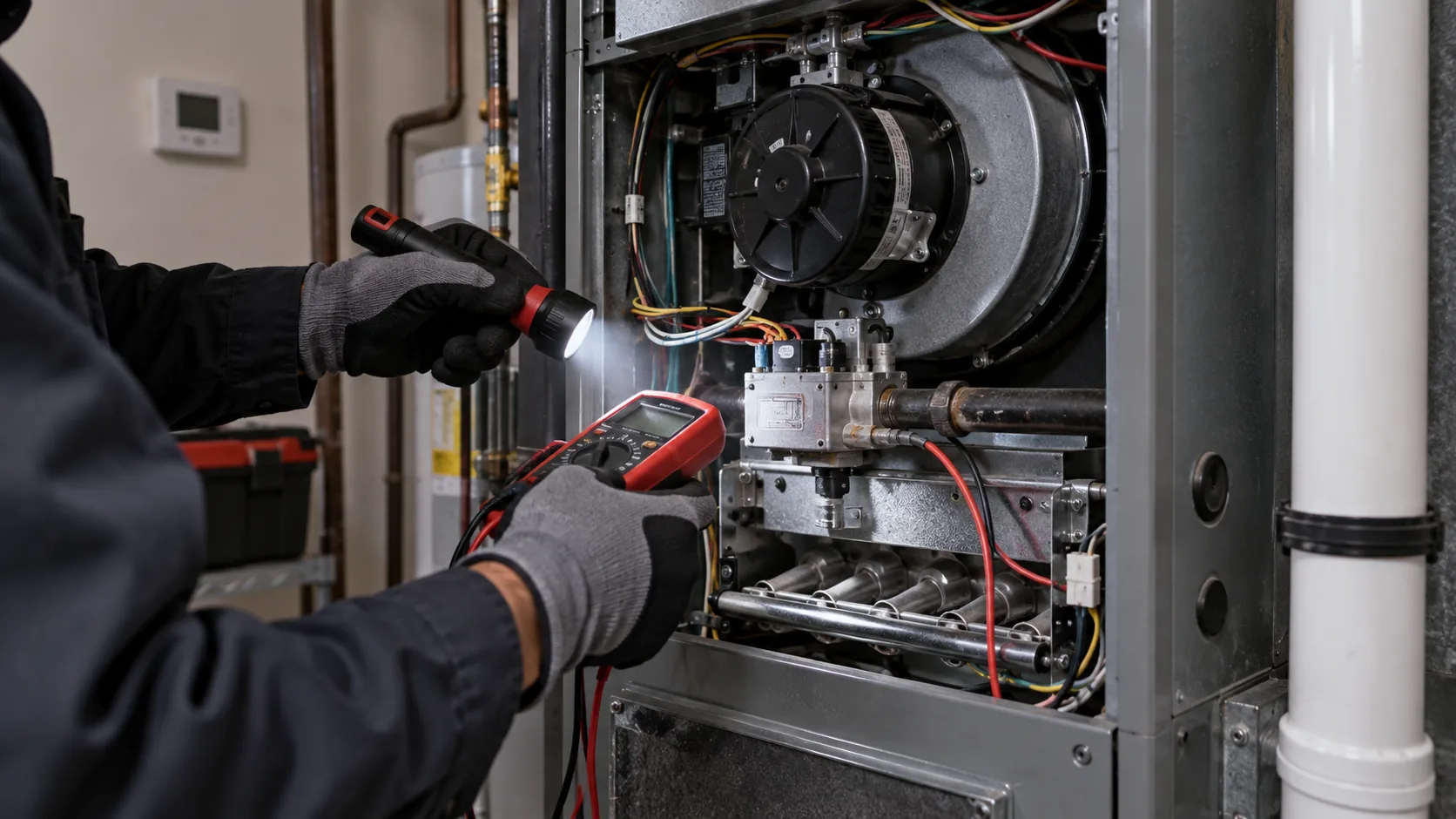
5 Signs You Need Emergency HVAC Repair
A safety-first HVAC triage guide for smoke, gas odors, electrical faults, grinding equipment, frozen coils, water leaks, and ordinary comfort problems.
Read guide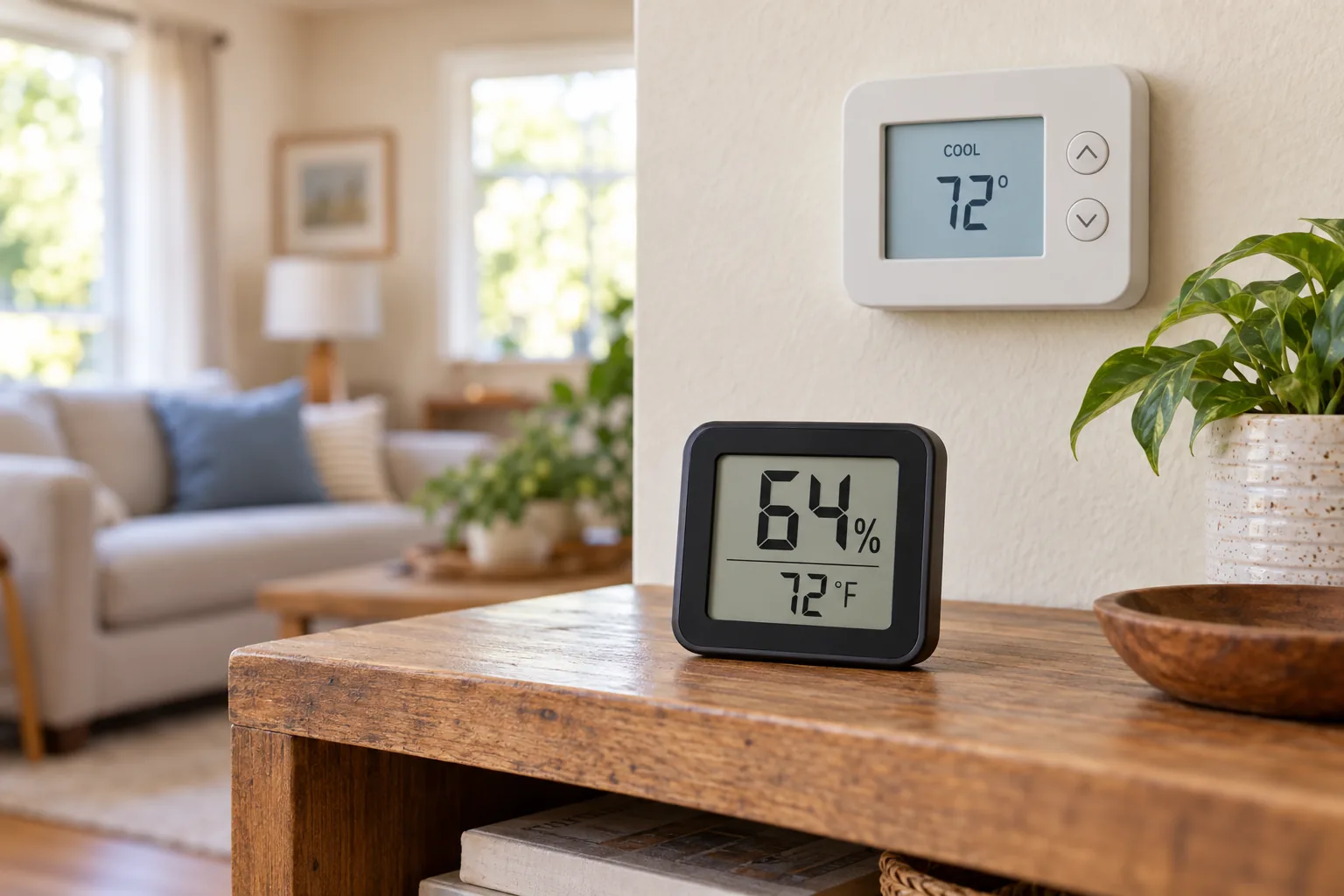
House Humid With the AC Running? Read the Hygrometer Before You Buy Anything
A cool, clammy house usually points to the fan setting, an oversized AC, or air leaking in. Here's how to tell which one you have and what each fix really costs.
Read guide