
Why does my hot water smell like rotten eggs, and how do I get rid of it?
A sulfur smell that shows up only at the hot tap is usually bacteria working with your water heater's anode rod. Here's how to confirm it in five minutes and which fix fits your water.
The short answer
If only the hot water smells, the usual cause is sulfate-reducing bacteria in the tank turning sulfate in your water into hydrogen sulfide, helped along by the hydrogen the anode rod gives off. The common fix is to shock-chlorinate the tank and swap the anode for a less active aluminum or aluminum/zinc rod, or a powered anode. If the cold water smells too, the problem is your water supply, and no change to the heater will cure it.
Estimate, not a final quote
This range is for planning. Final pricing depends on an on-site inspection, materials, permits, access, and contractor scope.
Compare written bids
Ask each contractor for the same scope, warranty terms, permit handling, cleanup details, and exclusions before choosing.
Source-backed guidance
Guides use public references and practical cost modeling, then point you to official sources where rules or rebates can change.
This article contains paid links to Amazon. As an Amazon Associate I earn from qualifying purchases.
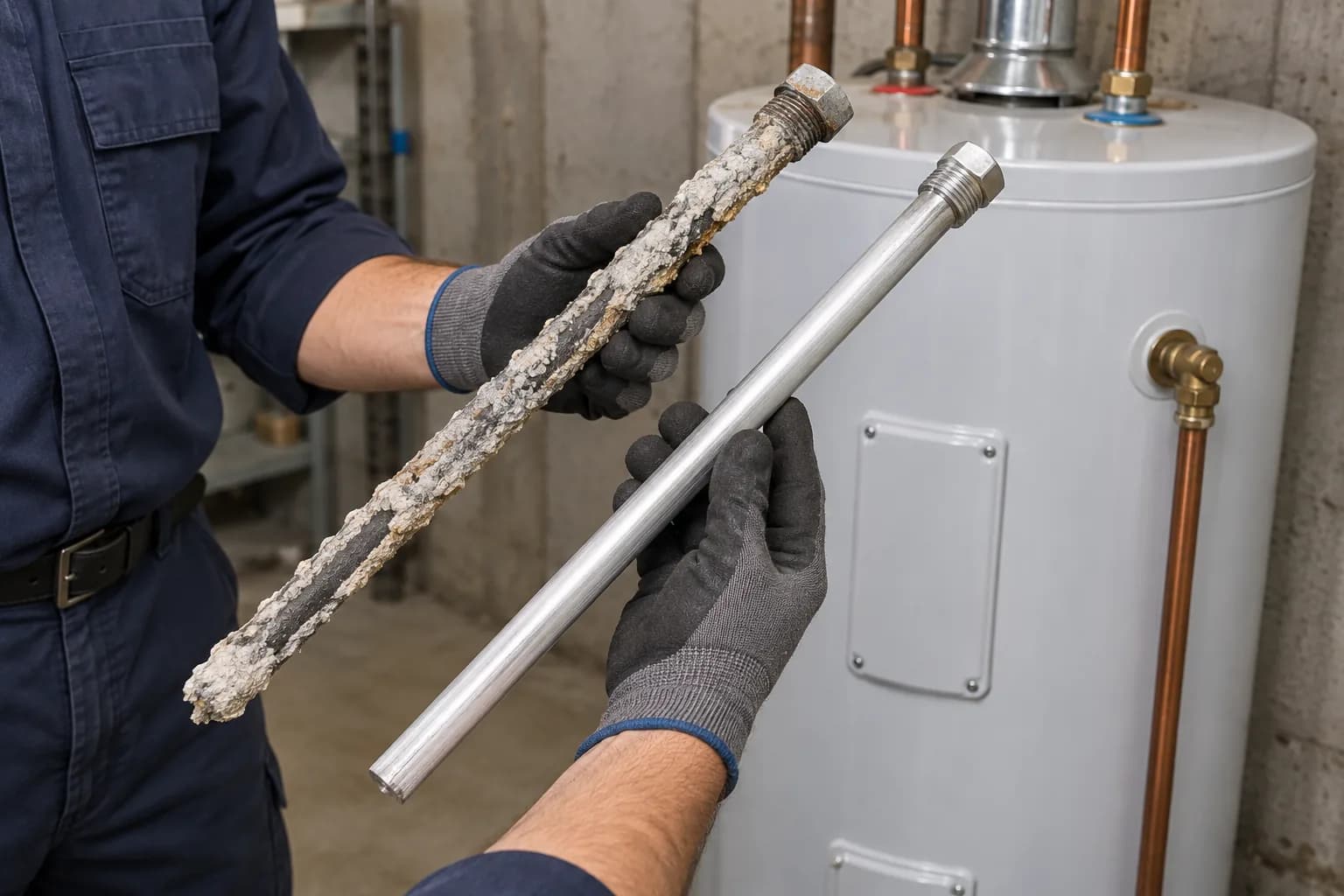
A Rheem aluminum anode rod lists for $31.74 on the company's own parts site. For most houses with sulfur-smelling hot water, that part plus one shock-chlorination of the tank is the whole fix. The trick is making sure the smell is actually coming from the water heater before anyone sells you anything bigger.
Four things have to be true at once
A.O. Smith's instruction manuals say the rotten-egg smell only develops when four conditions line up: sulfate in the supply water, little or no dissolved oxygen, sulfate-reducing bacteria living in the tank, and extra active hydrogen from the anode rod doing its job. The bacteria are harmless to people, per the same manuals. They get their energy by turning sulfate into hydrogen sulfide gas, and that gas is what you smell. A.O. Smith's Technical Bulletin 22 says the bacteria usually get into a water system during construction or through a break in underground piping.
The anode is the piece you can change. It's a sacrificial rod, usually magnesium, threaded into the top of the tank so it corrodes instead of the steel. Our anode rod guide covers why it matters for tank life. As it corrodes, it gives off the hydrogen the bacteria need. A more active rod feeds them more. Take away any one of the four conditions and the smell stops.
The five-minute test before you call anyone
Run a cold tap and a hot tap at the same sink and smell each one. Then walk the house. This is what the results mean:
| What you notice | Most likely source | What fixes it |
|---|---|---|
| Hot tap smells, cold tap doesn't | Bacteria and anode reaction inside the water heater | Chlorinate the tank, change the anode |
| Hot and cold both smell | Hydrogen sulfide in the water supply, often a well | Supply-side water treatment. The heater isn't the cause |
| One sink or floor drain smells, whatever tap you run | A dry drain trap letting sewer gas in | Run water into that drain |
| Smell in the air near the heater, stove, or furnace, not in the water | Possible natural gas leak | Leave the house and call the gas utility from outside |
The last row comes first in practice. The EIA explains that natural gas is odorless, so utilities add mercaptan, a chemical that smells like rotten eggs, so people can smell a leak. If the smell is in the air instead of the water, don't touch light switches and don't try to diagnose it. Go outside and call.
The dry-trap row is the cheap surprise. IRC Section P3201.2 requires every fixture trap to hold a water seal of at least 2 inches, and that seal is all that keeps sewer gas out of the room. A guest-bath shower or basement floor drain that nobody uses can evaporate dry. Pour water down it, and if the smell is gone by the next morning, you're done.
If both taps smell, stop working on the heater
The heater only touches hot water. If the cold tap smells too, the hydrogen sulfide is already in the water when it reaches your house. EPA treats sulfate as a secondary, aesthetic contaminant, with a non-enforceable guideline of 250 mg/L based on taste and odor, not health. That's reassuring, but it also means no one is going to fix your private well for you. Test the water first, then pick a treatment. A.O. Smith's own bulletin says the longer-lasting fixes are chlorinating or aerating the water supply. City water customers who notice it at the cold tap should call the utility.
The two fixes for the tank itself
Shock chlorination kills the bacteria. A.O. Smith's Bulletin 23 lays out the manufacturer procedure: the heat source shut off, the tank drained, the anode pulled, household bleach added through the anode port at one gallon per 25 gallons of tank capacity, every hot line drawn until you smell chlorine, then a hold of at least an hour before draining and flushing. It's a lot of scalding water, bleach, and a gas or electric shutdown, so have a plumber do it unless you've serviced a tank before. And be realistic about what it buys: Bulletin 22 calls chlorination a surface treatment that often has to be repeated in heavily infected systems. On its own, it's a reset, not a cure.
Changing the anode removes the hydrogen the bacteria feed on. GE Appliances says replacing the rod with a less active material reduces or eliminates the odor in most heaters, and recommends an aluminum rod for homes on a private or municipal well. The choices, at manufacturer list prices:
| Anode | Example part and price | What it does for the smell | The catch |
|---|---|---|---|
| Magnesium (factory standard) | Rheem SP11309Y, $21.95 | Feeds the smell most. It's the more active of the two sacrificial metals | Buying the same rod again brings the smell back |
| Aluminum or aluminum/zinc | Rheem UV99004 aluminum, $31.74 | Less hydrogen, usually enough | In high-pH water (8+), A.O. Smith's Bulletin 14 says aluminum can form a gel-like aluminum hydroxide that clogs aerators and makes popping noises |
| Powered (impressed-current) anode | Corro-Protec, 40–89 gal. tank, $179.95 | Protects the tank with a small current instead of a sacrificial metal, so there's no reaction to feed the bacteria | Needs a 120-volt outlet within reach of its 12-foot cord; Corro-Protec puts use at about 10 kWh a year |
Our rule: chlorinate and install an aluminum or aluminum/zinc rod first. Go to a powered anode only if the smell comes back within a few months or your water pH runs above 8. The aluminum rod is the cheap test. If it works, you've spent about $32 plus labor. If it doesn't, the powered anode is the next step. Corro-Protec's 20-year warranty only applies if you register within 90 days; skip that and you get 5 years.
Two things you should never do. First, never pull the anode and leave the port plugged. It kills the smell and the tank along with it. A.O. Smith's manuals say plainly not to leave the tank unprotected, and GE says running a heater without an approved anode voids the warranty. Second, check your manufacturer's approved-parts list before buying a rod. GE also voids coverage for a non-approved anode.
Pulling an anode takes a large socket, a breaker bar, and a tank that has to be shut down and partly drained. On a tank more than a few years old the rod is often seized. If you've never done it, the service call is worth it.
Cost estimator
Water heater cost estimator
A budgeting range, not a quote. Move the inputs to see what changes the number.
Household size sets the capacity: tank gallons or tankless flow rate.
Estimated national cost
Typical project lands near $1,280.
If a written quote comes in above the high end, that's not automatically wrong — ask what scope is driving it.
What this assumes
- Like-for-like swap of an existing gas tank, with no new gas line or venting route.
- Sized for a 3-person household.
- Permit and haul-away of the old unit included; no drywall or repiping.
What moves this price
- 01Switching fuel or moving the unit: new gas line, venting, or circuit adds $500–$2,500.
- 02Code catch-ups: expansion tank, drain pan, seismic straps, shut-off valve.
- 03Emergency same-day replacement vs. a scheduled install.
Walk into your quotes ready
This range is your anchor. Bring these to every contractor conversation so you can tell a fair quote from a padded one.
- Is this a like-for-like swap, or does my setup need venting, gas, or electrical changes?
- Which code updates are included: expansion tank, drain pan, straps, shut-off valve?
- What's the tank warranty (6, 9, or 12 years), and does labor have its own warranty?
- Is the permit, haul-away of the old unit, and any condensate drain work in the price?
- A flat phone price that doesn't ask what fuel type or where the unit sits.
- "Code upgrades" as one unexplained lump sum instead of itemized parts.
- Pushing a tankless conversion hard without checking your gas line size first.
Warranty won't pay for this, and turning up the heat is a short-term fix
Don't expect the manufacturer to cover the fix. A.O. Smith's Bulletin 22 says that because smelly water is caused by bacteria and not by the heater, treatment isn't considered a warranty issue. Figure on paying for the rod and the labor yourself.
GE notes that running the tank at 140°F can cut the odor in some cases. It's a stopgap, not a fix: water at that temperature scalds fast, especially for kids and older adults. If you try it, turn it back down afterward, and don't leave it there with nobody watching the setting.
The age tiebreaker
A.O. Smith puts the typical life of a tank heater at 8 to 12 years and lists "odd smelling water" among the signs of a heater nearing replacement. Its rule of thumb: repairs usually make sense under 8 years old when they cost less than half of a new unit, and past 10 years, replacement is often the smarter move. For a smell, that works out like this. Under 10 years, fix the anode and keep the tank. Past 10 years with the original magnesium rod, skip the $180 powered anode and price a replacement, then specify an aluminum or powered anode on the new tank so the smell doesn't come with it. Our replacement cost guide covers the budget, and the quote guide shows where to put the anode spec on the bid.
When comparing repair and replacement proposals, use a flashlight to read the model and serial label only after a suspected gas leak has been ruled out and the area is safe. Photograph the label for the plumber; do not remove panels or disturb gas fittings to reach it.
Research sources
- A.O. Smith: Technical Bulletin #22, Smelly Water — sulfate-reducing bacteria as the cause, how they enter the system, chlorination as a repeatable surface treatment, supply chlorination or aeration as the longer-lasting fix, and treatment not being warranty-related.
- A.O. Smith: Technical Bulletin #23, Chlorination Procedure — manufacturer chlorination procedure, including one gallon of bleach per 25 gallons of tank capacity.
- A.O. Smith: Technical Bulletin #14, Aluminum Hydroxide — aluminum anode gel in water with pH of 8 or higher.
- A.O. Smith: Residential Electric Water Heater Installation Instructions and Use & Care Guide (PDF) — the four conditions behind smelly water and the warning not to leave the tank without an anode.
- A.O. Smith: When to Repair or Replace Your Water Heater — 8-to-12-year lifespan, the repair-vs-replace rule, and odd-smelling water as a replacement sign.
- GE Appliances: Water Heaters, Hot Water Odor — less active anode material, aluminum rods for well water, chlorination, and the 140°F setting.
- GE Appliances: Water Heater Anode Rod Maintenance and Service — qualified-servicer replacement and the warranty void for non-approved or missing anodes.
- Rheem Parts: Aluminum Anode Rod, 0.75 in. x 42 in. (UV99004) — aluminum anode list price.
- Rheem Parts: Magnesium Anode Rod, 0.75 in. x 34-3/8 in. (SP11309Y) — magnesium anode list price.
- Corro-Protec: Powered Anode Rod for Water Heaters, 40–89 gal. — list price, cord length, and power use.
- Corro-Protec: Warranty & Returns — 20-year warranty with registration within 90 days, 5 years without.
- EPA: Secondary Drinking Water Standards, Guidance for Nuisance Chemicals — 250 mg/L sulfate secondary standard, aesthetic and non-enforceable.
- EIA: Glossary, Mercaptan — the rotten-egg odorant added to natural gas.
- EIA: Natural Gas Explained — natural gas is odorless until an odorant is added.
- ICC: 2021 International Residential Code, Chapter 32, Traps — Section P3201.2 trap seal of 2 to 4 inches.
Compare local quotes
Ready to compare real quotes from water heater pros?
Use your estimate as a budget anchor, then compare written contractor bids against it before you decide. Free request, no obligation.
Disclosure: this button opens a third-party quote-matching service. If you submit its form, its contact and privacy terms apply, and SaveBricks may earn a referral fee. It never changes the prices you're quoted, and our cost ranges are set independently — see how we estimate.
The cost guide
Get the monthly cost briefing
One useful email a month: project cost ranges, contractor red flags, and practical ways to avoid an inflated quote.
No spam. Unsubscribe any time. Read our privacy policy.
More water heaters guides
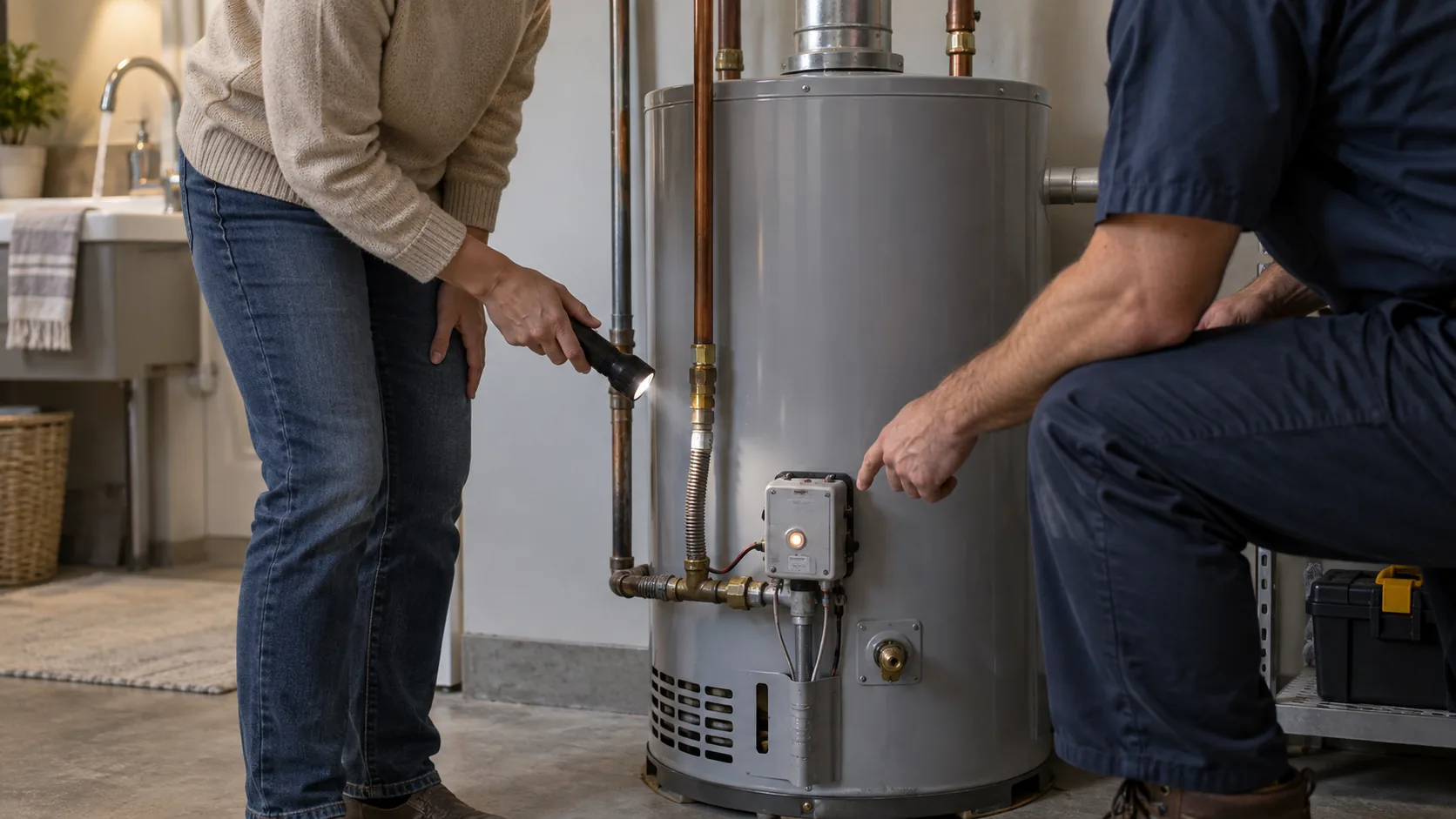
No Hot Water? Gas or Electric Decides Which Part Quit
A tank that suddenly runs cold has usually lost one specific part, and the fuel type tells you which ones to suspect. Here's how to narrow it down before the service call.
Read guide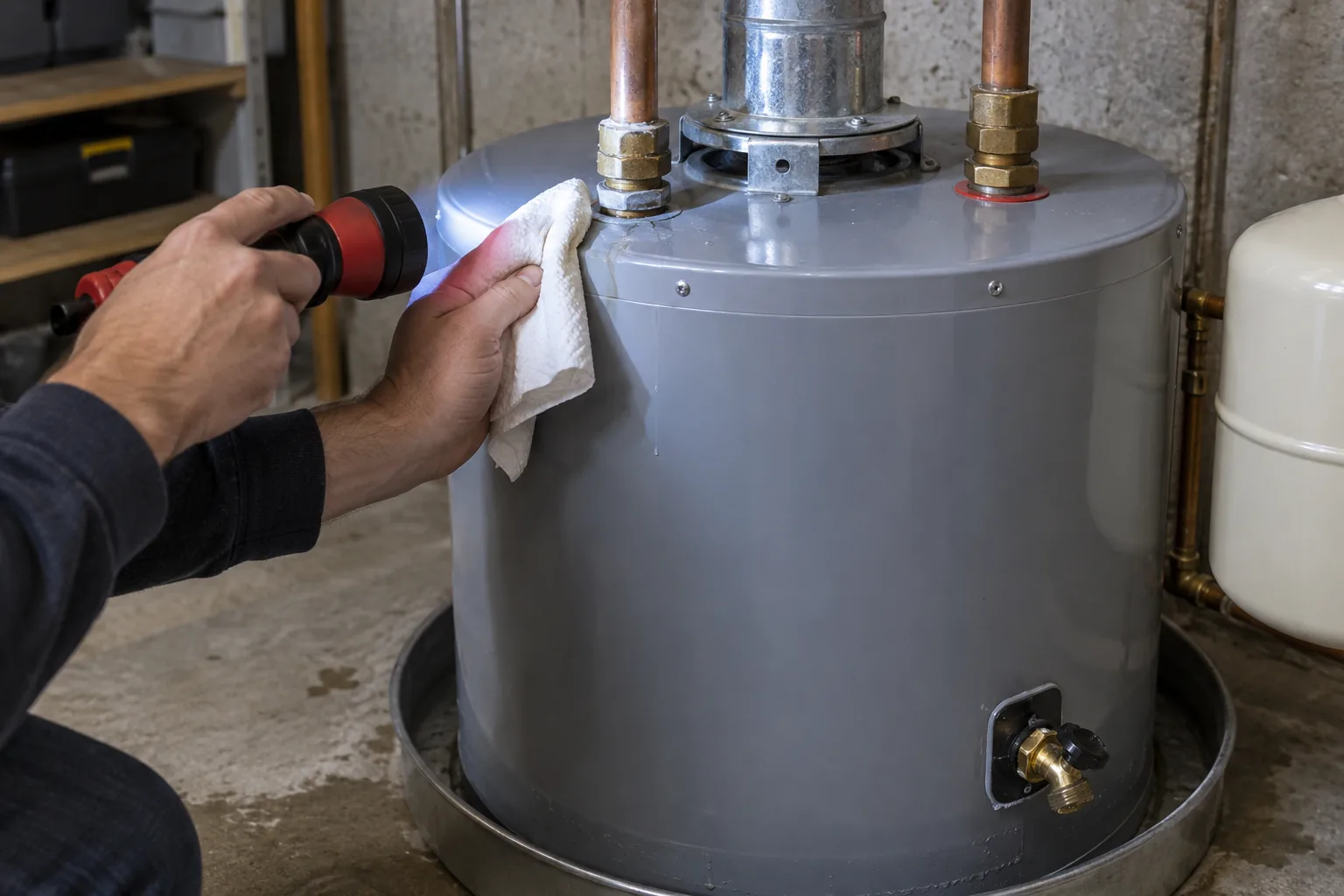
Water Heater Leaking? Where the Water's From Decides Everything
A leak from a fitting is a $150 fix. A leak from the tank body is a replacement, today. How to tell the difference in five minutes, before you call.
Read guide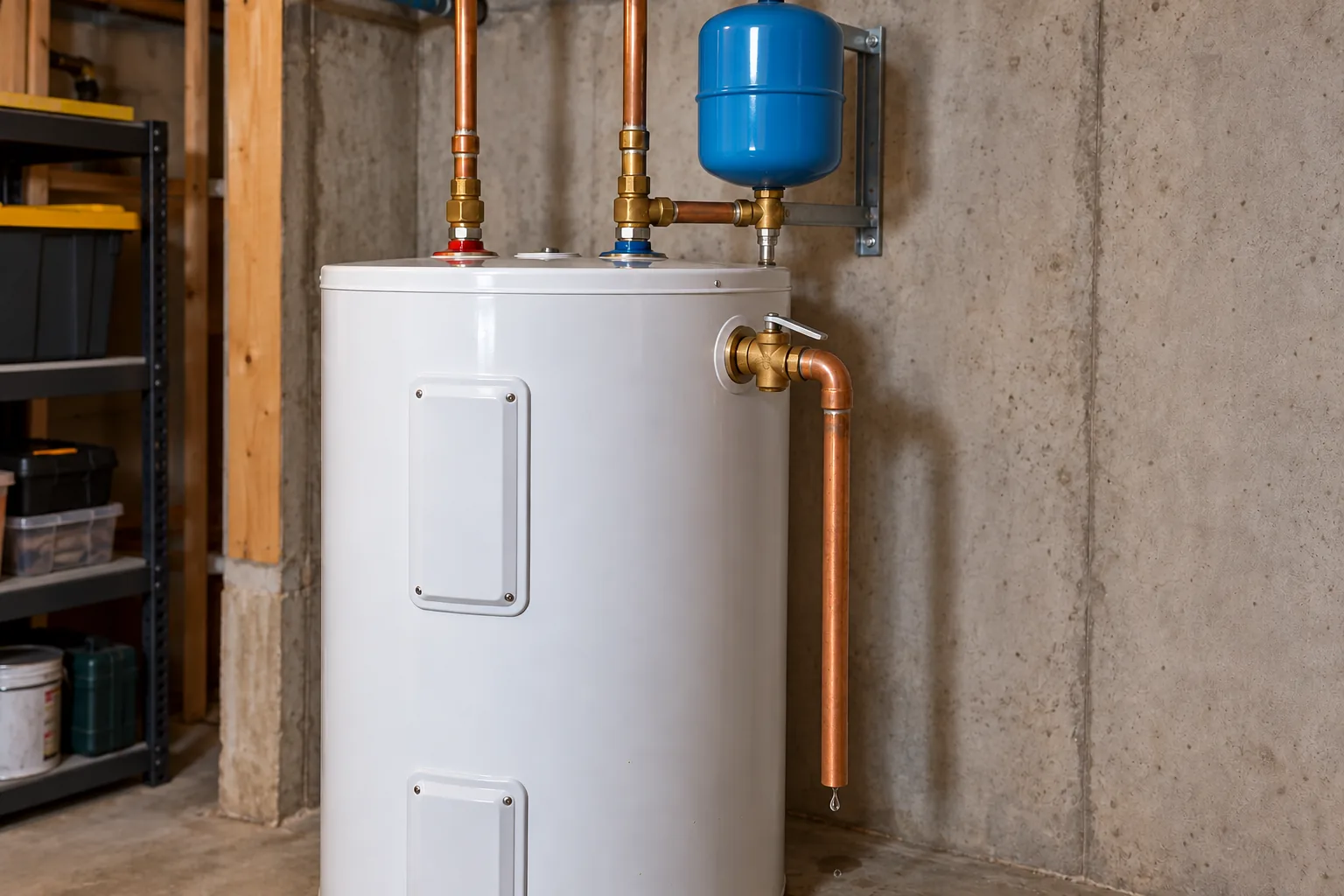
Water Heater Relief Valve Dripping? Read the Pressure Before You Replace the Valve
A T&P valve that weeps a little every heating cycle is usually doing its job in a closed system. Here's how to tell expansion from a failed valve, an overheating tank, or a bad weld.
Read guide