
How do I check whether my gutters and downspouts are protecting my house?
A gutter is only useful if its water reaches somewhere safe. Check overflow, loose connections, and discharge points from the ground before buying a fix.
- Parts
- $0 to inspect
- Time
- 30–45 min
- Avoids
- Water intrusion
The short answer
Inspect from the ground, then watch the system during ordinary rain from a sheltered location. Look for overflow, leaking connections, and water pooling beside the foundation. A clear gutter can still cause trouble if its downspout empties against the house. Leave high gutters, roof access, and buried drain problems to a qualified contractor.
Estimate, not a final quote
This range is for planning. Final pricing depends on an on-site inspection, materials, permits, access, and contractor scope.
Compare written bids
Ask each contractor for the same scope, warranty terms, permit handling, cleanup details, and exclusions before choosing.
Source-backed guidance
Guides use public references and practical cost modeling, then point you to official sources where rules or rebates can change.
This article contains paid links to Amazon. As an Amazon Associate I earn from qualifying purchases.
The gutter is the collection point. The downspout decides where the water goes. Cleaning one without checking the other can leave the original moisture problem untouched.
Our rule: follow the water all the way to the discharge point before buying gutter guards or authorizing waterproofing. This is an inspection, not a diagnosis of every basement leak. Groundwater, grading, flashing, and plumbing can also be involved.
Start on a dry day
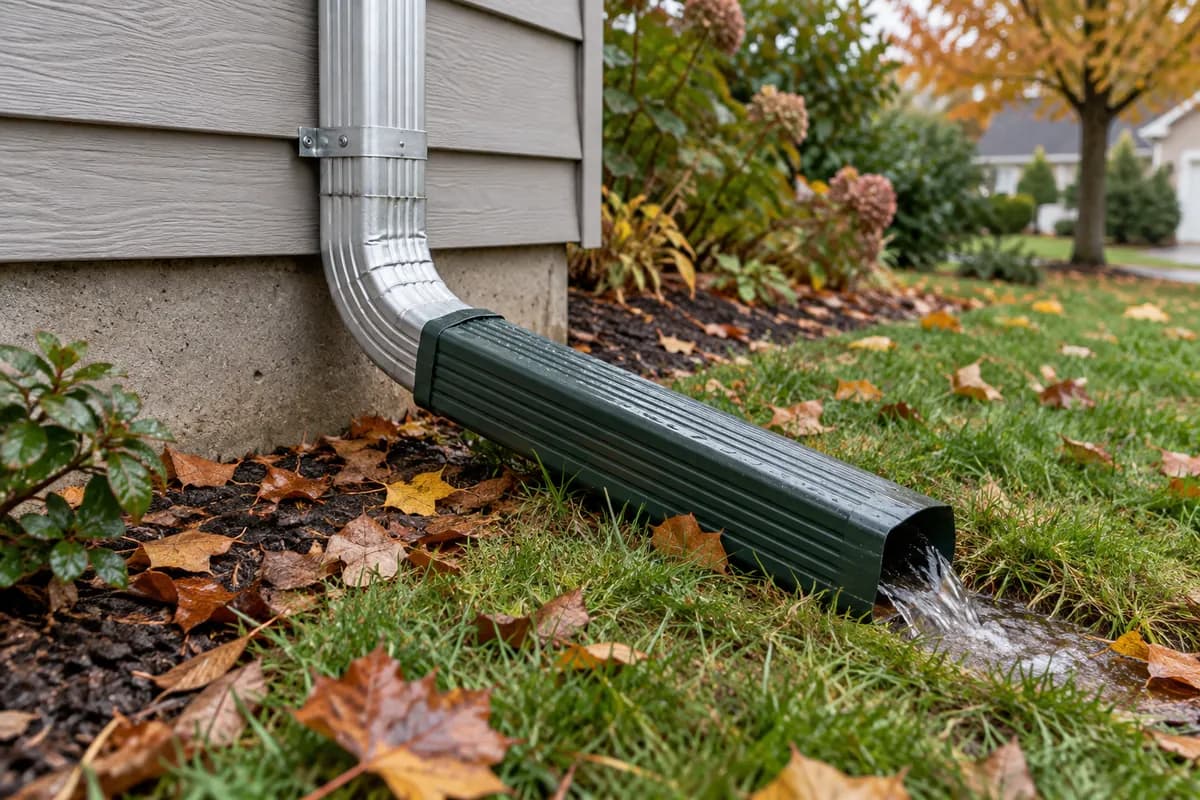
Take a walk around the house with a phone and a tape measure. Stay on the ground. Make a simple note for every downspout: where it ends, whether the joints are connected, and whether the surrounding ground slopes back toward the wall.
You are building a record for yourself or the contractor, not testing how high you can reach.
| What you see | What to investigate next |
|---|---|
| Downspout ends beside the wall | Whether surface discharge can be directed farther away |
| Extension detached or flattened | Fit, support, and a route clear of foot traffic |
| Staining beneath a gutter joint | A leaking joint or overflow during rain |
| Gutter visibly sagging | Professional assessment of supports and pitch |
| Downspout enters a buried pipe | Where that pipe discharges and whether it is obstructed |
Then watch ordinary rain
From a sheltered location, photograph the places where water leaves the intended path. Do not inspect outdoors during lightning, high winds, or dangerous footing.
Give a contractor a specific observation: “Water pours over this corner while the downspout outlet stays dry” is more useful than “the gutter leaks.” Avoid deciding from that observation alone whether the cause is a blockage, poor pitch, or inadequate capacity.
Check the discharge before changing anything
PNNL's Building America guidance recommends discharging onto sloping ground at least five feet from the foundation, or using an appropriately designed drainage system. The outlet must send water away rather than let it return to the building.
Measure your available space. A downspout extension must fit the site without creating a trip hazard or sending runoff onto a neighbor's property. Buried drains require their own assessment; do not assume an underground connection is working because it is out of sight.
Spend only after identifying the job
The inspection can cost nothing if you already have a tape measure. Material quantities depend on the number of outlets, the route, and the fittings. Measure first, then price the specific extension or repair locally.
For a cleaning quote, ask whether the contractor will clear the downspouts, check flow, remove debris from the property, and document damaged sections. For repairs, ask which joints or supports are included. These are useful scope questions even when two quotes have similar totals.
Gutter guards are a separate purchase decision. Ask how the proposed system will be inspected and cleaned, and whether future access is included in the quoted service.
When to call a pro
Use a qualified contractor for high gutters, unstable access, sagging sections, and roof or flashing work. Persistent indoor dampness after an obvious drainage defect is corrected also needs investigation.
If the problem is a ceiling stain, use our single-spot roof leak guide to understand other possible causes. Before accepting a whole-roof recommendation, check the roofing estimate for the actual scope.
The money-saving outcome is finding the right repair. A drainage check does not promise to eliminate every leak or avoid a particular dollar amount.
Research source
The cost guide
Get the monthly cost briefing
One useful email a month: project cost ranges, contractor red flags, and practical ways to avoid an inflated quote.
No spam. Unsubscribe any time. Read our privacy policy.
More maintenance guides
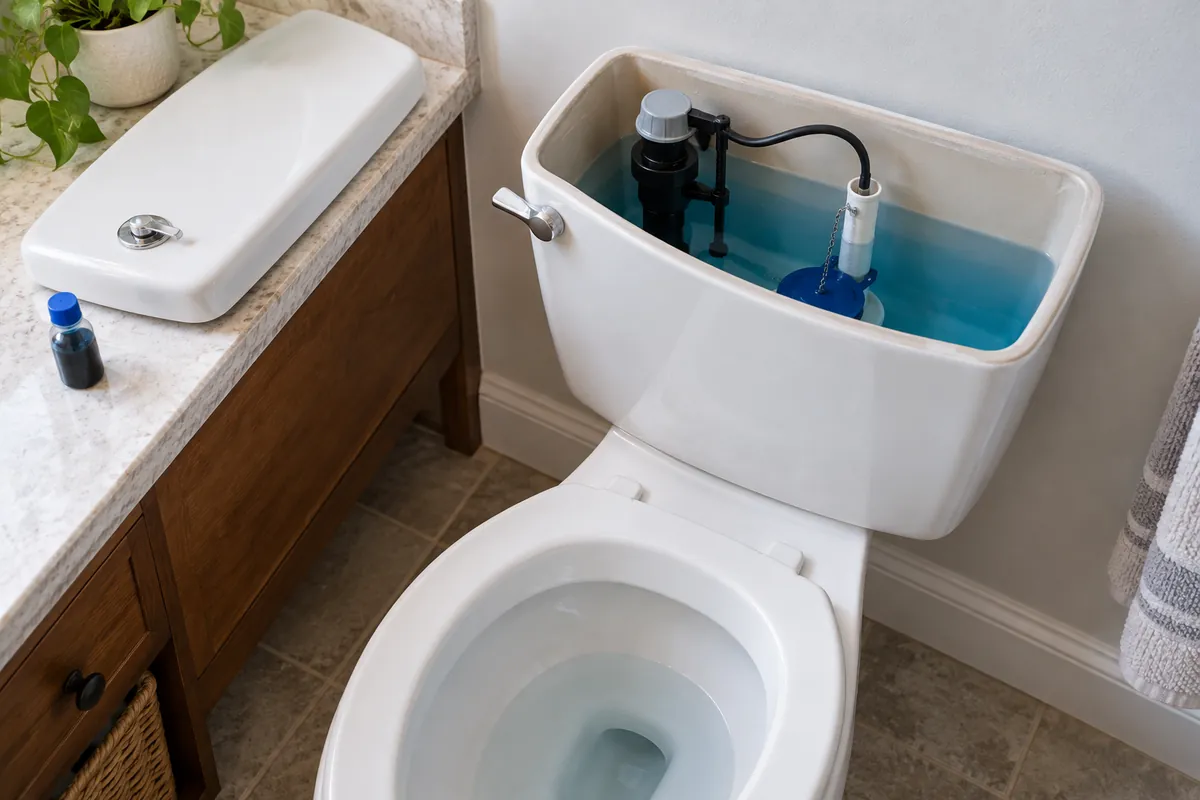
The Ten-Minute Toilet Check Before Your Next Water Bill
A toilet can waste water without leaving a puddle. Use a simple dye test, identify the flush mechanism, and buy a matching seal only after diagnosis.
Read guide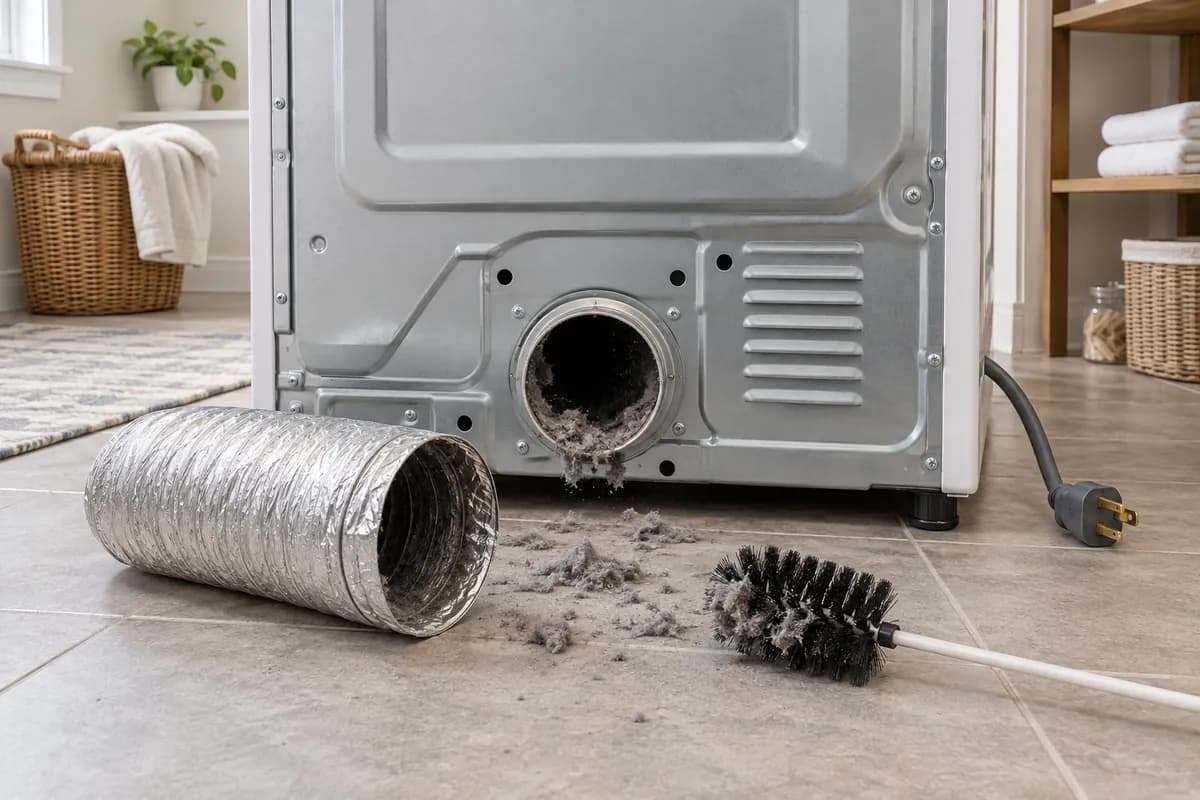
Dryer Taking Two Cycles? Check the Vent Before Replacing It
Separate lint-screen care from exhaust-vent maintenance. What you can inspect safely, what to ask a cleaning service, and why a drying problem needs diagnosis.
Read guide
Drafty Front Door? Measure the Gap Before Buying a New One
Separate a worn door seal from an alignment or threshold problem. Match weatherstripping to the opening and check that the door still closes properly.
Read guide