
How can I check for roof damage before water reaches the ceiling?
A safe attic-and-ground inspection checklist that separates urgent roof warning signs from ordinary wear and tells you what to document for a roofer.
The short answer
Inspect from the ground and from a safely accessible attic after heavy weather. Look for new shingle loss, displaced flashing, sagging, daylight, damp sheathing, active drips, or stains that have changed. Document the location and date, but do not diagnose the cause from one symptom or climb onto the roof yourself.
Estimate, not a final quote
This range is for planning. Final pricing depends on an on-site inspection, materials, permits, access, and contractor scope.
Compare written bids
Ask each contractor for the same scope, warranty terms, permit handling, cleanup details, and exclusions before choosing.
Source-backed guidance
Guides use public references and practical cost modeling, then point you to official sources where rules or rebates can change.
This article contains paid links to Amazon. As an Amazon Associate I earn from qualifying purchases.
A ceiling stain is late evidence: water has already crossed the roof covering, deck or flashing, attic space, insulation, and finished surface. You can often spot a problem earlier, but an inspection should answer two narrow questions: Is anything changing? and Does it need urgent professional attention? It should not turn a homeowner into a roof climber.
Use a safe three-pass inspection
1. Walk the property from the ground
Use binoculars or a camera zoom. Stand far enough back to see each roof plane without climbing a ladder. Photograph the same elevations so future changes are easier to compare.
Look for:
- A new bare patch, missing tab, lifted edge, or piece of shingle on the ground.
- Flashing that appears bent or displaced at a wall, chimney, skylight, or plumbing vent.
- A ridge or roof plane that looks newly uneven or sagged.
- Debris that has struck or is holding water against the roof.
- A gutter pulling away, overflowing in one area, or releasing water beside the foundation.
Granules in a gutter are not a diagnosis by themselves. Some loss occurs with age and after installation. The useful signal is a sharp change, exposed substrate, a visible bare area, or granule loss concentrated below one damaged roof plane.
2. Check the attic only where access is safe
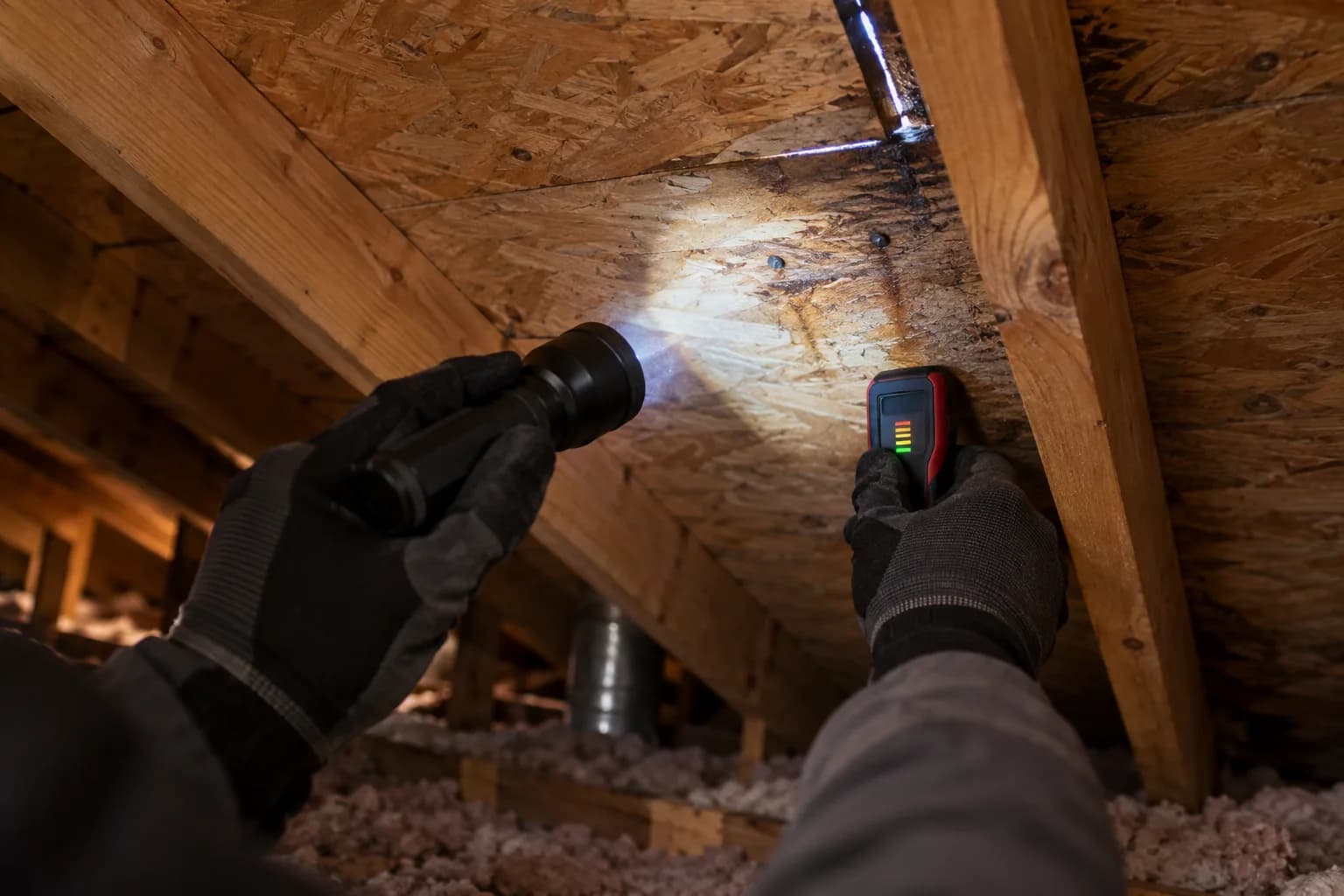
Enter during daylight with a flashlight, closed-toe shoes, gloves, and a clear walking surface. Step only on framing or a proper platform; ceiling drywall will not support you. Avoid exposed wiring, wet electrical equipment, suspected mold, pests, and low-clearance areas.
Check the underside of the deck and the areas around roof penetrations for:
- Active drops, damp wood, or wet insulation.
- A stain with a fresh dark edge or a different appearance from earlier photos.
- Rust trails on fasteners or metal components.
- Matted insulation below a penetration or valley.
- Daylight through an unintended opening.
- Musty odor or visible growth associated with persistent moisture.
Daylight does not always mean rain follows the same path; some roof assemblies have intentional openings, and water can travel along framing before it drops. Record the location relative to a fixed feature such as a chimney, vent, or gable wall so a roofer can find the exterior area.
3. Check the living space after weather
Inspect top-floor ceilings, exterior wall corners, skylight wells, and the areas below bathrooms or mechanical equipment. A ceiling stain may come from plumbing, condensation, an HVAC drain, or the roof. Note whether it appears only during wind-driven rain, after snow melt, when air conditioning runs, or regardless of weather. That timeline narrows the investigation.
Stop guessing. Get a planning range.
Use our free roofing cost estimator for a national planning range in seconds.
Triage what you find
| Observation | Sensible next step |
|---|---|
| Active water near wiring, a bulging ceiling, or structural movement | Keep people away, switch off affected circuits only if it is safe, and call for urgent help |
| New storm opening, missing section, or displaced flashing | Arrange prompt temporary weather protection and document it before permanent work |
| Damp attic sheathing or a stain that changed after rain | Schedule a roof inspection and check the corresponding exterior detail |
| Old, dry stain with no change across several storms | Mark its boundary, photograph it, and monitor while checking plumbing and condensation sources |
| General wear with no active moisture | Plan a routine inspection and budget; age alone does not prove replacement is due |
If water is actively entering, place a container only where the ceiling is stable and the area is free of electrical risk. Do not puncture a bulging ceiling, install a tarp on a steep or wet roof, or apply sealant blindly. Temporary material can redirect water and hide the actual failure point.
Build a useful inspection record
Create one folder with dated photos, storm dates, room locations, previous repair invoices, and any manufacturer or installer warranty. For every image, capture one wide view for location and one close view for detail. Put a ruler or familiar object in close photos when size matters.
Give the contractor a short written history:
- When the symptom first appeared.
- Which weather conditions trigger it.
- Whether the roof or flashing was repaired before.
- Whether plumbing, HVAC, solar, satellite, or chimney work occurred nearby.
- Whether the attic stain is wet now or only discolored.
This record reduces guesswork and makes competing repair proposals easier to compare.
Questions for the inspector
Ask the roofer to photograph the failed detail and answer four things in writing: what failed, what area will be opened, what materials will be replaced, and how the repair ties into the surrounding roof. If full replacement is recommended, ask why a localized repair is unsuitable and whether the conclusion is based on widespread failure, deck condition, repairability, or product availability.
A roof's age is context, not a verdict. Climate, installation, ventilation, materials, exposure, and repair history all change service life. Use observed condition and a documented scope to decide between monitoring, repair, and replacement.
Research sources
- EPA: Mold and Health. Moisture control and when visible growth needs careful handling.
- FEMA: Protect Your Property From Severe Winds. Roof and opening damage after severe weather.
- NRCA: National Roofing Contractors Association. Roof-system components and professional inspection context.
The cost guide
Get the monthly cost briefing
One useful email a month: project cost ranges, contractor red flags, and practical ways to avoid an inflated quote.
No spam. Unsubscribe any time. Read our privacy policy.
Cost estimator
Roofing cost estimator
A budgeting range, not a quote. Move the inputs to see what changes the number.
Estimated national cost
Typical project lands near $11,750.
If a written quote comes in above the high end, that's not automatically wrong — ask what scope is driving it.
What this assumes
- Asphalt shingle material selected.
- 1,500 sq ft house size selected.
- Standard tear-off and replacement scope assumed.
What moves this price
- 01Roof pitch, height, access, and number of layers.
- 02Decking repairs, ventilation, flashing, and underlayment.
- 03Permit requirements, disposal fees, and local labor rates.
Walk into your quotes ready
This range is your anchor. Bring these to every contractor conversation so you can tell a fair quote from a padded one.
- Is this a full tear-off or a layover, and how many layers are on there now?
- What underlayment, flashing, and ventilation work is included?
- Who pulls the permit, and is disposal of old material in the price?
- What's the workmanship warranty versus the shingle manufacturer's warranty?
- A bid far below every other, usually meaning a layover or skipped flashing.
- Asking for a large deposit before any material is delivered.
- No written scope listing tear-off, underlayment, and ventilation.
More roofing guides

Black Streaks on Your Roof? Check the Warranty Before You Pay a Cleaner
Dark streaks running down asphalt shingles are almost always algae, not damage. Here's how to tell it from moss, who may pay to clean it, and why it's never a reason to re-roof.
Read guide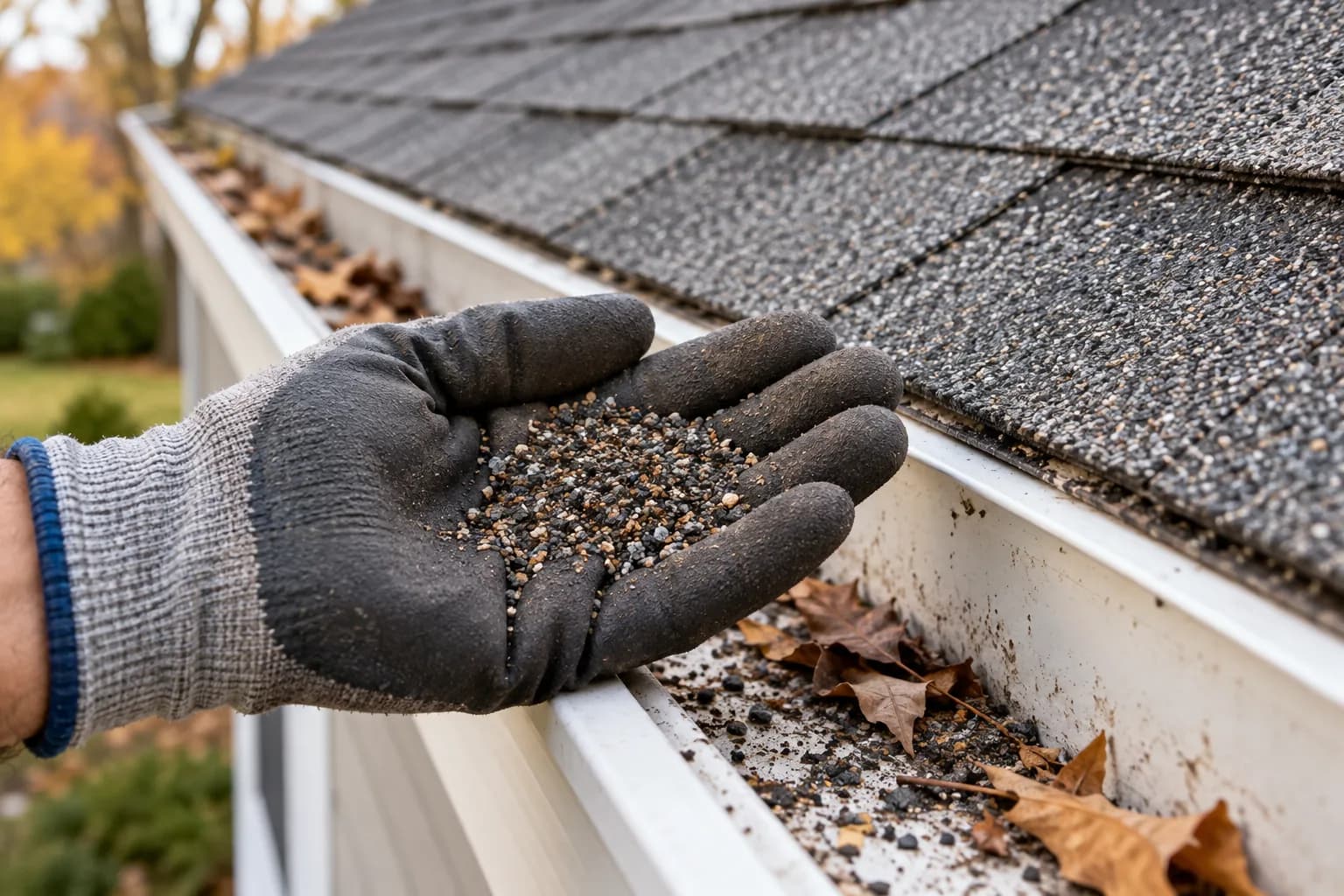
Shingle Granules in Your Gutters? Roof Age and Bare Spots Decide It
Grit at the downspout is normal on a new roof and a warning on a storm-hit one. Here's how to tell which, what an inspection costs, and who pays for the fix.
Read guide
Shingles Blown Off in a Windstorm? Count the Lifted Tabs, Not the Missing Ones
The shingle on your lawn is the cheap part of wind damage. The broken sealant bonds still on the roof decide whether you need a patch, a slope, or a new roof.
Read guide