
Why do my pipes bang when I turn off the water, and how do I stop it?
A bang the instant a washer, dishwasher, or toilet stops filling is usually water hammer, and the fix sits at the valve. Here's how to tell it from loose pipe and high pressure, and what each fix costs.
The short answer
A single sharp bang the moment a valve closes is water hammer: moving water stopped too fast. The fix is usually an ASSE 1010-rated arrestor at the valve causing it, and a static pressure check, because the code caps house pressure at 80 psi. A rattle while water is running is a different problem, loose pipe straps, and a slow tick as hot water flows is the pipe expanding, which is usually harmless.

Estimate, not a final quote
This range is for planning. Final pricing depends on an on-site inspection, materials, permits, access, and contractor scope.
Compare written bids
Ask each contractor for the same scope, warranty terms, permit handling, cleanup details, and exclusions before choosing.
Source-backed guidance
Guides use public references and practical cost modeling, then point you to official sources where rules or rebates can change.
This article contains paid links to Amazon. As an Amazon Associate I earn from qualifying purchases.
A half-inch supply line moving water at 6 feet per second can spike about 360 psi above its running pressure when a valve slams shut. That's the figure in Sioux Chief's engineering report on water hammer, which puts the rise in metal pipe at roughly 60 times the flow velocity. The code caps your home's static water pressure at 80 psi. The bang you hear is that spike hitting an elbow.
So the noise isn't just annoying. Every slam stresses the joints, valves, and appliance hoses on that line. The good news: the fix is usually small, and it lives at the valve, not inside the wall.
Name the moment it happens
Before you buy anything, figure out when the noise happens. Turn things on and off one at a time and listen. Three different problems make three different sounds.
| What you hear | When | Most likely cause | Usual fix | Rough cost |
|---|---|---|---|---|
| One sharp bang or thud | The instant a washer, dishwasher, ice maker, or toilet stops filling | Water hammer from a quick-closing valve | AA-size arrestor at that valve | About $20–$40 per hose-thread arrestor at retail; DIY on a washer |
| Bang at every fixture, even faucets you close gently | Any valve closing | High static pressure making every stop worse | Pressure test; pressure-reducing valve if above 80 psi | $0 to test with a gauge; roughly $250–$900 for a plumber-installed PRV, depending on pipe size and access |
| Rattle or knocking | While water is running | Pipe moving against framing; missing or loose straps | Add or tighten pipe supports | Parts are inexpensive; labor depends on access |
| Slow ticking or creaking | As hot water starts flowing, and again as it cools | Pipe lengthening against a hanger or a tight hole through a joist | Usually nothing; a plumber can add slack or sleeves if it's loud | $0 to live with it |
The cost column is our estimate unless it cites a manufacturer. Your local labor rate, whether the pipe is behind drywall, and your pipe size move it most.
Why the bang comes from appliances
Most faucets close over a second or two. The valves inside a washing machine, dishwasher, or refrigerator ice maker are solenoids: electrically operated valves that snap shut. Water moving toward them has nowhere to go, so the energy turns into a pressure wave that bounces through the line.
The International Residential Code treats this directly. IRC Section P2903.5 says the flow velocity of the water distribution system must be controlled to reduce the possibility of water hammer, and that a water hammer arrestor must be installed where quick-closing valves are used. Arrestors must conform to ASSE 1010 and be installed per the manufacturer's instructions. Some states amend that section, so your local code may read differently.
If your washer bangs and nothing else does, you've found your culprit. That's the most common version, and the cheapest to fix.
The fix at the valve: an arrestor
A water hammer arrestor is a small sealed cylinder with a piston and an air charge. When the valve slams, the wave pushes the piston into the air cushion instead of slamming the pipe. ASSE 1010 sizes these by fixture load, and the smallest size, AA, is the one made for a single residential fixture.
Sioux Chief's MiniRester line is a common example. Its straight 1/2-inch AA models hold 1.4 cubic inches of air, are rated to 350 psig and 250°F, and can be installed at any angle. The washing machine version, the 660-HB, threads between the wall valve and the washer hose with a 3/4-inch hose connection. Sioux Chief's spec says to put one on both the hot and cold valves. One on the cold side alone leaves half the problem.
Flat rule: put the arrestor at the valve that's banging, not where it's easy to reach. Sioux Chief's inline model spec calls for installation within 6 feet of the culprit valve. An arrestor at the water heater won't quiet a dishwasher two rooms away.
The hose-thread washer arrestor is a genuine homeowner job: shut both washer valves, unthread the hoses, thread the arrestors on, reattach. Arrestors for a dishwasher, ice maker, or toilet go on compression or sweat fittings under a sink or inside a wall. If you're not comfortable on compression fittings, or the line is soldered copper, that's a plumber's visit.
What about the old fix of draining the house to recharge the air chambers? Many older homes have capped vertical pipe stubs near fixtures that were meant to cushion the shock. Over time they fill with water and stop working. Draining the system can refill them with air for a while, but the code now asks for a listed ASSE 1010 device. A pipe stub isn't one.
Check the pressure before you blame the pipes
If everything in the house bangs, start with pressure. A hose-thread water pressure gauge threads onto an outdoor spigot or the washer's cold valve. Read it with every fixture in the house off. That's static pressure.
The IRC caps static water pressure at 80 psi. Above that, it requires a pressure-reducing valve (PRV) on the main where the water service enters the house. The section number has moved between editions, so ask your inspector which one your town has adopted. A typical residential PRV, such as Watts' LF25AUB, ships set to 50 psi and adjusts from 25 to 75 psi.
Flat rule: over 80 psi static, call a plumber about a PRV before you buy any arrestors. High pressure makes every valve closure harder, and arrestors downstream won't fix the cause. If you already have a PRV and pressure still reads high, have a plumber check whether it's holding its setting.
One catch: adding a PRV turns your plumbing into a closed system, which changes how your water heater handles thermal expansion. Our relief valve guide covers the expansion tank that usually goes in alongside it. Ask the plumber to price both together.
Rattles and ticks: the pipe is moving
A knock or rattle while water is running is a support problem, not a pressure wave. The IRC sets maximum spacing between pipe supports in Table P2605.1: copper tubing 1-1/4 inch and smaller needs support at least every 6 feet horizontally, and PEX 1 inch and smaller at least every 32 inches. In an unfinished basement, you can often see the long unsupported run that's slapping a joist.
PEX isn't immune to hammer, either. Sioux Chief's report notes that plastic and metal systems carry the same kinetic energy. Flexible pipe gives a little, but the valve still needs an arrestor.
A slow tick as hot water starts running is the pipe growing as it heats and catching against a hanger or a tight hole through a joist. It's usually harmless. If it's keeping you up at night, a plumber can loosen the strap or sleeve the hole. That's comfort work, not a repair you need.
When to stop and call a plumber
Call a licensed plumber if:
- Static pressure reads above 80 psi.
- The banging started suddenly at every fixture, which points at pressure rather than one appliance.
- You see a damp spot, a drip at a fitting, or a bulging appliance hose after the noise starts. Repeated spikes are hard on joints and braided supply lines.
Call one too if the culprit valve is on soldered copper inside a wall, or the noise comes from a pipe you can't see. Don't open a wall to chase a sound. A plumber can isolate the branch by shutting fixture stops one at a time first.
For a sense of labor costs, the Bureau of Labor Statistics puts the median wage for plumbers, pipefitters, and steamfitters at $30.67 an hour as of May 2025. Your bill will be higher than that: it includes the company's overhead, travel, and usually a minimum service charge. That's another reason to arrive with the valve already named. A plumber who knows it's "the dishwasher, one bang, 85 psi static" brings a PRV and an AA arrestor instead of billing you to listen to the pipes.
Research sources
- ICC: 2021 International Residential Code, Section P2903.5 Water Hammer
- ICC: 2024 International Residential Code, Chapter 29 Water Supply and Distribution
- ICC: 2024 International Residential Code, Section P2605.1 Piping Support
- Sioux Chief: Water Hammer Control Engineer Report (press release)
- Sioux Chief: Water Hammer Control White Paper
- Sioux Chief: MiniRester Straight Arrester Spec Sheet
- Sioux Chief: MiniRester 660-HB Washing Machine Arrester Specification
- Sioux Chief: MiniRester 660-GT Spec Sheet
- Watts: LF25AUB-Z3 Water Pressure Reducing Valve
- BLS Occupational Outlook Handbook: Plumbers, Pipefitters, and Steamfitters
Compare local quotes
Ready to compare real quotes from plumbing pros?
Use your estimate as a budget anchor, then compare written contractor bids against it before you decide. Free request, no obligation.
Disclosure: this button opens a third-party quote-matching service. If you submit its form, its contact and privacy terms apply, and SaveBricks may earn a referral fee. It never changes the prices you're quoted, and our cost ranges are set independently — see how we estimate.
The cost guide
Get the monthly cost briefing
One useful email a month: project cost ranges, contractor red flags, and practical ways to avoid an inflated quote.
No spam. Unsubscribe any time. Read our privacy policy.
More maintenance guides

Frozen Pipe? Open the Faucet Before You Warm the Ice
A tap that trickles on a cold morning usually means ice in one branch, not a burst. Here's how to tell which, when to thaw it, and when to shut the main and call a plumber.
Read guide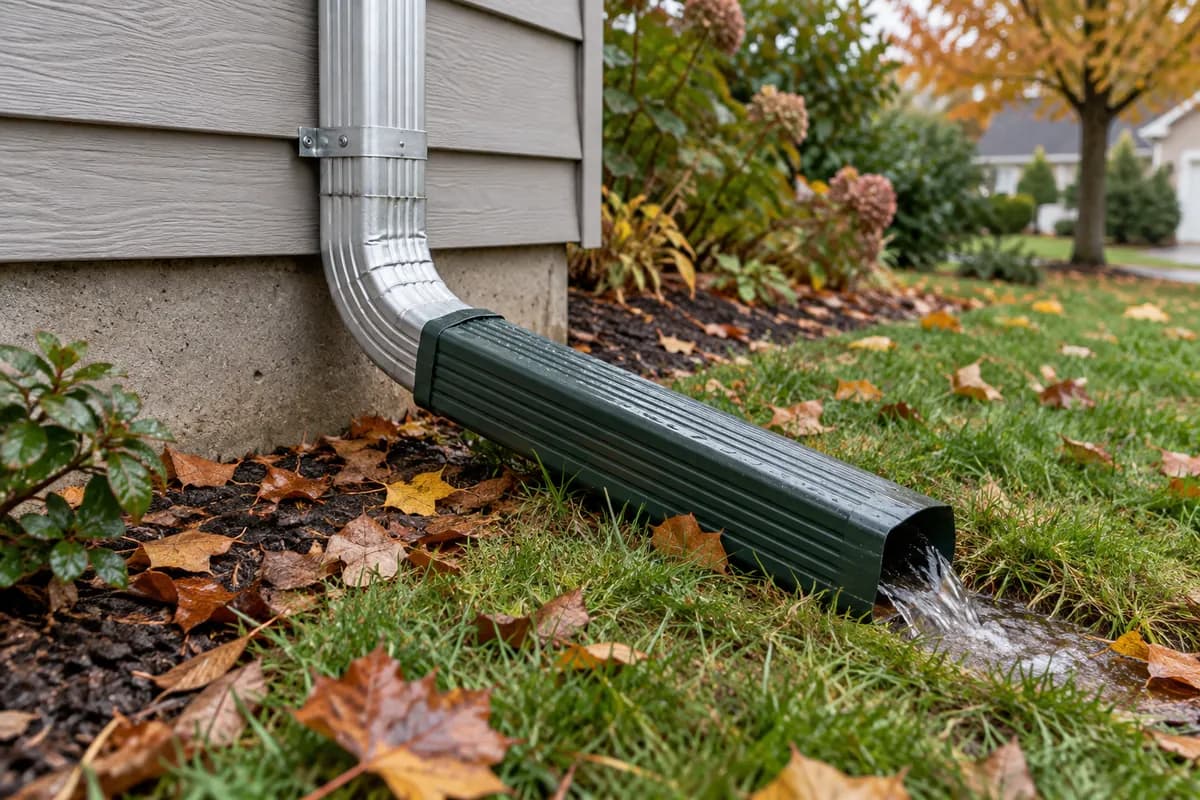
Before You Pay for a Leak Repair, Check the Downspouts
A gutter is only useful if its water reaches somewhere safe. Check overflow, loose connections, and discharge points from the ground before buying a fix.
Read guide
Carbon Monoxide Alarm Beeping? Count the Beeps Before You Touch It
Four beeps and a pause means get outside. A single chirp a minute means a battery. Here's how to tell the patterns apart, and what to have checked once the house is clear.
Read guide