
What does a full heating and cooling system replacement cost?
What a combined heating and cooling replacement costs, which line items belong in the bid, and how sizing, ductwork, and efficiency move the total.
The short answer
A standard central heating-and-cooling replacement commonly falls between $5,000 and $12,500 before major duct, electrical, or structural work. The useful comparison is the complete installed scope—not the equipment price alone.
Estimate, not a final quote
This range is for planning. Final pricing depends on an on-site inspection, materials, permits, access, and contractor scope.
Compare written bids
Ask each contractor for the same scope, warranty terms, permit handling, cleanup details, and exclusions before choosing.
Source-backed guidance
Guides use public references and practical cost modeling, then point you to official sources where rules or rebates can change.
This article contains paid links to Amazon. As an Amazon Associate I earn from qualifying purchases.
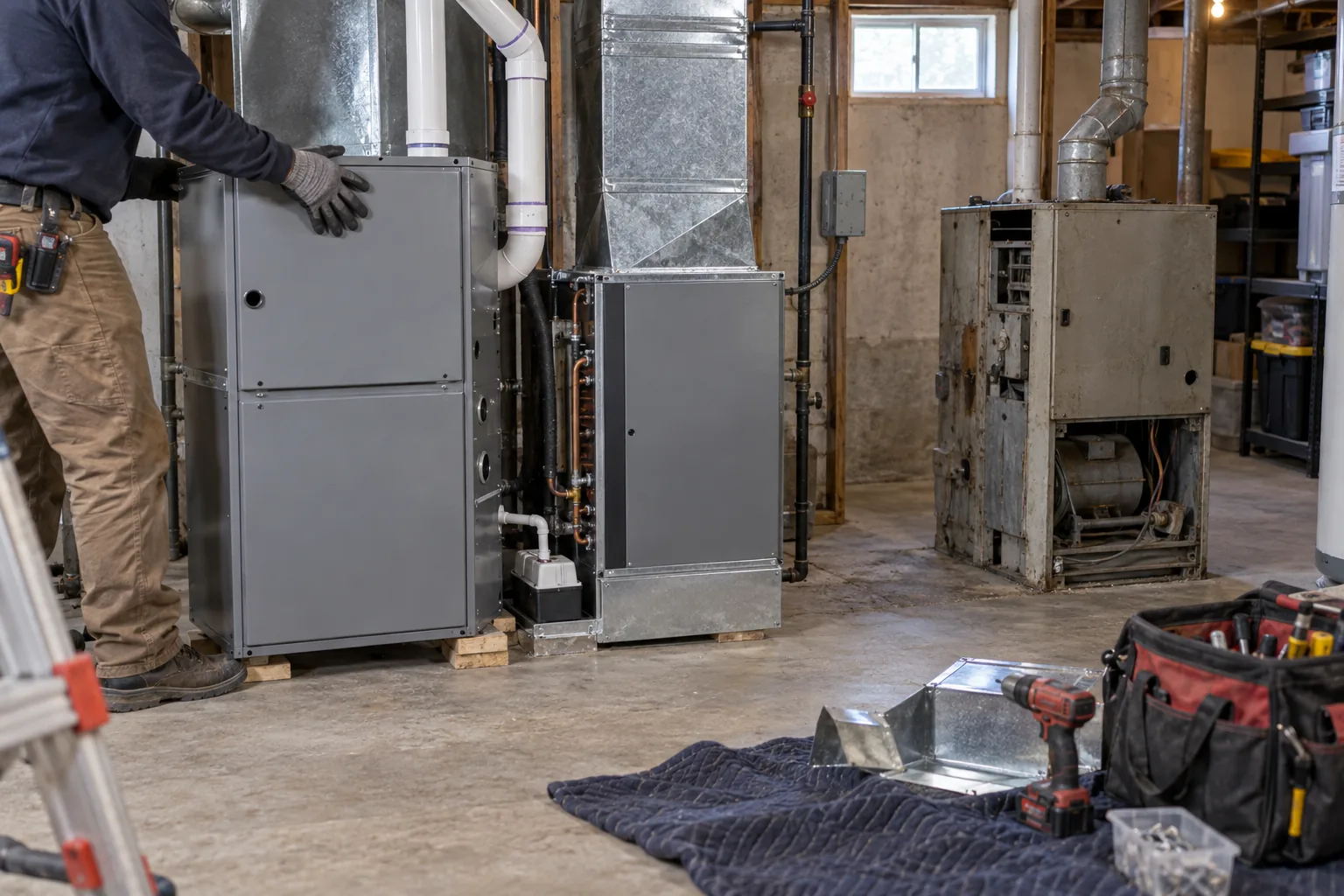
A full HVAC replacement means more than swapping the outdoor condenser. A complete scope can include the outdoor unit, indoor coil, furnace or air handler, refrigerant lines, drain work, electrical corrections, permits, disposal, and startup testing. That is why two bids using the same brand can be thousands of dollars apart.
What the planning range includes
The $5,000 to $12,500 range is a national planning anchor for a conventional central system in an average-size home. It assumes existing ducts can be reused, the equipment stays in roughly the same location, and the electrical service can support it.
It does not assume a full duct replacement, new electrical panel, finished-wall repairs, hazardous-material abatement, structural changes, or difficult crane access. Those items should appear as separate lines rather than being described as an unexplained premium.
| Scope | What the bid should identify |
|---|---|
| Outdoor equipment | Exact model, capacity, efficiency, refrigerant, and sound rating |
| Indoor equipment | Coil, furnace or air handler model, blower type, and heat output |
| Installation materials | Line set, pad or brackets, disconnect, drain, filter rack, transitions |
| Code and administration | Permit, inspection, haul-away, and disposal |
| Commissioning | Airflow, static pressure, refrigerant charge, temperature split, controls setup |
| Warranty | Manufacturer parts, registration deadline, and separate labor coverage |
Cost estimator
HVAC cost estimator
A budgeting range, not a quote. Move the inputs to see what changes the number.
Estimated national cost
Typical project lands near $8,250.
If a written quote comes in above the high end, that's not automatically wrong — ask what scope is driving it.
What this assumes
- Standard central HVAC replacement scope.
- 1,500 sq ft home size selected.
- No major duct, electrical, or structural repairs included.
What moves this price
- 01Equipment tier, SEER2 rating, and brand.
- 02Ductwork condition and attic or crawlspace access.
- 03Permit requirements, refrigerant changes, and local labor rates.
Walk into your quotes ready
This range is your anchor. Bring these to every contractor conversation so you can tell a fair quote from a padded one.
- What SEER2 rating and tonnage are you quoting, and why that size for my home?
- Is a full load calculation (Manual J) included, or are you sizing by rule of thumb?
- Does the price include new line sets, a permit, and haul-away of the old unit?
- What's the labor warranty, and is it separate from the manufacturer's parts warranty?
- A quote given over the phone without seeing your ductwork or home.
- Pressure to decide today or 'lose' a discount.
- An oversized system pitched as 'more powerful'. Bigger isn't better for comfort.
The four cost drivers
1. Capacity and sizing
Larger equipment costs more, but square footage alone does not determine capacity. Insulation, window area, orientation, infiltration, ceiling height, and local design temperatures all matter. Ask for an ACCA Manual J load calculation and for the selected equipment to be matched to that load through Manual S.
Replacing an old unit with the same tonnage is not proof of correct sizing. An oversized system can short-cycle, remove less humidity, and run noisier. An undersized one can run continuously during design conditions.
2. Equipment tier
Single-stage baseline equipment generally sits at the low end. Two-stage and variable-capacity systems cost more because of the equipment and controls. Compare the complete matched system and the expected operating conditions; a premium badge without model numbers is not a specification.
3. Ductwork and airflow
The new unit depends on the old distribution system. Undersized returns, crushed flex duct, leakage, or high static pressure can keep new equipment from delivering its rated performance. A bid should say whether it includes duct testing, sealing, transitions, added returns, or only a visual inspection.
4. Access and code work
Attic platforms, narrow crawlspaces, condensate routing, combustion-air requirements, electrical disconnects, and equipment relocation all change labor. Regional rates also matter, which is why the calculator provides a national range rather than claiming a ZIP-code quote.
Furnace and AC together, or one at a time?
Replacing both can make sense when both components are old, the indoor coil must change for the new refrigerant, or labor overlaps substantially. Replacing only the failed side may be reasonable when the other component is young, compatible, and under warranty.
Ask the contractor to state whether the proposed indoor and outdoor units are an AHRI-rated match. If only one side is being replaced, the bid should explain compatibility, controls, refrigerant, and what efficiency rating the combination actually achieves.
Federal credits in 2026
The Section 25C credit covered qualifying equipment placed in service through December 31, 2025. Do not subtract the old heat-pump or central-AC credit from a 2026 proposal. State and utility incentives may continue, but verify the exact model and application rules directly with the program before treating a rebate as cash.
How to compare three bids
Normalize the scope before comparing totals. Every proposal should identify the same equipment capacity, duct assumptions, permit handling, thermostat, filtration, warranty, and commissioning work. A lower bid that omits the permit, line set, or startup measurements is not the same job.
Before installation, ask which filter size and rating the new system requires and who supplies the first one. Compare replacement filters only after the installer confirms the specification; the old system's filters may not fit.
Use our line-by-line HVAC quote guide at the kitchen table, and read the AC-only replacement guide if the furnace or air handler is staying.
Research sources
- ACCA: Technical Manuals (Manual J load calculation). The sizing standard referenced above.
- ENERGY STAR: HVAC Quality Installation. Ductwork, airflow, and commissioning requirements.
- ENERGY STAR: Furnaces. AFUE certification criteria.
- ENERGY STAR: Heating & Cooling
The cost guide
Get the monthly cost briefing
One useful email a month: project cost ranges, contractor red flags, and practical ways to avoid an inflated quote.
No spam. Unsubscribe any time. Read our privacy policy.
More hvac guides
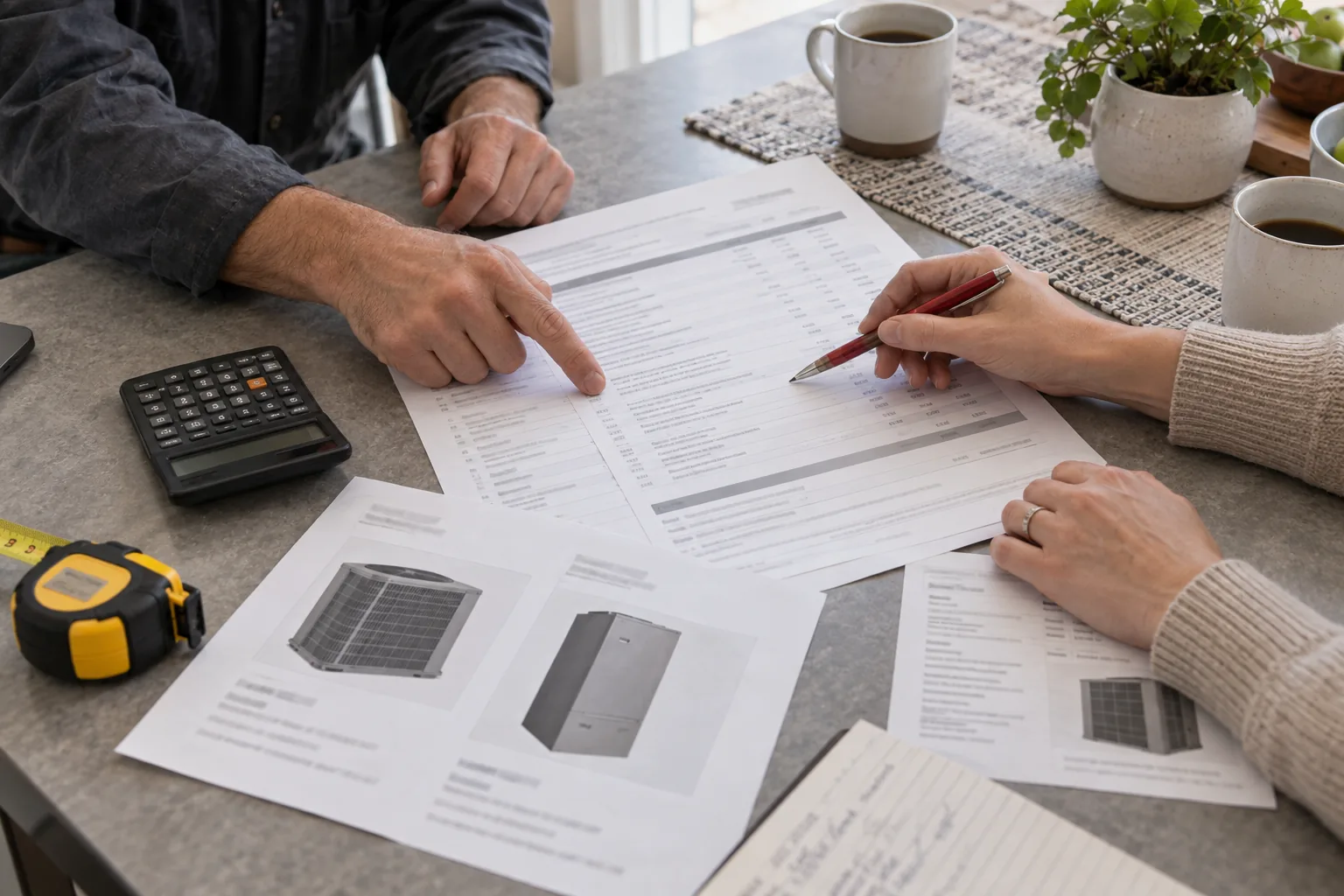
How to Read an HVAC Quote, Line by Line
A real HVAC bid itemizes nine things; most homeowners get four. Here's what belongs on the page, what's negotiable, and where a bare number hides a mismatched system.
Read guide
Furnace Leaking Water? Your Efficiency Rating Narrows It Down
A 90%-plus furnace makes water on purpose; an 80% furnace shouldn't make any. Here's how to read the leak by furnace type, and which fixes cost $0 versus $3,000.
Read guide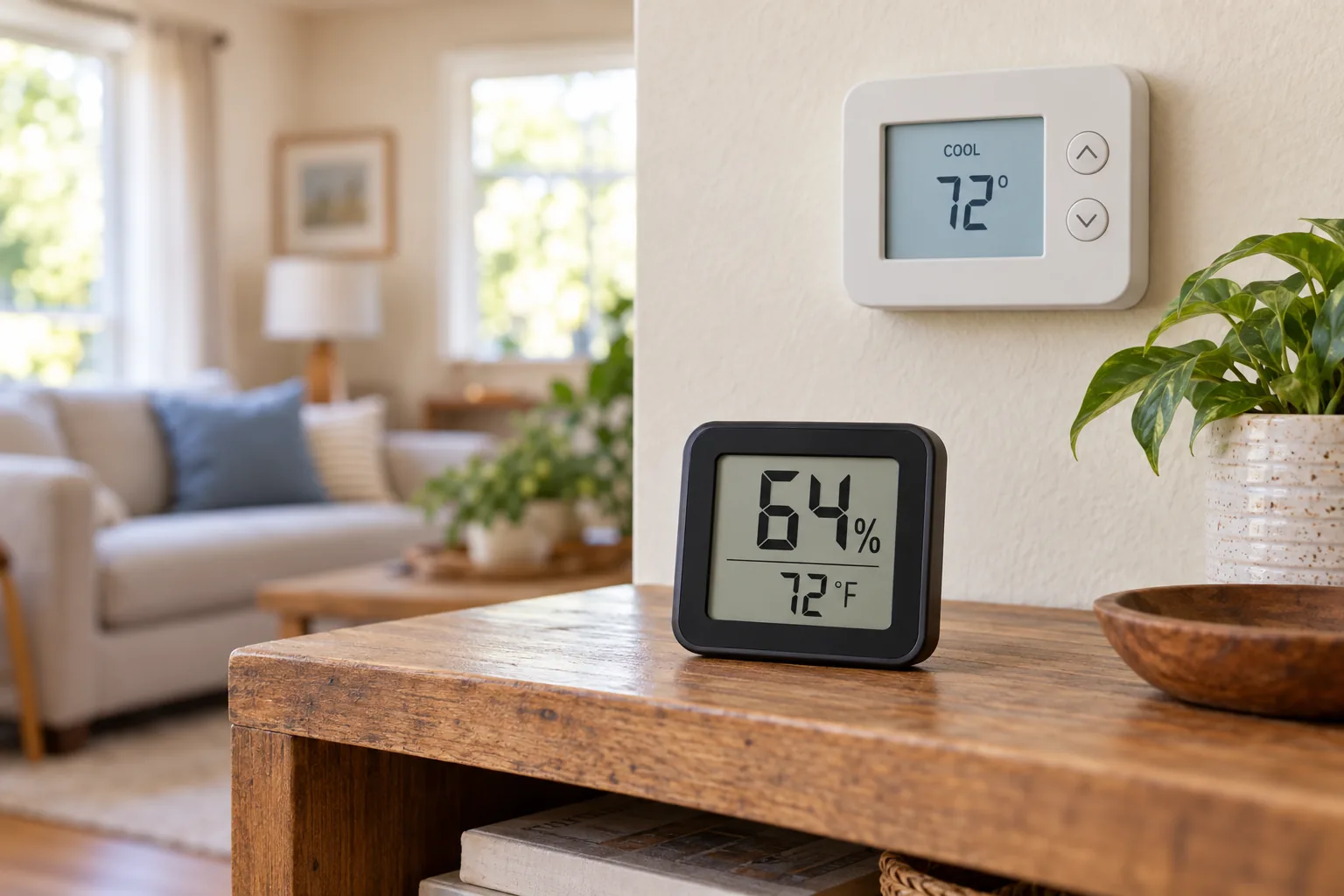
House Humid With the AC Running? Read the Hygrometer Before You Buy Anything
A cool, clammy house usually points to the fan setting, an oversized AC, or air leaking in. Here's how to tell which one you have and what each fix really costs.
Read guide